
Cultural answer
Why West Lake Longjing Is Culturally Important
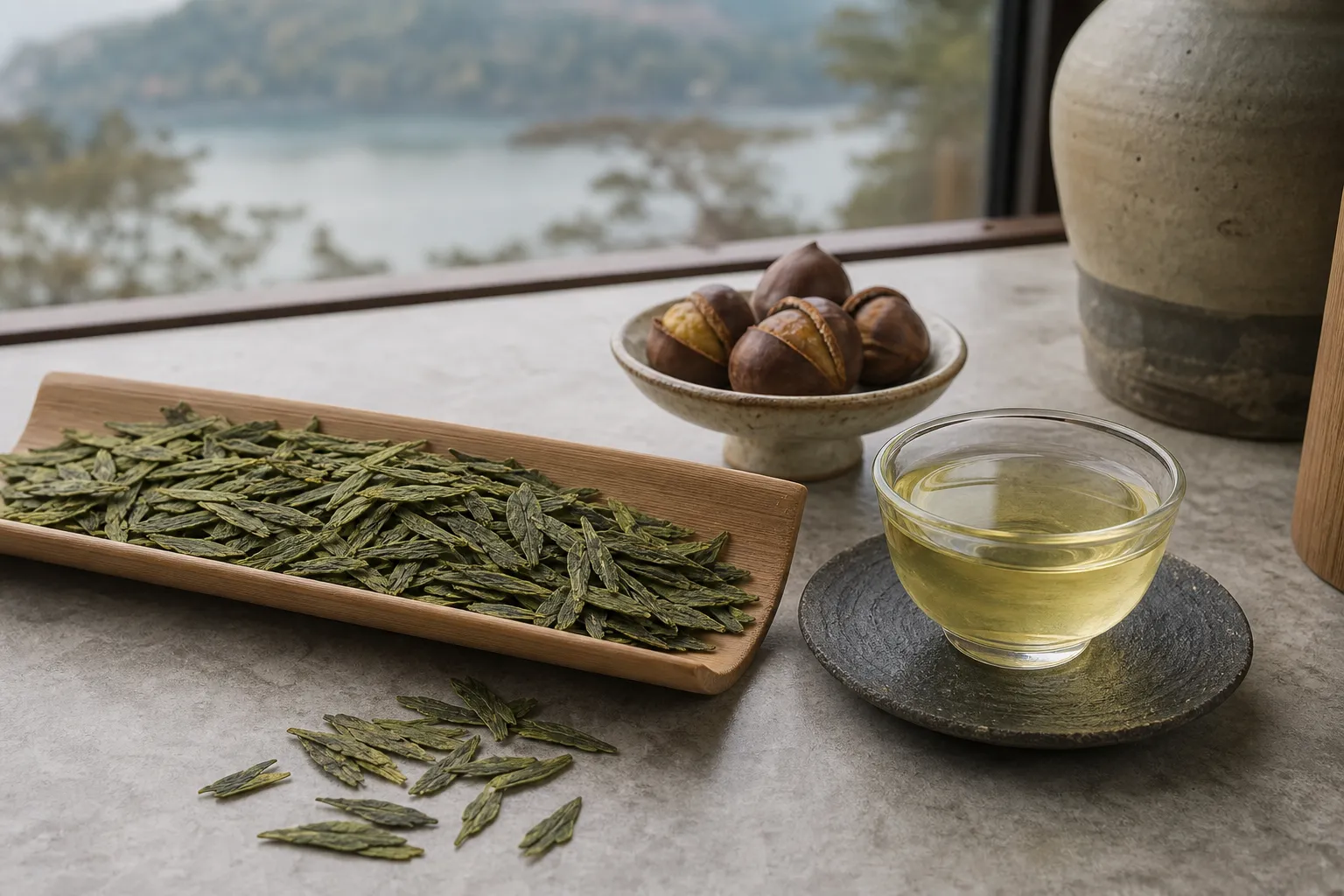
Flat Longjing leaves, a pale yellow-green cup, and a warm chestnut aroma make the answer more concrete than any prestige phrase. West Lake Longjing is culturally important because it connects a famous Chinese green tea to Hangzhou’s West Lake landscape, a recognizable flat-leaf craft, spring tea-making skill, and the social habit of serving tea with care.
West Lake Longjing culture is not only about reputation. It is about how place, hand work, sensory memory, and hospitality meet in one cup. The boundary is just as important: cultural weight does not verify every seller’s origin claim, every Dragon Well story, or every wellness phrase attached to the tea. Read the leaf before the claim.
upward
Start with the broader guide
Use the broader guide first if you need the full scope before this page.
The Meaning Starts With West Lake
West Lake Longjing tradition is hard to separate from Hangzhou. The name points to West Lake, nearby hills, tea villages, and tea spaces that have helped make Hangzhou Dragon Well tea a cultural marker rather than only a drink.
That place connection matters because green tea is not experienced only through price or chemistry. A cup can carry a landscape in practical ways: spring picking, hillside fields, local processing rooms, and the habit of offering fresh tea to a guest. UNESCO’s recognition of traditional tea processing techniques and associated social practices in China gives useful public context for tea as living culture, not just an agricultural product. It is a broad heritage frame, not a product label.
The wording also needs care. Longjing is often translated as Dragon Well, and casual sources may blur Longjing, Dragon Well, and West Lake Longjing into one phrase. For a reader, the distinction matters. Longjing can be used more broadly, while West Lake Longjing or Xi Hu Longjing points to a more specific cultural and geographic identity associated with Hangzhou.
The place name matters, but it is not a shortcut for buying proof.
Craft Makes the Leaf Recognizable
A dry West Lake Longjing leaf is usually described by shape before theory: flat, smooth, pressed, and neat rather than curled or needle-like. That appearance is part of the tea’s cultural identity because it comes from processing choices, not from the leaf alone.
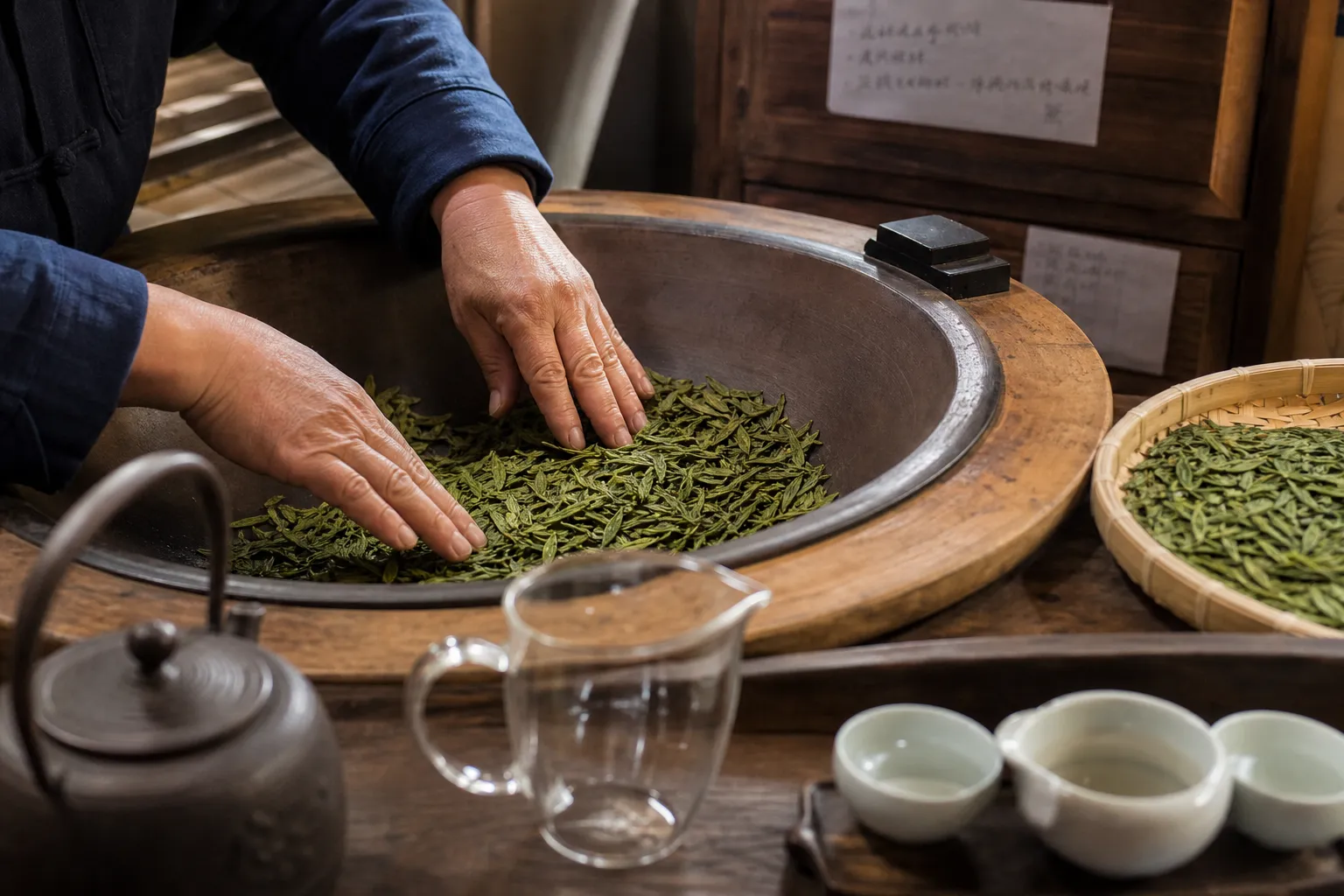
The available processing material supports a careful point: West Lake Longjing craft is tied to skilled green-tea making, including heat work and shaping that help create the tea’s familiar look and aroma. Tender spring leaves need quick handling to preserve a fresh green character, while controlled pan work helps build the flat shape and toasted, chestnut-like note many drinkers associate with Longjing tea processing.
A TIME-hosted China Daily feature gives a useful craft scene, though its branded setting means it should be read as attributed context rather than independent authority. It describes fresh leaves, steel woks, hand-stirring, and instruction around the making process. The value of that scene is simple: Longjing becomes recognizable through repeated gestures, not through fame alone.
Marketing can repeat the word famous. Craft has to show up in the leaf.
The Cup Carries Sensory Memory
West Lake Longjing sensory identity is one reason the tea remains culturally memorable. Common descriptions include yellow-green liquor, fresh vegetal sweetness, chestnut aroma, sometimes floral or orchid-like fragrance, and a smooth finish. Those words are not a fixed scorecard. Harvest, cultivar, storage time, brewing temperature, and steep time can all change the cup.
The useful point is that the pattern is recognizable enough to become cultural shorthand. A drinker who has never visited Hangzhou can still learn to notice the flat leaf, the clear green-yellow liquor, the balance between fresh grassiness and warm nut-like aroma, and the softer sweetness that appears when the brew is not pushed too hot or too long.
Scientific tea research in the source set supports a narrow boundary here. Longjing tea composition can vary by cultivar, geographic origin, and storage time. That helps explain why different samples may not taste identical. It does not turn the tea into a wellness argument or a simple at-home identity test.
Chemistry can describe variation. Culture explains why that variation matters to people.
Hospitality Keeps the Tea Social
Chinese tea social practices are part of the wider heritage frame, and West Lake Longjing fits that frame naturally. Its cultural importance is not only in how the tea is made, but also in how it is offered: a small cup, clear liquor, leaves opening in water, and a pause that gives the guest something to notice.
Hospitality is a softer claim than processing technique, so it should stay modest. Available material often describes Longjing through visiting, tasting, local tea spaces, museums, food pairings, and the gesture of serving tea. These examples show how readers may encounter Longjing Village tea culture today, but they should not be stretched into a complete social history.
This also explains why West Lake Longjing can feel different from a tea kept only as a collectible. Its meaning depends on use. A cup brewed for a guest is not just a display of rare leaves; it is a small act of attention. The host watches the leaf, water, and timing. The guest receives aroma before explanation.
That social rhythm is quiet, but it carries the tea.
Stories Add Meaning, With Limits
Dragon Well tea stories are part of the atmosphere around West Lake Longjing, but they are not all the same kind of evidence. Folklore around the Dragon Well name, Qianlong-related traditions, Hupao Spring pairing, Shifeng Mountain, and Royal Tea language can enrich how people talk about the tea. Without stronger historical sources, they are best presented as stories, traditions, or market motifs.
That boundary matters because these stories often appear beside sales language. A page may move quickly from imperial attention to rarity, from core-area wording to higher quality, or from Mingqian harvest language to automatic superiority. Those jumps are too fast. Cultural importance is not the same as buying certainty.
The same caution applies to wellness language. Some sellers connect Longjing to antioxidants, focus, energy, or broad benefits. For this page, caffeine and tea compounds are background context only. They are not the reason West Lake Longjing matters culturally.
Stories show what people value; they do not verify every package or promise.
What Makes the Answer Stronger or Weaker
West Lake Longjing is culturally important when the discussion stays connected to place, craft, sensory identity, and social use. The answer weakens when one piece is made to carry the whole story.
If the tea is discussed only as a luxury object, the culture becomes thin. If it is discussed only as chemistry, the human skill and hospitality disappear. If it is discussed only through legends, the leaf and wok work are lost. If it is discussed only through market labels, the reader may confuse reputation with verification.
A balanced answer keeps five checks in view:
- The place cue: Hangzhou, West Lake hills, and Xi Hu Longjing identity help explain cultural meaning, but they do not verify a specific package.
- The craft cue: flat shaped leaves and pan work connect the tea to skilled making, but appearance alone cannot carry the whole story.
- The sensory cue: yellow-green liquor, chestnut aroma, and gentle vegetal sweetness help readers recognize the style, while storage and brewing can shift the result.
- The social cue: serving Longjing can express hospitality and attention, without requiring exaggerated ceremonial language.
- The story cue: Dragon Well legends and Qianlong-related motifs belong to cultural memory, not automatic historical certainty.
These checks keep the answer useful without turning it into a buying guide.
Common Confusion: Famous Does Not Mean Simple
West Lake Longjing is often called one of China’s famous green teas, and that fame is part of why people search for it. The confusion begins when fame is treated as the whole explanation. Fame alone does not tell the reader why the tea matters, what the leaf should suggest, or where the cultural boundaries sit.
The better answer is layered but still narrow. West Lake Longjing matters because its name gathers several forms of value: Hangzhou landscape, spring leaf selection, skilled wok shaping, sensory recognition, hospitality, and inherited stories. None of those pieces works well alone. Together, they explain why a cup of Hangzhou Dragon Well tea can feel culturally specific rather than interchangeable with any green tea.
The tea should not be flattened into romance or skepticism. The romantic version treats every legend and premium phrase as evidence. The skeptical version reduces the tea to marketing. A careful cup sits between them. It accepts that cultural memory is real, while keeping claims about origin, quality, health, and history within their limits.
A Practical Way to Read the Cup
The next time you taste West Lake Longjing, start with three quiet observations. Look at whether the leaves are flat and even. Notice whether the liquor is clear yellow-green rather than dull. Then smell for the meeting point between fresh vegetal sweetness and a warm chestnut-like note.
Those observations will not verify every claim around the tea. They will bring the cultural question back to the cup. West Lake Longjing culture matters because the tea gives readers a way to see Hangzhou place, hand skill, social care, and sensory memory in a small serving of green tea.
Let the leaf open before the story grows.
Sources
Sources and further reading
Reference links are limited to sources considered suitable for public citation in this page.