
Longjing tasting note
Why Does Longjing Tea Taste Nutty
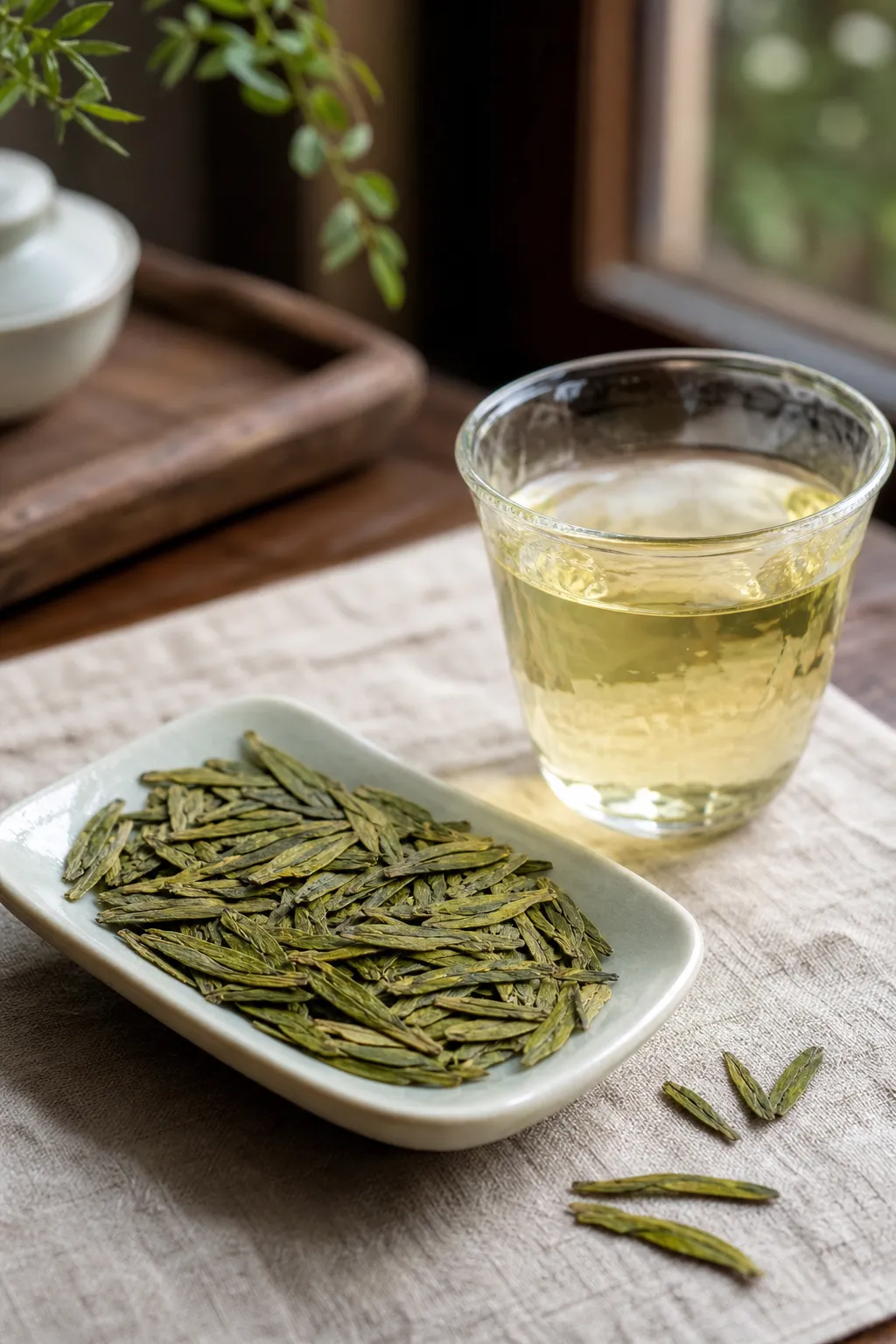
Longjing tea can taste nutty because the cup often brings together light roasted warmth, gentle sweetness, fresh green aroma, and a soft savory edge. The phrase Longjing tea nutty taste usually points to that balance, not to a literal nut flavor. Some drinkers call it chestnut-like; others notice toasted grain, warm bean, fresh grass, or mild vegetal sweetness.
The narrower answer is more useful: Longjing may taste nutty when the leaf, heat-shaped processing style, freshness, storage, brewing temperature, and steep time make the warmer side of the tea stand out. Not every authentic Longjing has to taste strongly nutty, and “chestnut notes” do not prove origin or quality on their own. The cup still has to make sense.
upward
Read the full overview first
Use the broader guide first if you need the full scope before this page.
What “Nutty” Usually Means in a Longjing Cup
A nutty note in Longjing Dragon Well is usually a tasting shortcut. It may describe the dry-leaf aroma, the warm middle of the sip, or the aftertaste that stays after the greener edge fades. In practical terms, it often sits between roasted, sweet, and vegetal.
If the dry leaf smells warm and the brewed tea tastes soft, lightly sweet, and rounded, a drinker may call that nutty. If the same tea is brewed hotter or longer, bitterness may rise and make the warm note seem sharper, more roasted, or slightly drying. If the leaf is very fresh and brewed gently, the nutty impression may sit quietly behind the green aroma.
“Chestnut notes in Longjing” works in the same way. Chestnut suggests warmth, mellow sweetness, and light roast without implying smoke or heavy baking. It is a descriptor, not a certificate.
| If the cup seems… | The “nutty” word may be pointing to… |
|---|---|
| Warm and sweet | Chestnut-like softness |
| Toasted but not smoky | Light roasted aroma |
| Green and fresh | Vegetal notes outweighing roast |
| Sharp or drying | Bitterness covering sweetness |
| Flat or papery | Storage loss, not clean nutty depth |
The word is helpful only when it brings the cup into clearer focus. Smell, sip, then name the finish.
Why Pan-Fired Longjing Is Linked With Roasted Flavor
Longjing is often described with phrases such as “pan-fired Longjing,” “Dragon Well roasted flavor,” and “Longjing roasted aroma.” Those phrases reflect how readers and sellers talk about the tea’s warmer side. With the available source base, though, the mechanism should stay cautious: the nutty impression is commonly associated with Longjing’s handled, heat-shaped character, but this page should not make a precise processing or aroma-chemistry claim.
That boundary matters. It would be too strong to say that one step always creates one chestnut flavor, or that one compound explains the cup. Longjing flavor is easier to observe than to prove from the current material. A reader does not need a chemistry claim to brew better; they need to know what to look for.
In the cup, the warmer side may appear as:
- Dry leaves that smell toasted, warm, or lightly sweet.
- A first sip that feels soft rather than grassy-sharp.
- A middle taste suggesting chestnut, toasted grain, or warm bean.
- A finish that stays mellow instead of turning harsh.
- A pale green-yellow liquor that smells fresh, not smoky.
Two teas sold with similar language can still taste different. One may lean fresh and vegetal; another may lean rounder and warmer. The name alone does not settle the flavor.
Freshness, Storage, and Leaf Quality Change the Nutty Impression
Fresh Longjing can taste bright, gentle, sweet, grassy, or warm depending on the tea and the brew. The useful point is that freshness changes how clear the aroma feels. When the leaf still smells lively, the nutty or chestnut-like note may feel woven into the green character. When the leaf has faded, the cup may lose both sweetness and freshness, leaving a dull roasted trace that is easy to mistake for intentional nuttiness.
Storage is part of that difference. Loose-leaf green tea is sensitive to air, moisture, heat, and strong surrounding odors. If Longjing sits open too long or is kept near spices, coffee, or a warm stove, the aroma can flatten or pick up outside smells. The result may be stale, papery, woody, or vaguely toasted, but not the clean nutty notes in Dragon Well that drinkers usually hope for.
Leaf appearance helps only as a clue. Longjing is known for flat leaves, but flat leaves alone do not promise a lively cup. A better check is more complete:
- Do the dry leaves smell fresh, warm, and clean rather than dusty?
- Does the brewed cup show sweetness, or only bitterness?
- Does the roasted impression feel gentle, or burnt and hollow?
- Does the aftertaste fade cleanly, or leave rough dryness?
- Has the tea been stored closed, cool, dry, and away from odor?
This is where “Longjing leaf quality flavor” can become too broad. Quality is not one flavor word. A good cup may be chestnut-like, but aroma, sweetness, bitterness, freshness, and finish should not fight each other.
Brewing Can Make Longjing Taste More Nutty, Bitter, or Green
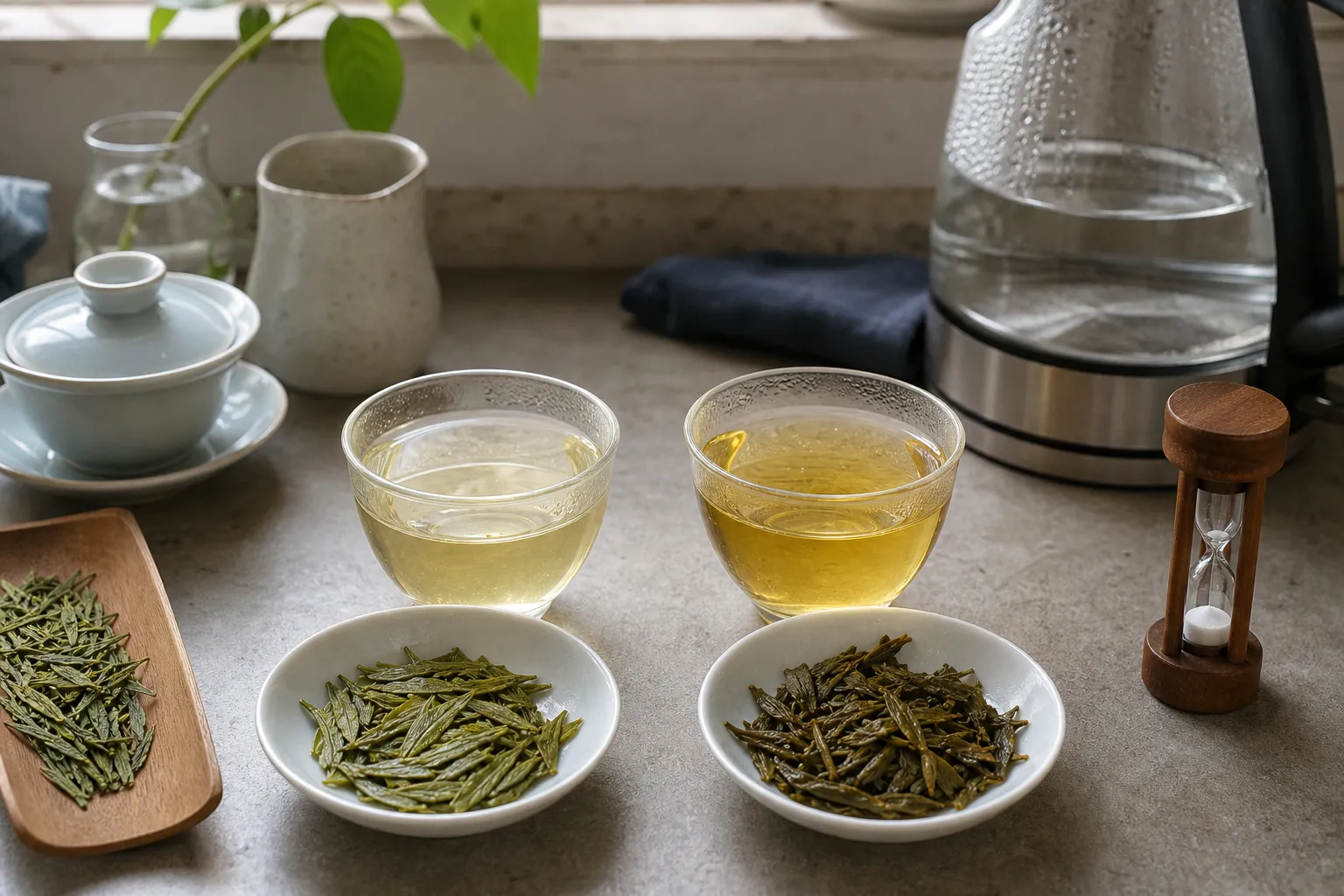
Brewing Longjing flavor is often about making one side of the tea more visible. Hotter water and longer steeping can pull more strength from the leaf; that may make the roasted aroma feel fuller, but it can also increase bitterness and dryness. Cooler water and shorter steeping can keep the cup softer; sweetness and fresh green notes may stay clearer, while the nutty note becomes more delicate.
Because this page does not have strong brewing trial data to cite, the best approach is observational. Brew the same tea two ways and compare the cup before blaming the label or the leaf.
Try a small cup test:
- Use the same amount of leaf in two small cups or brewing vessels.
- Brew one with slightly cooler water and a shorter steep.
- Brew the other with hotter water or a longer steep.
- Smell both before sipping.
- Notice whether the warmer cup tastes more roasted, more bitter, or both.
If the hotter or longer brew gives more chestnut-like aroma but also more harshness, the tea may need a gentler steep. If the cooler brew tastes thin and grassy, it may need a little more time. The goal is not to force a “correct” nutty flavor. The goal is to keep warmth, sweetness, and freshness together.
Bitterness can confuse the reading. A bitter Longjing may still have roasted aroma, but bitterness can cover the sweeter chestnut-like part. If the cup feels sharp at the sides of the tongue or dry at the finish, adjust water or time before judging the leaf. Let the kettle explain the bitterness first.
Common Confusions Around Chestnut Notes in Longjing
The biggest confusion is treating “nutty” as required. Longjing can be described that way, but it may also be fresh, vegetal, sweet, lightly savory, or softly roasted. A tea that is not strongly chestnut-like is not automatically poor or false; it may simply sit on a different part of the Longjing tea flavor profile.
Another confusion is treating “Dragon Well roasted flavor” as heavy roast. Longjing’s pleasant warm aroma is usually not the same as a dark, smoky, heavily baked character. If the cup tastes burnt, rough, or stale, calling it nutty may hide the problem. Warm is not scorched.
Market language adds another layer. Product pages may use phrases such as “pan-fired Longjing flavor,” “fresh Longjing taste,” or “chestnut aroma” because buyers recognize them. They can tell you what to look for, but they cannot verify the tea. A sourcing cue is useful only when the leaf and cup support it.
There is also a perception issue. One drinker’s chestnut may be another drinker’s toasted rice, warm bean, or soft vegetal sweetness. Sensory language is approximate. It becomes more useful when you place it in the cup: dry aroma, first sip, middle sweetness, bitterness, or finish.
When the Nutty Taste Is a Good Sign
A nutty Longjing impression is most convincing when it is clean, gentle, and balanced. It should not need to shout. If the dry leaf smells fresh, the brewed tea opens with soft roasted aroma, the sip carries some sweetness, and the finish avoids harsh dryness, the chestnut-like language is doing useful work.
It is less convincing when the cup is flat, dusty, sour, smoky, or aggressively bitter. Those traits do not become good because a seller calls the tea roasted or chestnut-like. Longjing storage and taste are closely connected in everyday use; a loose bag, warm shelf, or poor storage tin can make the tea seem tired before the leaf is fully used.
| Cup signal | Better interpretation |
|---|---|
| Soft warmth plus sweetness | Nutty or chestnut-like note may be present |
| Fresh green aroma plus mild roast | Balanced Longjing cup experience |
| Strong bitterness hiding sweetness | Brewing may be too hot or too long |
| Dull toasted smell with no freshness | Possible age or storage issue |
| Label says chestnut but cup tastes flat | Marketing language is not enough |
This keeps the question practical. You are not proving a tea by one word. You are checking whether the word matches the cup.
A Simple Way to Taste for Nutty Notes
To look for nutty notes in Dragon Well, start with aroma before analysis. Warm the cup or brewing vessel, add the dry leaf, and smell before water touches it. If there is clean warm sweetness, remember that baseline. After brewing, smell the liquor, then sip slowly enough to notice the middle taste, not only the first bitterness.
Ask four questions:
- Is the warm note clean, or does it smell stale?
- Is there sweetness behind the roasted aroma?
- Does the green character feel fresh or dull?
- Does the finish stay smooth, or turn dry and rough?
If the answer points to clean warmth, mild sweetness, and a smooth finish, “nutty” is a reasonable tasting word. If the answer points to harshness, flatness, or storage odor, another explanation may fit better.
Longjing tea tastes nutty when the cup makes warmth, sweetness, and light roasted aroma easy to notice. It tastes less nutty when freshness dominates, brewing pulls too much bitterness, or storage has dulled the leaf. Test the next cup by changing only water temperature or steep time; the flavor will tell you more than the label.