
Longjing Tea
Longjing Tea Taste, Leaf Shape, and Daily Use
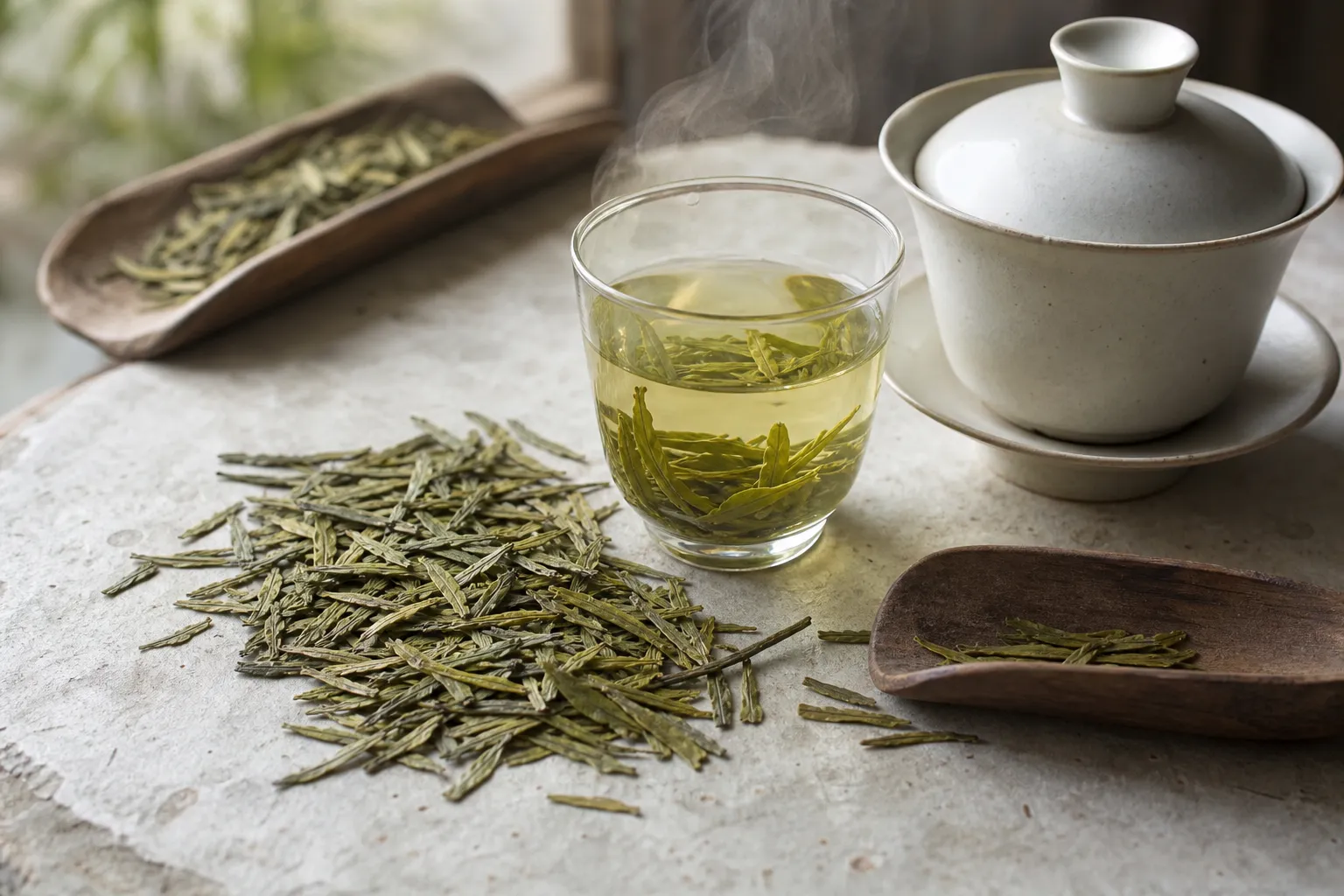
A pale green-yellow cup can look calm, then turn sharp when the water is too hot or the leaves sit too long. That is the useful way to start with Longjing tea: not with a famous name, but with the flat leaf, the first aroma, the color in the cup, and the point where sweetness gives way to bitterness.
Longjing, also called Dragon Well green tea, is usually recognized through several signals working together. The leaves are commonly flat and narrow. The liquor is usually light rather than dark. The aroma may lean nutty, grassy, bean-like, or tender green. The taste can feel soft and rounded when brewed gently, yet become drying when extraction runs too hard. Read the leaf, then read the cup.
upward
Read the full overview first
Use the broader guide first if you need the full scope before this page.
What Longjing Tea Usually Tastes Like
Longjing tea taste is often described in quiet terms: toasted nuttiness, tender greens, light sweetness, and a savory note that some drinkers compare to beans or chestnut. Those words are useful, but they are not a promise for every packet. Freshness, storage, water temperature, leaf amount, and steep time all change the cup.
A balanced Longjing flavor profile usually sits closer to soft and rounded than grassy-sharp. Compared with sencha, it is less likely to show a marine or briskly steamed character. Compared with matcha, it is not powdered, foamed, or thick in the mouth. Compared with many rolled green teas, the leaf is easier to inspect because it is pressed flat rather than twisted into pellets or needles.
The nutty impression is one reason people remember Longjing Dragon Well. In everyday tasting language, “nutty” does not mean dark-roasted like coffee or a heavily fired oolong. It usually points to a gentle toasted edge over green sweetness. If the cup tastes lightly toasted, clean, and fresh rather than smoky, stale, or aggressively bitter, it sits within the expected Longjing conversation.
Grass or bean aromas can also appear. A green aroma is not automatically a flaw; many green teas carry vegetal notes. The question is whether the aroma feels fresh and integrated, or dull, papery, and tired. Fresh-green, bean-like, or tender vegetable notes can belong in the cup. A storage note is different. Smell before you judge.
What Dragon Well Tea Leaves Should Look Like
Dragon Well tea leaves are best known for their flat appearance. The dry leaf is usually pressed, narrow, and smooth rather than curled or rolled. This is the visual cue many buyers notice first: flat tea leaves in shades that may range from yellow-green to deeper green, depending on the tea and storage condition.
That cue matters, but it only tells part of the story. Flat Longjing tea leaves can suggest the Dragon Well style, yet flatness alone cannot confirm origin, grade, freshness, harvest timing, or careful handling. A packet can use “Dragon Well,” “authentic,” or “premium” language; the leaf and cup still need to answer.
Look for consistency before romance. A packet with many broken fragments, dusty material, or uneven shapes may brew faster and more unevenly than one with more intact leaves. Broken pieces expose more surface area, so they can release flavor quickly and turn bitter sooner. Mostly whole leaves usually give the drinker more room to adjust.
Dry leaf color is also only a clue. Brightness may suggest better freshness, while a very dull or brownish look may raise questions about age or storage. Still, color shifts with cultivar, processing, lighting, and time. The cup gives the second answer.
Brewed Longjing Tea Color and Brewing Behavior
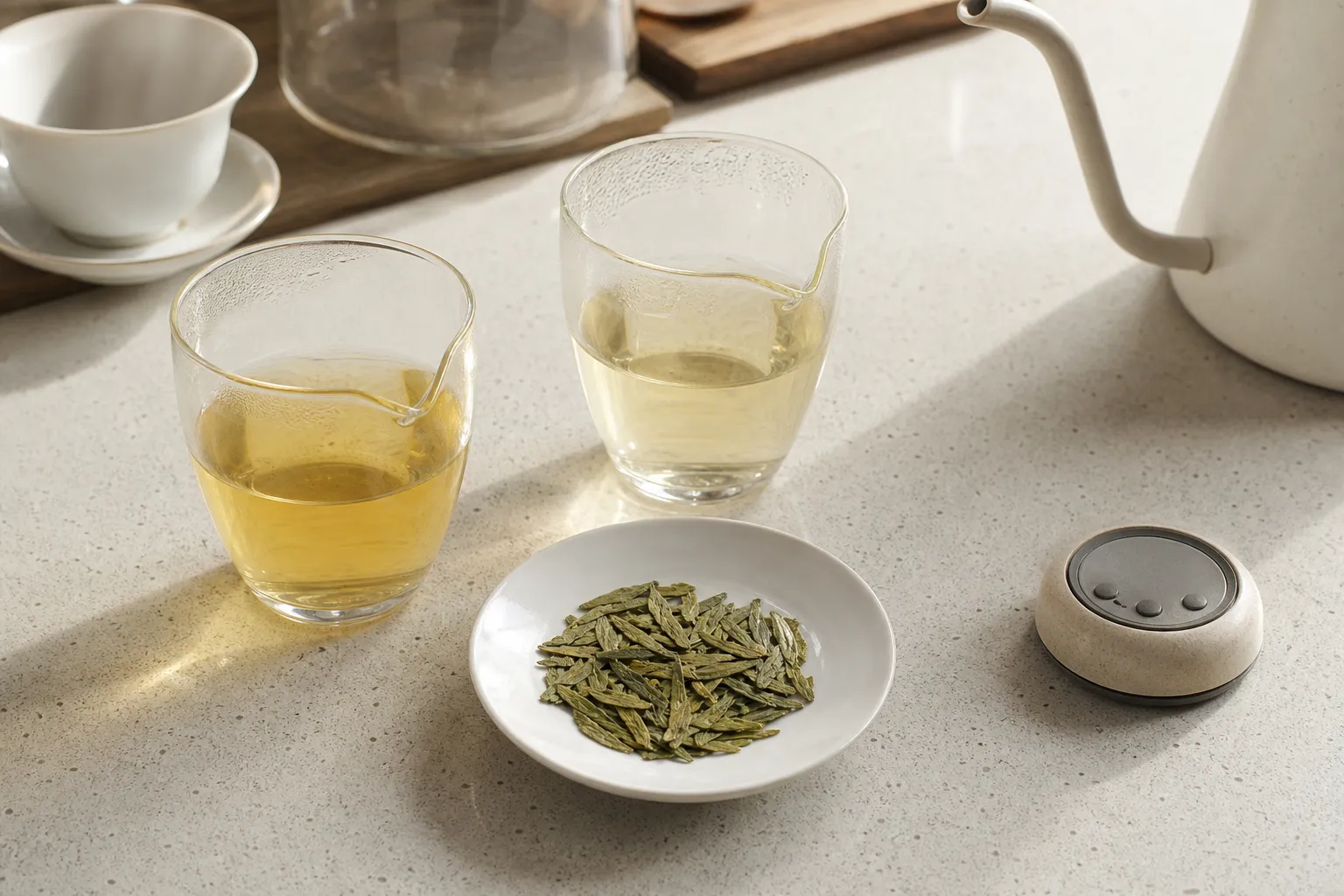
Brewed Longjing tea color is usually light rather than dark: pale yellow, yellow-green, or soft green-gold are common reference points in tea practice. A deep amber cup may simply reflect heavy leaf use, hotter water, or a long steep, but it often brings a stronger and more astringent taste.
Longjing tea brewing behavior is sensitive to small choices. Hotter water may bring out more body and aroma; it can also push bitterness. Cooler water may soften the cup, though it can make the tea feel thin if the leaves are underused. Longer steeping extracts more flavor, but it also gives bitterness and astringency more room.
Exact brewing numbers are best treated as starting habits rather than fixed rules. Vessel size, leaf condition, and personal taste change the result. A small glass, gaiwan, or mug will not behave the same way. The water-to-leaf ratio is the real lever.
Cup Symptoms and First Adjustments
Bitter and drying
Check water heat or steep length. Use gentler water or decant sooner.
Thin and quiet
Check leaf amount or short contact time. Use slightly more leaf or wait longer.
Fresh but grassy
Normal green-tea character may be present. Try slightly cooler water if too sharp.
Dull or flat
Check age, storage, or weak leaf. Smell the dry tea before the next brew.
Heavy and dark
Strong extraction may be driving the cup. Use less leaf or pour off earlier.
How much Longjing tea should you use per cup? Start modestly, taste, and adjust. A larger mug needs a different approach than a small tasting glass, and broken leaves need more caution than intact ones. The first cup is a reading, not a final verdict.
How many times can you steep Longjing tea? Many loose-leaf green teas can give more than one infusion, but the number depends on leaf quality, amount, water temperature, and steep length. If the second cup still smells fresh and tastes clear, continue. If it becomes hollow, harsh, or stale, stop. The leaf will tell you.
Why Longjing Tea Turns Bitter
Bitterness is one of the most common reasons a drinker doubts the tea. Sometimes the tea is not the problem; the extraction is. Green tea leaves can move quickly from sweet and savory into a sharper edge when heat, time, or leaf amount is pushed too far.
The Usual Suspects
- Water is too hot for the leaf.
- The steep runs too long.
- Too much leaf is packed into a small vessel.
- Broken leaves release flavor faster than expected.
- The tea has lost freshness or absorbed storage odors.
This is where Longjing differs from a tea bag habit. Boiling water may be routine for a quick bagged cup, but loose-leaf Dragon Well green tea often rewards closer attention. If the first sip is bitter, do not immediately decide the tea is poor. Try one calmer brew: less heat, less time, or slightly less leaf.
There is also a difference between bitterness and structure. A light bitter edge can give shape to the cup, especially after the first sweet or nutty note fades. Harsh bitterness that coats the tongue and dries the mouth points more toward extraction, breakage, age, or quality concerns. Let the kettle explain the bitterness.
Hot, Cool, and Cold Use
Hot brewing gives the quickest read on aroma and leaf behavior. It lets you notice the toasted, vegetal, and sweet notes as they rise from the cup. For judging a new Longjing tea, hot preparation is usually the more informative first test.
A warm cup that has cooled slightly may taste sweeter and less sharp than it did just off the kettle. That can help you separate true bitterness from heat intensity. If the tea tastes pleasant after cooling, your next brew may simply need gentler water.
Cold preparation can be appealing for daily use, but it changes the sensory frame. Cold water extracts more slowly, so the cup may feel smoother and less aromatic. It can help when a hot brew keeps turning bitter, but it should not be used to hide stale leaf or poor storage. Cold Longjing still depends on clean leaves.
The best method is the one that answers your question. To inspect aroma, brew hot. To soften edge, lower the water temperature or let the cup rest. To drink slowly through the day, use a lighter preparation and watch whether the flavor stays clean.
Daily Use, Caffeine, and Antioxidant Language
Can you drink Longjing tea every day? Many people include green tea in ordinary routines, but daily use should stay personal and moderate. Longjing tea has caffeine because it is tea. The exact amount in a cup varies with leaf quantity, steep time, water temperature, and serving size.
Some drinkers like Dragon Well green tea in the morning or early afternoon because the flavor is clear and the caffeine is present. Others may notice sleep disruption, jitters, stomach discomfort, or sensitivity, especially with stronger brewing or late-day drinking. Caffeine tolerance varies. People with pregnancy-related questions, medication use, sleep concerns, heart concerns, anxiety sensitivity, or other health considerations should rely on qualified medical guidance rather than a tea page.
Longjing tea antioxidants are another area where wording matters. Green tea contains naturally occurring compounds often discussed in nutrition and wellness contexts, but that does not turn a cup into a health-outcome tool. For this page, the practical point is simpler: enjoy Longjing for taste, routine, and culture first; keep wellness language modest.
Daily use is also about storage and repetition. A tea you drink often should be easy to brew consistently, easy to keep away from heat and strong odors, and pleasant at the strength you actually like. If the cup only tastes good when handled with extreme precision, it may be better as an occasional tea than a desk or breakfast habit.
Cultural Context Without Turning It Into Proof
Longjing belongs to the broader world of Chinese tea processing and social tea practice. Cultural heritage sources can support that broad frame: tea preparation, serving, and processing sit inside a larger tradition, not just a beverage category. That context adds depth, especially for readers who know Longjing Dragon Well as a famous Chinese green tea.
But cultural context is not a shortcut for judging a specific packet. Heritage language does not prove that the leaves in front of you are fresh, well stored, accurately labeled, or suited to your taste. Origin names and traditional associations may help you ask better questions; the dry leaf, aroma, brewed color, and flavor still have to carry their own weight.
This is a common buying confusion. A reader sees a familiar name, a flat leaf, and confident packaging, then assumes the cup must be excellent. A better sequence is slower: check leaf shape, smell the dry tea, brew lightly, observe liquor color, taste for clean sweetness or harshness, then decide whether the claim and the cup match.
A sourcing cue is not proof by itself. It is an invitation to look closer.
A Practical Longjing Reading Frame
Longjing tea is easiest to understand when you separate four questions that often get mixed together.
What do the leaves look like?
Flat, narrow leaves point toward the Dragon Well style, while excessive dust, uneven breakage, or dullness may affect brewing behavior. Leaf appearance is a starting signal.
What does the cup smell like?
Nutty, bean-like, grassy, or tender green notes can sit within normal Longjing taste expectations when they feel fresh. Stale, musty, smoky, or papery aromas ask for more caution.
How did you brew it?
A bitter cup may reflect the tea, but it may also reflect water temperature, steep time, or leaf amount. Change one variable before changing your opinion.
How does it fit your day?
Longjing tea daily use depends on caffeine sensitivity, schedule, taste preference, and storage habits. It is not automatically ideal for every person or every hour.
Those four questions prevent two common overreaches: treating Longjing as a wellness shortcut, or treating a famous name as proof of quality. The cup deserves closer reading than either shortcut.
Small Questions Readers Often Bring to Longjing
What does Longjing tea taste like?
It is often described as light, nutty, vegetal, slightly sweet, and sometimes bean-like. The exact taste changes with freshness, storage, water temperature, leaf amount, and steep time.
Why are Longjing tea leaves flat?
Flat leaves are part of the recognizable Dragon Well tea appearance. Use this cue for visual recognition, not as proof of grade, origin, or freshness.
Does Longjing tea have caffeine?
Yes. Longjing is a green tea, so it contains caffeine. The amount in a cup varies, and sensitive drinkers may need to adjust serving size, strength, or timing.
Why does my Longjing taste bitter?
The most likely brewing causes are hot water, long steeping, too much leaf, or broken leaf pieces extracting quickly. If a gentler brew still tastes harsh or stale, freshness and storage may be part of the problem.
Longjing flat leaves tell only part of the story. For the next cup, test one clear observation: brew a lighter infusion, watch the pale color, and see whether the nutty-green note appears before bitterness does.
Sources
Sources and further reading
Reference links are limited to sources considered suitable for public citation in this page.