
Support Note
Brewing and Storage Help
Use this page when a green tea tastes sharper than expected, loses aroma quickly, or leaves you unsure whether the issue is water temperature, steep time, leaf amount, storage, or sourcing context. The notes here are meant to route you toward practical fixes, not to replace the more detailed variety guides.
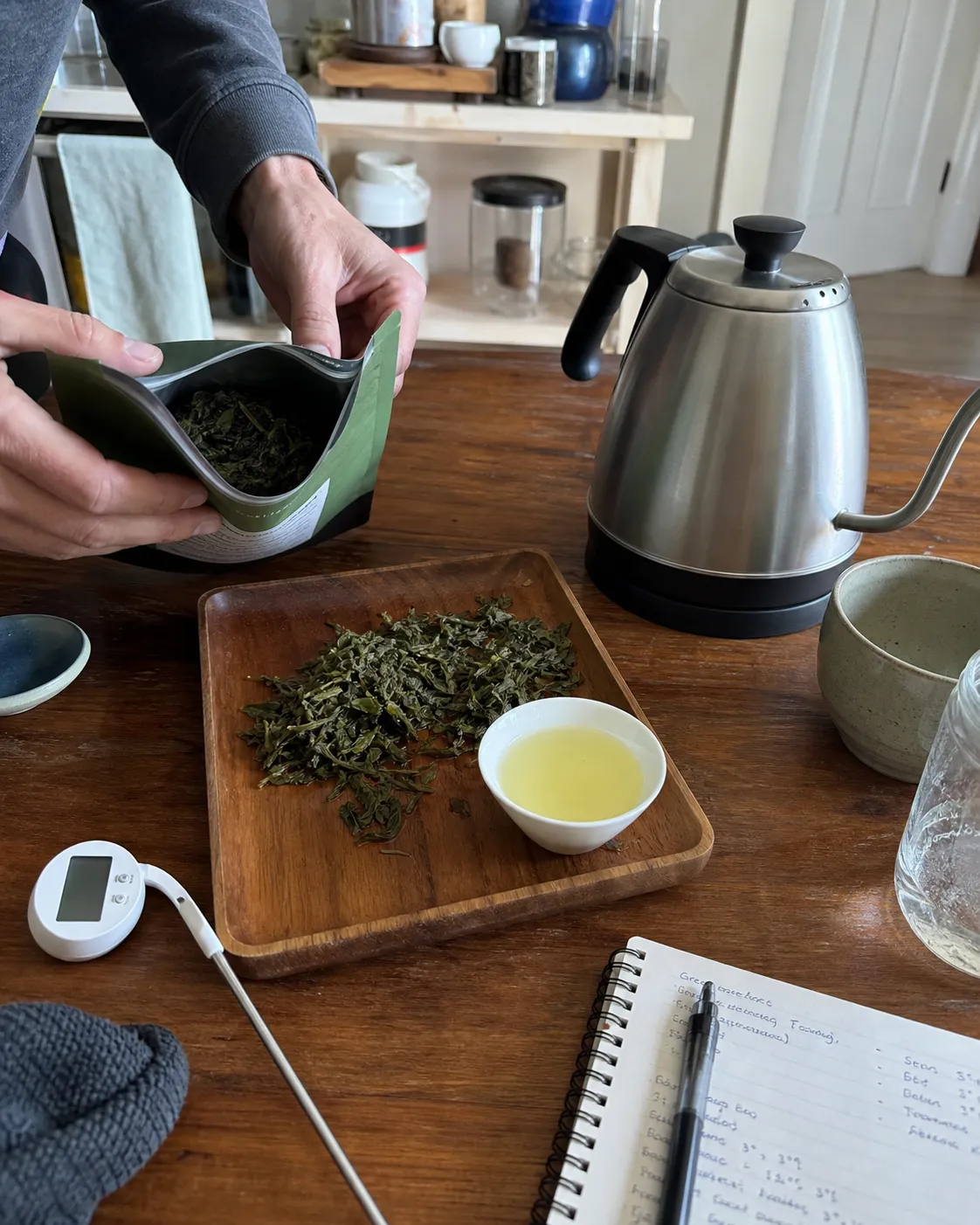
Start with the cup: liquor color, aroma, bitterness, sweetness, and how long the leaf has been open. Most brewing problems can be narrowed by changing one variable at a time.
If the cup is bitter
Lower the water temperature first, then shorten the steep. For many green teas, a small drop in heat changes bitterness more clearly than adding more water afterward.
If aroma fades fast
Check air exposure, heat, light, and time since opening. Fresh green tea is easier to judge when the pouch is sealed tightly and kept away from warm shelves.
If the tea tastes flat
Compare leaf age, dose, and water quality before assuming the variety is poor. Some delicate teas need slightly more leaf, shorter contact, or fresher storage.
What to include
- Tea type: matcha, sencha, Longjing, blended loose leaf, tea bag, or unknown sample.
- Method: water temperature, steep time, leaf amount, vessel size, and number of infusions.
- Freshness: harvest or purchase context if known, open date, packaging, and storage spot.
- Taste cue: bitter, grassy, marine, sweet, roasted, dull, astringent, powdery, or stale.
Common next steps
One-variable test
Brew the same tea twice and change only one point: temperature, time, dose, or water. This makes the result easier to read than adjusting everything at once.
Storage check
Move opened tea into a tightly sealed pouch or tin, press out excess air when practical, and keep it away from heat, sunlight, spice cabinets, and damp counters.
Boundary note
Brewing help can explain flavor, preparation, storage, and general beverage context. It does not evaluate medical conditions, treatment plans, or guaranteed wellness outcomes.