
Green tea field guide
Green Tea Varieties
Flat leaves, fine powder, pale liquor, grassy steam, toasted edges, soft sweetness, firm bitterness: green tea varieties make more sense when you begin with what the leaf and cup show. The useful question is not which tea is “best.” It is which form, flavor, preparation style, and daily routine fit the way you drink.
Whole-leaf teas ask you to watch leaf shape, water temperature, steep time, and aroma. Matcha asks you to notice powder texture, whisking, foam, and body. Sencha, Longjing Dragon Well, and other named styles give helpful paths, but the name on a label does not prove freshness, origin, grade, or wellness value. Read the leaf before the claim.
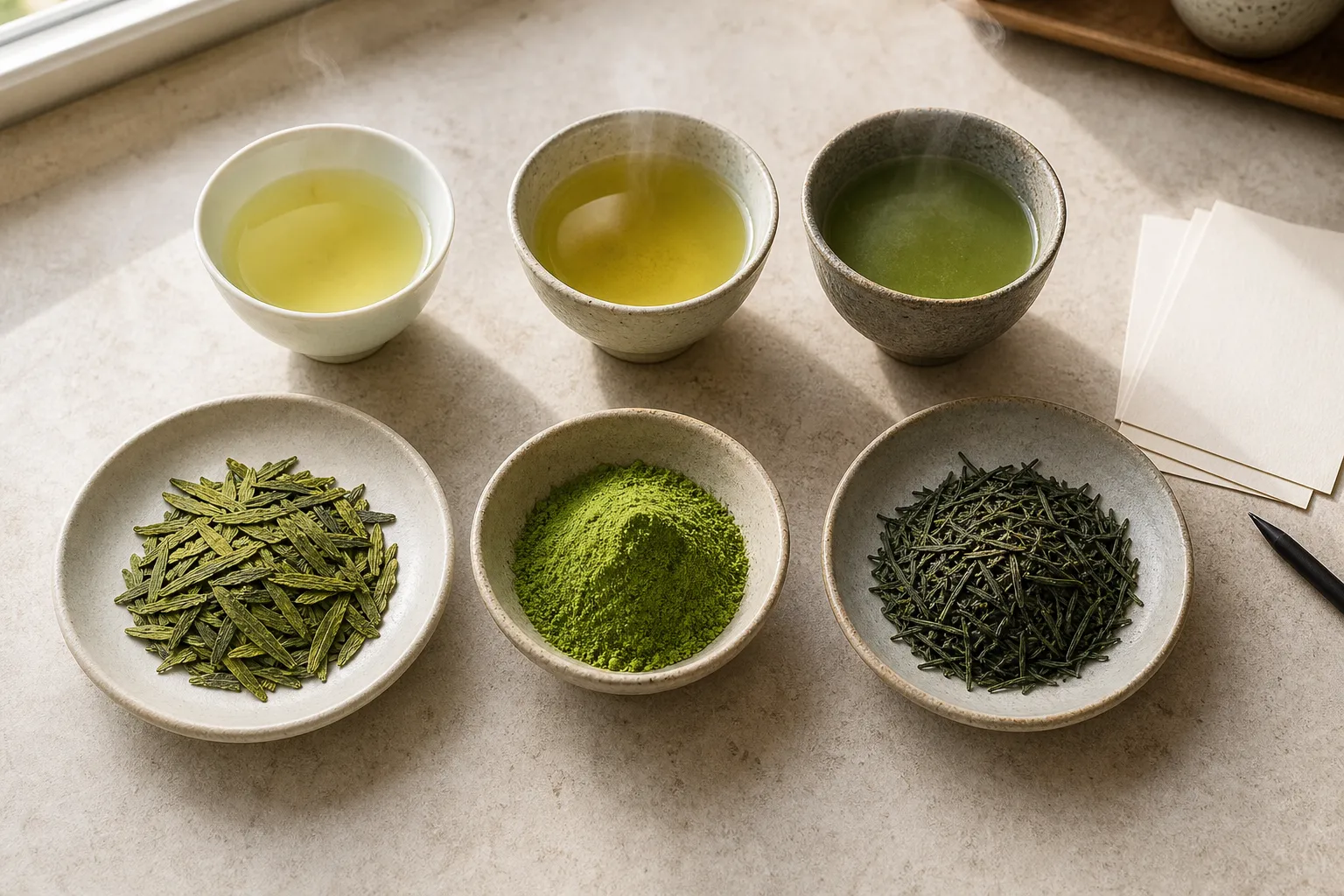
A Practical Map of Green Tea Varieties
Green tea is a broad family, not one flavor. Some cups lean grassy and brisk. Some feel rounder, sweeter, nuttier, or more savory. Some brew into a clear yellow-green liquor; others become opaque because the leaf has been ground into powder and suspended in the bowl.
At root level, the best way to compare green tea varieties is by form, processing style, taste direction, brewing behavior, and common use.
| Reader cue | What to look at first | What it can suggest | What it cannot prove alone |
|---|---|---|---|
| Whole flat leaf | Shape, evenness, breakage, aroma after warming | A Longjing-style tea may be intended | Exact origin, grade, harvest timing, or freshness |
| Fine green powder | Texture, color, clumping, foam after whisking | A matcha-style preparation | Quality, caffeine amount, or health effect |
| Slim, rolled, or twisted leaf | Leaf size, color, broken pieces, aroma | A steamed or rolled loose-leaf style may be intended | Full processing details without reliable context |
| Liquor color | Pale yellow, green-gold, deeper green, cloudy | Brew strength, leaf form, and water-time effects | A universal quality score |
| First-sip bitterness | Water heat, steep time, leaf amount, broken leaf | Brewing may need adjustment | That the variety is poor |
| Aroma | Grassy, marine, floral, nutty, toasted, vegetal | Processing, storage, and freshness clues | Precise cultivar, region, or harvest date |
A good first reading of green tea is practical. If the cup tastes harsh, check water and time before blaming the variety. If the aroma seems flat, ask about storage and age. If a label promises more than the cup can show, return to visible leaf, preparation guidance, and sourcing language that can be checked. A sourcing cue is not a wellness claim.
The Main Comparison Axes
Most types of green tea can be compared without turning every named tea into a full sub-guide. Four axes do most of the work: leaf form, heating style, flavor behavior, and daily use.
Leaf form
Changes how quickly flavor enters the water, how much texture appears, and how easy the leaf is to inspect. Test whole leaf, broken leaf, or powder.
Heating style
Changes aroma direction: greener, grassier, warmer, nuttier, more toasted, or more vegetal. Check pan-fired and steamed language against the cup.
Brewing behavior
Changes bitterness, sweetness, aroma lift, body, and second-infusion strength. Test water temperature, steep time, leaf amount, and pour speed.
Daily use
Changes whether the tea fits a bowl, mug, food pairing, iced cup, or slower tasting session. Test tools, time, cleanup, caffeine sensitivity, and storage habits.
Leaf form is the easiest starting point. Whole-leaf green tea is steeped and separated from the drink. You can watch the leaves open, smell the wet leaf, and adjust the next infusion. Broken leaf and fannings usually infuse faster because more surface area meets the water; the cup may be convenient and brisk, but less forgiving if steeped too long.
Powder changes the routine. With matcha, the leaf remains in the drink as a suspension. The bowl can feel thicker, more concentrated, and more textural. That does not make powder automatically better than whole leaf. It makes the decision different: bowl, whisk, water amount, and drinking pace matter more.
Liquor color helps, but it is not a verdict. A pale yellow-green cup may be delicate. A deeper green cup may be stronger or made from a different leaf form. A cloudy bowl may simply reflect suspended powder. Read color with aroma and taste, not alone.
Bitterness also needs care. A firm edge can be part of structure, especially in a stronger cup, but harshness often points to a mismatch between leaf, water, and time. Hotter water and longer steeping can increase body; they can also make roughness more obvious. Change one variable before judging the variety.
Major Green Tea Paths at a Glance
Named green teas are useful entry points. They tell you where to look first, not what to believe automatically.
| Path | First visible cue | Taste direction to check | Routine fit | Best next question |
|---|---|---|---|---|
| Longjing Dragon Well | Flat, pressed-looking leaf | Nutty, soft, pan-warmed, sometimes sweet | Calm loose-leaf cups, food-friendly sipping | Is the leaf shape consistent, and does the aroma stay clean? |
| Matcha | Fine powder | Concentrated, creamy or brisk, textured | Whisked bowl, latte, culinary use | Does powder texture and whisking match the use? |
| Sencha | Loose green leaf, often slim or rolled | Grassy, brisk, sweet, marine, or astringent | Daily steeping, kyusu-style brewing, cool or warm cups | How does water temperature change the edge? |
| Other loose-leaf green teas | Curled, rolled, twisted, flat, whole, or broken leaf | Floral, vegetal, toasted, sweet, or sharp | Flexible steeping and comparison tasting | What does the leaf show before the label speaks? |
| Blended or flavored green tea | Leaf plus added ingredients | Base tea plus added aroma | Casual drinking, iced tea, food pairing | Is the base tea pleasant when the added scent fades? |
| Roasted or darker green-tea styles | Deeper leaf color or roasted aroma | Toasted, warm, low-grass impression | Softer-feeling cups for some drinkers | Is the roast fresh or stale? |
These paths should stay flexible. Preparation and storage can make a familiar variety taste lively, dull, sweet, sharp, or thin. The label starts the tasting; the cup finishes the argument.
Longjing Dragon Well: Flat Leaf, Soft Warmth, and Label Limits
Longjing Dragon Well is often recognized by its flat leaf shape. That makes it a useful leaf-shape entry point for green tea drinkers: before the water arrives, there is already something to inspect. Look for evenness, breakage, dry aroma, and how the leaf opens once wet.
Longjing tea taste is commonly described with nutty, gentle, pan-warmed, and softly sweet language. Those words are useful only when the cup supports them. If the tea tastes sharp, dull, or dusty, the cause may be storage, water temperature, leaf amount, or product condition rather than the style itself.
A simple way to read Longjing is to use a clear glass, gaiwan, or small cup. Warm the vessel, smell the leaf, add water gently, and watch how quickly color and aroma appear. If bitterness rises too fast, reduce heat, shorten time, or use less leaf next time. Longjing flat leaves tell only part of the story.
The deeper reader path for this style is narrow and practical: what makes Longjing distinct, how flat leaf shape behaves in water, which taste words are useful, and where origin or grade language needs verification.
Matcha vs Loose Leaf Green Tea
Matcha and loose-leaf green tea ask for different habits. Matcha is powder suspended in water. Loose leaf is infused in water and then separated from the drink. That one difference changes texture, equipment, cleanup, flavor intensity, and how quickly the cup feels strong.
Matcha is prepared with a bowl, whisk, and enough water to suspend the powder. The drinker sees foam, opacity, clumping, and body. Loose-leaf tea is prepared by steeping leaves in a vessel, then pouring away from the leaf or removing the leaf. The drinker sees expansion, liquor clarity, aroma release, and infusion strength.
Neither format is automatically more serious. Matcha can feel vivid and concentrated, but it is sensitive to clumping, water amount, and whisking. Whole leaf can feel lighter or more aromatic, but it can become rough if brewed carelessly. The better choice depends on routine.
Choose matcha when...
- You want a thicker, direct bowl.
- You like whisking or making lattes.
- You need a powder for food or drinks.
- You accept more texture in the cup.
- You can use opened powder while it is fresh.
Choose loose leaf when...
- You want a clear infusion.
- You want multiple steeps.
- You want to compare aroma over time.
- You prefer to remove the leaf after steeping.
- You want more flexibility with water and time.
For caffeine and focus language, stay cautious. Both formats may contain caffeine, and some drinkers describe different energy experiences, but a variety page should not promise an effect. Serving size, sensitivity, food intake, sleep, medication, and personal health context can change the response.
Sencha and Steamed Green Tea Style
Sencha is often approached through flavor words: grassy, marine, sweet, fresh, brisk, or astringent. For many readers, it is also the tea that makes brewing behavior obvious. A short, careful steep may show sweetness and aroma. A stronger steep may show more body and a firmer edge.
That sensitivity makes sencha useful for learning. If the cup is too biting, change the next brew before blaming the variety. Use less leaf, cooler water, a shorter steep, or a faster pour. If the cup tastes thin, increase leaf amount or time carefully. Sencha sweetness changes with water and time.
Steamed green tea style is often contrasted with pan-fired green tea because drinkers notice different aroma directions. Steamed teas are commonly described through greener, grassier, more vegetal, or more marine language. Pan-fired teas are often described through warmer, nuttier, or more toasted language. These are tasting frames, not guarantees for every product.
A deeper sencha page should stay focused on flavor range, leaf appearance, brewing sensitivity, and how steamed style differs from pan-fired styles in the cup.
Pan-Fired vs Steamed Green Tea
Pan-fired vs steamed green tea is one of the most useful comparisons because it connects processing language with sensory expectation. The exact method behind a specific tea needs reliable verification, but the reader can still use the comparison as a tasting framework.
Green tea leaves are heated during processing to shape how the leaf continues to change. Different heating traditions are often associated with different aroma directions. Pan-fired teas may suggest warmer, nutty, toasty, or chestnut-like impressions. Steamed teas may suggest greener, grassy, vegetal, or sea-breeze-like impressions. Treat those words as starting points.
| Processing cue | What it may suggest | What to check in the cup | What it cannot prove |
|---|---|---|---|
| Pan-fired | Warmer aroma, nutty or toasted edges, softer vegetal notes | Dry-leaf aroma, first infusion sweetness, finish | Grade, exact origin, freshness, or health value |
| Steamed | Greener aroma, briskness, grassy or marine notes | Water sensitivity, astringency, color, aroma lift | Universal quality or suitability for every drinker |
Heating style can also suggest brewing patience. A delicate tea may become bitter with aggressive steeping. A stronger leaf may tolerate more heat. Instead of memorizing one universal temperature, observe how each tea responds. The best setting is the one that keeps aroma alive without pushing bitterness too far.
Processing is a clue, not a conclusion. A pan-fired tea can be flat. A steamed tea can be balanced. A package with impressive language can still hold tired leaf.
How to Choose a Green Tea Variety
Choosing a green tea variety becomes easier when you begin with the cup you actually want. Do you want a clear loose-leaf infusion, a whisked bowl, a grassy daily tea, a nutty afternoon cup, a tea for food, or a simple cold steep? That answer narrows the options faster than a list of famous names.
| Decision point | If you prefer this... | Look toward... | Watch out for... |
|---|---|---|---|
| Taste direction | Soft, nutty, rounded, food-friendly | Longjing-style or other gentle loose-leaf teas | Assuming the label proves freshness |
| Taste direction | Grassy, brisk, green, marine | Sencha or other steamed-style teas | Brewing too hot or too long |
| Texture | Thick, vivid, direct | Matcha | Clumping, stale powder, too much water |
| Routine | Repeatable mug or pot | Loose-leaf green tea | Oversteeping while distracted |
| Food use | Lattes, baking, smoothies, sauces | Matcha or culinary powder | Expecting culinary powder to behave like a careful drinking bowl |
| Sensitivity | Lower evening impact or gentler routine | Smaller servings, earlier cups, lighter preparation | Treating “green tea” as one caffeine level |
Taste words should stay humble. A label may say sweet, fresh, spring, ceremonial, or premium, but your water, storage, leaf amount, and timing decide what lands in the cup.
Preparation effort matters too. Some green tea common uses are simple: a mug, leaves, water, and a short steep. Others ask for more attention. Matcha needs powder handling and whisking. Sencha may reward careful pouring and timing. Longjing can be easy to observe in a glass, but it still responds to water temperature and leaf amount.
For caffeine, avoid precise assumptions unless a specific product provides credible information. Green tea can contain caffeine, but the amount varies by product, serving size, preparation, and whether the leaf is infused or consumed as powder. If caffeine affects sleep, heart rhythm, anxiety, pregnancy guidance, medication routines, or other higher-stakes decisions, use qualified guidance rather than a tea article.
For everyday choice, keep the test modest: drink smaller servings, avoid late-day cups if they disturb sleep, and notice your own response. Tea should fit the body you actually have.
Sourcing Cues Without Overreading the Label
Green tea buying often comes with attractive language: premium, ceremonial, estate, spring, first harvest, hand-picked, authentic, antioxidant-rich. Some terms may be meaningful in the right context; others may be market language without enough support. The reader’s job is not to become cynical. It is to ask what can be checked.
Useful buying questions:
- What form is the tea: powder, whole leaf, broken leaf, blend, or flavored base?
- Is the leaf shape visible, and does it match the style being described?
- Does the package give practical preparation guidance rather than only status language?
- Is there harvest, packing, or storage information?
- Does the aroma seem fresh when the container is opened?
- Are wellness-related claims restrained?
- Does the seller distinguish variety, origin, grade, and processing instead of blending them into one vague status word?
Origin and grade language can be helpful when it is specific and verifiable. It can also be used loosely. A famous place name on a package should invite a closer look, not automatic trust. The same goes for terms that describe ceremony, prestige, or market position. They may signal intended use; they do not guarantee taste.
For a root page, the practical path is simple: use labels as hypotheses. Then check the leaf, aroma, liquor, and brewing behavior. If the cup and the label disagree, believe the cup first.
Storage and Freshness Across Varieties
Green tea is sensitive to air, light, heat, moisture, and strong odors. The exact speed of decline depends on the product and storage, but the principle is steady: protect aroma and keep the tea away from conditions that make it dull or stale.
Whole-leaf tea usually belongs in a well-closed container away from light and heat. Matcha powder needs extra care because fine powder exposes more surface area and can pick up odors or lose brightness quickly once opened. Flavored teas bring another issue: added aroma can fade or dominate, while the base leaf may tell a different freshness story.
Use a storage tin or sealed pouch as a working tool:
- Keep tea away from steam rising from the kettle.
- Close the container quickly after measuring.
- Avoid storing tea beside spices, coffee, soap, or scented foods.
- Use smaller containers for opened tea if a large bag will sit for weeks.
- Label the opening date when comparing several teas.
- Smell before brewing; stale aroma rarely becomes lively in the cup.
Better storage protects what is already there. It cannot rescue tired leaf.
Wellness Language Belongs Inside Clear Limits
Green tea is often discussed in wellness contexts because it contains caffeine and naturally occurring compounds. A variety guide can acknowledge that interest without turning tea into health advice. The useful distinction is simple: taste and preparation are cup-level observations; health-outcome claims require stronger evidence and a more appropriate professional context than this article provides.
Some drinkers describe green tea as feeling gentler or steadier than other caffeinated drinks. That is a personal experience category, not a promise. Serving size, sensitivity, food intake, sleep, medication, and health context can all change the response.
Antioxidant language also needs restraint. Green tea is often discussed in relation to antioxidant compounds, but a page about varieties should not translate that into promised outcomes. A tea can be enjoyable, culturally rich, and part of a daily routine without carrying exaggerated claims.
The practical wellness boundary for choosing among green tea varieties is this: pick the tea you can prepare well, enjoy consistently, and tolerate comfortably. Leave higher-stakes health decisions outside the teacup.
A Simple Tasting Routine for Comparing Varieties
You do not need a formal tasting table to compare green tea varieties. You need consistency. Use the same cup size, similar water amount, and a short note format. Change one thing at a time.
Try this when comparing two or three teas:
- Look at the dry leaf or powder before reading the full label language.
- Warm the vessel briefly, then smell the leaf or powder if appropriate.
- Brew conservatively first, using less heat or less time than you might use for black tea.
- Note liquor color, aroma, body, sweetness, bitterness, and finish.
- Brew again with one small change: slightly more time, slightly cooler water, less leaf, or a faster pour.
- Decide whether the variety or the preparation caused the main problem.
- Store the tea carefully, then repeat another day before making a final judgment.
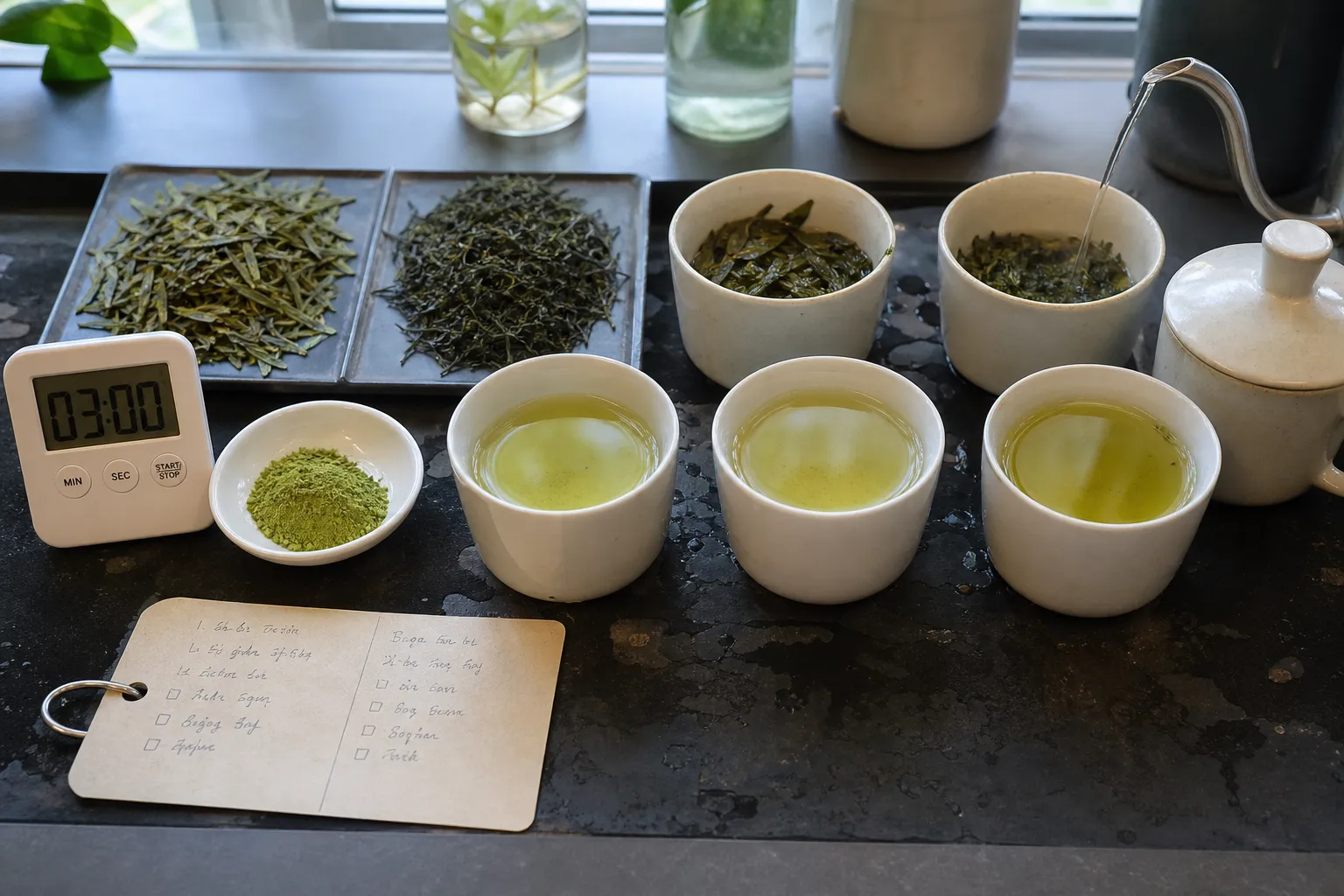
A short note is enough:
| Note field | Useful words |
|---|---|
| Leaf or powder | Flat, rolled, broken, fine, clumped, bright, dull |
| Aroma | Grassy, nutty, toasted, floral, marine, sweet, stale, sharp |
| Liquor | Pale, yellow-green, deeper green, clear, cloudy |
| Taste | Sweet, savory, brisk, bitter, soft, thin, rounded |
| Brewing change | Cooler water, shorter steep, less leaf, faster pour, fresher storage |
| Daily use fit | Morning bowl, work mug, food pairing, iced tea, slow session, occasional cup |
The note does not need to be poetic. It needs to help the next brew.
Common Mistakes When Comparing Green Tea
Treating the name as the answer
Longjing, matcha, sencha, and other green teas are useful starting points, but the cup still depends on leaf condition, storage, water, time, and preparation.
Chasing intensity
Stronger is not always better. A tea that tastes elegant at a lighter steep can become harsh when brewed like a darker tea.
Letting market language outrun observation
Words such as premium, ceremonial, estate, and spring deserve attention only when context and cup behavior support them.
Making wellness language carry the decision
Enjoyment, caffeine tolerance, and repeatable preparation are more useful than broad claims. A tea that fits your day is more valuable than a promise you cannot verify.
Reader Paths Into Deeper Green Tea Topics
A root page should help you choose the next question, not answer every branch in full.
| Next path | Use it when your question is... | What the deeper page should clarify |
|---|---|---|
| Longjing Tea Taste, Leaf Shape, and Daily Use | “Why do these flat leaves taste different from other green teas?” | Longjing tea taste, flat leaf inspection, pan-warmed aroma language, daily brewing choices, and sourcing limits |
| Matcha vs Loose Leaf Green Tea | “Should I buy powder or steeped leaf?” | Matcha texture, whisking, whole-leaf steeping, caffeine caution, flavor intensity, and routine fit |
| Sencha Tea Flavor and Steamed Green Tea Style | “Why is this cup grassy, sweet, marine, or sharp?” | Sencha tea flavor range, steamed green tea style, water-time sensitivity, and astringency control |
| Pan-Fired vs Steamed Green Tea | “How does processing language connect to aroma?” | Heating style, cup color, mouthfeel, bitterness expectations, and what labels cannot prove |
| How to Choose a Green Tea Variety | “Which tea fits my taste, tools, and day?” | A practical decision framework using flavor, effort, sensitivity, food pairing, and storage habits |
The right path depends on the problem in front of you. If the leaf shape is confusing, start with Longjing. If texture matters, start with matcha. If bitterness keeps appearing, start with brewing behavior.
The Bottom Line on Green Tea Varieties
Green tea varieties are best compared through visible form, cup behavior, and restrained language. Longjing Dragon Well invites attention to flat leaf shape and soft, pan-warmed taste cues. Matcha asks you to think about powder, texture, and whisking. Sencha draws attention to grassy, brisk, sweet, or astringent shifts in a steamed-style cup. Pan-fired vs steamed green tea gives a useful aroma framework, but it does not prove grade, origin, freshness, or wellness value.
Choose by taste direction, preparation effort, caffeine tolerance, storage needs, and daily use. Then test the decision in the cup. Put two teas side by side, keep the water gentle, change one variable, and write down what the leaf actually did. Taste is the clearest next step.