
Buyer framework
Tea Sourcing Guide for Green Tea Buyers
Dry leaves tell the first part of the story: shape, color, scent, broken edges, packaging, and the way the cup behaves after a careful brew. Tea sourcing is the practice of using those visible and sensory clues, along with harvest wording, origin labels, grade terms, and seller descriptions, to decide what is worth buying and what still needs proof.
For green tea buyers, the safest first move is simple: read the leaf before the claim. A named region, early harvest phrase, estate story, or premium label can be useful, but none of it replaces the tea in the hand, the aroma in the bag, or the taste in the cup.
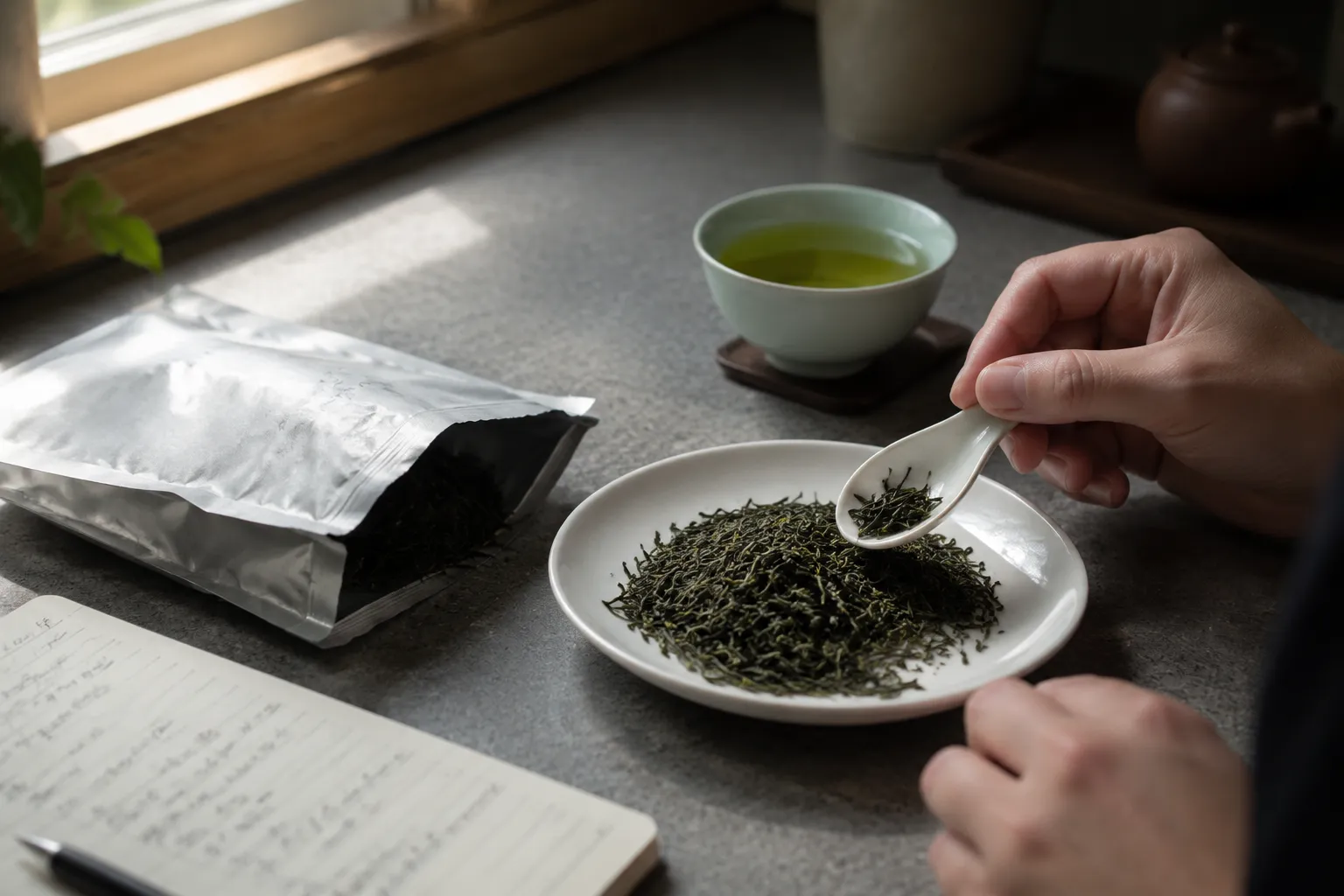
What Tea Sourcing Means for Green Tea Buyers
Green tea sourcing is not only about finding rare tea. For most buyers, it is a practical filter: which loose-leaf green tea looks fresh enough to try, which matcha description needs closer reading, which sencha bag seems well packed, and which Longjing Dragon Well claim sounds stronger than the visible evidence.
The buyer’s job is not to verify every label from the shelf. It is to sort signals by strength.
Strong first signals sit close to the tea itself
- Dry leaf appearance: shape, color, surface texture, stems, dust, and broken pieces.
- Aroma before brewing: fresh, grassy, nutty, marine, roasted, stale, flat, or muted.
- Packaging condition: seal, opacity, bag size, and whether the seller gives basic timing and storage information.
- Brewed cup behavior: liquor color, bitterness, body, aroma lift, aftertaste, and how quickly flavor fades.
- Label language: origin, harvest season, grade terms, cultivar words, processing style, and storage instructions.
These cues do not all carry the same weight. A leaf may look intact but smell dull. A polished origin story may still need sensory confirmation. A high grade name can be meaningful in one tea context and vague in another. The cup keeps you honest.
A sourcing cue is a clue, not a final verdict. “Spring,” “single origin,” “shade-grown,” “ceremonial,” “first flush,” “mountain,” and “estate” may describe something real, but the words alone do not show freshness, careful handling, or better taste.
This page stays within a buyer-facing boundary. It does not verify precise harvest calendars, regional claims, grade systems, storage science, caffeine amounts, antioxidant effects, supplier practices, or third-party label programs. Those claims need stronger public sourcing before they should be treated as settled. Here, the focus is the practical reading path: what to notice, what to ask, and when to slow down.
A Simple Framework for Green Tea Sourcing
Good green tea sourcing starts with five working questions. You do not need perfect answers before buying; you need enough clarity to keep one impressive phrase from carrying the whole decision.
This framework works for loose-leaf green tea, matcha, sencha, Longjing Dragon Well, and many everyday green tea purchases. The details change by tea type, but the order stays useful: leaf, season, origin, label, storage, cup.
Read Loose-Leaf Appearance Before the Sales Copy
Loose-leaf appearance is not the whole quality judgment, but it is the most immediate one. Before thinking about rare origins or high grade names, look at the dry tea under good light.
Whole, recognizable leaf shapes usually give you more to read than dust-heavy tea. Longjing Dragon Well is often encountered as flat leaves; sencha often appears as fine, needle-like pieces; many pan-fired or rolled green teas have their own visual language. Treat those examples as familiar buyer categories, not as a complete grading system.
What matters at the shelf level is coherence. A tea with many different colors, sizes, twiggy pieces, and powdery fragments may brew unevenly. Smaller pieces can release flavor quickly and may become bitter faster with hot water or a long steep. Larger intact pieces may open more gradually. Neither form is automatically better; the question is whether the leaf looks consistent for the tea being sold.
Color also needs caution. Bright green can suggest freshness in some teas, but color can be affected by processing style, cultivar, storage, lighting, and photo editing. A dull or brownish cast may raise questions, especially if the seller is making strong freshness claims. Pair color with aroma and brewing behavior before deciding.
Dry leaf aroma is one of the most useful everyday checks. Fresh green tea is often described through plant-like, nutty, marine, floral, roasted, or sweet notes, depending on the type. A flat, papery, musty, smoky, or stale smell is worth slowing down for.
Do not over-read one scent. A roasted green tea may smell toasted by design. A steamed tea may smell more grassy or marine than a pan-fired tea. Matcha may show sweetness, vegetal notes, or a muted edge depending on age, handling, and storage. The useful move is comparison: smell the dry tea, then smell the wet leaf after the first infusion. If the dry aroma promised freshness but the wet leaf smells tired, the cup will often explain the gap.
For a first cup, use a moderate brewing temperature and a short steep. Very hot water or a long steep can exaggerate bitterness and make sourcing judgment harder.
Four cup checks after the first brew
- Aroma lift: Does the scent rise clearly from the cup, or does it disappear quickly?
- Bitterness: Is it sharp from brewing conditions, or rough even with careful water and time?
- Texture: Does the cup feel thin, soft, brisk, creamy, or drying?
- Finish: Does the aftertaste remain pleasant, or does it flatten?
This is not laboratory evaluation. It is a buyer’s cup check. If a tea looks beautiful but brews flat, the sourcing story needs a second look.
Use Harvest-Season Cues Without Letting Them Decide Everything
Harvest season matters in green tea buying because freshness, aroma, texture, and price language are often tied to timing. But precise harvest calendars vary by region, cultivar, weather, and production style. Keep the cue useful and modest.
Harvest language can help you ask better questions:
- Is the harvest year visible?
- Is the seller naming a season, a specific picking window, or only using vague freshness language?
- Is the tea sold as a small seasonal batch or as a general stock item?
- Does the packaging date, best-use window, or storage note support the freshness claim?
- Does the price rise because of season language, and does the sensory quality make sense for you?
An early harvest phrase may suggest delicacy or prestige in some green tea contexts, but it should not become a shortcut. The cup still has to taste alive. A later harvest can be enjoyable if it is well handled, clearly described, and priced in a way that matches the drinking experience.
Freshness is not only harvest date. A recently harvested tea can lose aroma if exposed to heat, air, light, or moisture after production. An older tea may still be pleasant if it has been packed and stored carefully, though the most delicate notes may be more vulnerable.
For green tea buyers, the practical question is not “Is this the earliest possible harvest?” It is “Does the seller give enough timing and storage context for this tea, and does the cup still show life?”
That question protects you from paying only for seasonal language. It also keeps you open to good everyday tea that does not need a dramatic harvest story.
Tea Origin Cues Are Context, Not a Finished Answer
Tea origin cues can shape expectation. Country, region, village, estate, garden, cultivar, and terroir language may tell you how the seller wants the tea to be understood. For green tea sourcing, that language is worth reading carefully, but it should not carry more weight than it can hold.
A clear origin label may help you place the tea in a style family. Longjing Dragon Well, sencha, matcha, and other green teas carry cultural and processing associations that affect how buyers imagine leaf shape, color, aroma, and brewing. Region language can also help you compare teas inside a category: one seller may emphasize a mountain area, another a garden name, another a broader country label.
Useful origin language becomes more helpful when it is specific, consistent, and connected to product details. A label that names only a romantic landscape but gives no harvest, variety, processing, or storage context leaves more work for the buyer.
Origin language cannot, by itself, prove quality, freshness, careful storage, or a particular taste result. It also cannot replace documentation when a claim is unusually precise or commercially important.
This is the place to be strict without becoming cynical. A good origin note can be a real sourcing cue. A vague one can still describe a broad tea style. But a label that leans heavily on place while avoiding basic product information deserves a slower read.
Use a small test: if the origin phrase were removed, would the tea still look and sound worth trying based on leaf appearance, harvest wording, packaging, and brewing expectations? If not, the place name may be doing too much work.
Translate Green Tea Grades and Label Terms
Green tea grades and label terms often create the most confusion because they sound decisive. “Premium,” “ceremonial,” “reserve,” “first grade,” “competition,” “superior,” and similar words may appear on packages or seller pages. Some terms may have structured meanings in particular markets or tea types; others function more like positioning.
Because this page does not have selected external references for grade systems, it treats grade language as a reading problem rather than a verified hierarchy.
A grade term can help you ask:
- Is this tea meant for daily brewing, careful tasting, matcha whisking, cold brewing, food use, or gifting?
- Does the seller explain what the grade means in practical terms?
- Are the visible leaves, powder texture, aroma, and packaging consistent with the claimed level?
- Does the description name sorting, harvest, processing, or storage details, or only praise?
- Is the price being justified by observable tea qualities or by prestige wording?
For matcha, grade words are especially easy to over-read because buyers often associate fine powder, color, foam, and use case with quality. Matcha foam is a preparation signal; it can show whisking behavior, powder texture, and water handling, but it does not verify the whole sourcing story. For loose-leaf tea, a neat grade name still needs the cup.
Marketing language limits are not a reason to distrust every seller. They are a reason to separate description from proof.
Watch for descriptions that rely mostly on emotional status: rare, elite, ancient, exclusive, perfect, pure, or extraordinary without enough product detail. Also slow down when wellness-adjacent language becomes the main reason to buy. Green tea contains caffeine and is often discussed in relation to antioxidants, focus, and daily energy, but those topics belong in general context, not as promised outcomes. People respond differently to caffeine, and health-related decisions belong with qualified guidance.
A grounded seller description can still be warm and inviting. It should also give the tea enough practical detail to stand on its own.
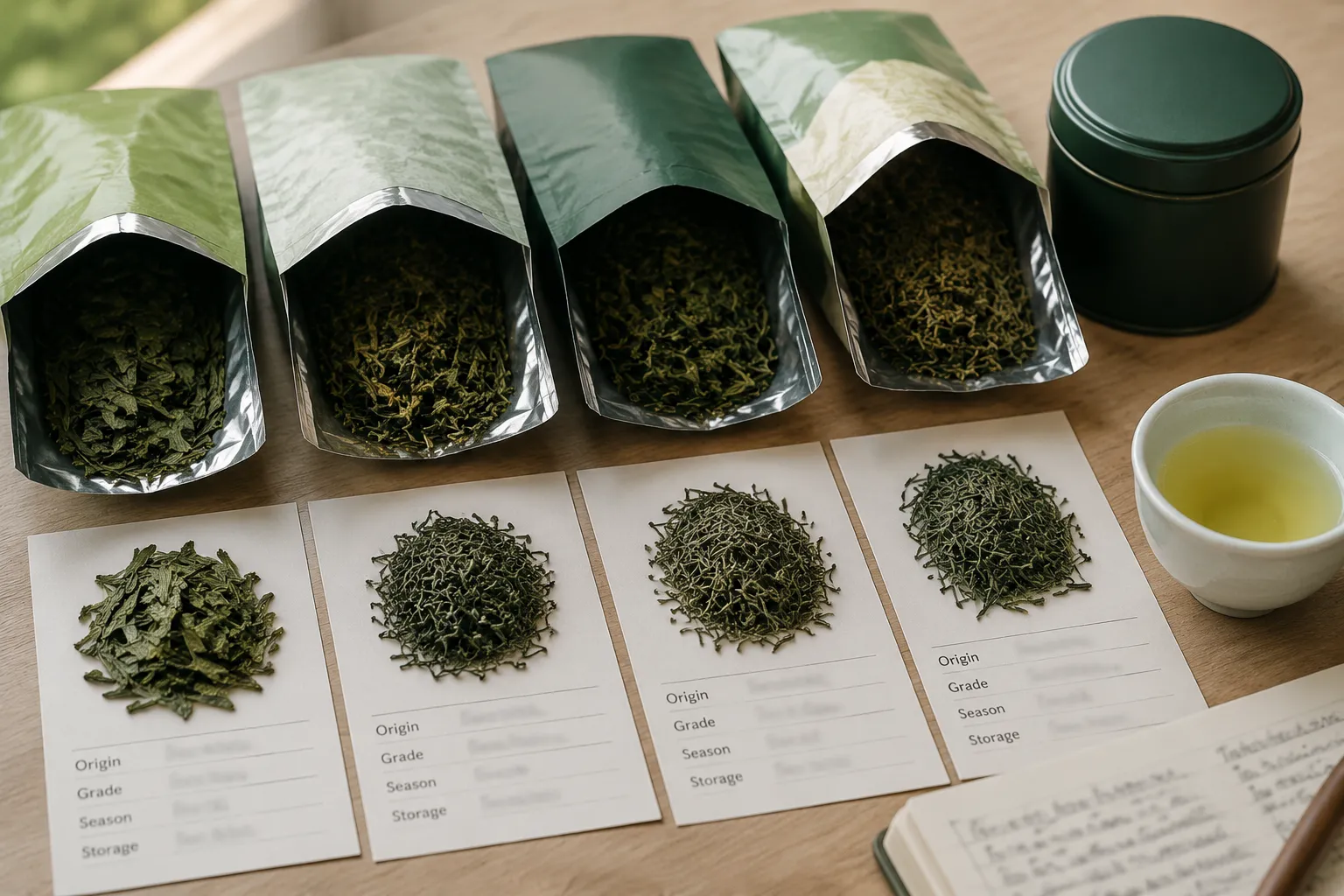
Storage Is Part of Sourcing
Green tea sourcing does not end when the tea leaves the producer. The buyer receives the result of harvest, processing, packing, transport, storage, and handling. Even without precise storage science in the available source set, the practical direction is clear enough for everyday buying: aroma is fragile, and storage conditions matter.
Before buying, look for packaging that suggests the tea has been protected from the most obvious freshness pressures: air, light, heat, and moisture. An opaque, well-sealed bag or tin is usually more reassuring than a loose, clear, frequently opened container. Smaller quantities can be easier to finish while the tea still smells lively.
Read the packaging for:
- Harvest or packing date if provided.
- Storage instructions that match the tea’s delicate nature.
- Resealable structure or inner pouch.
- Bag size in relation to your drinking pace.
- Seller explanation of how the tea is stored before sale.
None of these cues prove perfect handling. They simply reduce uncertainty. A beautiful bag with no timing detail may still hide tired leaf. A plain bag with clear dates and good aroma may be a better buy.
Once opened, green tea becomes your responsibility. If you buy more than you can drink in a reasonable time, the sourcing decision becomes a storage problem. A storage tin, clipped pouch, cool cupboard, and smaller refill rhythm can help protect aroma better than leaving a large bag open near heat or sunlight.
The buying lesson is practical: source for your real routine. A delicate tea bought in a large amount may disappoint if you drink it slowly. A modest daily sencha or pan-fired green tea may serve you better if it stays aromatic to the last cup.
Match the Tea Type to the Right Sourcing Cue
Different green tea forms ask for different reading habits. A sourcing framework should flex without pretending that all teas show quality in the same way.
This comparison is a routing tool, not a ranking. The best tea for a morning mug may not be the tea you would choose for a quiet tasting session. The best matcha for a latte may not behave like a fine powder meant for plain whisking. Use case matters.
Evaluate Sellers Without Pretending You Can Verify Everything
Supplier-evaluation guidance can become too confident very quickly. From a buyer’s desk, you may not be able to verify farms, batches, storage rooms, or transport conditions. What you can evaluate is how the seller communicates and whether the tea itself supports the description.
A helpful seller usually gives practical details. The exact set will vary, but useful information may include tea type, origin level, harvest or packing timing, leaf style, processing description, storage advice, brewing guidance, and clear use case.
The best descriptions do not ask you to trust praise alone. They help you predict the cup.
A thin description is not always a sign of bad tea, especially in small shops or traditional settings where labels may be brief. But when the price or claim strength rises, the detail should rise too. A costly tea with vague wording deserves questions.
If you contact a seller, ask questions that connect directly to drinking:
- When was this batch packed or received?
- How should it be stored after opening?
- What brewing temperature and steep time does the seller suggest for the first cup?
- Is the tea better for plain brewing, cold brewing, latte use, or cooking?
- If the origin or grade wording is central to the price, what details can the seller share?
The point is not to interrogate every seller. It is to avoid buying from a page that gives you only atmosphere. A good answer should help you brew and store the tea more wisely.
Some claims ask the buyer to accept more than the visible evidence can support. Strong place claims, rare harvest stories, high grade labels, wellness-adjacent language, and dramatic freshness promises all deserve proportion.
A practical rule: the stronger the claim, the more you should expect supporting detail. If that detail is absent, treat the claim as marketing language and return to the leaf, aroma, packaging, and cup.
A Practical Buying Sequence for Green Tea
When you are comparing two or three teas, use a steady sequence. It keeps one attractive phrase from taking over the whole decision.
- 1. Name the tea type: Identify whether it is Longjing Dragon Well, sencha, matcha, blended green tea, roasted green tea, or general loose-leaf green tea. If the tea type is unclear, origin, grade, and brewing language become harder to interpret.
- 2. Check the leaf or powder: For loose-leaf tea, look at shape, color, consistency, stems, and dust; for matcha, look at texture, color, clumping, aroma, and packaging. Visible form gives you the first reality check before seller language takes over.
- 3. Read timing and storage: Look for harvest year, packing date, storage guidance, and package size. Missing timing does not make the tea bad, but it lowers confidence.
- 4. Translate origin and grade terms: Ask what each phrase actually tells you. A region can suggest style, and a grade can suggest use; neither completes the decision.
- 5. Compare claim to detail: Match dramatic language against concrete product information. Stronger claims should come with clearer details.
- 6. Brew gently first: Use water and steep time that give the tea a fair chance. Bitterness may come from brewing before it comes from the leaf.
- 7. Record one note: Write a short line about leaf shape, dry aroma, timing language, and cup behavior. Over time, your own notes become more useful than chasing every label term.
A useful note can be simple: “Fresh grassy aroma, fine broken leaf, quick bitterness,” or “Flat leaves, nutty scent, soft first cup, fades on second steep.” These small records build a sourcing memory. They show what your kettle and cup have already taught you.
Common Sourcing Mistakes to Avoid
Green tea buying becomes easier when you notice the traps that repeat across shelves and seller pages.
Treating famous names as proof
Use a famous tea name as a style clue, then check leaf appearance, aroma, harvest context, origin clarity, and cup behavior.
Buying more than your routine can protect
Choose a quantity that fits your drinking pace, especially for teas you want for freshness.
Confusing bitterness with quality
Try gentler water and shorter steep time before blaming the tea; if it stays rough and flat, return to the sourcing question.
Letting wellness language lead the purchase
Keep caffeine, antioxidants, focus, and daily routine language in general context; do not let it replace taste, storage, and product clarity.
Expecting one cue to settle everything
Look for a cluster of signals: aroma, leaf coherence, timing, packaging, seller detail, and cup performance.
Better sourcing is rarely one dramatic discovery. It is a set of small checks that point in the same direction.
Reader Paths: Where to Go Next
This root page gives the map. Narrower pages should answer the next decision without making you read the entire sourcing topic again.
These are entry points, not shopping commands. A matcha buyer might begin with grade terms, then move to storage. A Longjing Dragon Well buyer might begin with origin language, then check loose-leaf appearance. A sencha drinker might begin with freshness and brewing behavior.
Evidence Boundaries for This Page
This page is written as a practical editorial framework, not as a source-backed verification report. The current material available for this article does not include public references, standards documents, academic sources, regulator materials, reputable tea education sources, curated firsthand sourcing experience, or verified seller examples. That matters.
Before relying on precise claims about harvest calendars, regional naming, grade systems, cultivar details, processing methods, third-party label programs, storage science, caffeine levels, antioxidant context, or supplier practices, stronger source material should be added. Commercial shop pages, affiliate guides, marketplace ratings, brand copy, short social posts, and forum fragments can show how buyers encounter language, but they should not carry the burden of proof for quality, origin, freshness, or wellness claims.
The useful stance for now is measured: observe the tea closely, read the label carefully, and keep claim strength proportional to the evidence you can see.
The Sourcing Note to Carry Into Your Next Cup
A good green tea purchase does not need a perfect story. It needs enough alignment: the leaf looks coherent, the aroma has life, the harvest or packing language is not empty, the origin wording is specific enough to be useful, the grade term fits the intended use, and the package gives the tea a fair chance after opening.
When those cues line up, the tea is worth a careful first brew. When one cue is doing all the work, slow down.
For the next tea you consider, make one small note before brewing: leaf shape, dry aroma, date or season wording, and the strongest claim on the package. Then let the water test it. The cup will not answer every sourcing question, but it will answer the one that matters first: whether this tea still tastes alive.