
Taste note
What Does Longjing Tea Taste Like
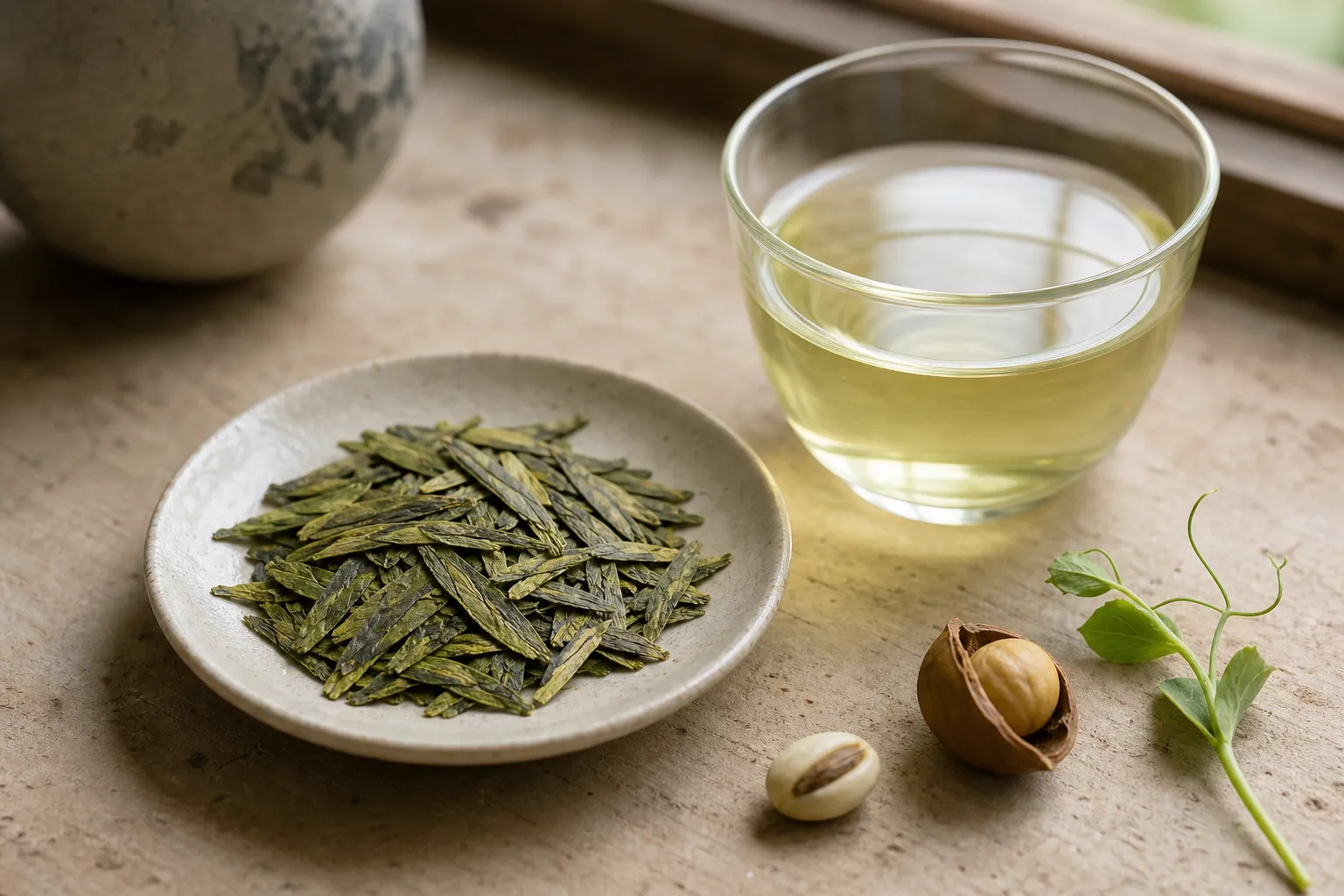
Longjing tea taste is usually gentle, rounded, and clean: a little nutty, softly vegetal, lightly sweet, and smoother than many sharper green teas. The flavor words people most often reach for are chestnut, toasted bean, tender spring greens, and a quiet sweet finish. A good cup should not taste smoky, sour, stale, or aggressively bitter.
There is one important boundary. The research packet for this page did not include usable public sources, specialist tasting records, or firsthand brewing notes, so these descriptions should be read as common tea-tasting language rather than proof that every Longjing will taste the same. Leaf quality, freshness, storage, water temperature, and steep time can move the cup quickly.
upward
Read the full overview first
Use the broader guide first if you need the full scope before this page.
The Short Flavor Profile
Soft roasted-nut impression
The classic Longjing flavor profile starts with a soft roasted-nut impression. “Chestnut” does not mean the tea tastes like sweet chestnut paste or dark roasted nuts. It is more like a warm, dry nuttiness sitting under the green tea freshness.
Toasted bean note
A second layer is often described as toasted bean. Depending on the leaf and the drinker’s vocabulary, that can suggest soybean, mung bean, or a lightly warmed grain note. It is a quiet savory note; not as brothy as some shaded Japanese teas, and not as marine as many sencha cups can be.
Tender green side
The green side of Longjing is usually tender rather than wild. Vegetal notes may suggest young greens, pea shoots, or fresh-cut stems, but the cup should still feel measured. If the green note turns harsh, metallic, or boiled-spinach-like, look first at brewing, storage, or leaf condition.
Quiet sweetness
Sweetness is part of the appeal, but it is rarely sugary. It often appears after the first sip, sitting at the sides of the tongue and returning in the aftertaste as a soft, clean finish.
Aroma, Body, And Aftertaste
Longjing tea aroma often says more than the liquor color. Dry leaves may smell warm, nutty, bean-like, or softly green. Once water reaches the leaf, the aroma can turn rounder and more savory; this is where the toasted bean note may become easier to notice.
The body is usually light to medium. Longjing should not feel thick like matcha or deeply soupy tea. A pleasing cup feels smooth, more satin than syrup. If it tastes completely thin, the leaf may be old, under-leafed, or brewed too lightly. If it feels rough and drying, the water may be too hot, the steep too long, or the leaf itself may be coarse.
The aftertaste matters because Longjing can seem quiet at first. A clean cup may leave a mild nutty sweetness, a green echo, or a faint savory finish. It should not need dramatic language. Often, the best sign is a small return of warmth and sweetness after swallowing.
Bitterness should stay light, if it appears at all. Some bitterness can give green tea shape, especially with hotter water or a longer steep, but it should not dominate. When bitterness arrives first and stays longest, the cup is no longer showing the rounded Dragon Well tea flavor most drinkers are looking for.
Why One Longjing Can Taste Different From Another
The same label can cover very different cups. Without stronger sourcing material, it would be too confident to make exact claims about origin, grade, harvest timing, or processing. Still, several observable cues can explain why two Longjing teas may not taste alike.
Freshness
Freshness is one major clue. Useful Longjing freshness cues are sensory before they are documentary: a lively dry-leaf aroma, a clear green or nutty scent after warming, and a cup that opens quickly rather than tasting flat. Stale tea may still brew, but the flavor can collapse into cardboard, dull hay, or generic dryness. Better storage protects aroma; it cannot bring back what has already faded.
Leaf condition
Leaf condition also changes the cup. Broken pieces and dust release flavor quickly, which can make the brew stronger but also more bitter or rough. More intact leaves usually give the drinker more room to adjust the steep. Leaf shape is a cue, not a guarantee.
Water
Water changes Longjing faster than many beginners expect. Hotter water can pull out more body and a stronger green bite. Cooler water can make the cup softer and sweeter, but it may also taste weak if the leaf amount is too low. The useful question is not “What is the one correct temperature?” It is “Does this water show nuttiness and sweetness before bitterness?”
Time
Time matters in the same way. A short steep may emphasize aroma and gentle sweetness. A longer steep may bring more body, deeper vegetal notes, and more astringency. If a cup tastes flat, add time or leaf before blaming the tea. If it tastes sharp, reduce heat or time before giving up on the batch.
Common Confusion About Longjing Taste
It is not dark-roasted flavor
One common mistake is expecting Longjing to taste roasted like roasted oolong or coffee. Chestnut Longjing flavor is a soft tea descriptor, not a dark roast promise. If the cup tastes charred, smoky, or heavy, that is not the rounded nutty note usually associated with Dragon Well.
It is not sencha
Another mistake is expecting it to taste like sencha. Sencha can be brighter, grassier, more marine, or more steamed-vegetable in character, depending on the tea and brew. Longjing is usually discussed in a warmer lane: flatter, nuttier, softer, and less sharply green. Both are green tea, but they do not speak with the same accent.
It is not matcha texture
Matcha is a different comparison again. Matcha is powdered tea suspended in water, so texture, intensity, and foam shape the drinking experience. Longjing is loose-leaf tea infused in water. It can have savoriness and sweetness, but it should not feel like a bowl of powdered green tea.
Premium wording is not proof
Premium language can also confuse the cup. Words such as early, spring, origin, grade, handmade, or authentic may be useful sourcing cues when properly supported, but they are not automatic proof of flavor. Taste still has to show itself in aroma, body, bitterness, and finish.
A Simple Cup Check
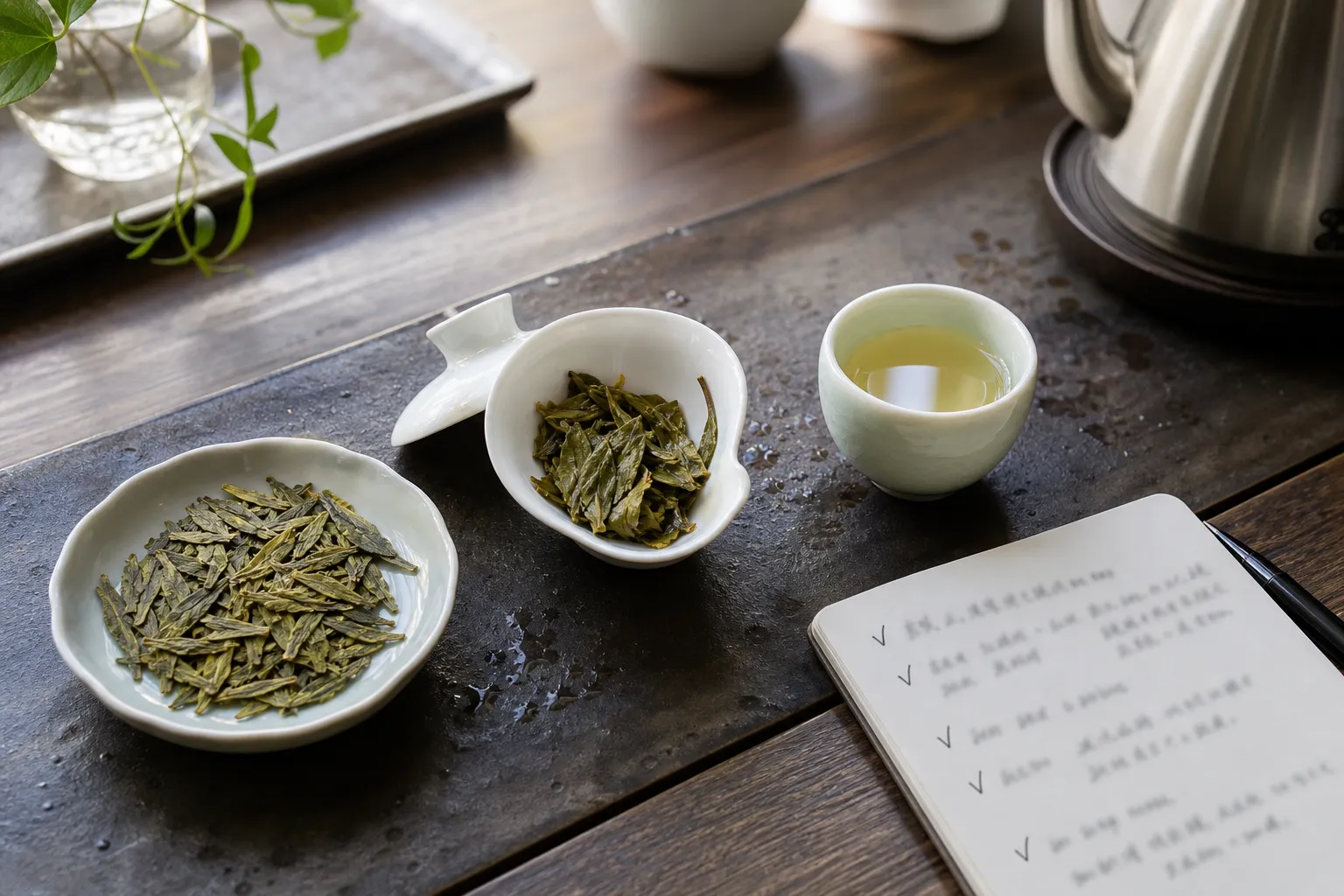
Use the cup as a small diagnostic tool. You do not need a formal tasting session to understand what Longjing tea tastes like; you need to notice the sequence.
- First, smell the dry leaf. Look for a clean green, nutty, or bean-like impression. If the aroma is dusty, stale, sour, or nearly absent, the cup may struggle before water is added.
- Second, smell the wet leaf after the first pour. A warm bean note, soft greens, or a toasted-nut edge can appear here even when the liquor tastes subtle.
- Third, take a small sip before judging sweetness. Let it sit for a moment. The first impression may be green and light; the sweeter nutty part may arrive after swallowing.
- Fourth, track the finish. Does the cup leave gentle sweetness, light nuttiness, and a clean mouthfeel? Or does it leave rough bitterness, drying edges, and little aroma? That answer tells you whether to adjust brewing or question the leaf.
- Fifth, change one thing at a time. If the tea is too bitter, lower the water heat or shorten the steep. If it is too thin, use slightly more leaf or extend the steep. If it stays dull through several careful adjustments, freshness and storage may be the real issue.
What This Page Cannot Prove
This page can explain common sensory expectations, but it cannot verify a specific Longjing’s origin, grade, harvest date, processing method, or authenticity. The supplied material contains no usable public citations, no specialist tasting notes, and no curated firsthand experience. Any precise claim beyond cup-level observation would need stronger sourcing.
It also does not support wellness claims. Longjing is a green tea and may contain caffeine like other teas, but this page is not using evidence about antioxidants, focus, digestion, energy, or broader wellness effects. For this question, the better path is simpler: stay with taste.
If a seller promises a perfect chestnut note, use that wording only as something to look for, not as proof. If your cup tastes gently nutty, softly vegetal, clean, and lightly sweet, it sits within the common Longjing tasting frame. If it tastes harsh, stale, smoky, or flat, start with water, time, and storage before trusting the label’s story.
The Cup To Look For
A satisfying Longjing cup is usually quiet but not empty. It may open with warm chestnut or toasted bean, move into tender green notes, and finish with a gentle sweetness that feels cleaner than it is loud. The best clue is balance: nutty without being roast-heavy, vegetal without being harsh, sweet without being sugary, and bitter only at the edge.
Taste the next cup in that order: aroma first, then body, then bitterness, then aftertaste. Longjing flat leaves tell only part of the story. The cup finishes the sentence.