
Longjing gift meaning
Why Longjing Tea Is Given as a Gift
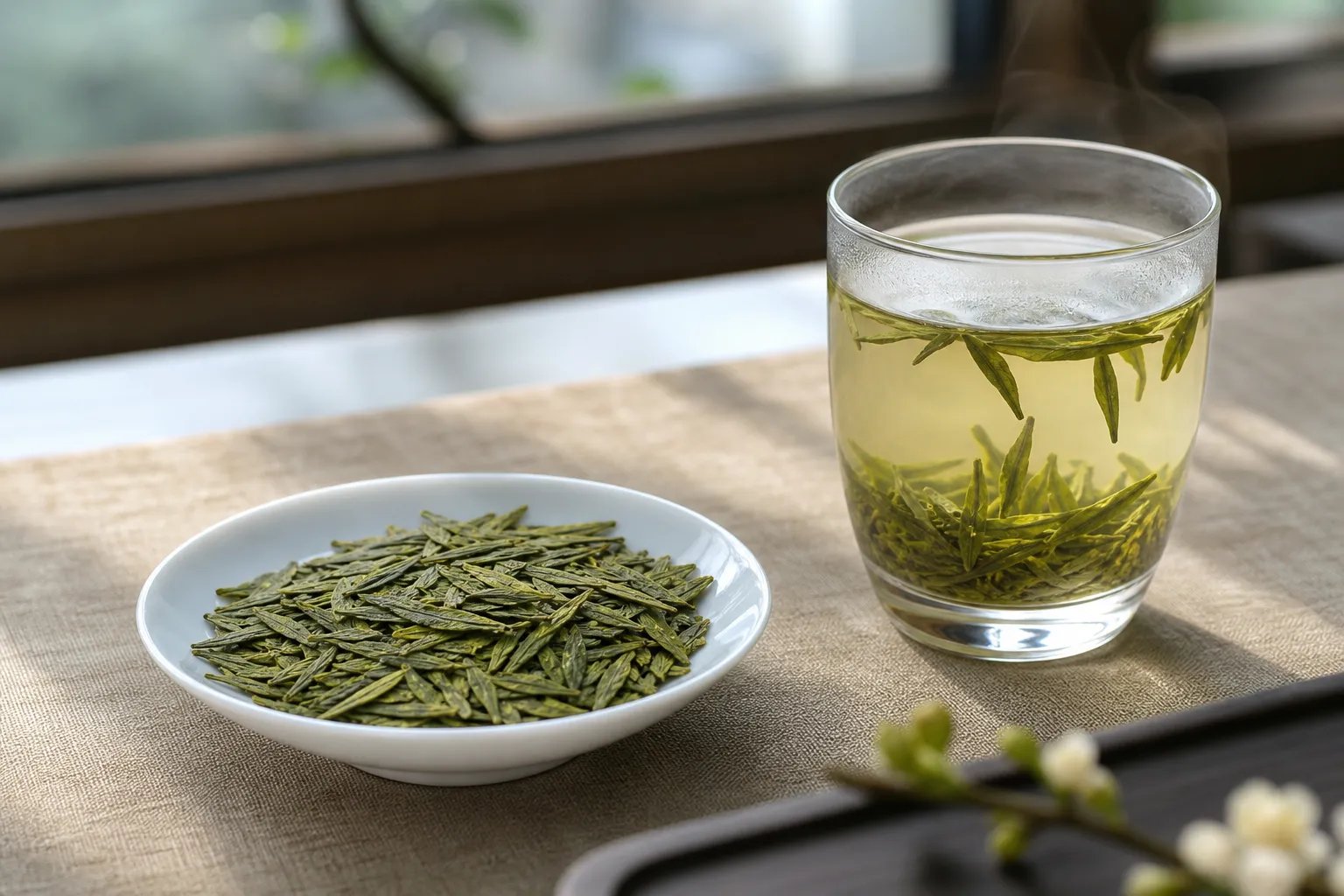
Longjing tea is given as a gift because it can show care before anyone explains the symbolism: flat green leaves, a clean spring aroma, a pale yellow-green cup, and a clear link to Hangzhou or West Lake. The Longjing tea gift meaning is not one fixed message. In many settings, a Dragon Well tea gift is read as a quiet offering of taste, season, place, and hospitality.
The useful way to read the gift is simple: leaf first, story second. If the tea looks tidy, smells fresh, brews cleanly, and is packed well enough to protect its aroma, the gesture feels considered. If the box is grand but the leaf is dull, the meaning weakens.
upward
Start with the broader guide
Use the broader guide first if you need the full scope before this page.
The short reading
A Longjing gift usually says the giver chose something calm, specific, seasonal, and drinkable. That reading is strongest when the tea itself supports it: tidy leaves, fresh aroma, clean storage, and a cup that tastes gentle rather than tired.
The Gift Meaning Starts with a Tea That Looks Chosen
Longjing Dragon Well has a gift quality because it is easy to present as something selected with attention. The dry leaves are commonly described as flat, narrow, and neat rather than curled, twisted, or heavily broken. In the cup, well-kept Longjing is often light, fragrant, and gentle, with sweet vegetal, bean-like, chestnut-like, or grassy notes depending on the leaf and brewing.
That makes it different from a gift chosen only for price or packaging. A careful Longjing gift suggests that the giver noticed the recipient’s taste for clean green tea, the season of the leaf, and the way the tea will actually drink. It says, quietly, “I chose something specific.”
The sensory side matters because tea gifting is not only symbolic. The recipient can open the tin, smell the leaves, and see whether the tea still feels alive. A flat-pressed green tea with a tired aroma, brownish cast, or harsh bitterness may not carry the same feeling, even if the label uses impressive place names.
A good Longjing gift lands through the cup.
West Lake and Hangzhou Add a Sense of Place
Longjing is strongly associated with Hangzhou, West Lake, Zhejiang, and names such as Longjing Village, Dragon Well, Shi Feng, and Lion’s Peak. For many tea drinkers, that place identity is part of why a West Lake Longjing gift feels more specific than a general green tea gift. It carries a location in the name, not just a flavor category.
That does not mean every package using West Lake, Xihu, Shi Feng, or Dragon Well wording should be read the same way. The available public material supports the broad association between Longjing and Hangzhou or West Lake identity, but it is not enough to confirm every label, origin story, or protected-origin claim. Origin wording is a sourcing cue, not proof by itself.
This distinction changes the gift meaning. If the recipient knows Longjing, the place name may add warmth: spring tea, Hangzhou landscape, regional craft, or a memory of travel. If the recipient does not know the geography, the tea may simply read as a clean, carefully packed green tea.
The same tin can speak differently to different people. For a Longjing drinker, “West Lake Longjing” may sound precise. For a casual tea drinker, the leaf, aroma, and presentation may speak first.
Freshness Makes the Gift Feel Timely
Longjing is often valued as a fresh green tea, and that freshness is one reason it appears in gift settings. Spring harvest language, including Mingqian or pre-Qingming wording, often appears in Longjing gift presentation. It can suggest early-season attention, but it should still be read carefully: harvest wording is a cue to ask about freshness, storage, and sourcing, not a quality guarantee by itself.
A fresh Longjing gift invites the recipient to brew soon rather than save the tea for years. Green tea generally shows best when protected from heat, light, air, and moisture. If the leaves smell lively and the cup has a clean vegetal sweetness, the gift feels immediate. It is a seasonal cup waiting to be made.
This is why a smaller, well-kept package can be more meaningful than a large box of tired tea. Presentation matters, but freshness carries the experience. A good tin seals well, gives useful sourcing or harvest context, and encourages the recipient to drink the tea while the aroma is still present.
Fresh leaf is part of the message.
Craft Adds Respect Without Needing Hype
Longjing is often discussed through craft language: flat shaping, pan-firing, careful handling, and a cup that can show gentle sweetness rather than heavy roast. Heritage-adjacent material also places West Lake Longjing tea-making within a wider conversation about traditional tea craft. That context helps explain why the tea can feel gift-worthy, but it should stay modest.
The point is not that every tin of Longjing proves rare handwork or high status. The point is that the style invites attention to handling. The flat shape is visually distinct. The aroma can be delicate. The brew can turn coarse if the water is too hot or the leaf is stale. A giver who chooses it well is offering a tea that rewards care.
That is a different kind of respect from a gift chosen only for display. Longjing asks the recipient to notice small things: how the leaves settle in the glass, how the first infusion smells, how sweetness appears after the grassy edge, and how bitterness changes with water temperature.
Craft is part of the meaning, but the leaf still has to support the claim.
What Longjing Can Signal in Tea Gifting
In Chinese tea gifting tradition, tea can be a polite, useful, and shareable offering. Longjing may be chosen because it can signal respect, hospitality, refined taste, seasonal attention, or a connection to Hangzhou and West Lake. These are possible readings, not fixed rules.
Relationship changes the tone. A family gift, host gift, visit gift, and business gift do not carry the same weight. A tea friend may read Longjing through harvest and origin. A host may appreciate it as something to brew for guests. A casual recipient may simply see a neat, pleasant green tea.
Longjing tea symbolism is strongest when it stays close to what the tea can actually show. The flat leaves suggest careful processing. The light liquor suggests restraint. The aroma suggests freshness. The place name suggests regional identity. Together, these can make Longjing feel like a respectful gesture without leaning on grand claims about status or history.
The simplest reading is often the best: Longjing says the giver chose something calm, specific, and drinkable.
Packaging Helps the Gesture, but It Can Mislead
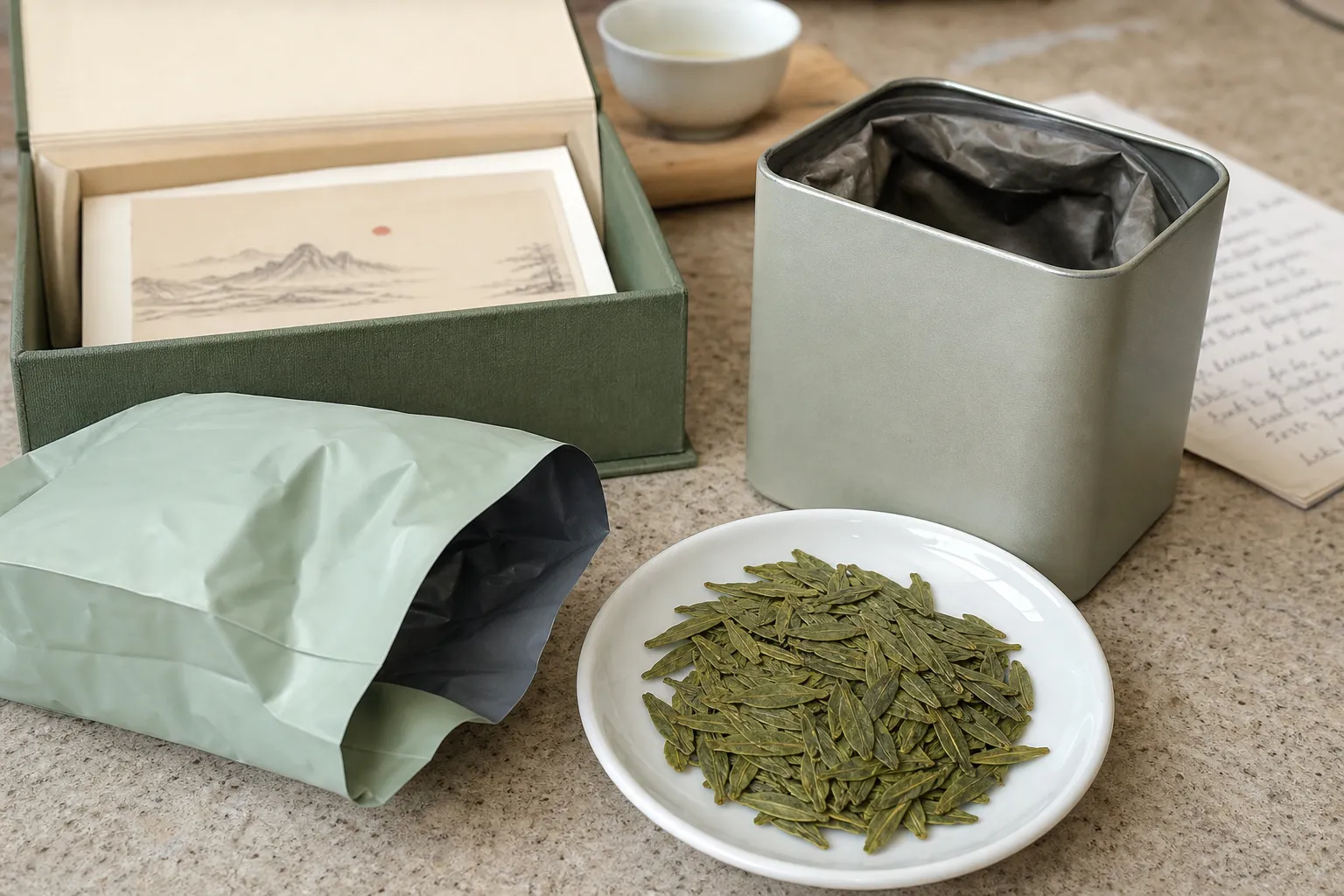
Longjing gift presentation often includes tins, boxes, origin names, harvest terms, and polished design. Presentation can help because green tea is fragile; good packaging should protect aroma and make the tea easy to store. It also gives the recipient a first set of clues before brewing.
But packaging is one of the easiest places to overread Longjing. A beautiful box does not prove freshness. A flat leaf shape does not prove West Lake origin. A high price does not prove better taste. Words such as famous, treasured, award-winning, imperial, or diplomatic may appear in market language, but this source pool does not support using them as factual proof.
A better reading of a Longjing gift box is practical
- Does the package keep light, air, and moisture away?
- Does it give enough origin or harvest context to ask better questions?
- Do the leaves look reasonably even rather than dusty or broken?
- Does the dry aroma still feel fresh when opened?
- Does the cup taste clean rather than stale, smoky, or sharply bitter?
These checks do not confirm everything, but they keep the gift grounded. Read the leaf before the claim.
When Longjing Is Not the Right Gift
Longjing is not automatically the right tea gift for every person. Some recipients prefer roasted oolong, black tea, pu-erh, matcha, sencha, or herbal infusions. Some drinkers are sensitive to caffeine and may avoid green tea later in the day. Some may not have the habit or tools to brew loose-leaf tea comfortably.
A Dragon Well tea gift can also feel less suitable if the giver relies only on prestige language. If the recipient does not drink green tea, a famous origin name may not help. If the tea has been stored poorly, the gift may taste flat. If the box is large but the leaf is ordinary, the gesture may feel more decorative than thoughtful.
The best Longjing gift is not necessarily the most expensive one. It is the one that fits the recipient: fresh enough to enjoy, clear enough in presentation, and not burdened with claims the tea cannot prove.
A respectful gift still has to be drinkable.
A Short Caution for Corporate Longjing Gifts
Longjing can appear in business and corporate gift settings because tea is useful, shareable, and culturally familiar in many Chinese contexts. Still, this page is not a business-etiquette guide. The practical caution is narrower: expensive, policy-sensitive, negotiation-timed, cross-border, or public-sector-adjacent gifts may need extra care.
If a Longjing corporate gift is being considered, the giver should follow local rules, customs limits, and the recipient organization’s gift policy. This matters more when the gift is costly, given near a decision point, or presented in a way that could be misunderstood. A modest tea gift and an expensive status package can be read very differently.
For personal gifting, the tea question is usually simpler: Is the Longjing fresh, well packed, and suitable for the recipient’s taste? In business settings, timing and policy matter too.
The Evidence Limit: Meaning, Not One Universal Meaning
The public source pool for this topic is thinner than the market language suggests. Independent material can support Longjing’s sensory and quality context; heritage-adjacent material can support a cautious craft frame; compliance material can support a narrow business-gift caution. It does not support one universal explanation of Longjing tea gift meaning.
That limit is useful. It keeps the article from turning into sales copy. Longjing is often given because it combines recognizable place identity, careful green-tea craft, freshness, and a quiet respect gesture. But the meaning changes with the giver, the recipient, the setting, the tea’s condition, and how honestly the packaging describes it.
If you receive or choose Longjing as a gift, start with the visible cues: flat leaves, fresh aroma, pale green-yellow liquor, clean storage, and a cup that tastes gentle rather than tired. The most reliable meaning is in the leaf, the place cue, and the care taken to keep the tea fresh.
Sources
Sources and further reading
Reference links are limited to sources considered suitable for public citation in this page.