
Longjing tea tradition
Longjing Tea Tradition
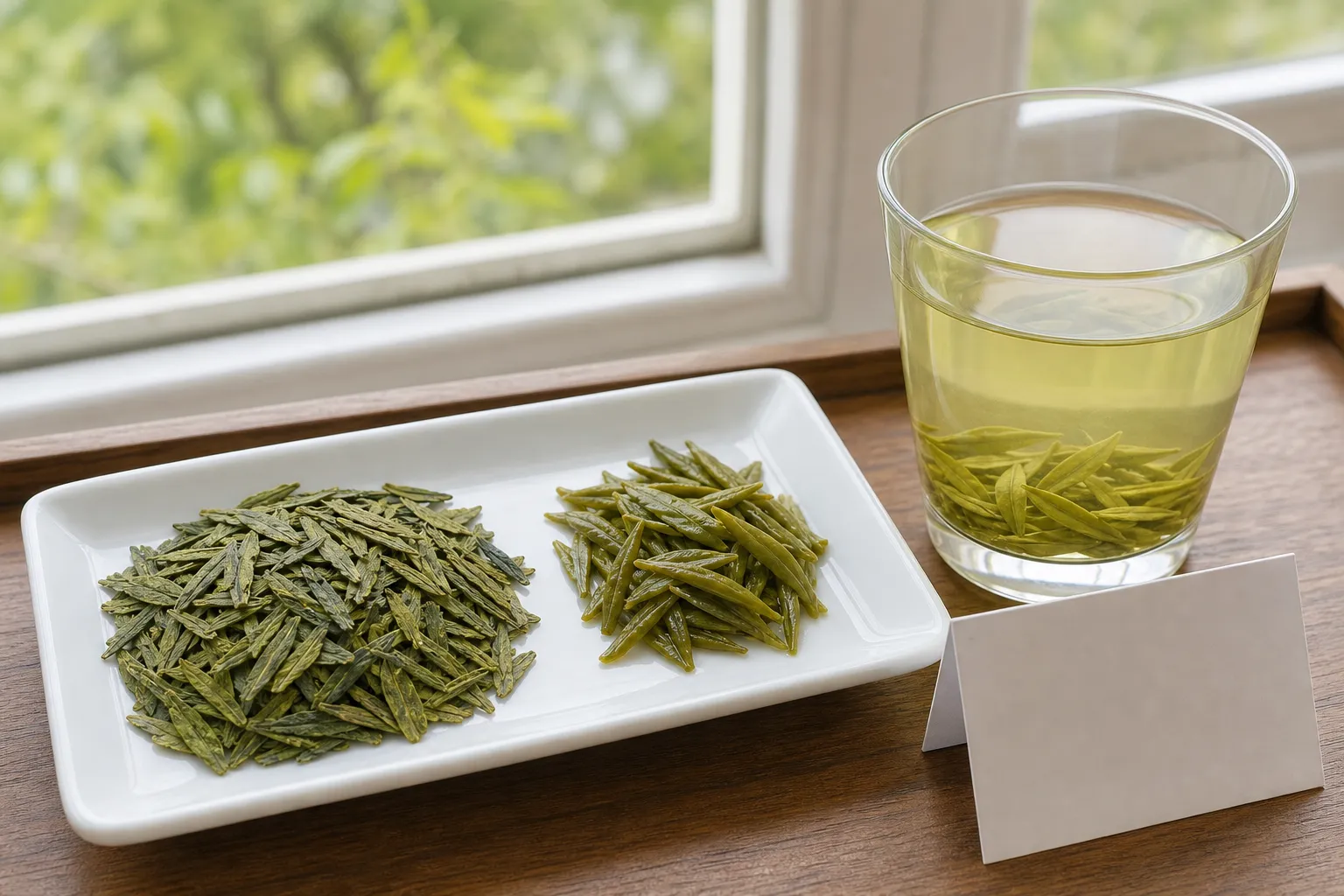
Flat Longjing leaves can look convincing before the water is even hot. That is why Longjing tea tradition is easy to misread: one small green tea carries leaf-shape cues, Hangzhou culture, West Lake identity language, gift etiquette, harvest terms, and market prestige all at once.
The useful starting point is narrower. Tradition can help you notice the leaf, brew with more care, understand why Dragon Well tea culture matters, and read sourcing language more carefully. It cannot, on its own, prove origin, freshness, grade, price, or health outcomes.
upward
Read the full overview first
Use the broader guide first if you need the full scope before this page.
What Longjing Tea Tradition Means in Hangzhou Tea Culture
Longjing tea tradition is not one rule. It is a cluster of habits and meanings around a green tea style: flattened leaves, clear greenish liquor, gentle aroma, pan-fired character, spring harvest language, glass-cup brewing, guest service, and the cultural weight often attached to West Lake Longjing.
Those cues are connected, but they do not prove the same thing.
A flat leaf may suggest Longjing-style processing, yet it does not verify where the tea was grown. A pale, bright cup may fit the expectation of a delicate green tea, yet water temperature and leaf age can change that result. Words such as Dragon Well, West Lake, Mingqian, village, handmade, or tribute-style each need their own support before they can carry a factual claim.
A tasting map for tradition
- Leaf cue: flattened, tidy leaves are part of the visual language many drinkers associate with Longjing.
- Cup cue: a light, clear infusion is often expected, while bitterness may rise with hotter water or longer steeping.
- Aroma cue: gentle nutty, toasted, chestnut-like, vegetal, or fresh notes often appear in Longjing descriptions, though not every tea will show them clearly.
- Serving cue: transparent glassware is common because leaf movement and liquor color are part of the pleasure.
- Buying cue: place names and harvest words can be useful prompts, but they are not proof without stronger sourcing details.
Read the leaf before the claim.
Why West Lake Longjing Carries Extra Weight
West Lake Longjing is the phrase most likely to raise the stakes. Many readers encounter it as the most prestigious identity within the wider Longjing conversation, and that prestige is exactly why the wording can be stretched in buying language.
Treat West Lake Longjing identity as origin-sensitive. “Longjing” may be used broadly for Dragon Well-style tea. “Longjing-style” may point to processing appearance or flavor expectation rather than a specific place. A poetic label, gift box, or place-name story is not the same as traceable sourcing.
Questions for cautious buying
- Does the label separate “Longjing” from “West Lake Longjing” clearly?
- Does it provide harvest date, production area, cultivar or batch details, and seller accountability?
- Does the description rely mostly on prestige words, or does it also describe leaf condition, storage, aroma, and brewing behavior?
- Are origin claims presented as sourcing details, or as decorative story language?
The cultural meaning matters. The proof burden is separate.
What Dragon Well Means in Longjing Tea
Dragon Well is the English name commonly attached to Longjing. For many readers, it makes the tea sound more mythic than practical, which is one reason Dragon Well tea culture can become confusing. The name may invite stories, place associations, and gift symbolism, but the drinker still has to return to the cup.
Dry leaf
Shape, breakage, color variation, and aroma after opening the package.
Wet leaf
Tenderness, evenness, and how the leaves unfold after brewing.
Liquor
Clarity, color, aroma lift, sweetness, astringency, and finish.
Preparation
Water temperature, steep time, leaf amount, and cup shape.
Storage condition
Whether the tea smells fresh, flat, stale, roasted, grassy, or tired.
The common mistake is treating the name as a quality rating. Dragon Well is culturally meaningful, but the name alone does not tell you whether the tea is fresh, well stored, carefully processed, or suited to your taste.
A modest cup can still be pleasant. A prestigious label can still brew dull if the leaves are old or poorly stored.
Why Longjing Is Often Brewed in a Glass Cup
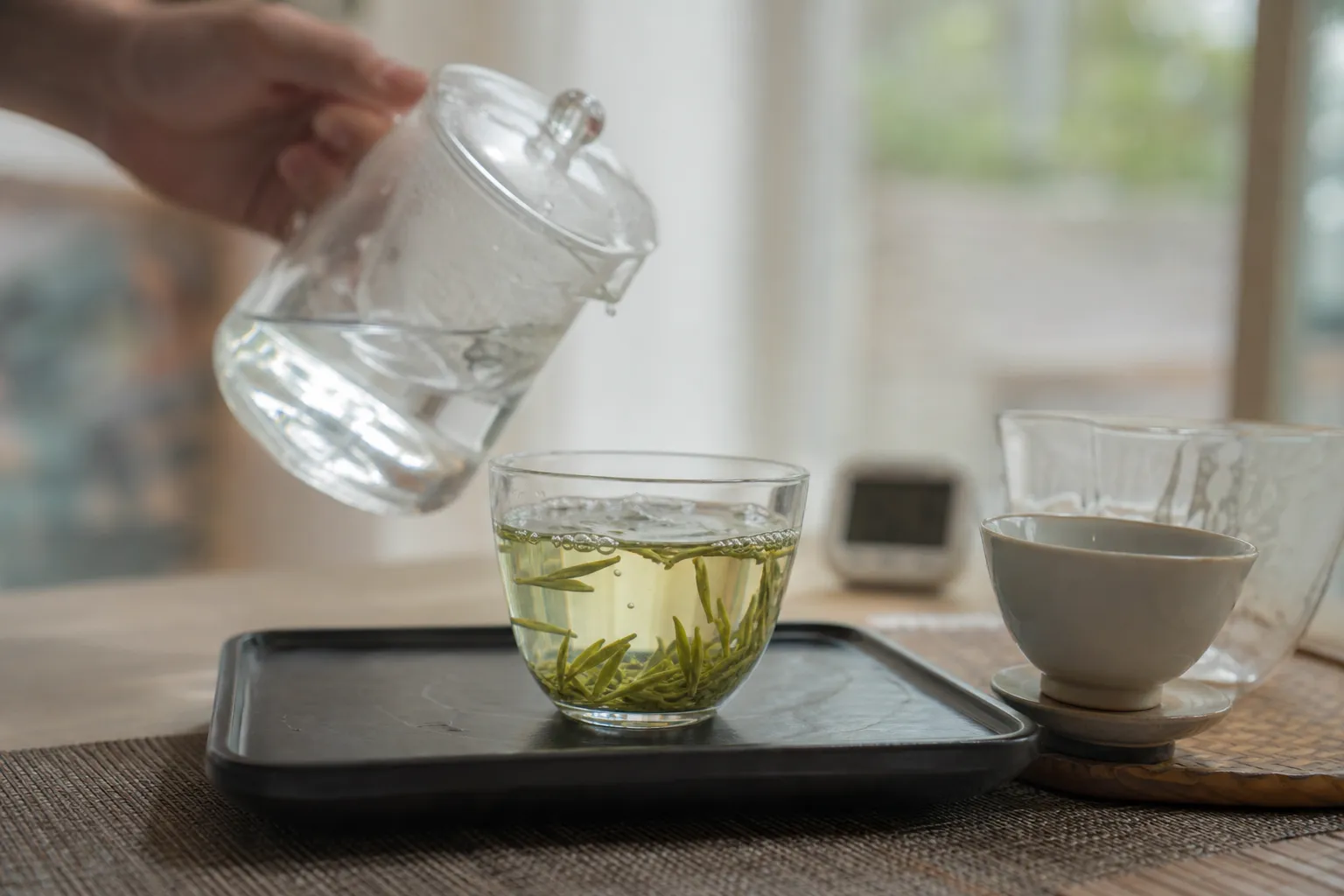
Glass-cup brewing fits Longjing because it makes the leaf visible. You can watch the leaves soften, sink, rise, and open; the liquor color can be judged without lifting a lid. This is not only visual theatre. It is a practical way to learn how this green tea behaves.
Small questions a glass cup can answer
- Are the leaves mostly whole or broken?
- Does the liquor turn bright and clear, or dull and murky?
- Does the aroma lift quickly, or stay muted?
- Does the first sip feel sweet, grassy, nutty, thin, sharp, or heavy?
- Does bitterness come from the tea itself, or from water that was too hot or a steep that ran too long?
Glass is not the only proper vessel. A gaiwan, small pot, or everyday mug can also work depending on habit. The point is that glassware supports the tradition of looking as well as tasting. It makes the cup less abstract.
For a first check, use moderate water, avoid an aggressive steep, and taste before the cup turns harsh. Let the leaves explain the timing.
What Hand-Firing Means in Longjing Tea Tradition
Hand-firing is one of the most repeated ideas in Longjing tea tradition, and one of the easiest to overstate. Broadly, Longjing is associated with heat-work that shapes, dries, and develops the leaf character. Many descriptions connect that work with the flat form and gentle toasted impression people expect from the tea.
That does not make hand-firing language automatic proof of quality. Without strong production details, it is safer to treat the phrase as part of the tradition, not as a finished verdict.
A buyer can still use the idea practically. If a tea is described as carefully fired, the cup should not feel only raw, sour, smoky, or stale. The leaf should not be reduced to powder. The aroma should have some coherence, whether it leans fresh, soft, toasty, vegetal, or nutty. If the description promises craft but the cup tastes flat and old, the claim has done more work than the leaf.
Craft wording needs cup support.
Mingqian Longjing Meaning in Tea Tradition
Mingqian Longjing is another phrase with cultural weight. It is generally used in tea conversations to point toward very early spring picking before the Qingming seasonal marker. Because early spring language can influence price and prestige, it deserves careful reading.
The useful point is not to memorize a hierarchy. It is to understand what the term is trying to signal. Early-season language usually suggests tenderness, limited production, and a delicate profile. It does not remove the need to check storage, leaf condition, seller clarity, and whether the tea still tastes alive in the cup.
How to read Mingqian language
Early harvest wording
May suggest a claim about timing.
Cannot prove freshness, origin, or careful storage alone.
Tender leaf appearance
May suggest young leaf material.
Cannot prove exact harvest date alone.
Higher price
May suggest market positioning.
Cannot prove better taste for every drinker alone.
Delicate flavor
May suggest a lighter cup style.
Cannot prove verified Mingqian status alone.
Gift packaging
May suggest cultural value.
Cannot prove leaf quality or sourcing accuracy alone.
A Mingqian claim should invite closer reading, not automatic belief.
Why Longjing Is Given as a Gift
Longjing is often presented as a gift because it carries cultural refinement, seasonal feeling, and visual neatness. The dry leaves look composed; the cup can feel quiet and graceful; the name has enough recognition to make the gift legible even to people who are not deep tea buyers.
Gift meaning can blur buying judgment. Decorative tins, elegant boxes, and place-name language may make a tea feel important before anyone has brewed it. That may suit hospitality, but it is weak as evidence.
When choosing Longjing as a gift, look for
- Clear harvest and packing information where available.
- Packaging that protects the leaves from light, heat, air, and odor.
- A realistic amount that can be finished while fresh.
- Taste notes that describe the cup rather than only status.
- Origin wording that does not ask the buyer to trust prestige alone.
Tea given as a gift still has to become tea in a cup. Freshness matters after the ribbon is gone.
How Longjing Is Served to Guests
Serving Longjing to guests is often less about ceremony and more about attention. The host controls water, leaf amount, cup choice, and timing so the tea does not become too bitter before the guest tastes it. Clear glass or simple cups keep the focus on the leaf and liquor.
A gentle serving approach
- Warm or rinse the cup if that suits the setting.
- Add a modest amount of leaves rather than crowding the vessel.
- Use water hot enough to lift aroma but not so forceful that it flattens sweetness.
- Let the leaves open visibly if using glass.
- Offer the tea while the aroma is still present, not after it has sat too long.
The exact numbers depend on leaf condition and preference, so one fixed formula is less useful than watching the cup. If the liquor darkens quickly and the aroma turns sharp, shorten the steep or cool the water next time.
Hospitality is partly timing.
What Tribute Tea Language Can and Cannot Do
Tribute tea language can appear in cultural discussions of Longjing, but it needs careful handling. On this page, the phrase is best treated as cultural context: it signals that Longjing has often been framed as a tea of high regard.
That framing affects how modern readers interpret the tea. It can make Longjing feel like a heritage object rather than an everyday drink. It can also encourage sellers to use elevated language that sounds more historical than the available details can support.
The practical boundary is simple. Tribute language may explain why the tea is admired; it does not verify a specific batch, a current origin claim, or a superior cup. If a description leans on history but gives little information about leaves, harvest, storage, or brewing behavior, the reader still has unanswered questions.
History can add meaning. It cannot brew the tea for you.
Longjing Village Tea Culture for First-Time Visitors
Many first-time visitors approach Longjing village culture with curiosity and buying pressure mixed together. Even without turning the visit into a precise map of village boundaries or tourism routes, the reader task is clear: separate experience from verification.
A tea village visit may show landscape, shops, tasting rooms, local hospitality, and many forms of tea language. It may also place the visitor inside a market setting where origin, grade, and price are difficult to judge quickly. The charm of the place can be real while the buying decision still needs caution.
What you saw
Leaf shape, brewing style, cup color, storage containers, packaging, and how the tea was presented.
What you were told
Origin names, harvest timing, processing claims, age, grade, and gift value.
What you can verify later
Seller details, written sourcing information, batch clarity, storage advice, and whether the tea still tastes good at home.
This keeps memory and evidence in separate cups. Both matter, but they do different work.
Common Misconceptions About Dragon Well Tea Culture
Dragon Well tea culture attracts recurring misreadings. Most come from treating a cultural phrase as if it were a buying guarantee, a fixed origin label, or a wellness promise.
All Longjing is West Lake Longjing
That is too broad. Wider Longjing language and West Lake-specific language are not identical, and a careful label should not blur them.
A flat leaf proves origin
Leaf shape is useful, but not enough. Processing style, cultivar, handling, and seller presentation can all affect appearance.
Early spring wording means better tea for every person
Some drinkers may prefer a tender, delicate cup; others may want more body, a stronger fired impression, or a lower price. Tradition does not erase preference.
Cultural prestige supports wellness promises
Longjing is green tea and contains caffeine; some drinkers describe green tea as helping them feel alert or settled in a daily routine. Individual tolerance varies, and health-adjacent language belongs in general context rather than as a promised result. People with caffeine sensitivity, pregnancy-related questions, medication interactions, or higher-stakes health concerns should rely on qualified guidance rather than tea culture.
Expensive packaging means better leaves
It may protect the gift impression. It does not replace sensory checking.
West Lake Longjing vs Other Longjing in Cultural Meaning
The difference between West Lake Longjing and other Longjing is not only a taste question. It is a language question, an origin question, and a cultural-positioning question. West Lake wording tends to carry stronger prestige and narrower identity expectations. Other Longjing may still be enjoyable green tea, but the claim being made is different.
How the wording changes the claim
What is being emphasized?
West Lake wording emphasizes a place-sensitive identity.
Broader Longjing wording emphasizes a tea style or name family.
What should the buyer request?
West Lake wording calls for stronger sourcing clarity.
Broader Longjing wording calls for clear leaf, harvest, and storage details.
What can the cup show?
Freshness, brewing behavior, and sensory quality.
Freshness, brewing behavior, and sensory quality.
What can the cup not prove alone?
Exact origin.
Exact origin.
What should be avoided?
Prestige replacing evidence.
Style name replacing evidence.
The cup can tell you whether the tea tastes fresh, balanced, harsh, stale, thin, sweet, nutty, vegetal, or bitter. It cannot settle every identity claim by itself.
That is the branch-level judgment: Longjing tea tradition helps you read the tea more intelligently, but each claim has a different proof threshold.
Evidence Limits for Longjing Tea Tradition
The supplied research set for this page contains no usable public reference links for Longjing history, West Lake origin boundaries, harvest classifications, processing details, cultural practice, sensory norms, brewing methods, caffeine, antioxidants, or wellness-adjacent effects. That absence does not make those topics false. It means this article should keep its claims close to observable tea practice and clearly marked interpretation.
The strongest responsible use of tradition for now
- Use tradition to notice the flat leaf, cup color, aroma, and bitterness.
- Use preparation context to adjust water, time, leaf amount, and vessel.
- Use sourcing language as a prompt for questions, not as proof.
- Use West Lake Longjing wording with extra care.
- Use wellness language modestly and keep it separate from taste.
A better-supported version of this page would need topic-native sources: regional tea materials for identity boundaries, agricultural or tea research for processing and cultivar context, cultural institutions for history, and careful brewing references for preparation details. Until then, the honest page stays close to the cup.
A Practical Way to Judge Longjing Claims
When a Longjing description sounds impressive, slow it down into four checks.
- First, look at the leaf. Are the leaves mostly intact, flat, and clean-looking, or are they dusty and broken? Leaf shape is only one clue, but it is the first visible clue.
- Second, brew gently and watch the liquor. If the cup turns harsh quickly, change the water or time before blaming the tea. If the aroma is muted even with careful brewing, storage or age may be part of the story.
- Third, read the sourcing words separately. Longjing, Dragon Well, West Lake Longjing, Mingqian, village, handmade, and tribute-style language do not carry the same kind of claim. Do not let one attractive word support all the others.
- Fourth, decide what you are actually buying. A daily green tea, a cultural experience, a gift, or a carefully sourced origin-sensitive tea each has a different threshold.
Longjing flat leaves tell only part of the story. The next part is in the cup: color, aroma, timing, and the quiet question of what the label can really support.