
Direct answer
Does Longjing Tea Have Caffeine
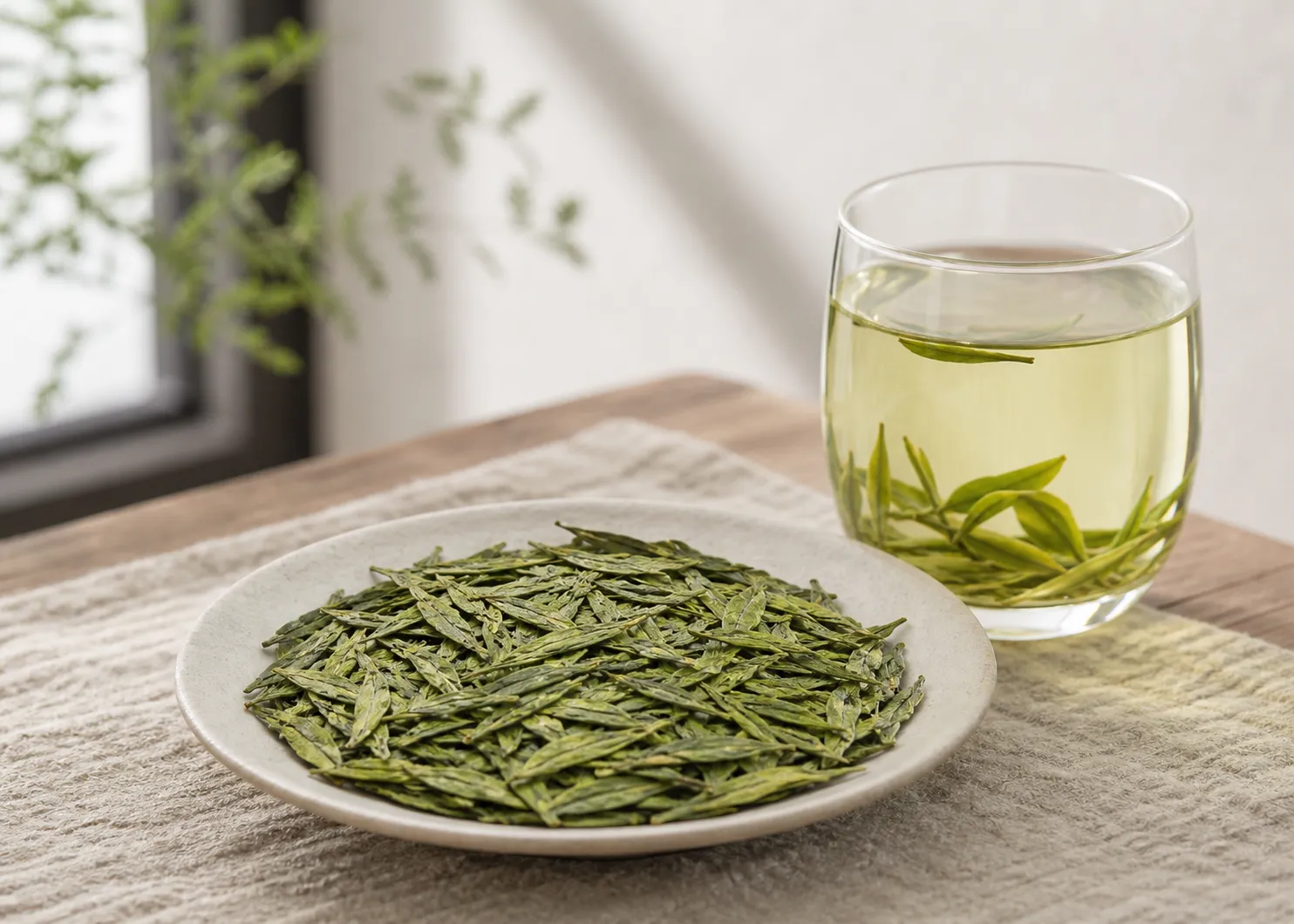
Longjing’s flat green leaves can look mild in the glass, especially when the liquor stays pale yellow-green. Still, yes: Longjing has caffeine. Longjing tea caffeine belongs in the answer because Longjing, also called Dragon Well tea, is a green tea made from tea leaves.
The exact amount in your cup is the part to hold lightly. Public reference sources support the general point that brewed green tea contains caffeine, but they do not give a verified Longjing-specific number for a fixed leaf dose, water temperature, steep time, or serving size. A small, lightly steeped glass can feel gentle; a hotter mug with more leaf can feel much stronger. Leaf, water, time, and the drinker all matter.
upward
Read the full overview first
Use the broader guide first if you need the full scope before this page.
Longjing Is Caffeinated, but Not One Fixed Number
If the question is “does Longjing have caffeine?” or “is Longjing caffeinated?” the practical answer is yes. It should not be treated like an herbal infusion or a caffeine-free evening drink unless a product has been specifically processed and labeled that way.
The careful answer is that caffeine in Longjing green tea is not a single universal value. Broad nutrition references can confirm that brewed green tea contains caffeine, and public caffeine guidance can help frame general moderation. They do not prove that every Dragon Well cup carries the same caffeine amount.
That matters because tea is prepared, not poured from a standard bottle. One person may use a small pinch of loose-leaf Longjing in a glass and refill it with warm water. Another may pack a gaiwan with more leaf and drink several short infusions. Both are drinking Longjing; the serving is not the same.
A useful rule is simple: treat Longjing as caffeinated first, then adjust the cup.
What Makes a Longjing Cup Feel Stronger
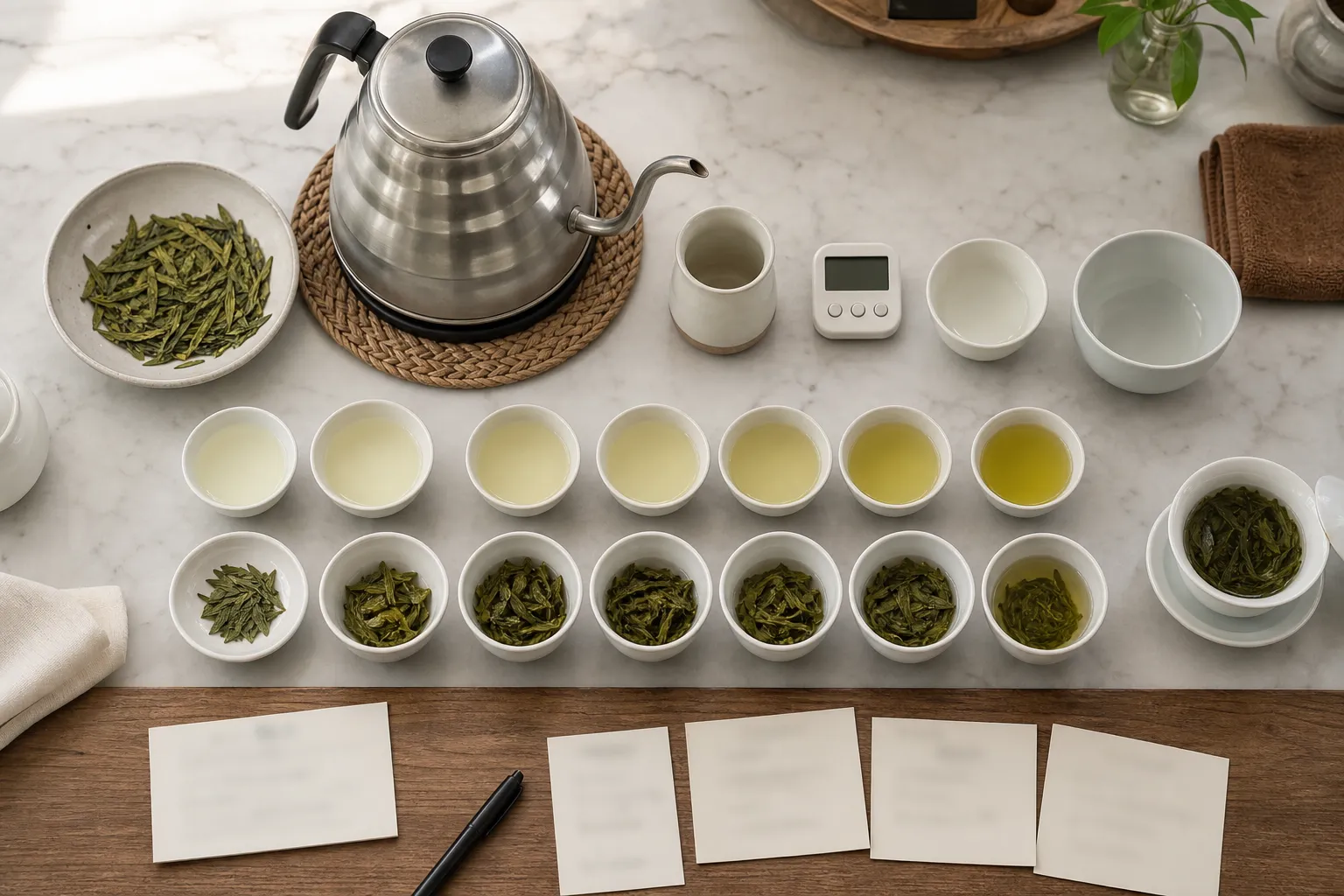
A Longjing cup can feel stronger for taste reasons and caffeine-related reasons. Those overlap, but they are not identical. Bitterness, body, heat, and concentration can make a brew seem more forceful even when you do not know the exact caffeine number.
More leaf
Fuller flavor, thicker body, more intensity.
May raise total caffeine in the serving.
Hotter water
Faster extraction, more edge, more bitterness if pushed.
Can make the cup feel stronger.
Longer steep time
Deeper color, more astringency, stronger taste.
Can extract more compounds, including caffeine.
Larger serving size
More liquid consumed.
Can raise total caffeine intake.
Multiple infusions
Several rounds from the same leaves.
Total intake depends on the whole session.
Water temperature deserves attention. Longjing is often appreciated for chestnut-like aroma, light sweetness, and a smooth green body. When the water is too hot or the steep runs too long, bitterness can rise quickly. That sharpness may be read as “more energy” or “more caffeine,” but taste alone cannot measure caffeine. It is a brewing cue, not a lab result.
Leaf amount is the quiet variable. Two grams in a small glass and five grams in a gaiwan do not create the same session. If your Longjing feels unusually stimulating, look first at the dry leaf, then at the cup size and number of refills.
Why Dragon Well Tea Caffeine Gets Misunderstood
Dragon Well tea caffeine is often misunderstood because “green tea” can sound light, clean, or mild. Those words may describe color, aroma, or body, but they do not mean caffeine-free.
Longjing can taste softer than a roasted black tea or a concentrated matcha bowl. Its flat leaves open slowly, and the liquor can stay bright rather than heavy. That visual gentleness can make the drink feel less demanding. Still, Longjing is made from tea leaves, not an herbal plant outside the tea family.
Another confusion comes from “Longjing energy” language. Sellers and drinkers may use energy words to describe how the cup fits a morning or work routine. That can be useful everyday vocabulary, but it is not proof of a guaranteed effect. Some drinkers may feel more alert after Longjing; others may notice little change, feel uncomfortable with caffeine, or find that afternoon tea affects sleep.
There is also a difference between caffeine presence and perceived strength. A tea can be caffeinated without tasting harsh. A cup can taste strong because it is bitter, grassy, or over-steeped, while a smoother cup can still contain caffeine. Sensory strength is not the same as a precise caffeine reading.
How to Make Longjing Gentler
If you like Longjing but want a gentler routine, start with the parts of the brew you can control. The goal is not to make Longjing caffeine-free. It is to make the serving smaller, lighter, or earlier.
Use a little less leaf
This is the cleanest first adjustment because it changes the strength of the whole cup. If your usual glass tastes dense or drying, reduce the dry leaf before changing everything else.
Shorten the steep
A shorter infusion can keep the cup brighter and less bitter. It may also help moderate how strong the serving feels, especially when you are making one larger cup.
Lower the water temperature slightly
Longjing often shows better sweetness and less edge when it is not brewed with boiling water. Cooler water can make the cup feel rounder on the palate, though it does not make the tea caffeine-free.
Watch the serving size
A small tasting cup and a large mug are different caffeine decisions. If you refill the same leaves several times and drink every infusion, count the whole session, not just the first pour.
Move the tea earlier if caffeine affects your sleep. For some drinkers, timing matters as much as recipe. People with pregnancy-related questions, medication concerns, heart rhythm issues, anxiety sensitivity, sleep problems, or other health concerns should rely on qualified medical guidance for personal caffeine decisions.
What the Evidence Can and Cannot Say
The evidence boundary is narrow but useful. Credible general sources support that brewed green tea contains caffeine and that caffeine response varies by person. That is enough to answer the main question: Longjing should be treated as caffeinated.
The same source set does not verify a precise Longjing caffeine amount. It does not provide a tested value for a specific Dragon Well cultivar, harvest grade, origin, roasting style, or brewing recipe. It also does not confirm exactly how caffeine changes across repeated Longjing infusions under controlled conditions.
That limit keeps the answer practical. Most readers are not choosing between lab values; they are deciding whether a cup of Longjing belongs in a morning routine, an afternoon break, or a quiet evening. For that decision, the steady answer is: yes, it has caffeine; if you are sensitive, adjust the brew and the timing.
Quick Checks Before Your Next Cup
If you are trying to understand your own Longjing response, check the brew before reaching for a fixed caffeine number.
- Did you use more leaf than usual?
- Was the water hotter than your normal Longjing range?
- Did the steep run long enough to bring out bitterness?
- Was the serving a small cup, a large mug, or several refills?
- Did you drink it late in the day?
- Are you already sensitive to caffeine from coffee, matcha, sencha, or other teas?
These questions do not measure caffeine exactly, but they explain why one cup can feel calm and another can feel stronger. They keep the answer close to the leaf.
So, Does Longjing Tea Have Caffeine?
Yes. Longjing tea has caffeine, and Dragon Well tea should be treated as a caffeinated green tea. The exact amount is not fixed by the name Longjing alone; it depends on leaf amount, water temperature, steep time, serving size, and how many infusions you drink.
If you want a lighter cup, use less leaf, shorten the steep, keep the water gentler, and drink it earlier. If you want a fuller cup, more leaf and a longer, hotter brew will usually taste stronger, though taste still cannot give an exact caffeine number.
The next useful test is simple: brew your usual Longjing once with slightly less leaf and a shorter steep, then notice both the bitterness and how the cup fits your day. Read the leaf, then adjust the water and time.
Sources
Sources and further reading
Reference links are limited to sources considered suitable for public citation in this page.