
Cup-level troubleshooting
Why Does Longjing Tea Taste Bitter
Longjing tea can taste bitter when the cup is pushed harder than the leaf can comfortably show: water is too hot, the steep runs too long, the leaf dose is heavy, or the tea is tired, broken, stale, or sharper than you expected.
The quickest answer is this: if your Longjing tea bitter note feels harsh, drying, and back-of-the-tongue, look at preparation first. If gentler brewing does not help, look at leaf condition and realistic Longjing sensory expectations. The cup gives the first clue.
upward
Start with the broader guide
Use the broader guide first if you need the full scope before this page.
What Bitter Longjing Usually Feels Like
A bitter Dragon Well tea is not always a failed tea. Longjing can carry a clean green edge, a light drying finish, or a faint savory sharpness that keeps the cup from tasting flat. That kind of bitterness is usually brief; it appears, then leaves room for aroma, sweetness, nuttiness, or a soft vegetal note.
The problem starts when bitterness takes over the whole sip. The liquor may taste sharp before you notice aroma. The finish may feel rough or drying. The tea may seem thin but aggressive, as if the pleasant parts disappeared while the harsh parts stayed.
Separate the sensations before changing everything
- Bitterness: a sharp taste, often noticed at the back or sides of the tongue.
- Astringency: a drying or puckering feeling in the mouth.
- Stale or scorched character: a flat, dull, smoky, cardboard-like, or tired impression.
These can overlap, but they do not point to the same fix. A mainly bitter cup may need a gentler steep. A drying cup may need less leaf, shorter contact, or softer handling. A stale cup may not improve much, even with careful water.
Taste first; then adjust.
Brewing Choices That Can Make Longjing Taste Bitter
The most useful place to begin is the brew itself. Longjing Dragon Well is a loose-leaf green tea, and green teas are usually handled more gently than darker, heavily oxidized teas. Because the available research pack for this page does not include usable external brewing sources, it would be too confident to give one exact Longjing brewing temperature as a rule. The practical pattern is still clear: if the cup is harsh, reduce intensity.
Start with one variable.
If the tea tastes bitter after very hot water, let the kettle cool before the next infusion. You do not need to turn the session into a lab test; the useful question is whether a cooler pour gives more aroma and less bite. If it does, heat was probably part of the problem.
If the tea tastes pleasant at first and bitter later, shorten the steep. Oversteeped Longjing can lose its graceful side because the leaf has had too much contact with water for that vessel, leaf amount, and drinking pace. Stop earlier when the liquor has color and aroma but before the finish turns heavy.
If the tea tastes bitter even with a short infusion, check the leaf amount. Longjing’s flat leaves can look light and tidy, but a generous scoop can still make a strong cup. Use less leaf and see whether the bitterness relaxes without making the tea hollow.
Sharp from the first sip
Use cooler water next time. Watch for more aroma and less bite.
Pleasant at first, bitter later
Shorten the steep. Watch for a cleaner finish.
Strong, drying, and dense
Use less leaf. Watch for a softer body.
Bitter across repeated attempts
Check leaf condition. Watch for stale, broken, or tired notes.
This is not a guarantee. It is a controlled way to listen to the tea.
When the Leaf Condition Is the Real Clue
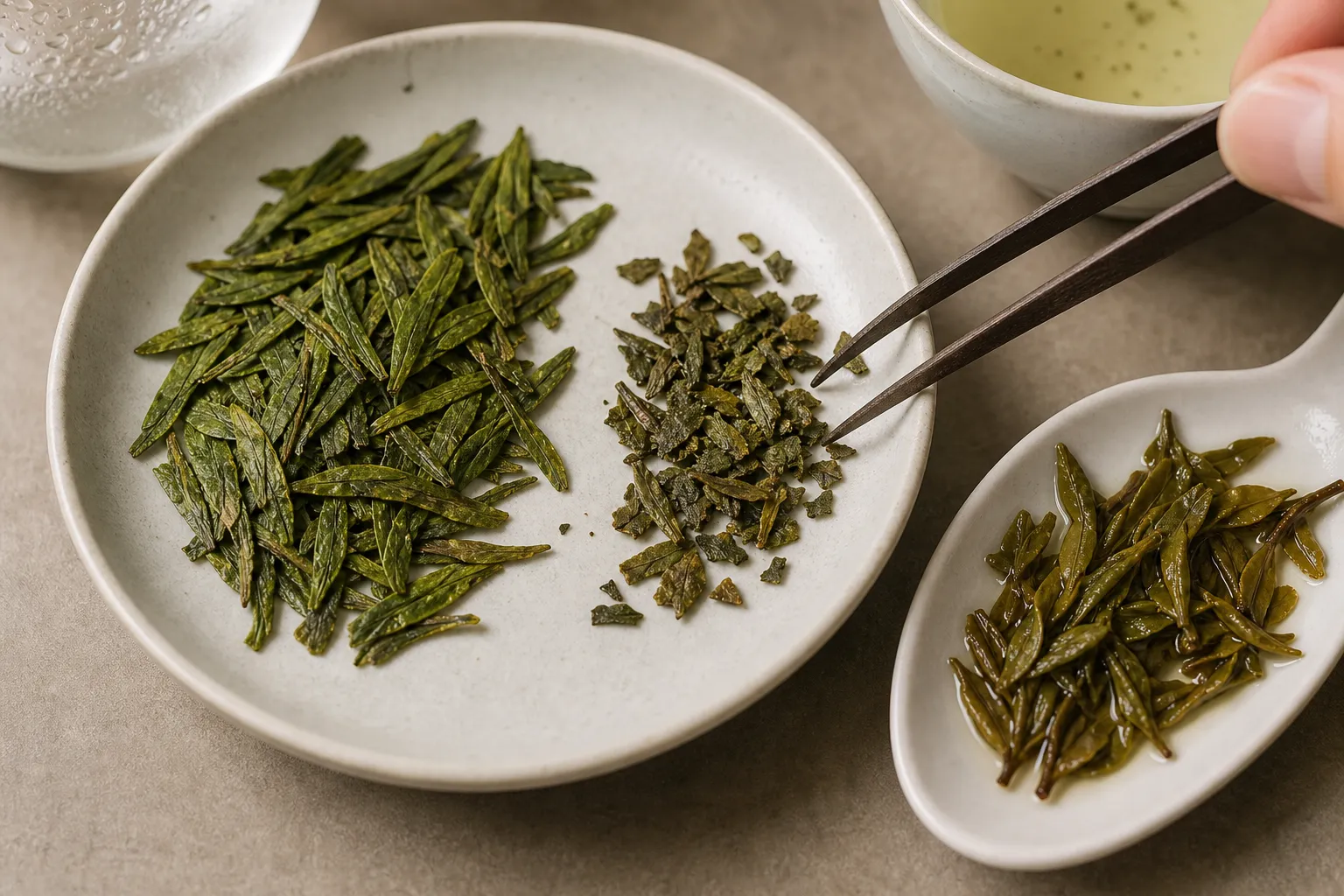
Longjing leaf condition can change how forgiving the cup feels. If the dry leaves are very broken, dusty, faded, damp-smelling, or dull, the brew may taste harsher than expected. That does not prove one specific quality problem. It simply tells you not to blame only the kettle.
Look at the dry leaf before brewing. Longjing is known for its flat leaf shape, but shape alone is not a promise of sweetness. A neat-looking leaf can still be old or poorly stored. A less uniform leaf can still brew pleasantly. Treat appearance as a cue, not a verdict.
Smell the dry tea. If the aroma is quiet but clean, the tea may still have something to give. If it smells flat, stale, damp, or oddly roasted in a way that covers the green character, the bitterness may be part of a larger freshness problem. Brewing adjustments can soften it, but they cannot bring back lost aroma.
Watch the wet leaf after steeping. If the leaves open unevenly, shed many small fragments, or leave a cloudy, gritty-looking liquor, the cup may feel rougher. This is an observation, not a formal grade judgment. Broken material and fine particles can make a cup harder to control.
Storage belongs in the same check. Green tea is often sensitive to air, heat, light, moisture, and nearby odors. If a tea turned bitter only after weeks in a loose bag near spices, sunlight, or a warm cabinet, storage belongs on the suspect list.
Read the leaf before the claim.
Normal Bitterness Versus a Fixable Problem
Not every trace of Longjing tea bitterness needs to be removed. A completely flat cup can taste sweet for one second and empty after that. A slight bitter edge may give the tea structure, especially when it is balanced by aroma and a clean finish.
The better question is not “should Longjing ever be bitter?” It is “does the bitterness block the tea?”
If the bitterness is brief and the cup still has a fresh, nutty, grassy, chestnut-like, or savory impression, it may be within your tolerance range. Some drinkers enjoy that edge. Others prefer a softer cup and should brew more gently.
If bitterness covers every other note, try a cooler, shorter, lighter brew before deciding the tea itself is the problem. If that still fails, the leaf may be stale, too broken, poorly matched to your taste, or simply not a style you enjoy.
This distinction matters because Longjing is often surrounded by confident market language: premium, early, authentic, hand-finished, famous origin. Those words may be useful buying clues when properly supported, but they do not guarantee a sweet cup in your kitchen. Water, time, storage, leaf condition, and your own bitterness threshold still shape the cup.
A sourcing cue is not a taste guarantee.
A Small Troubleshooting Routine for the Next Cup
For the next brew, change only one thing first. If you change temperature, steep time, leaf amount, vessel, and water all at once, you may get a better cup without knowing why.
Begin with the most likely pressure points:
- Use a little less leaf than last time.
- Let the water cool slightly before pouring.
- End the steep earlier than you did before.
- Taste while the liquor is warm, not scalding.
- Smell the wet leaf before judging the tea only by bitterness.
If the second cup improves, keep the adjustment. If it becomes weak but still bitter, the issue may sit more with leaf condition than brewing strength. If it becomes fragrant and clean, the first cup was probably pushed too hard.
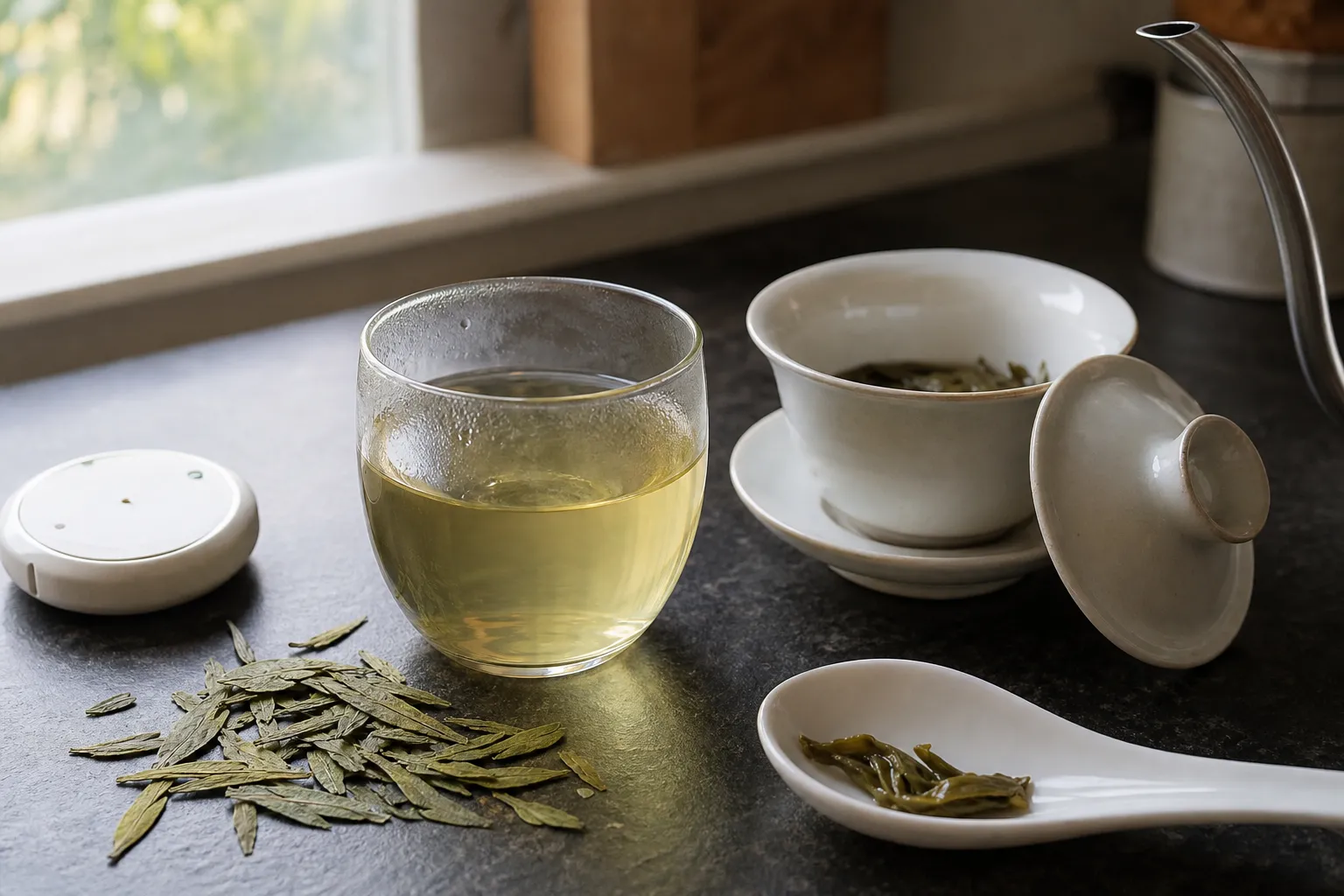
A glass brewing style can make this easier because you can see the leaves and liquor change. A gaiwan can make it easier to pour off quickly. A mug can work too, but if the leaves sit in the water while you drink slowly, the cup may keep getting stronger. The tool is less important than contact time.
For Longjing preparation bitterness, stop chasing one perfect number and watch the sip sequence: aroma first, sweetness or green body next, finish last. When the finish turns rough before the aroma opens, the brew needs less pressure.
Let the kettle explain the bitterness.
Where Wellness Language Should Stay Secondary
Some readers connect green tea bitterness with caffeine, antioxidants, focus, or general wellness language. Longjing contains caffeine, like other true teas, but bitterness is not a reliable sign that the tea is stronger, better, or more useful for wellness purposes.
That distinction matters because wellness language does not help much when the immediate problem is a harsh cup. If your Dragon Well tea bitterness is bothering you, the practical question is preparation and leaf condition.
Avoid treating bitterness as a sign of potency. A bitter cup may simply be oversteeped Longjing, a heavy leaf dose, tired tea, or a style that does not match your palate. If caffeine affects you personally, treat that as an individual tolerance issue and rely on qualified guidance for personal health concerns rather than a tea taste note.
Taste is not medical evidence.
The Boundary of This Answer
The evidence available for this page is limited. No usable public sources, technical references, official Longjing materials, or curated firsthand brewing reports were provided in the research pack. That means this article should not pretend to settle precise brewing temperature, exact steep time, extraction mechanisms, harvest-grade effects, storage chemistry, or health-adjacent claims.
What it can do is give a careful cup-level answer: Longjing tea tastes bitter most often when the brew is too intense for the leaf and your palate, or when the leaf itself is not giving a fresh, balanced infusion. The responsible next step is not to label the tea as bad immediately. Brew it once more with less pressure and observe what changes.
If cooler water, shorter time, or less leaf makes the tea cleaner, your fix is in preparation. If the bitterness remains dull, stale, or rough, look at the leaf and storage. If the cup has only a small bitter edge and still smells good, it may be part of that tea’s normal balance.
One cup can answer a lot: change one variable, then taste again.
FAQ
Why does Longjing tea taste bitter?
Longjing tea usually tastes bitter when the brew is too intense for the leaf: the water may be too hot, the steep too long, or the leaf amount too heavy. If those changes do not help, check whether the tea smells stale, looks broken, or has been stored poorly.
Is bitter Dragon Well tea bad?
Not always. A small bitter edge can be part of the cup, especially when it is brief and balanced by aroma, nuttiness, sweetness, or a clean green finish. It becomes a problem when bitterness blocks every other note.
How do I make Longjing less bitter?
Try one adjustment at a time: use slightly cooler water, shorten the steep, or reduce the leaf amount. If the tea becomes weak but still rough, the issue may be leaf condition rather than brewing strength.
Does bitterness mean Longjing is more powerful?
No. Bitterness is not a reliable sign of better tea, stronger tea, or a wellness effect. It is usually more useful to read it as a brewing or leaf-condition signal.