
Leaf shape cue
Why Are Longjing Tea Leaves Flat
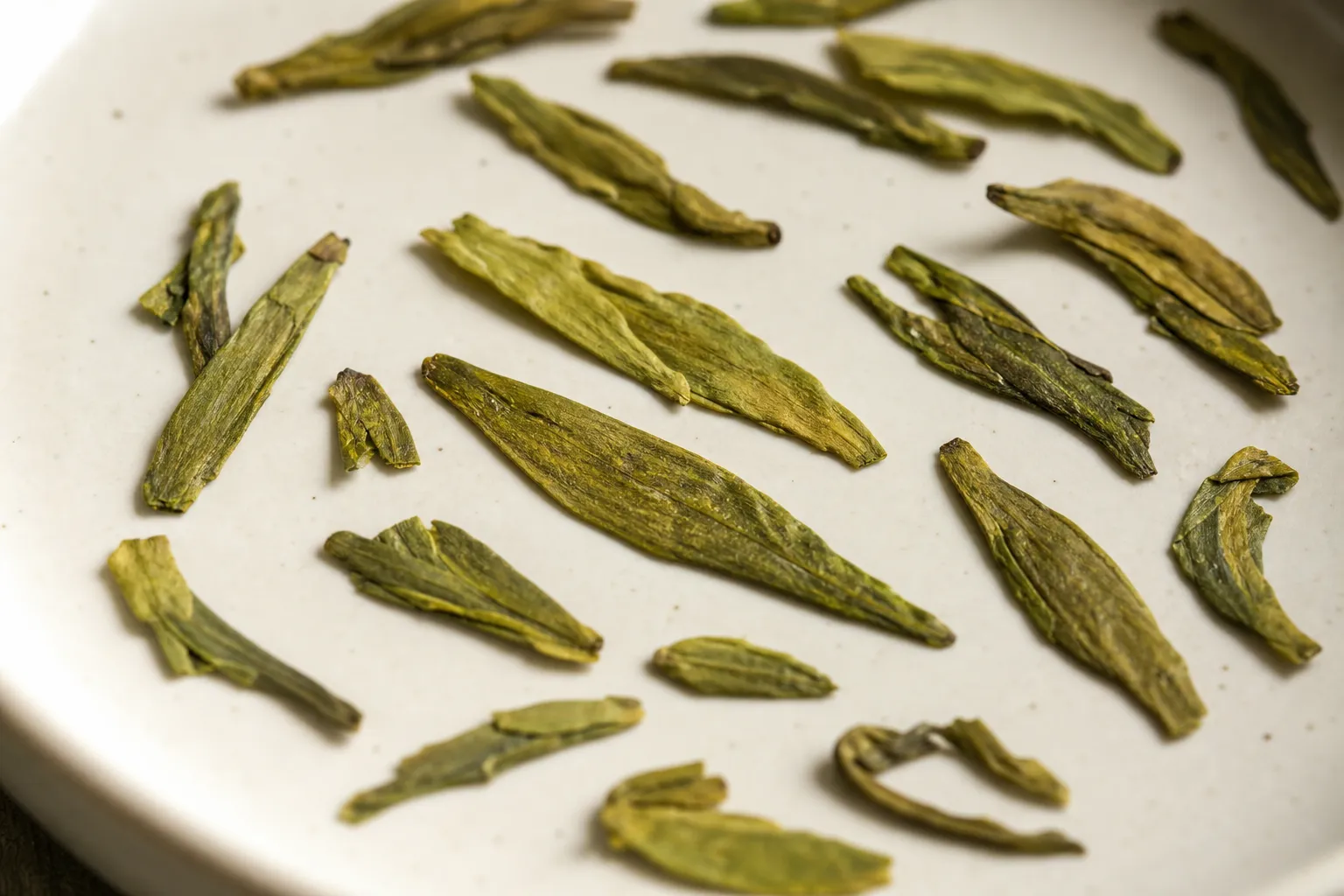
Flat Longjing leaves are the first thing many drinkers notice: slim, pressed-looking pieces that sit straighter than most loose-leaf green teas. The careful answer to why Longjing leaves are flat is simple but limited: flatness is part of the recognized Longjing Dragon Well leaf shape, not proof of quality, origin, grade, freshness, health value, or better flavor by itself.
The source set available for this page does not support a detailed explanation of the exact pressing sequence, pan-firing movement, handwork, machinery, cultivar effect, or grade rule behind a specific batch. So the useful answer stays narrow: flat Dragon Well leaves can help you read the tea visually, but they cannot carry the whole claim.
upward
Read the full overview first
Use the broader guide first if you need the full scope before this page.
The Short Answer: Flatness Is a Shape Cue
When Dragon Well leaves look flat, you are seeing a tea finished in the familiar Longjing-style shape. That shape matters because it helps identify the visual family of the tea; it does not act as a certificate.
A flat leaf alone cannot confirm where the tea was grown, how fresh it is, whether it was shaped by hand or equipment, which grade it belongs to, or how the cup will taste after brewing. It should make you look more closely, not stop asking questions.
Read the leaf before the claim. Flatness is a starting point.
What “Flat” Looks Like in the Leaf
“Flat” is not always perfectly uniform. In a real pouch, some leaves may look smooth and blade-like. Others may be slightly curved, folded, broken, or uneven. Finished tea is rarely a tray of identical pieces.
A green tea can look neat and still taste flat if it is old, poorly stored, or brewed too hot. Another batch may look less uniform but still make a pleasant cup if the leaf is fresh and handled carefully.
The cup gets the final vote.
Why Processing Language Needs Care
Tea writing often connects Longjing leaf shaping with heating, pressing, and skillful finishing. That language is familiar, and it may appear in vendor descriptions or general tea summaries. For this page, the available references are not strong enough to turn those phrases into a precise production explanation.
Several claims should therefore stay outside the answer unless stronger sources are added:
- The exact motion used to flatten the leaf.
- The precise order of heating, pressing, and drying.
- Whether a specific batch was hand-shaped or machine-shaped.
- Whether a certain flatness level proves a grade.
- Whether flat Dragon Well leaves prove origin.
- Whether the shape alone predicts sweetness, chestnut aroma, bitterness, or umami.
This does not mean processing is unimportant. It means a single visual question should not be stretched into a manufacturing claim without evidence that can carry it.
For a buyer, Longjing shaping terminology is best treated as vocabulary, not proof. If a seller mentions pressing, handwork, or traditional finishing, look for specific and transparent detail rather than attractive wording alone.
What Can Change the Flat Look
Leaf integrity
Whole or mostly whole pieces show the Dragon Well leaf shape more clearly. A pouch full of small fragments may look flat for a different reason: broken pieces naturally settle low.
Surface and color
A lively dry leaf can make the tea worth brewing carefully, but color alone is not proof of freshness or grade. Lighting, photography, packaging, and expectation can all distort judgment.
Uniformity
Many similarly shaped pieces may look more refined. Still, uniform shape is only one sourcing cue; it does not guarantee flavor.
Wet leaf
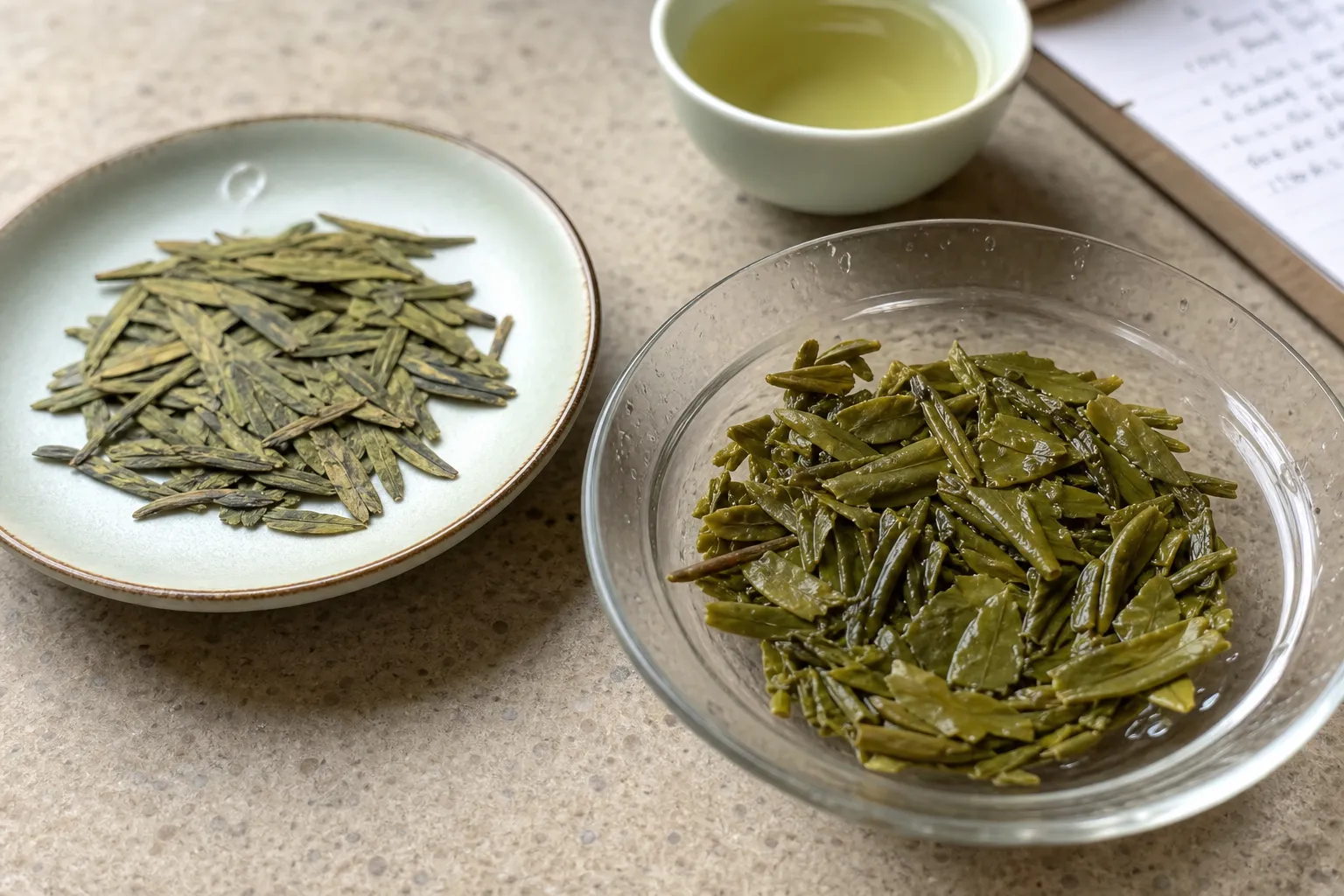
Infused leaves often reveal more than dry leaves. After steeping, they may open, soften, curl, or show breakage hidden in the dry form. If you want to understand why Dragon Well leaves look flat, compare the dry leaf with the wet leaf.
That keeps the question grounded. One feature can start the reading; it cannot finish it.
Common Confusion Around Flat Dragon Well Leaves
The easiest mistake is treating flatness as a quality badge. It is more accurate to treat it as part of the expected appearance of Longjing-style tea, then ask better follow-up questions.
Flat does not automatically mean fresh.
A tea can keep its pressed-looking shape after its aroma has faded. Storage still matters; a weak scent, stale impression, or tired cup is not rescued by attractive shape.
Flat does not automatically mean authentic.
Origin and authenticity require stronger sourcing information than leaf shape alone. A visual cue can support a question, but it cannot answer everything.
Flat does not automatically mean better tasting.
Taste depends on leaf material, processing, storage, brewing temperature, steep time, and preference. A beautiful-looking tea can become harsh in very hot water. A modest-looking tea may still be enjoyable with a gentler brew.
Flat does not automatically mean added wellness value.
Longjing is a green tea, but this page is about leaf shape, not caffeine, antioxidants, or health outcomes. If health concerns affect your tea drinking, rely on qualified guidance rather than a leaf-shape cue.
Longjing flat leaves tell only part of the story.
A Simple Way to Check the Leaf
When you open a pouch of Longjing Dragon Well, start with the flat shape and move slowly.
- First, look at the dry leaf in natural light if possible. Are the leaves recognizably flattened? Are many pieces intact, or is the pouch mostly fragments? Does the color look reasonably even, or mixed and tired? These are observations, not verdicts.
- Next, smell the dry leaf. A clear aroma can make the tea more promising, while a faded or storage-heavy smell is worth noting. Scent is still only part of the reading.
- Then brew a small amount with care. For delicate green tea, many drinkers use moderate water rather than aggressively hot water because hotter brewing can draw out more bitterness. The exact temperature and steep time depend on the tea and your taste; the point is not to judge the leaf with a punishing brew.
- Finally, look at the wet leaves. Do they open into recognizable pieces? Do they seem mostly whole, or shredded? Does the cup taste fresh, sweet, nutty, grassy, bitter, thin, or stale?
The shape starts the question. The brew gives it context.
Where the Evidence Boundary Sits
The current source set for this page does not provide strong public references for the processing details behind flat Longjing leaves. Because of that, this article avoids detailed claims about pan-firing, hand pressing, machinery, cultivar traits, grade standards, origin rules, or guaranteed sensory results.
If stronger sources are added later, the best support would come from transparent tea-processing references, agricultural or tea-science material, reputable tea education sources, institutional tea references, or producer documentation that explains process without sales exaggeration. Commercial descriptions may show how buyers talk about flat Longjing tea leaves, but they should not carry the core factual claim by themselves.
Flatness is visible. The rest needs evidence.
The Practical Answer to Remember
Longjing tea leaves are flat because flatness is part of the recognizable Dragon Well leaf shape. The exact explanation for how a specific batch became flat needs stronger processing evidence than this page currently has.
Treat the shape as a useful visual cue, not as a guarantee of origin, grade, freshness, flavor, or wellness value. Next time you see flat Dragon Well leaves, compare the dry shape with the wet leaf after brewing. If the leaf opens cleanly and the cup tastes fresh to you, the shape has done its job as a starting clue.
The water tells the rest.