
Leaf check
What Should Dragon Well Tea Leaves Look Like
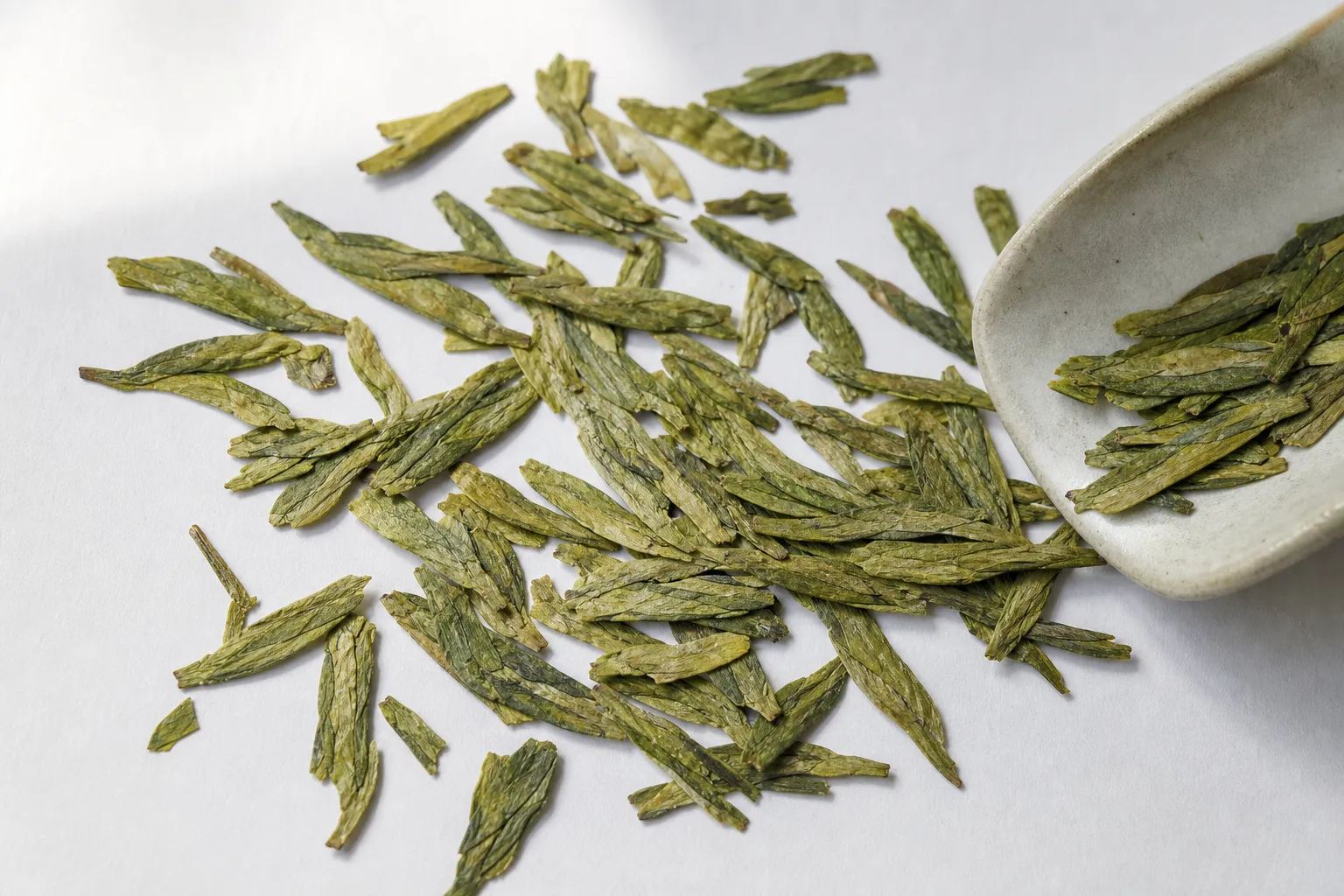
Dragon Well tea leaves should look flat, narrow, and pressed, not curled, balled, or needle-like. In a dry handful, the pieces usually sit like small green blades: smooth, flattened strips with enough similarity that the batch looks like one tea. They should not be mostly dust, crushed fragments, bare stems, or powder.
Color is useful, but it is not a single test. Dragon Well tea leaves may look pale green, yellow-green, muted olive, or a deeper quiet green depending on processing, storage, age, and light. A coherent color range matters more than chasing one perfect shade.
That first look can guide buying expectations, but it cannot prove origin, grade, harvest date, or authenticity by itself. Longjing flat leaves tell only part of the story. Read the leaf before the claim.
upward
Start with the broader guide
Use the broader guide first if you need the full scope before this page.
The Quick Visual Check
Spread a small spoonful of dry leaf on a white plate, plain paper, or the inside lid of a tea tin. Neutral light helps more than special equipment; a warm kitchen bulb can make leaves look yellower, while hard sunlight can make them seem brighter than they are.
For Dragon Well tea leaves, start with the Longjing leaf shape. The dry pieces should be mostly flat and pressed, with a fairly straight blade-like profile. They should not resemble tightly rolled gunpowder tea, curled green tea, fluffy white tea buds, or the broken fannings found in tea bags.
Four checkpoints
- Shape: mostly flattened strips, not curled balls or twisted needles.
- Size: reasonably similar pieces, with natural variation rather than machine-perfect sameness.
- Color: green, yellow-green, or muted olive, read under neutral light.
- Integrity: more recognizable leaf pieces than dust, crumbs, stems, or powder.
These are appearance cues, not certificates. A neat-looking tea can still brew flat or harsh, and a slightly uneven batch can still make a pleasant daily cup if the aroma and taste are lively.
Why Flatness Matters
The flat shape is the visual feature most readers are looking for. Dragon Well green tea appearance is strongly associated with this pressed look, so a batch that is mostly curled, balled, or wiry may not match the usual expectation for Longjing-style tea.
Flatness gives the leaf a recognizable identity before brewing. When you scoop the tea, the pieces may overlap like small green blades. Some will be broader, some narrower. A few may have tiny bends, chips, or uneven ends. That is still different from a pile of dust or a tea broken into short fragments.
Flatness has a limit. It can suggest a Longjing-like style, but it does not confirm where the tea was grown, how it was processed, when it was harvested, or whether the seller’s grade language is reliable. Terms such as spring harvest, premium grade, handmade, or famous origin need more than a glance at the leaf.
The practical rule is simple: if a tea sold as Dragon Well has no flat-leaf character at all, pause before buying. If it does, keep checking color, consistency, aroma, and the brewed cup.
Color Range: Useful, But Easy to Overread
Dragon Well tea leaves do not need to match one exact green. Dry leaf appearance can sit in a soft range: pale green, yellow-green, light olive, or deeper muted green. Lighting, storage, processing, and age can all shift what you see.
Look for balance rather than a paint-chip match. A batch that looks broadly harmonious is easier to read than one with sharp contrast: bright green pieces mixed with brown scraps, many dark broken bits, or a large amount of pale stem. Some unevenness is normal in loose-leaf tea; heavy dullness, excessive browning, or a dusty bottom layer lowers buying confidence.
Color can also shape brewing expectations. Fresher-looking green tea may lead you to expect a lighter cup and a more lifted aroma; older or poorly stored tea may look flatter and brew with less brightness. That is a sensory expectation, not a guarantee. The cup still has to confirm it.
Do not reject Dragon Well just because it is slightly yellow-green. It is not matcha powder, and it is not sencha. It does not need to look neon, glossy, or deep emerald to be plausible.
Consistency Without Expecting Perfection
Visual consistency is one of the most useful checks because it does not require knowing a farm, cultivar, or grade system. Spread the leaves out and ask whether the batch looks like one tea, or like sweepings from several piles.
Consistent Dragon Well tea leaves usually share the same general shape family. The pieces may vary in length and width, but they should not jump wildly between flat blades, curled fragments, thick stems, and powder. If many pieces are crushed, the tea may brew faster and taste sharper because small fragments expose more surface area to water.
A small amount of breakage is normal. Loose-leaf tea is handled, packed, shipped, scooped, and stored. The concern is proportion. If the bottom of the bag is mostly crumbs, if the leaves look shredded, or if the pieces behave like dust in the cup, the visual quality is weaker for tea sold as whole or loose-leaf Dragon Well.
Very tidy leaves can look appealing, but neatness alone does not prove careful sourcing. It may only show closer sorting, or that the visible portion of the package was selected well. Appearance should open the question, not close it.
What the Leaves Look Like After Brewing
Dry leaves answer the first question; wet leaves answer a slightly different one. Once Dragon Well is brewed, the flattened pieces should soften, expand, and become easier to read as leaf material rather than dry strips. This helps you see whether the tea was mostly intact or mostly broken.
Use moderate water if you want to observe the leaf calmly. Very hot water can push bitterness and make delicate green tea harder to judge. A short first steep also keeps the cup from becoming too strong while the leaves open.
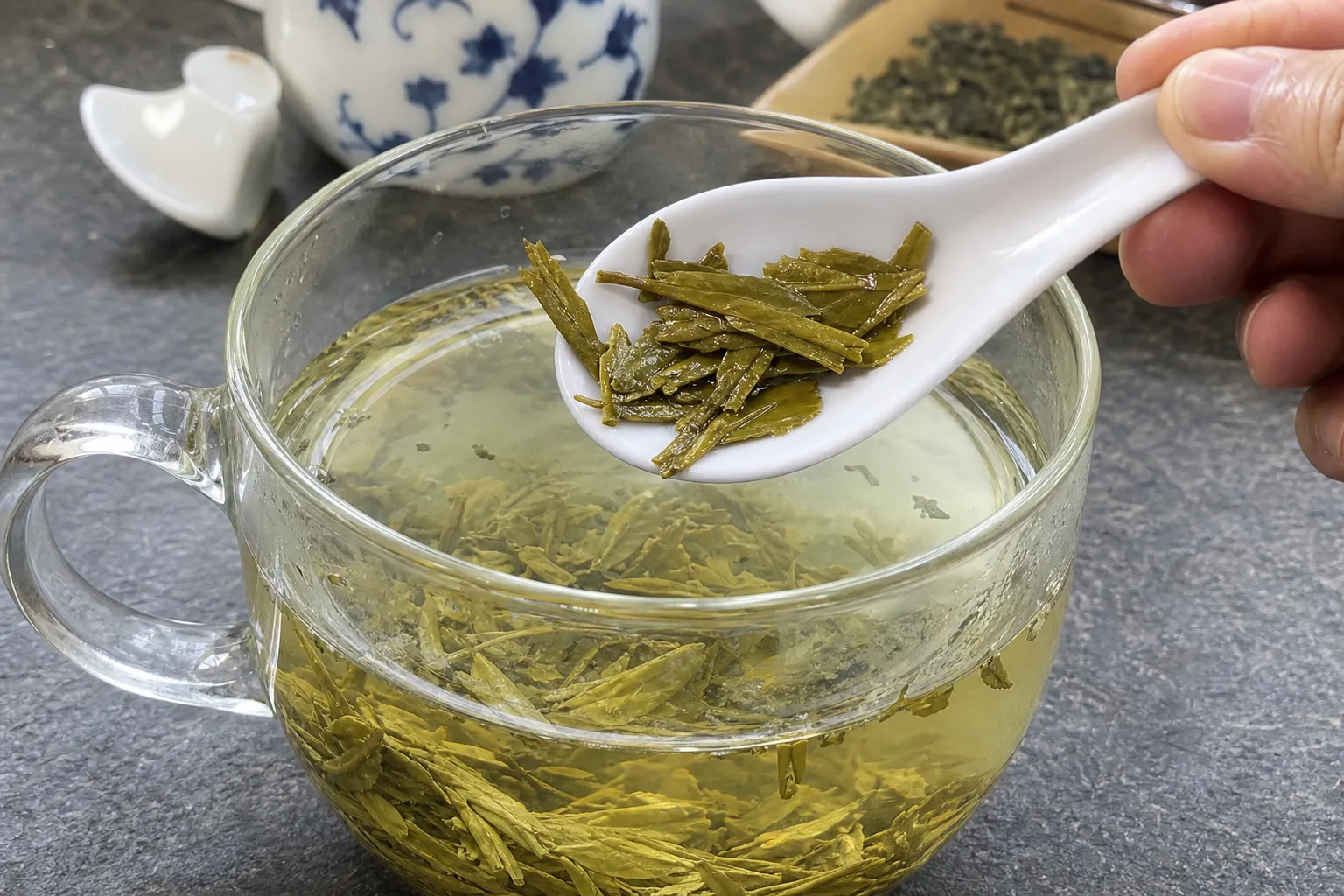
After steeping, look for these signs
- Do they open into recognizable leaf pieces?
- Are many pieces still flat and blade-like, or mostly tiny fragments?
- Is the wet color reasonably even, or full of dark, dull scraps?
- Does the cup smell fresh and gentle, or flat, stale, smoky, or harsh?
Aroma and taste matter because appearance can mislead. A handsome dry leaf that brews thin or stale is not saved by its shape. A slightly uneven leaf that gives a clear, pleasant cup may still be useful for daily drinking.
Common Confusion When Judging Dragon Well Leaves
Flat does not mean perfect
Dragon Well leaves may be pressed-looking without being rigid, identical, or ruler-straight. Natural leaf material bends. Edges can lift. Some pieces may overlap or curve slightly in the tin.
Other green teas look different
Sencha often has a more needle-like or slender broken look, depending on style and handling. Matcha is a powder, so it should not be judged by leaf shape at all. Other loose-leaf green teas may be curled, twisted, rolled, or pan-shaped.
Appearance is not the whole proof
A batch can look like Longjing and still carry unclear origin claims. Polished language around grade, estate, spring timing, or rarity still needs evidence beyond the leaf.
Dragon Well is visually distinct because the flat profile is part of the buying expectation. The leaf can help you notice mismatch; it cannot confirm the full story.
If the tea is sold as Dragon Well but looks nothing like flat Longjing leaves, the mismatch is worth questioning. If it looks plausible, move to cup quality, seller transparency, storage condition, and price context before making a larger judgment.
What Appearance Can and Cannot Tell You
Appearance can help with
- Whether the tea visually matches the broad expectation for Dragon Well green tea.
- Whether the dry leaf is mostly flat.
- Whether there is heavy breakage.
- Whether the color is coherent.
- Whether the batch seems visually consistent.
- Whether crumbs may brew faster or larger intact leaves may need more time to open.
Appearance cannot prove
- The exact origin.
- A named area, specific garden, harvest window, or grade.
- How the tea was stored before it reached you, except through indirect clues such as dull color, stale aroma, or excessive dryness.
- How your body will respond to caffeine.
- Any wellness claim based on leaf shape.
Dragon Well is a green tea and contains caffeine, but leaf shape does not tell you how your body will respond to it. If caffeine or personal health concerns matter for you, treat tea as a beverage choice and rely on qualified guidance for individual questions.
The strongest use of appearance is modest: it helps you decide whether to keep looking, brew a small test cup, ask a seller better questions, or pass on a batch that looks badly mismatched.
A Simple Buying and Brewing Check
- Before buying, look for a seller image or sample that shows the actual dry leaves, not only a styled cup. The leaves should show the flat Longjing profile clearly enough for you to judge shape, color range, and broken material. If the photo is too dark, too distant, or only shows a decorative spoonful, it may not answer the visual question.
- When the tea arrives, open the package and smell before brewing. Appearance and aroma belong together. A visually tidy tea with a tired or musty smell deserves caution. A fresh, gentle aroma does not prove origin, but it gives the first brew a better starting point.
- For the first cup, use a small amount of leaf and a short steep so you can observe without overwhelming the taste. If the dry leaves include many fragments, shorten the steep or lower the water temperature slightly. If the leaves are larger and intact, give them enough time to soften. Let the kettle and the leaf explain the cup.
The best answer to “what should Dragon Well tea leaves look like?” is not a luxury image. It is a practical sequence: flat leaves, coherent color, limited dust, recognizable pieces after steeping, and a cup that supports the visual promise. Next time you open a tin, spread one spoonful out before brewing. The leaf will give you the first clue.