
Cup, leaf, setting
Chinese Green Tea Culture
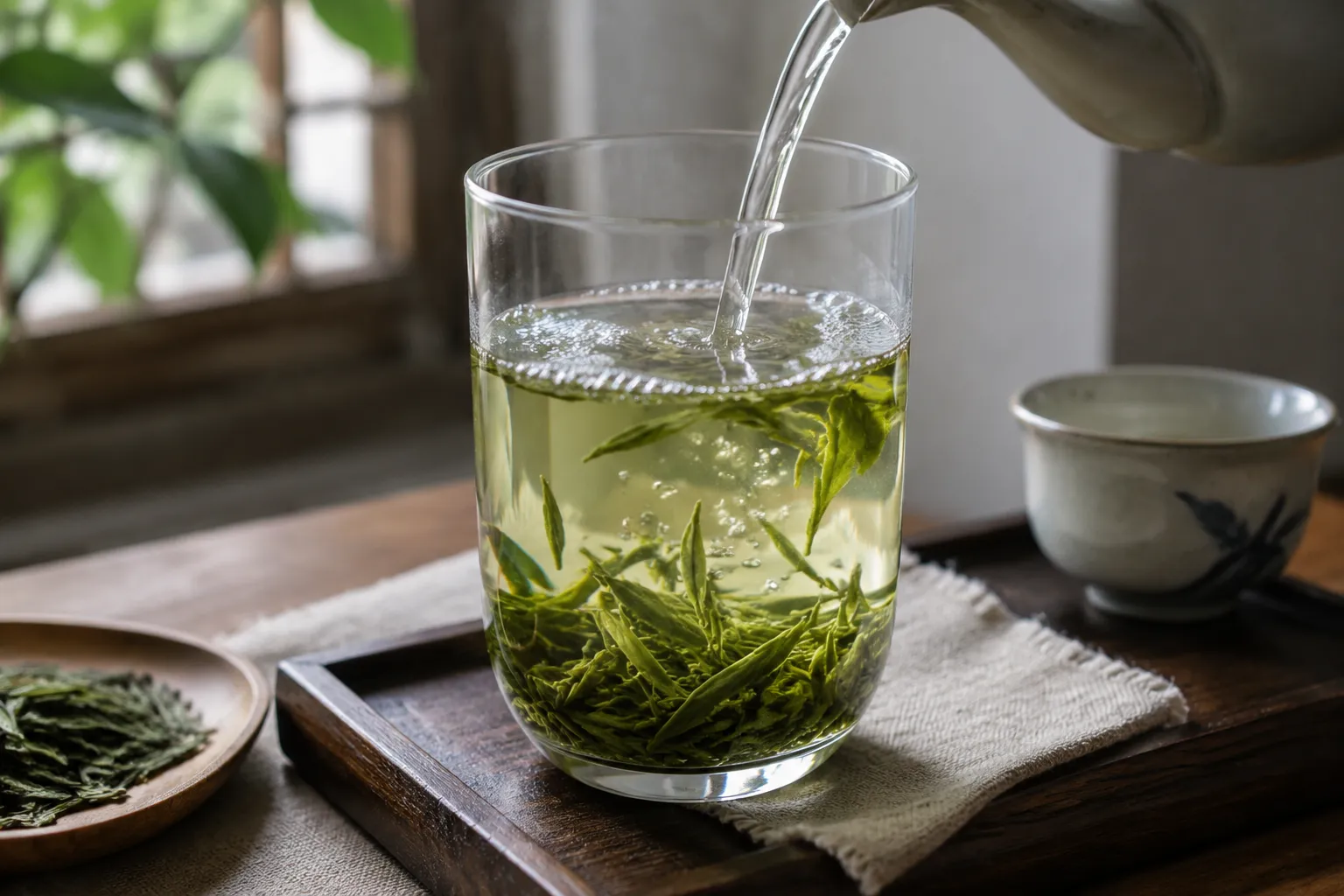
Flat leaves opening in a glass, a pale yellow-green cup, and a host adding hot water before the liquor turns too strong: these small details are often where readers first meet Chinese green tea culture. The confusion begins when one phrase is asked to explain too much at once. It may point to everyday desk drinking, a spring gift, a Longjing Dragon Well expectation, a casual glass-cup brew, or a more focused tea table using gongfu language.
Those settings overlap, but they are not the same.
The most useful way to read Chinese green tea culture is through the variables that change the cup: leaf shape, vessel, water temperature, steep time, season, storage, and the reason tea is being served. Tradition gives context. The cup gives the check.
upward
Start with the broader guide
Use the broader guide first if you need the full scope before this page.
What Chinese Green Tea Culture Means in Everyday Drinking
Everyday Chinese green tea is not only a ceremonial subject. Much of its meaning sits in ordinary choices: loose leaves in a glass, a covered cup beside work, a small pot after a meal, or a package of spring tea brought to a host. The culture is practical before it becomes symbolic.
Daily drinking
Notice refilled leaves, lighter color over time, and changing bitterness. This can show how the tea behaves across water additions, but it cannot prove exact origin, grade, or a health result.
Guest service
Notice a clean cup, attentive refilling, and modest serving gestures. These can show care, welcome, and attention, but not one universal etiquette rule.
Tea-focused session
Notice smaller vessels, shorter steeps, and repeated tasting. These can show aroma and texture changes across infusions, but not that every Chinese green tea should be prepared this way.
Gift context
Notice packaging, harvest wording, variety name, and freshness cues. These can show social care and seasonal awareness, but not authenticity, value, or quality by wording alone.
A daily cup asks whether the leaves can hold up while someone drinks slowly. A tea table asks how aroma and texture shift from one short infusion to the next. A gift asks whether the gesture fits the relationship and season. Those are different decisions, not different levels of seriousness.
Why Chinese Green Tea Is Often Brewed in Glass Cups
Glass cups appear often in Chinese green tea because they make the leaf visible. The drinker can watch leaves open, sink, float, or stand at different angles while the liquor deepens. For teas where leaf shape and unfolding are part of the pleasure, the vessel becomes part of the observation.
A glass does not make tea better by itself. It changes what the drinker can read. Bitterness is easier to trace when the leaves remain in view: more heat, more leaf, longer contact, or too little dilution from later water can all push the cup sharper.
Glass-cup brewing also suits a slow refillable style. Leaves stay in the cup while more water is added. The first portion may be brighter and more aromatic; later additions may turn gentler or thinner. If the cup becomes harsh, the adjustment is usually simple: use cooler water, fewer leaves, or refill before the remaining liquor gets too concentrated.
The limit matters. A glass cup can show leaf behavior, but it cannot confirm origin, grade, or cultural importance. It is a vessel, not evidence by itself.
What Grandpa Style Means for Chinese Green Tea
“Grandpa style tea” is a casual English-language label for brewing loose leaves directly in a cup or glass and refilling with hot water as needed. The practical idea is familiar in Chinese green tea drinking even if the English phrase is not the center of the tradition: leaves remain in the drinking vessel, and the cup changes over time.
This style works best as a patience test. Too many leaves can make the liquor thick and sharp. Water that is too hot can flatten delicate aroma into bitterness. Waiting until the cup is nearly empty before refilling can leave a strong base that overwhelms the next pour.
A useful rhythm is to leave some liquor in the cup before adding more water. That remaining tea softens the next pour and keeps the flavor from restarting too abruptly. The drinker is not chasing a fixed recipe; they are managing strength through water and time.
Relaxed does not mean careless. The leaf still has to be read.
Is Gongfu Tea Used for Chinese Green Tea?
Gongfu tea language can appear around Chinese green tea, but it should not be treated as the only frame. Gongfu-style preparation usually means more leaf relative to water, smaller vessels, shorter steeps, and repeated infusions. The point is attention: noticing aroma, sweetness, texture, and bitterness as they change.
For some green teas, that attention is useful. For very tender leaves, too much heat or intensity can make the first pour astringent before the tea has a chance to show its quieter side. A gaiwan can highlight a tea’s structure, but it can also expose mistakes quickly.
This is where people mix concepts. Gongfu tea is sometimes spoken about as if it automatically means better taste or higher seriousness. In practice, it is a preparation choice. Glass brewing may be better for watching leaves and drinking slowly. A gaiwan may be better for comparing infusions. A mug may be best for an ordinary afternoon.
The better question is not “Which one is the correct culture?” It is “What does this vessel help me notice?”
Longjing Tea Tradition and the Problem of Overreading Names
Longjing Dragon Well often becomes the reference point when readers think about Chinese green tea culture. Its flat leaf shape, spring associations, and frequent appearance in gift or sourcing language make it prominent in many green tea conversations. But the name alone should not carry more certainty than the tea can support.
A Longjing-related cue can shape expectations: flat leaves, a gentle roasted impression, fresh green character, and careful packaging language may all matter. Yet a familiar name, elegant box, or origin phrase should not be treated as a complete quality judgment. Without stronger documentation for a specific tea, those signs remain cues, not conclusions.
The same caution applies to “traditional” language. It may suggest care, continuity, or regional identity, but it still needs practical checks: how the dry leaf looks, whether the aroma feels fresh or flat, how quickly bitterness appears, and whether storage has protected the tea from staleness.
Longjing flat leaves tell only part of the story. Water, storage, and sourcing details still matter.
Why Spring and Pre-Qingming Language Matter
Spring matters in Chinese green tea culture because freshness is often part of how green tea is valued. Readers commonly meet “spring green tea” and “pre-Qingming green tea” in product names, gift descriptions, and buying discussions. These phrases can signal early-season attention, but they should not be turned into complete judgments.
Pre-Qingming generally refers to tea associated with the period before the Qingming festival. In buying language, it often suggests early harvest timing. That may shape expectations around tenderness, aroma, and gift value, but it does not automatically mean the tea will taste better in every cup.
Freshness is also fragile. Heat, light, air, and moisture can dull delicate green tea character. A tea described as fresh still needs to be checked through aroma, color, and taste. Does the dry leaf smell lively or tired? Does the brewed cup feel clean or dull? Does the flavor carry through a few sips, or disappear after the first scent?
Freshness is a cup-level question before it is a label.
Why Chinese Green Tea Is Often Linked With Freshness
Green tea freshness is partly sensory. A fresh-feeling cup may seem lighter, cleaner, more aromatic, or less stale than an older or poorly stored one. The exact profile depends on the tea, but the reader’s task is consistent: separate freshness as an observable quality from freshness as market language.
Freshness can show up in several places
- Dry leaf aroma: lively, clean, and not musty.
- Leaf appearance: intact enough to suggest careful handling, without relying on looks alone.
- Liquor color: clear rather than muddy, while remembering that color varies by tea and brew strength.
- First sip: balanced enough that bitterness does not erase aroma immediately.
- Later sips: still present, not hollow after a brief flash of scent.
Storage can change the answer. A well-named tea can taste tired if it has been kept poorly. A modest tea can still be enjoyable if it is fresh enough and brewed with care.
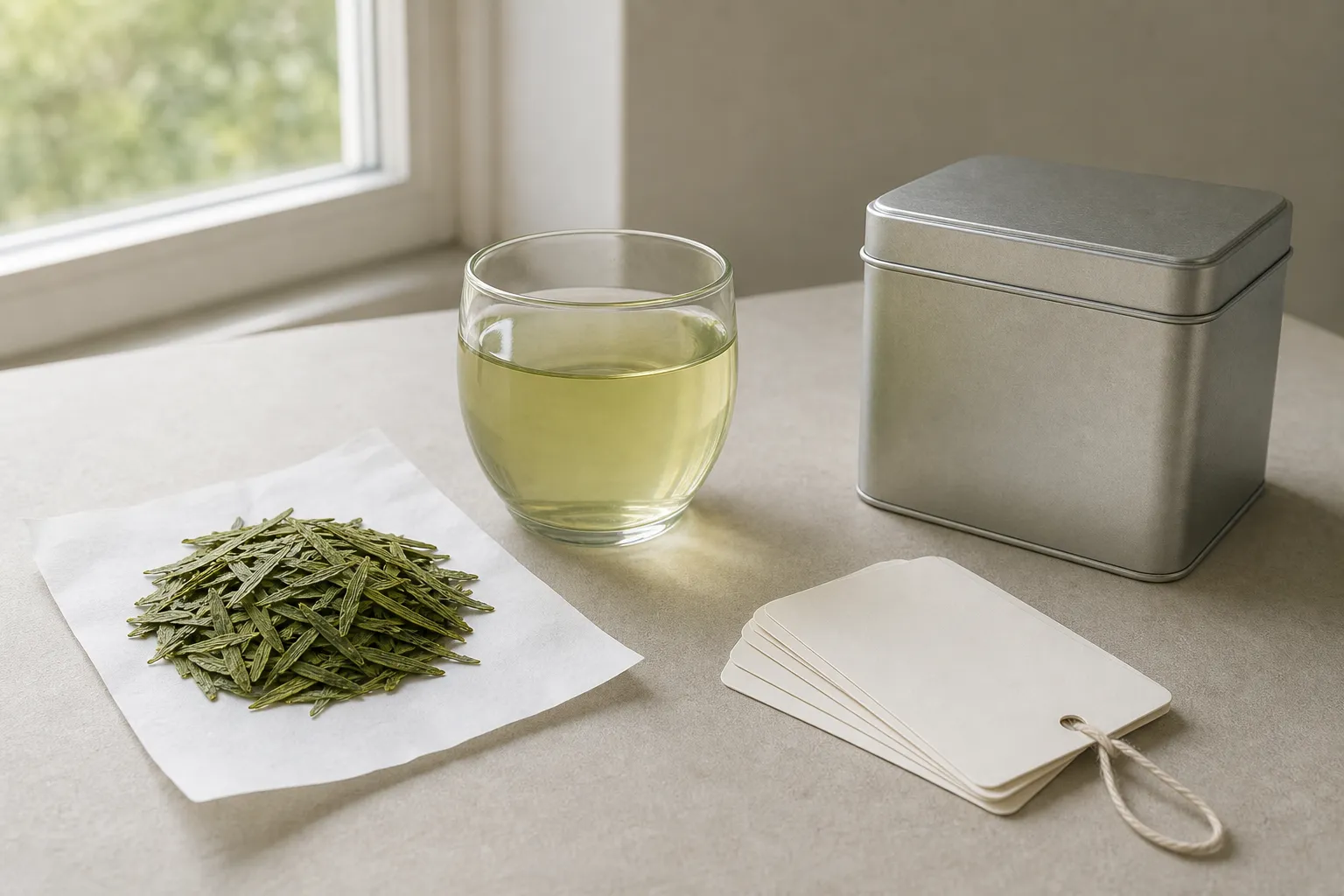
A storage tin cannot revive stale leaves, but it can help protect what remains.
Chinese Green Tea Etiquette for Guests and Hosts
Chinese tea etiquette becomes easy to overstate when it is presented as one strict script. For a green tea reader, the practical version is simpler: tea service often communicates attentiveness. A host notices the guest’s cup, the strength of the brew, the cleanliness of the vessel, and the pace of conversation.
The useful cues are modest. Do not fill a cup so full that it is awkward to hold. Do not ignore leaves that have become too strong. Do not make the guest manage every refill alone if the tea is being served as hospitality. At the same time, not every setting is formal. A family table, an office cup, and a dedicated tea session carry different expectations.
Green tea can also work as a social bridge. It may mark welcome, attention, seasonality, or respect. Those meanings are cultural and situational; they should not be turned into promises about personal change.
The clearest etiquette is often practical: serve a cup that can be comfortably received.
Chinese Green Tea as a Gift
A Chinese green tea gift can mean care, seasonality, taste, or social respect. It may be chosen because the recipient drinks tea, because spring tea feels timely, or because a known variety such as Longjing Dragon Well carries recognizable cultural weight. The gesture matters, but the package should not be read as proof on its own.
Gift tea creates a special kind of confusion. Decorative tins, origin language, harvest wording, and premium-sounding phrases can make a tea feel important before the leaves are brewed. Sometimes the tea is good. Sometimes the language is doing more work than the leaf.
A grounded way to judge a gift tea
- Gesture: Does the tea suit the relationship and occasion?
- Product cue: Do the leaves, aroma, and storage look handled with care?
- Drinking result: Does the cup taste balanced when brewed gently?
The first question is social. The second is observational. The third belongs to the kettle.
Why Chinese Green Tea Is Commonly Pan-Fired
Many Chinese green teas are associated with pan-firing or other heat-fixing methods that shape aroma, color, and leaf character. Without stronger source material for a specific tea, the claim should stay broad: processing affects taste, and Chinese green tea is often discussed differently from steamed Japanese styles such as sencha.
Pan-fired green tea is often expected to taste less marine or grassy than some steamed teas, though individual teas vary. A drinker might notice toasted, nutty, vegetal, or soft green impressions depending on the leaf and brewing. These are tasting cues, not rigid classifications.
This comparison also helps explain why Chinese green tea vs Chinese black tea in daily culture is not only a caffeine or color question. Green tea is usually lighter in liquor and less oxidized in character, while Chinese black tea tends to bring deeper color, fuller sweetness, and more warmth in the cup. The daily choice may depend on weather, meal, mood, or habit. It does not need to become a ranking.
Processing sets the direction. Brewing decides how clearly you can taste it.
Common Misconceptions About Chinese Green Tea Culture
The most common misunderstandings come from turning one visible cue into a full conclusion.
- A glass cup does not mean the tea is informal or low-value. It may simply be the best way to watch the leaves and drink slowly.
- A gaiwan does not automatically improve the tea; it changes control over infusion.
- A famous tea name does not settle origin or quality.
- A spring label does not replace freshness in the cup.
- A gift box does not prove careful storage.
Wellness language creates another blur. Green tea contains caffeine, and many drinkers talk about it in relation to focus, energy, or a lighter daily routine. That language should stay modest here. Sensory clarity, caffeine presence, and personal drinking preference are fair topics; claims about health results need stronger support than cultural language or market phrasing can provide.
There is also a cultural mistake in treating Chinese green tea as one unified performance. It can be quiet and domestic, social and hospitable, seasonal and gift-oriented, or tasting-focused at a small tea table. These settings are connected, but they are not interchangeable.
Read the leaf before the claim.
A Practical Way to Judge the Cup
When a term feels confusing, return to the variables that actually change the tea.
Start with the vessel. A glass cup favors visibility and slow refilling. A covered cup keeps heat and aroma closer. A gaiwan gives more control but can intensify mistakes. Then look at leaf amount and water temperature. If the brew turns harsh quickly, reduce one pressure point: less leaf, cooler water, shorter contact, or earlier refilling.
Next, ask what the cultural language is trying to do. “Spring” may point toward freshness. “Pre-Qingming” may point toward early harvest language. “Longjing” may point toward a familiar flat-leaf green tea tradition. “Gongfu” may point toward attentive infusion. None of those words should replace the cup.
Finally, separate social meaning from product judgment. Tea can be a welcome, a gift, a habit, or a focused tasting. The same leaves may feel different in each setting because the decision is different.
For the next cup, choose one cue to test: watch the leaves in glass, shorten the steep in a gaiwan, or smell the dry leaf before adding water. Chinese green tea culture becomes clearer when the claim returns to leaf, water, time, and taste.