
Longjing tea tradition
What Longjing Tea Tradition Means in Hangzhou Tea Culture
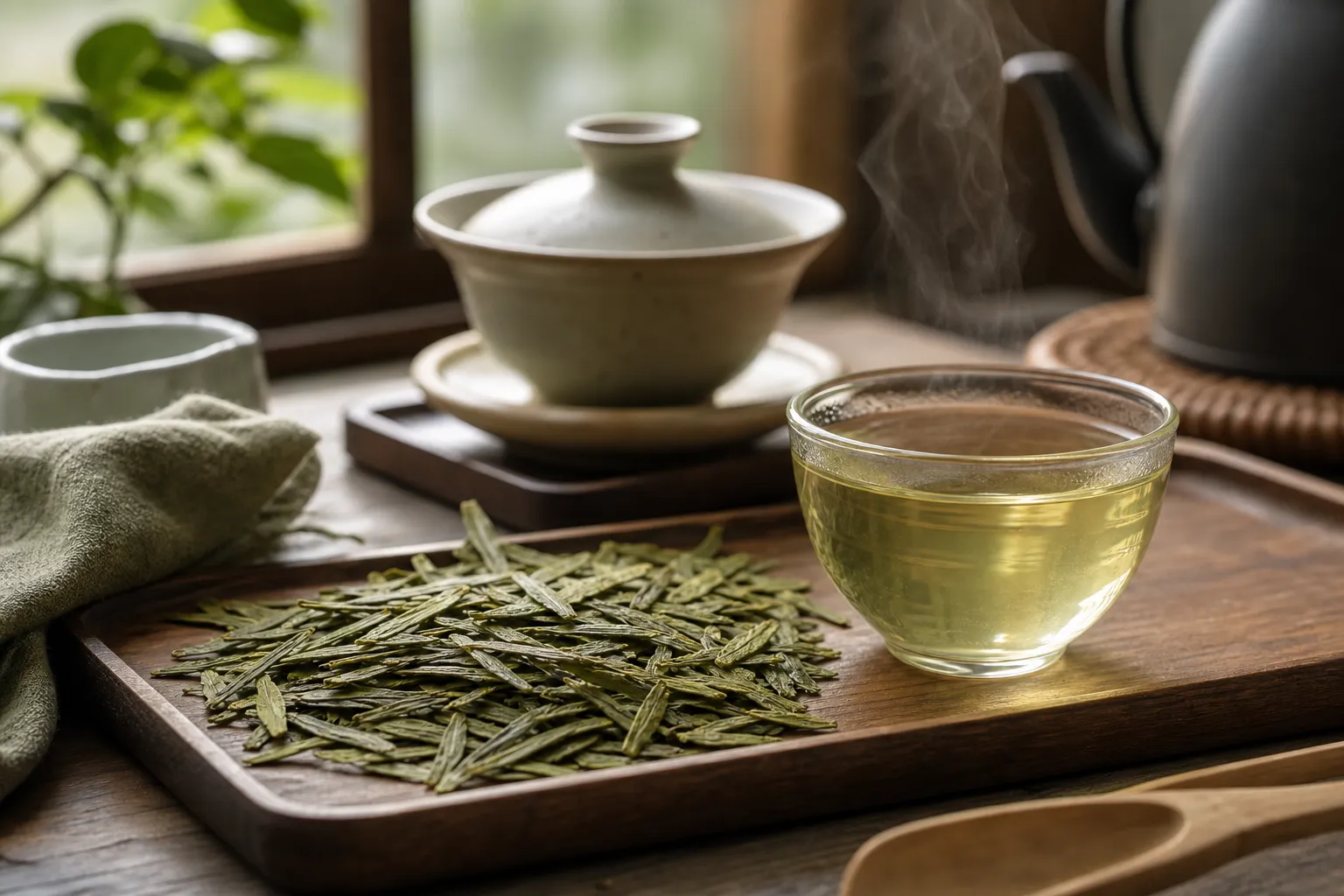
Flat Longjing leaves give the safest starting point: Longjing tea tradition means treating Longjing Dragon Well as a Hangzhou-associated green tea with visible leaf cues, careful preparation habits, and place-aware language. It does not mean every packet labeled “traditional,” “West Lake,” “heritage,” or “authentic” has proven origin, better quality, or a clear historical line.
For a drinker, the useful answer is practical. Longjing tradition is a way of reading the tea: the flat dry leaf, the clarity of the liquor, the aroma released by warm water, the balance of sweetness and bitterness, and the care taken with names on a label.
upward
Read the full overview first
Use the broader guide first if you need the full scope before this page.
The Practical Meaning of Longjing Tea Tradition
Longjing tea tradition sits where place, preparation, and social attention meet. Longjing Dragon Well is commonly associated with Hangzhou and with West Lake Longjing culture, but this page does not have the source base to make precise claims about dates, named villages, production boundaries, protected-use rules, or historical rankings.
So the safer frame is observable. The dry leaf should invite inspection before belief. The brewed cup should be judged by aroma, liquor color, texture, bitterness, aftertaste, and freshness. The name on the package should be treated as a sourcing cue, not proof by itself.
That matters because Hangzhou tea culture is often described with affectionate words: “classic,” “traditional,” “West Lake,” “spring,” “handmade,” or “heritage.” These words can show how the tea is being positioned. They do not, on their own, verify origin, processing, harvest timing, or cultural authority.
In that sense, Longjing cultural meaning is modest but useful: slow down, notice the leaf, and respect the place language without letting it become a sales shortcut.
What the Cup Can Show First
A Longjing cultural explainer should begin with the cup because the cup keeps the claim grounded. History may be interesting, but the reader still has to brew the tea in real water.
Useful Longjing tea cues include:
Leaf shape
Flat, inspectable leaves with reasonable consistency.
Liquor color
A clear infusion rather than a dull or murky one.
Aroma
Fresh green, nutty, lightly toasted, vegetal, or stale notes.
Bitterness
Sharpness that appears immediately, builds with hotter water, or follows a long steep.
Freshness
Aroma that holds through the first cup and does not collapse too quickly.
Mouthfeel
A cup that feels thin, rounded, drying, or smooth.
These observations do not prove a tea’s origin. They do help separate cup-level evidence from loose marketing language. A tea may have an elegant name and still taste flat. Another may have plain packaging and still brew cleanly.
Preparation also changes the answer. Very hot water can make a delicate green tea sharper. A shorter steep may show aroma before astringency takes over. Cooler water may soften the cup but reduce body. These are brewing effects, not proof of grade or place.
That is why Longjing preparation habits belong in this cultural discussion. Tradition is not only a story about where tea comes from; it is also a habit of paying attention while making it.
Hangzhou Tea Culture Without Overclaiming It
Hangzhou tea tradition is often approached through beauty: lake scenery, teahouse language, spring leaves, and the calm image of green tea prepared with care. Those associations may be part of how many readers encounter Dragon Well tea culture. Still, without stronger sources, this page should not present fixed local etiquette, detailed historical episodes, named figures, or official naming rules.
A more reliable frame is this: in Hangzhou tea culture, Longjing is commonly treated as more than a casual green tea name. It carries place-aware meaning. Readers meet it through origin language, seasonal language, gifting language, and quality language.
That does not make every phrase equally reliable. “West Lake Longjing” may appear as a naming cue, a market term, or a cultural reference. The current material does not support a precise explanation of geographic boundaries or protected naming, so the phrase should not become an automatic authenticity conclusion. Ask what the seller can document. Then return to the cup.
The same caution applies to “traditional.” A traditional style can mean a preparation habit, a processing claim, a family story, a regional association, or a simple marketing word. The useful next question is: traditional in what sense?
- Traditional leaf appearance?
- Traditional preparation style?
- Traditional local association?
- Traditional processing language?
- Traditional branding?
Culture can be meaningful without making every commercial phrase verifiable.
Where Readers Misread Longjing Origin Language
The common mistake is treating origin language as a complete quality judgment. A place name can matter, but it is not the same as tasting the tea, checking the source, or understanding how the leaves were handled after production.
“Longjing”
May suggest a Dragon Well-style green tea identity.
Does not prove exact place, grade, or freshness alone.
“West Lake”
May suggest a specific cultural and origin-aware association.
Does not prove verified boundary or production details alone.
“Traditional”
May suggest a claimed link to established tea practice.
Does not prove historical continuity or superior taste alone.
“Premium”
May suggest a seller’s quality positioning.
Does not prove better leaf, better sourcing, or better storage alone.
“Handmade”
May suggest a production-style claim.
Does not prove skill level, origin, or cup quality alone.
This is not cynicism. It is good tea reading. Market terms can be useful when they come with clear information; they become weak when they ask the reader to accept prestige without details.
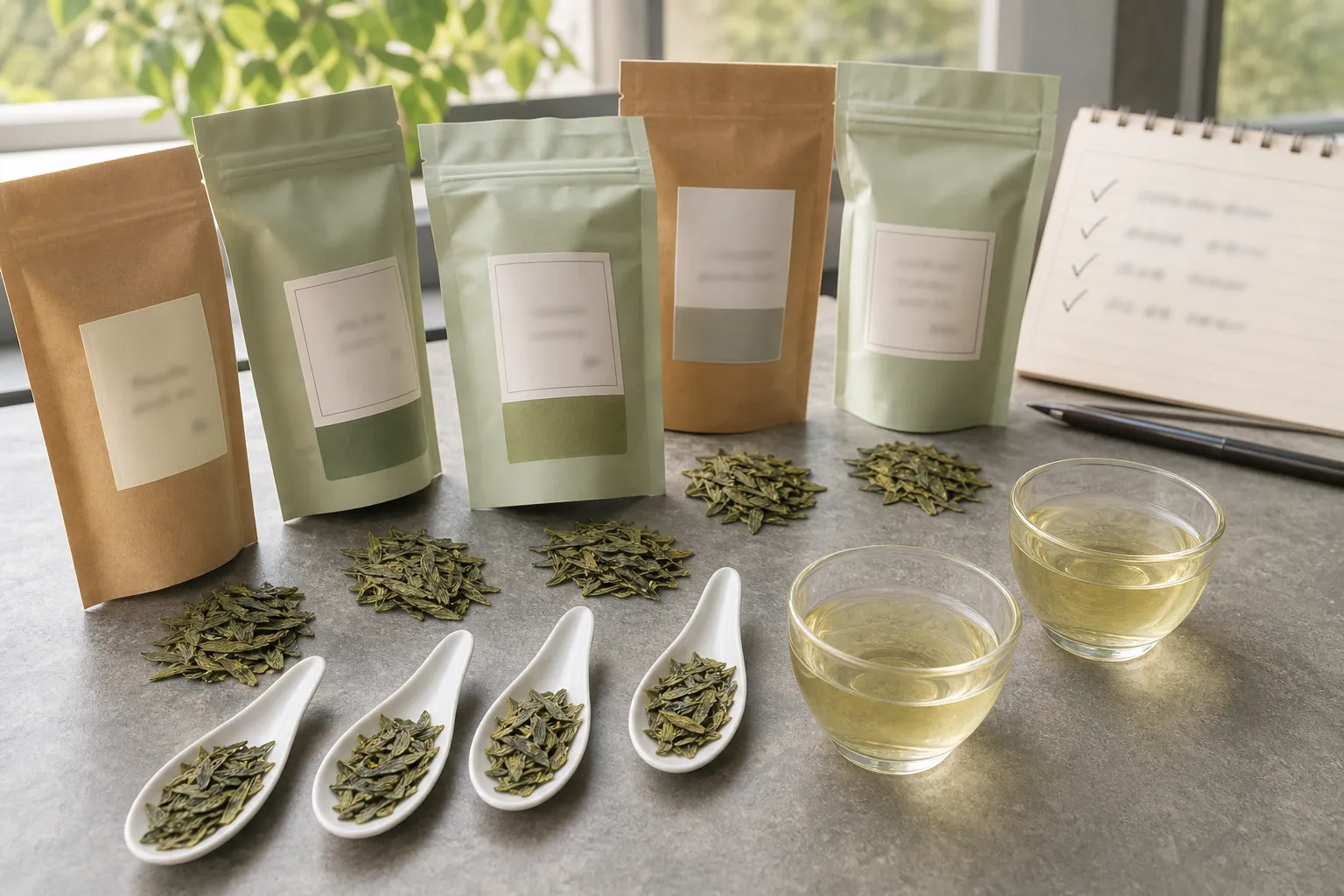
Longjing authenticity claims deserve the same restraint. A buyer may want a simple yes-or-no answer, but this page cannot provide an authentication standard from the current evidence set. What it can suggest is a reader habit: compare the name, the seller’s explanation, the leaf condition, the aroma, and the brewed taste. If the story is grand but the details are vague, pause.
The leaf will not verify every claim. It can slow down a bad assumption.
What Tradition Means in Your Own Cup
If you are drinking for taste, tradition means learning the sensory range without rushing to rank it. Notice whether the cup is gentle, brisk, nutty, grassy, sweet, drying, or flat. Keep the language close to the mouth.
If you are buying loose-leaf, tradition means reading the source language carefully. Ask what is being claimed and what is only implied. Look for concrete information rather than prestige words. Store the tea well once opened, because poor storage can erase the freshness that cultural language promised.
If you are comparing Longjing with matcha or sencha, tradition means not forcing one green tea culture onto another. Matcha asks the drinker to notice powder texture, whisking, foam, and suspension. Sencha often asks close attention to water temperature, leaf fragments, and savory or grassy shifts. Longjing asks for attention to flat leaf shape, clear infusion, aroma, and the way origin language appears around the tea.
If wellness is part of your interest, keep it secondary. Green tea contains caffeine, and some drinkers describe a gentler daily experience than coffee, but this page has no health evidence specific to Longjing or Hangzhou tea culture. Tradition should not be used as a health-outcome promise. If caffeine affects your sleep, anxiety, medication routine, or personal tolerance, treat the cup as a dietary choice that may need individual caution.
A cultural tea can be meaningful without carrying body-outcome claims. Taste first.
A Careful Way to Read Longjing Market Terms
A useful buying note for Longjing is not “trust nothing.” It is “trust specific claims more than decorative ones.”
When a seller uses cultural language, look for the supporting detail. Does the description explain the tea’s origin in a precise and checkable way? Does it describe the leaf and cup in terms you can compare later? Does it separate harvest timing, processing style, and place language instead of blending them into one luxury phrase?
A weaker description leans on mood: rare, classic, famous, old-style. A stronger description gives you something to inspect: leaf appearance, harvest context if available, storage advice, brewing range, aroma expectation, and a clear statement of what the name refers to.
Even then, each cue has a limit. A neat description does not replace sourcing records. A beautiful leaf does not prove a protected place name. A clean cup does not prove historical continuity.
This is where Longjing verifiable facts matter. If a claim is precise, it should be supportable. If it is only a mood word, treat it as mood. If it is about taste, test it in the cup. If it is about origin, ask for details. If it is about wellness effects, keep it outside the cultural meaning of the tea unless credible evidence is provided.
That separation protects both the reader and the tradition.
The Evidence Limit for This Page
The current research material for this page did not provide usable external sources for specific Longjing history, Hangzhou tea customs, West Lake Longjing naming rules, harvest classifications, production standards, local etiquette, or health-adjacent effects. Because of that, this article stays narrow.
It can explain how to think about Longjing tea tradition as a reader: observe the leaf, brew carefully, respect the cultural association with Hangzhou, and treat market language with care. It cannot verify detailed historical claims, decide authenticity, define protected naming boundaries, or rank grades.
That limit is part of the answer. A careful cultural page should not turn familiar tea stories into fact when the evidence is missing. Longjing is important enough to deserve better than overconfident wording.
For now, the strongest reader move is simple: read the leaf before the claim, brew the tea with attention, and let the cup tell you what the label cannot.