
Early spring tea cue
What Pre-Qingming Means in Chinese Green Tea Culture
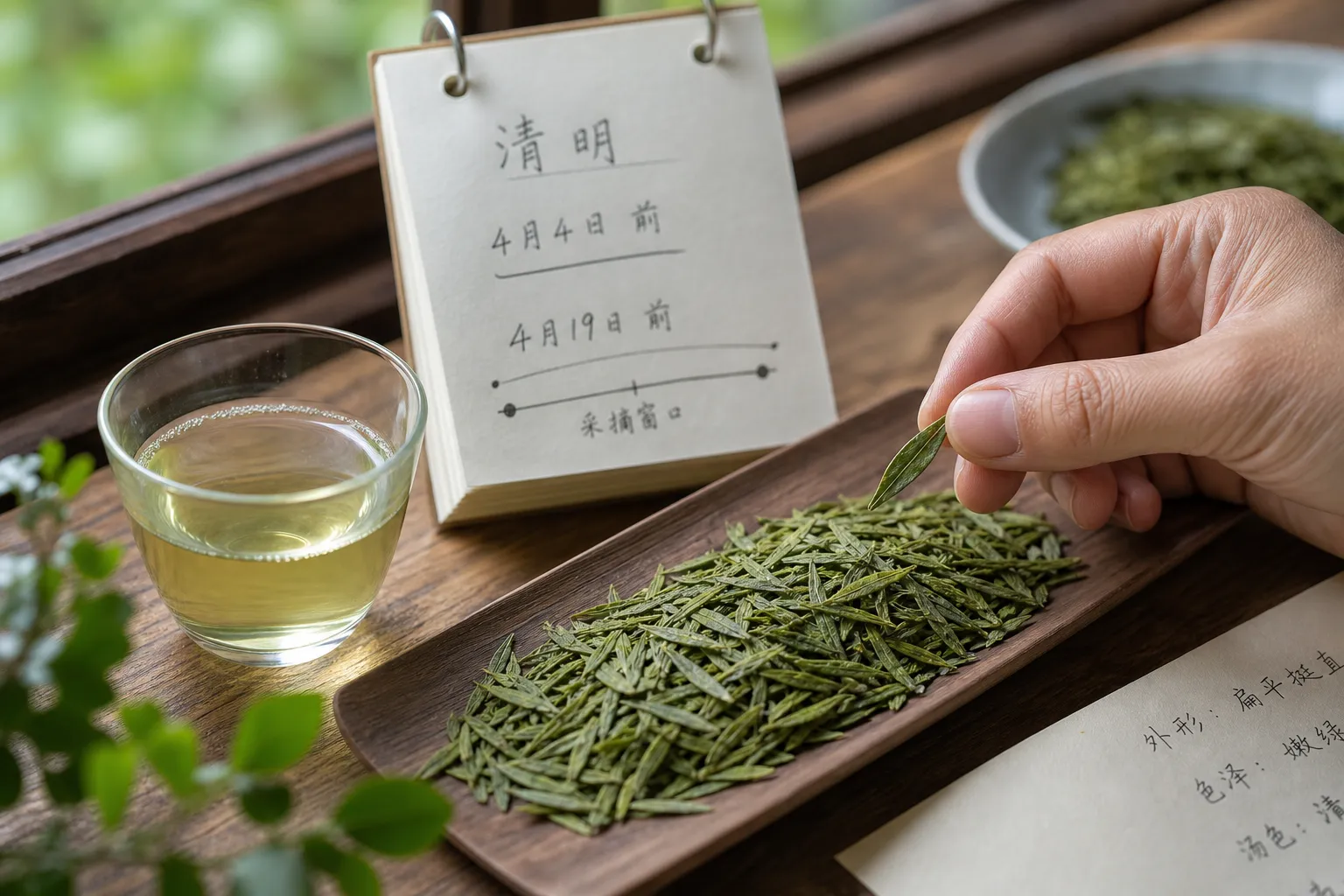
A packet of early spring Chinese tea often asks you to read the calendar before you read the leaf. In Chinese green tea culture, pre-Qingming Chinese green tea usually means tea presented as picked before Qingming, the early-April seasonal marker. The Chinese term often linked with this idea is Mingqian, or “before Qingming.”
That timing can suggest very early spring leaf, small buds or tender young material, and a cup that many buyers expect to taste fresh, delicate, and lightly sweet. It does not, by itself, prove origin, grade, price fairness, storage quality, or better flavor. Read the leaf before the claim.
upward
Start with the broader guide
Use the broader guide first if you need the full scope before this page.
The Meaning Is Mainly Timing, Not a Universal Grade
Pre-Qingming tea culture starts with a seasonal idea: the first part of spring matters. In green tea, early picking is often valued because young leaf can carry a fine aroma, light body, and soft texture when the tea is handled well. In market language, Mingqian green tea is often treated as desirable because it belongs to that early spring window.
But timing is not a complete quality system. A label that says pre-Qingming does not tell you the cultivar, garden elevation, processing skill, storage condition, or how the tea will behave in your cup. It tells you how the tea is being positioned. It does not finish the evaluation.
This matters with famous Chinese green teas such as Longjing Dragon Well, where early spring language can sit close to origin language, leaf-shape language, and price language. Flat leaves, pale green liquor, chestnut-like aroma, and a soft finish may all be part of a buyer’s expectation for good Longjing, but pre-Qingming alone cannot confirm those details. Leaf shape still matters. Aroma still matters. The brew still has to answer.
For a reader comparing early spring Chinese tea, the safest interpretation is simple: pre-Qingming is a timing cue with cultural weight, not standalone proof of excellence.
Why Qingming Became a Prestige Marker
Qingming is a seasonal point in the Chinese calendar, and in tea language it often works as a dividing line between very early spring picking and later spring production. The meaning is partly agricultural and partly cultural. Before the weather warms further, the tea bush may be producing young shoots; with later growth, leaf size, yield, and cup character may change.
That is the broad frame behind pre-Qingming tea meaning. Early spring harvest timing becomes a way to talk about freshness, tenderness, scarcity, and care. Those words are common in tea-selling language, but they need careful reading. Freshness is not only a date. Tenderness is not only a slogan. Scarcity is not the same as better drinking.
The appeal is easy to understand in the cup. Many green tea drinkers look for a first infusion that feels clean rather than heavy, aromatic rather than dull, and gentle rather than harsh. Early picked tea is often associated with that style, especially when the leaves are processed and stored well. Still, without clear source details for a specific tea, the phrase should be treated as a cue to inspect, not a conclusion to accept.
Prestige also varies by tea type and region. Mingqian language may be especially visible around some famous Chinese green teas, but not every green tea should be judged by the same calendar rule. A later spring tea can be enjoyable. A very early tea can disappoint if processing, storage, or brewing is poor. Timing opens the question; it does not close it.
What Taste Expectations Are Reasonable
A pre-Qingming label usually leads buyers to expect a lighter spring profile. In practical tasting language, that may mean a soft aroma, a pale or bright liquor, less coarse bitterness, and a finish that feels fresh rather than roasted or heavy. These are expectations, not promises.
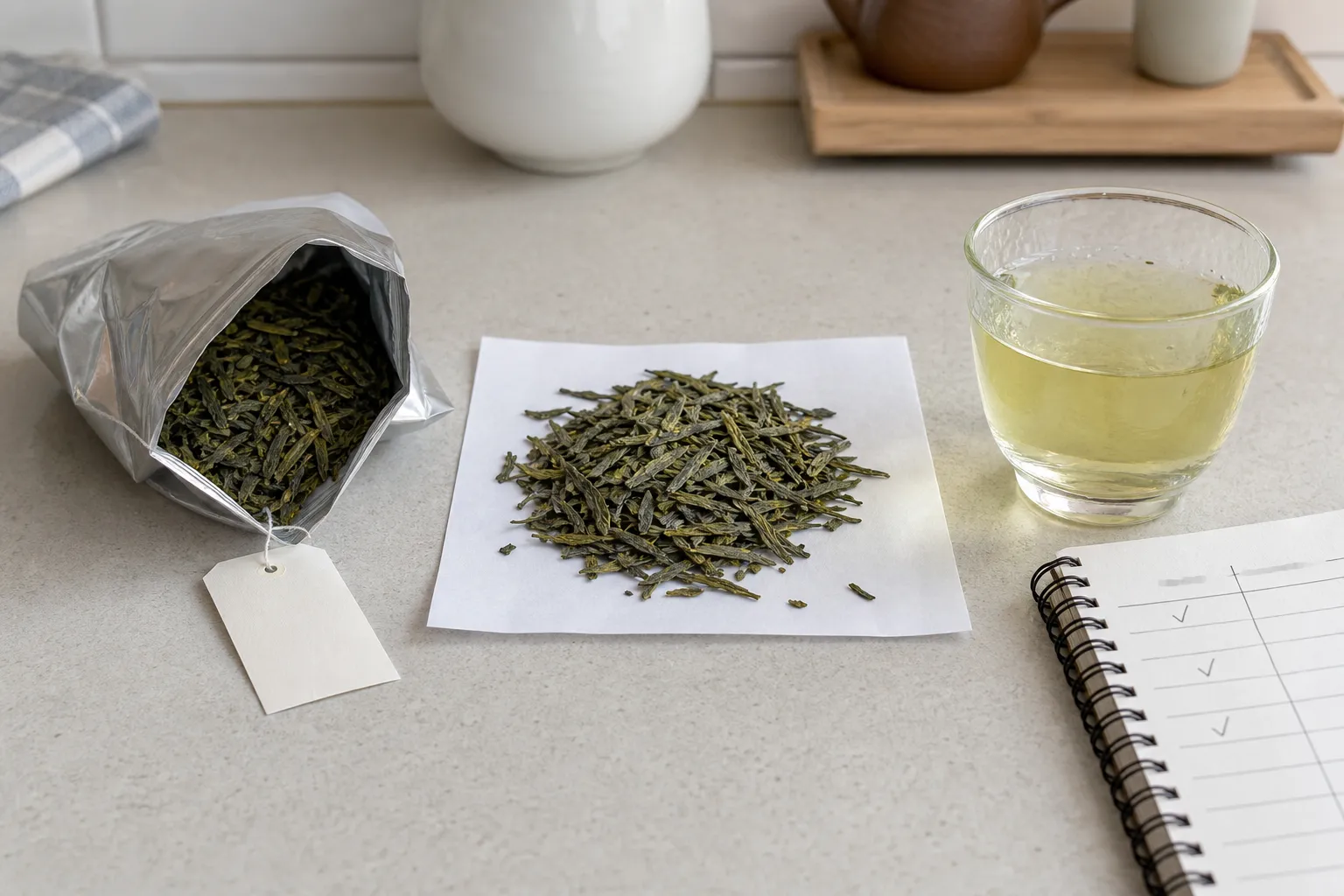
The dry leaf still deserves its own check. Are the leaves whole or badly broken? Do they look reasonably even for the style? Does the aroma seem clean, or is it flat, stale, smoky in the wrong way, or damp? A tea carrying early spring prestige language should not ask you to ignore basic sensory signs.
The first steep is often the clearest test. Use water that is not too hot for delicate green tea, keep the steep short, and watch how the liquor opens. If the cup becomes sharp, rough, or aggressively bitter right away, the cause may be brewing temperature, leaf ratio, processing, storage, or the tea itself. The label cannot explain the bitterness alone.
It also helps to compare pre-Qingming tea with later spring tea without assuming one must always win. Later picked green tea may have more body, stronger vegetal notes, or a different balance of aroma and bitterness. Some drinkers prefer that. The point is not to chase the earliest date at any cost; the point is to understand what the date is supposed to suggest in the cup.
For Longjing Dragon Well, a buyer may expect flat leaves and a smooth, rounded brew. For other Chinese green teas, the shape and flavor language may differ. Pre-Qingming timing should be read inside the style of that tea, not as a universal flavor code.
How to Read a Pre-Qingming Label When Buying
A pre-Qingming label is most useful when it appears with other clear information. Look for the tea name, harvest year, region or production area, leaf style, and storage condition if provided. None of these details makes the tea perfect, but together they give you a fuller buying picture.
Be more cautious when the label leans only on prestige language. Phrases about rarity, premium status, tender buds, spring freshness, or high value can be meaningful only if the tea itself supports them. In a careful buying decision, those words should lead to questions:
- What tea is it, beyond being early spring?
- Is the harvest year clear?
- Does the dry leaf look consistent with the named style?
- Does the aroma seem fresh and clean?
- Is the seller explaining storage, origin, or processing in plain terms?
- Is the price being justified only by the phrase pre-Qingming?
This is where Chinese tea buying caution becomes practical rather than suspicious. You do not need to reject the term. You just should not let it do all the work.
The source material available for this page does not verify exact regional rules, price behavior, scarcity claims, or sensory outcomes for every pre-Qingming tea. That does not make the term useless. It means the answer should stay narrow: pre-Qingming is a widely used timing and prestige cue in Chinese green tea culture, while any specific tea still needs visible product details and cup-level checking.
If a seller gives you only romance and no particulars, slow down. If a tea gives you clean aroma, intact leaf, clear harvest context, and a pleasant brew, the timing claim becomes more useful. The cup and the label should point in the same direction.
Common Confusions Around Mingqian Green Tea
Timing is not “best tea”
One common confusion is treating Mingqian tea meaning as if it were identical to “best tea.” It is better understood as tea presented as picked before Qingming. That may be desirable for certain styles, but it is not a complete quality judgment.
Earlier is not always smoother
Another confusion is assuming that earlier always means sweeter, smoother, or more refined. Green tea taste depends on many linked conditions: cultivar, field conditions, picking standard, processing, storage, leaf-to-water ratio, brewing temperature, and steep time. Early timing may influence expectations, but it cannot override all of those factors.
Cultural value is not a body-effect claim
A third confusion is mixing cultural value with health-adjacent language. Green tea contains caffeine and is often discussed in general wellness contexts, but a pre-Qingming label should not be treated as evidence of special body effects. If your reason for drinking green tea involves caffeine sensitivity, sleep, medication concerns, pregnancy, or another health-related concern, rely on qualified guidance rather than a harvest label. A tea page can describe taste; it should not make health decisions for you.
Repeated names are not extra proof
There is also a naming confusion. “Pre-Qingming,” “Mingqian,” and “before Qingming” are related ways of pointing to the same seasonal idea. They are not separate proof layers. Repeating the term in different languages does not make the tea more traceable.
The Useful Way to Think About It
Pre-Qingming Chinese green tea is best understood as a culturally important early spring signal. It tells you that the tea is being framed around harvest timing before Qingming, and it can prepare you to look for a fresh, delicate, young-leaf style. That is useful.
Its limit is just as important. It does not verify origin, settle price, or replace tasting. It should sit beside other cues: leaf appearance, aroma, named tea style, harvest year, storage, and how the first infusion behaves.
For a simple buying note, write down three things before you decide: what the label claims, what the dry leaf shows, and what the cup actually tastes like. If those three agree, the pre-Qingming timing has practical meaning. If they do not, trust the leaf and the brew more than the prestige phrase.