
Sencha processing cue
What Steamed Green Tea Means for Sencha
A packet that calls sencha a steamed green tea is giving you a processing cue, not a complete promise about flavor, color, grade, origin, caffeine, or wellness value. For a sencha drinker, the useful meaning is simple: “steamed” tells you what to check in the leaf and cup before you decide how the tea behaves.
The boundary matters. This article does not have citation-ready production sources for exact steaming levels, Japanese category terms, chemistry, caffeine, antioxidants, or fixed sensory outcomes. So the answer stays narrow: steaming may help explain why sencha is described as Japanese steamed tea, but the cup still has to be judged by leaf shape, water, time, aroma, bitterness, sweetness, and umami.
upward
Read the full overview first
Use the broader guide first if you need the full scope before this page.
The Short Answer: A Processing Cue, Not a Full Taste Promise
When people ask what steamed green tea means for sencha, they often want one label to explain one cup. That is understandable. “Steamed tea leaves” sounds like it should tell you whether the brew will be grassy, savory, bright, sweet, or bitter.
It cannot do that by itself.
A steaming claim may tell you the kind of production language a seller or source is using. It does not, on its own, prove freshness, grade, harvest timing, storage condition, origin, or how the tea will taste in your own pot. Those are separate checks.
Treat “steamed” as the beginning of the read. Look at the dry leaf. Smell the warmed leaf if you can. Watch the liquor color. Taste the first infusion with a controlled water temperature and steep time. Then decide what the label actually helps explain.
The cup gets the final vote.
What to Notice in the Leaf and Cup
Because the available material does not support firm claims about specific sencha steaming categories, it would be too strong to say that steaming always creates one color, aroma, bitterness level, or umami profile. The label is still useful if it helps you observe more carefully.
Dry Leaf
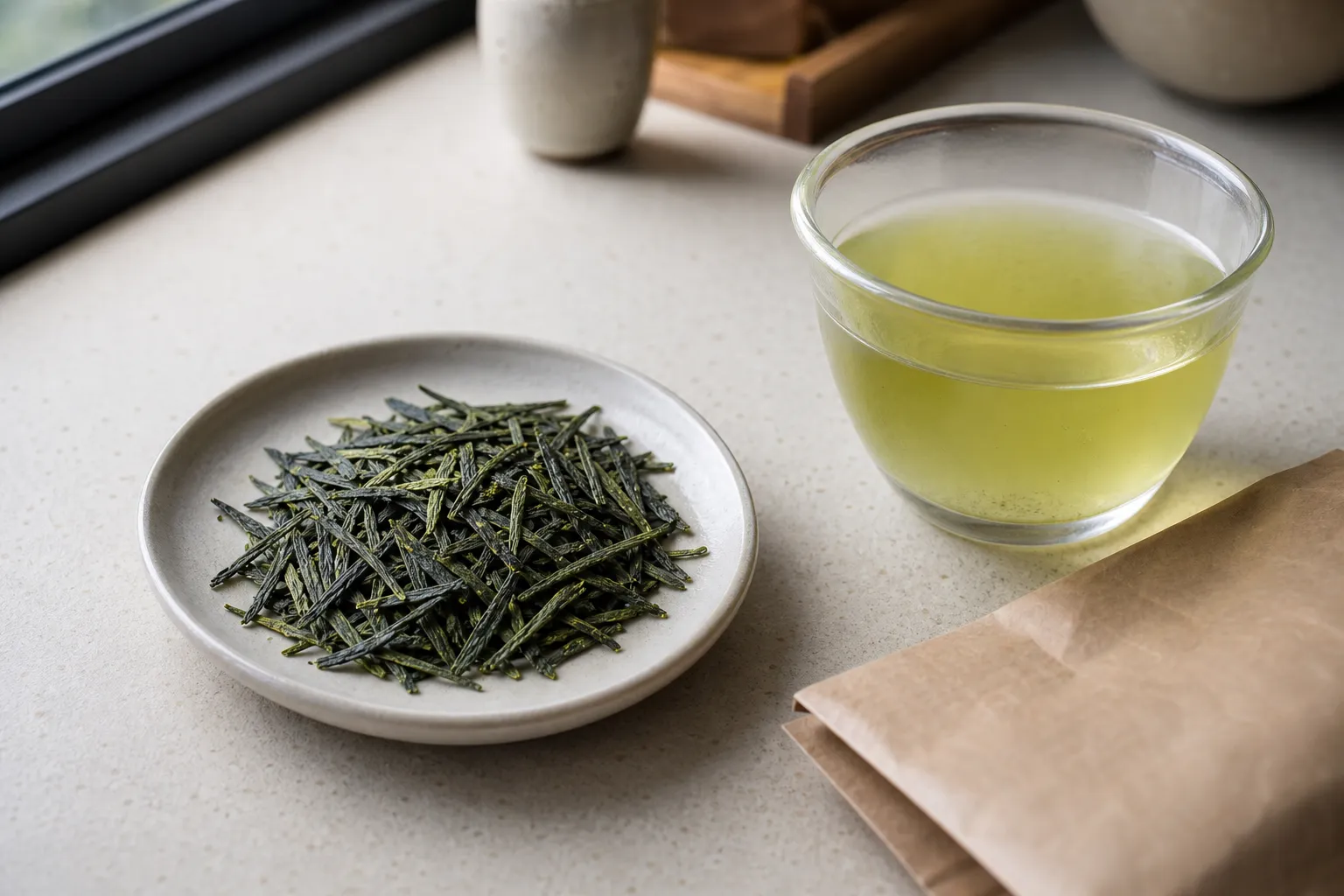
Start with the dry leaf. Is it fine, broken, needle-like, dusty, uneven, or mostly intact? A steaming label does not explain every shape, but leaf size can hint at brewing behavior. Fine fragments often release flavor quickly; larger pieces may open more gradually. That is a cup-level observation, not proof of processing quality.
Liquor Color
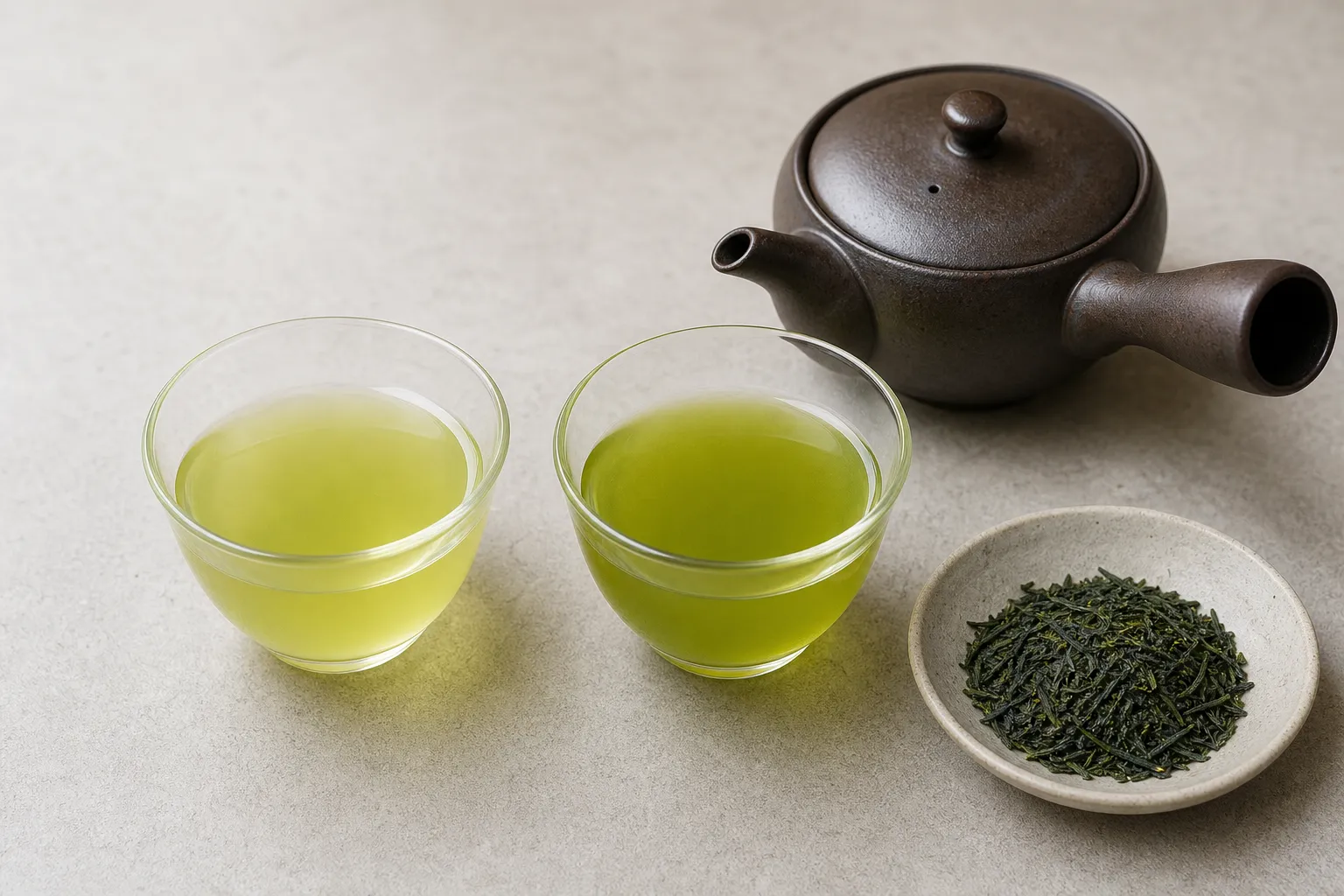
Then watch the liquor. A sencha may brew pale, bright, cloudy, deep, yellow-green, or dull depending on leaf size, age, storage, water, and preparation. Steamed green tea color is easy to overread. Record what happens with the same leaf amount, water temperature, and steep time before you turn color into a conclusion.
Aroma
Aroma deserves the same restraint. Some sencha drinkers look for fresh green notes, sea-like savory notes, sweetness, or a softer cooked edge, but those should not be treated as guaranteed results from the sencha steaming process. Smell first. Interpret second.
Taste
Taste is where small changes matter most. Bitterness, sweetness, and umami can shift quickly with hotter water or longer steeping. If the cup turns harsh, the cause may be the leaf, the water, the steep, storage age, or the fit between your method and this tea. Do not blame or praise steaming alone.
Read the cup before the claim.
How Steaming Language Should Shape Brewing
A steamed green tea label gives you a reason to brew sencha with attention, not a reason to lock into one rigid recipe. Since exact timing and temperature claims are not supported here, the safer method is to change one variable at a time.
If the first cup is too sharp, reduce intensity before you judge the tea. Try slightly cooler water, a shorter steep, or a little less leaf. If the cup feels thin, move carefully the other way: a touch more leaf, a longer steep, or warmer water. The goal is not to force sweetness or umami from a label; it is to find where this particular sencha tastes balanced.
Mixed leaf size can make the first infusion stronger than expected. Fine particles may release quickly while larger pieces still have more to give later. That does not prove authenticity or quality. It just tells you to watch the first pour closely.
A simple tasting sequence is enough
- Keep the leaf amount steady.
- Change only water temperature or steep time.
- Note whether bitterness rises before aroma opens.
- Watch whether the second infusion becomes sweeter, flatter, sharper, or more savory.
- Decide from the cup, not from the marketing phrase.
Sencha sweetness changes with water and time.
Common Confusion Around Steamed Green Tea and Sencha
Confusing it with grade
The first confusion is treating “steamed” as a quality grade. It is not. A tea can use steaming language and still vary widely by leaf condition, harvest, storage, handling, and brewing response. The word is too thin to carry the whole judgment.
Confusing it with one flavor
The second confusion is treating steamed green tea taste as one flavor. Wider tea descriptions may connect steamed styles with green, savory, or fresh impressions, but this article cannot turn those impressions into a rule. The actual sencha matters more than the category word.
Confusing it with origin proof
The third confusion is assuming that Japanese steamed tea language settles origin or exact method. It may point toward a cultural and production context, but a reader should still look for clearer notes: origin, harvest, storage, producer, processing detail, or brewing guidance from a source worth trusting.
Confusing it with wellness evidence
The fourth confusion is wellness drift. Green tea is often discussed alongside caffeine, antioxidants, focus, and daily routine, but a steamed sencha label should not be treated as evidence for a health result. If caffeine sensitivity or health concerns matter for you, use qualified guidance rather than a product phrase.
A sourcing cue is not a wellness conclusion.
What Would Make the Answer Stronger
A stronger answer would need reliable green tea production sources explaining the sencha steaming process, the terminology used for Japanese steamed tea, and how processing choices are described in tea agriculture, industry, or non-commercial education materials. It would also need careful brewing sources before making firm claims about color, aroma, bitterness, umami, or steeping behavior.
That matters because tea language travels easily. A shop page, tasting note, or marketplace listing can blend production facts, sensory impressions, and sales language. Without stronger support, the honest move is to keep the claim small.
When you see “steamed green tea” on sencha, ask what else the source gives you:
- Does it explain the processing term clearly?
- Does it give origin or harvest context?
- Does it mention storage or packing conditions?
- Does it offer brewing guidance without promising one fixed result?
- Does the cup match the description when brewed carefully?
If the answer is mostly no, treat the label as incomplete. You can still enjoy the tea; just do not let one production word make the whole decision.
A Simple Cup Check
Use the label as a hypothesis. Brew one small cup gently, then another with a slightly stronger extraction. Keep the leaf amount steady.
In the first cup, look for balance: aroma before bitterness, body without harshness, and a finish that tells you whether the tea wants cooler water or more time. In the second cup, see what changes. If bitterness quickly dominates, lower the intensity. If the cup stays quiet, give the leaf a little more help.
This small test does not identify an exact production method from your kitchen. It simply lets the steamed green tea label meet observable sencha brewing expectations.
The best answer is in the next pour.