
Beginner tea choice
Matcha vs Loose Leaf Green Tea for Beginners
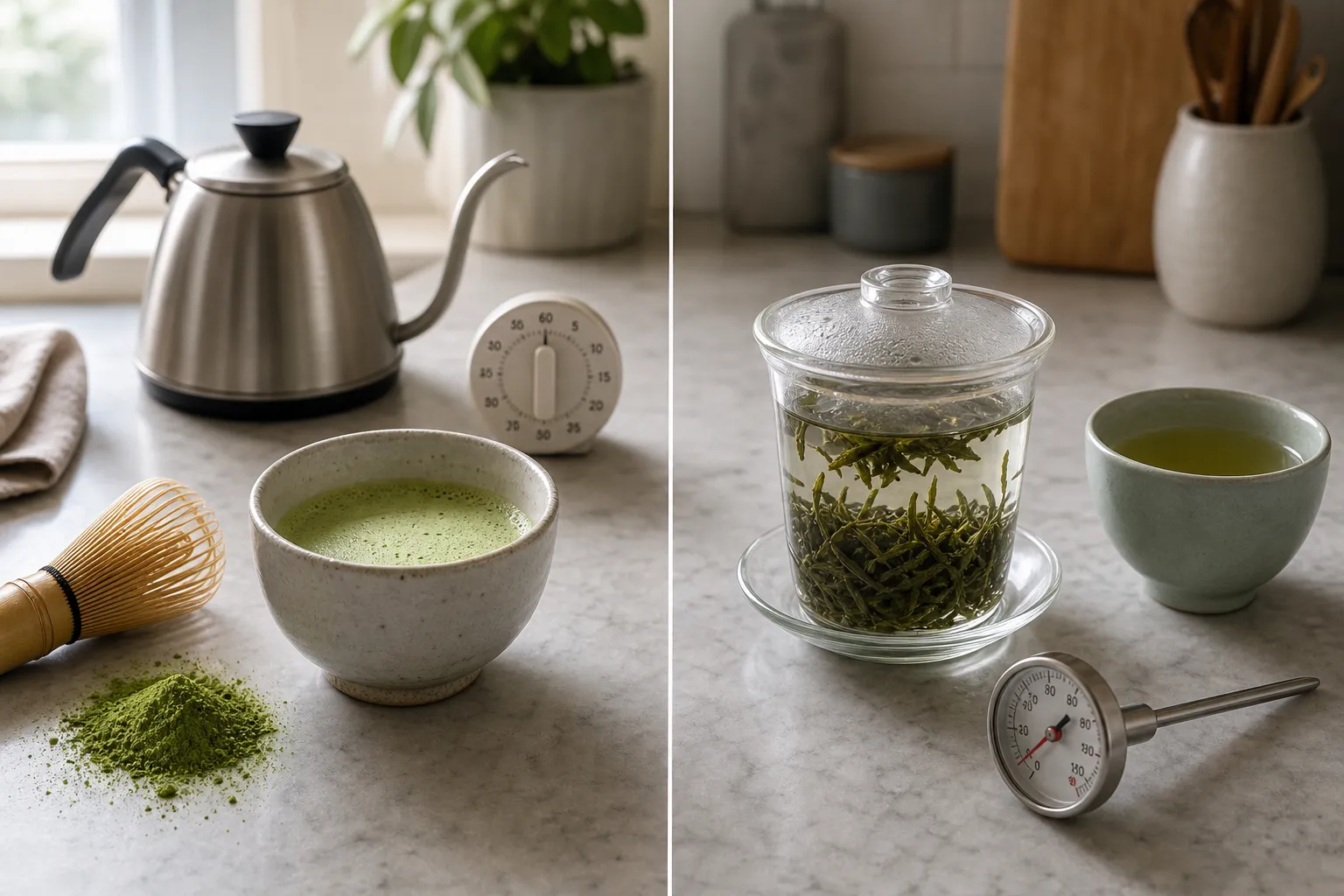
Matcha foam and loose leaves ask for different habits. For most beginners, loose-leaf green tea is the easier first choice if you want a gentler start, simpler cleanup, and more room to adjust water and time. Matcha is the better first choice if you like a fuller, greener cup, do not mind whisking, and want one concentrated serving instead of several light infusions.
That is the short answer to matcha vs loose leaf green tea for beginners: choose loose leaf for flexibility; choose matcha for immediacy and body.
The answer still depends on your kitchen, your taste for bitterness, your budget, and how much attention you want to give the cup. Leaf, powder, water, and time decide more than the words on the label.
upward
Read the full overview first
Use the broader guide first if you need the full scope before this page.
The Quick Choice: Matcha or Loose Leaf Tea
Choose loose leaf for flexibility
Loose-leaf green tea gives a beginner more ways to correct a difficult cup. If the first steep tastes sharp, you can lower the brewing temperature, shorten the steep time, use fewer leaves, or try a softer style such as a less assertive sencha or a flat-leaf tea like Longjing Dragon Well. The leaf remains visible, so you can notice shape, color, aroma, and how it opens in the pot or cup.
Choose matcha for immediacy and body
Matcha gives less room to hide. Because the powder is suspended in the drink, the cup carries the full texture and flavor of the tea. A good bowl can taste creamy, grassy, savory, and lightly sweet; a rough bowl can turn chalky or bitter quickly if the powder is stale, clumped, or mixed with water that is too hot. Matcha foam is a preparation signal, not proof of quality by itself.
If your priority is easy green tea preparation on a weekday morning, loose leaf often feels more forgiving. You need a cup, strainer, small pot, gaiwan, or simple infuser. You can steep, taste, and adjust.
If your priority is a compact ritual with one bowl and a whisk, matcha can feel direct. You loosen or sift the powder, add warm water, whisk, and drink soon after.
A useful beginner rule is simple: choose loose leaf if you want to learn green tea through small adjustments; choose matcha if you already enjoy bold green flavor and are willing to practice texture.
Preparation Feels Different Before the First Sip
Dry loose leaf gives you visible clues before water touches it. Longjing Dragon Well may show flatter leaves; sencha may look needle-like; other loose-leaf styles may be curled, twisted, or broken. Those shapes do not prove excellence on their own, but they help you slow down and notice what you bought. When water is added, the leaves soften, expand, and release aroma over time.
Matcha starts as powder. The beginner check is not leaf shape but texture: fine powder, few hard clumps, fresh color, and a smell that still seems lively rather than dull. For a first matcha or loose leaf tea decision, the practical difference is enough: one is infused and removed; the other is whisked into the cup.
Loose-leaf rhythm
- Use warm water rather than boiling water if bitterness is a concern.
- Measure the leaf, then adjust after tasting.
- Steep briefly, then pause to smell and sip.
- Make a second steep if the leaf still has aroma and flavor.
Matcha rhythm
- Use a small amount of powder, loosened or sifted if clumpy.
- Add warm water in a small pour.
- Whisk until the surface looks even and lightly foamed.
- Drink while the texture is still fresh.
Neither routine is automatically superior. Loose leaf teaches patience with water and steep time. Matcha teaches attention to powder, water volume, and whisking. The easier first green tea is the one whose small tasks you will actually repeat.
Taste Expectations: Light Infusion Versus Full Powder
Loose leaf green tea taste is usually easier to separate into stages. The dry leaf may smell nutty, grassy, marine, floral, toasted, or fresh-cut depending on style and storage. The first steep may be pale and aromatic; the next may become fuller. If the cup turns harsh, the cause is often practical: too much leaf, water that is too hot, or a steep that ran too long.
Matcha taste expectations should be more direct. Beginners often expect sweetness because matcha is used in sweet drinks, desserts, and café lattes, but plain matcha is not the same as a sweetened matcha drink. It can taste grassy, savory, vegetal, creamy, or bitter depending on the powder and preparation. Milk and sugar can soften the edge, but they also change what you are learning from the tea.
Texture matters more with matcha. A well-mixed bowl feels smoother; a poorly mixed one can leave dry specks on the tongue or a grainy finish. Loose leaf can also taste rough if over-extracted, but the liquid is usually clearer because the leaf is removed.
For a beginner green tea drinker, bitterness is not a failure signal by itself. It is information. With loose leaf, bitterness tells you to adjust water temperature, steep time, or leaf quantity. With matcha, bitterness may point to hotter water, too much powder, poor mixing, stale powder, or simply a flavor style you do not enjoy. Let the kettle explain the bitterness before blaming the tea.
Tools, Cleanup, and Routine Fit
Green tea tools for beginners do not need to be elaborate. Loose leaf can begin with a mug and a basket infuser. A small teapot, gaiwan, or kyusu can come later if you like the routine. The key beginner tool is not expensive teaware; it is a way to separate leaf from water at the right time.
Matcha asks for tools that affect texture. A bowl, whisk, and small scoop are common, and a fine sieve can help with clumps. You can improvise some parts, but the whisking step still matters because powder needs to disperse evenly. A lidded jar or electric frother may work for casual preparation, yet it changes the feel of the routine. For a first cup, the goal is not ceremony; it is an even drink.
Cleanup is different, not difficult
Loose leaf leaves wet leaves in an infuser, pot, or gaiwan. They need to be emptied and rinsed before they dry in place. Loose leaf cleanup is more about spent leaves.
Matcha leaves a green film in the bowl and whisk; it should be rinsed soon, especially if powder dries in the tines. Matcha cleanup is more about fine residue.
Routine fit is often the deciding factor. If you like repeating a small process and noticing how the cup changes, loose leaf suits that habit. If you want a compact bowl and a fuller drink, matcha may suit you better. The best beginner choice is the one that survives Tuesday morning.
Cost and Storage: Where Beginners Misjudge Value
Matcha cost for beginners can feel surprising because a small tin may look expensive beside a bag of loose leaf. But the comparison is not only package size. Matcha is used as powder in each serving, while loose leaf may offer multiple steeps from one portion depending on the tea and brewing style. Hard cost-per-cup claims need current price and serving data, so the safer beginner point is simpler: matcha often feels more sensitive to waste because each serving uses powder directly.
Loose leaf gives more room to buy small quantities and learn. A modest amount of sencha, Longjing Dragon Well, or another loose-leaf green tea can teach you whether you prefer nutty, grassy, marine, or mellow profiles. Buying less also lowers the storage burden.
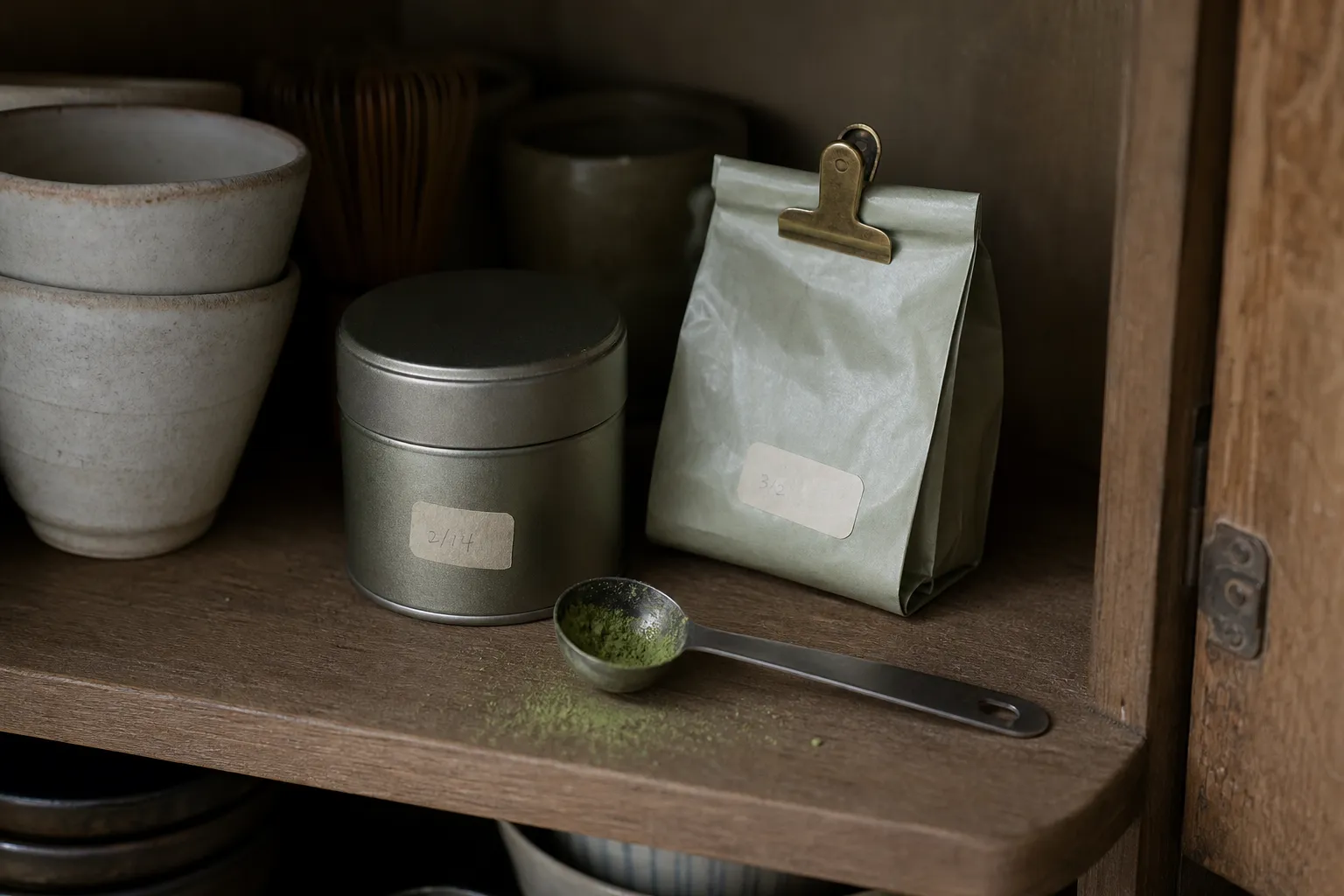
Freshness matters for both forms, but matcha is commonly handled with extra care because powder exposes more surface area to air than an intact leaf. Storage should be boring and careful: keep green tea away from heat, light, moisture, and strong smells. Use a tight tin or pouch, close it quickly, and avoid leaving the tea near spices, coffee, or steam. If a tea smells flat before brewing, better equipment will not fully bring it back.
The word “premium” does not solve storage. Neither does “ceremonial,” “estate,” or “antioxidant” language. Those terms may describe how a seller positions a tea, but they do not replace checking the powder, leaf, aroma, packaging, and your own cup. A sourcing cue is useful only when it leads to something observable.
Caffeine, Focus, and Wellness Claims Need a Smaller Voice
Green tea caffeine expectations matter because beginners often choose between matcha and loose leaf for a morning cup or an afternoon routine. Both matcha and loose-leaf green tea can contain caffeine, and people vary in how they respond. Exact amounts depend on serving size, leaf or powder quantity, preparation, and the number of cups or infusions.
Matcha is often described as feeling more concentrated because the powder is consumed in the drink rather than infused and removed. That does not make it a promise of steady focus, better work, or a specific body effect. Loose-leaf cups also vary widely by leaf amount, steep time, water temperature, and how many infusions you drink.
Claim boundary
If caffeine affects your sleep, anxiety, medication routine, pregnancy decisions, or medical care, a tea article is not the right authority. Use this page for beverage comparison, not personal health guidance. Taste first. Then notice how timing and serving size feel in your day.
Antioxidant language needs the same restraint. It is common in green tea marketing, but it should not decide your first purchase. For beginners, the more useful question is whether you like the cup enough to prepare it consistently, store it well, and avoid forcing yourself through bitterness because a label sounded persuasive.
Common First-Cup Mistakes
The most common beginner tea mistakes are small and fixable. They usually come from preparing green tea like black tea, preparing matcha like instant cocoa, or reading marketing words as brewing instructions.
Loose-leaf mistakes
For loose leaf, the usual problems are water that is too hot, a steep that runs too long, or an infuser packed so tightly that leaves cannot open. If the cup tastes thin, use a little more leaf or a slightly longer steep next time. If it tastes biting and dry, back down the heat or time. One change at a time teaches more than a complete reset.
Matcha mistakes
For matcha, the usual problems are skipping the clump check, using too much powder, pouring very hot water over it, or whisking only until the surface looks green. If the bowl tastes powdery, work on mixing and water volume before assuming you dislike matcha. If it tastes flat, check freshness and storage.
Beginners also overbuy. A large bag of unfamiliar loose leaf or a large tin of matcha can become a storage problem before it becomes a habit. Start small. Notice whether you reach for the tea twice in one week without forcing it.
A Simple Beginner Decision
Choose loose leaf green tea first if you want the most forgiving route into green tea preparation. It lets you see the leaf, smell the steep, adjust the water, and learn from mistakes without committing to one dense cup. It is especially friendly if you enjoy lighter flavors or want several small cups from one session.
Choose matcha first if you already like bold green flavor, want a fuller texture, and are willing to learn the whisking step. It can be satisfying, but it is less forgiving of stale powder, clumps, overheated water, and oversized servings. The powder tells on the preparation.
If you are still unsure, buy a small amount of each rather than a large starter bundle. Make loose leaf on one day and plain matcha on another. Keep the water warm rather than harshly hot, avoid sweeteners for the first taste if you want a clear comparison, and write down one observation: bitter, grassy, nutty, creamy, thin, savory, or fresh.
That note is more useful than a label. Your first choice is not a permanent identity; it is a cup, a leaf, and the next adjustment.