
Cup-level comparison
Is Matcha Powder the Same as Loose Leaf Green Tea
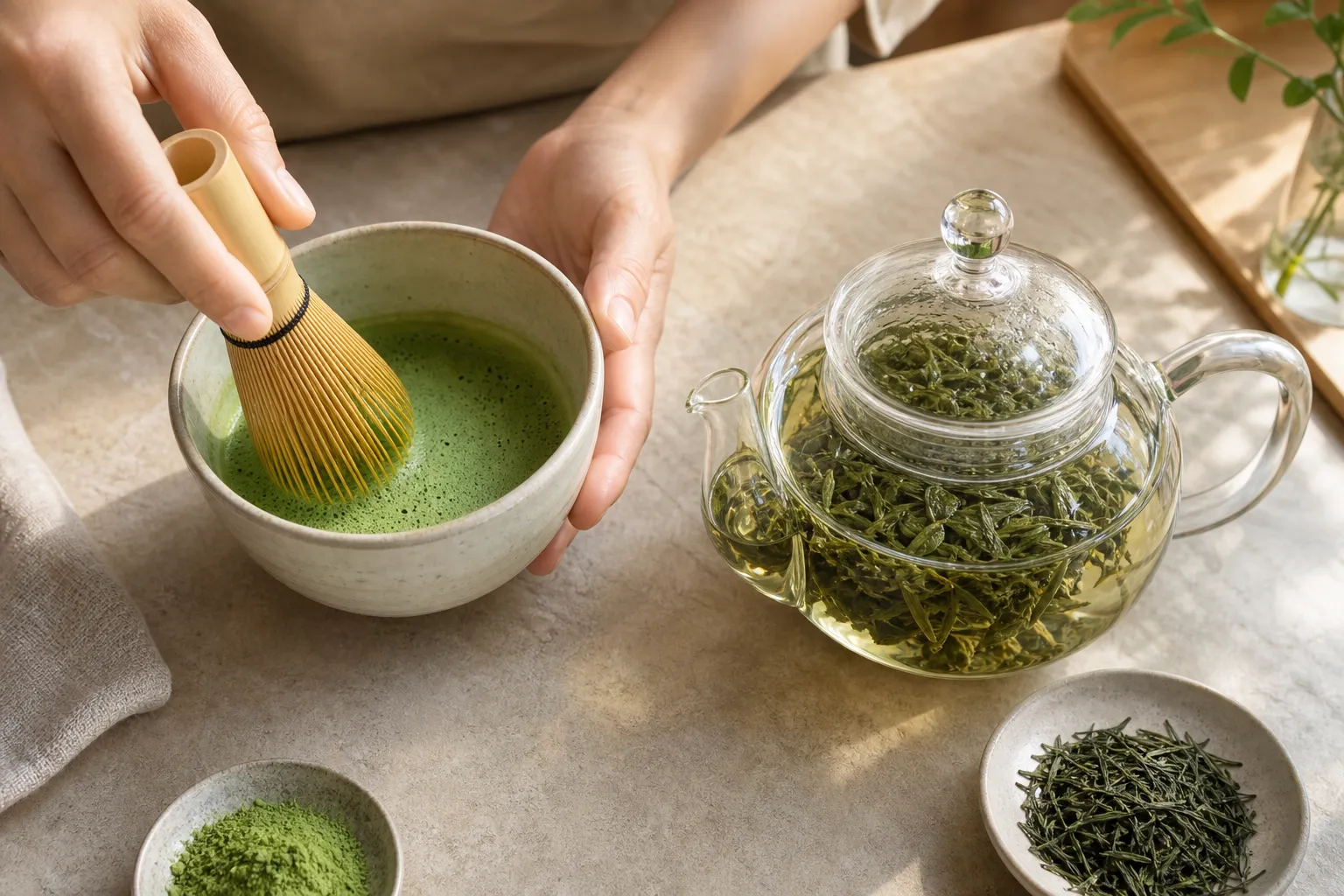
Matcha foam sits on the surface; loose leaves open, sink, or float in the pot. That visible difference gives the quickest answer: no, matcha powder is not the same everyday form as loose leaf green tea, even though both sit inside the green tea family.
If you are asking, “is matcha the same as loose leaf green tea,” the practical distinction is form and preparation. Matcha is powdered green tea that is mixed into the drink. Loose leaf green tea is made from leaves that are steeped in water and usually removed before drinking.
One becomes part of the cup. The other infuses the cup and leaves the vessel.
upward
Read the full overview first
Use the broader guide first if you need the full scope before this page.
The Short Cup-Level Answer
Matcha and loose leaf green tea can both begin as tea leaves, but they do not behave the same in the kitchen.
Matcha is a fine powder. When prepared as tea, it is whisked into water so the particles stay suspended in the bowl or cup. You are not only flavoring water and then removing the leaf; you are drinking the powdered tea material as part of the liquid.
Loose leaf green tea works differently. The dry leaves sit in hot water for a chosen steep time, then the drink is separated from the leaves. A Longjing Dragon Well leaf may lie flat and pale in the glass. Sencha may soften into a green mass in a kyusu. In both cases, the leaf gives color, aroma, and taste to the water, but the leaves are not normally consumed as the drink.
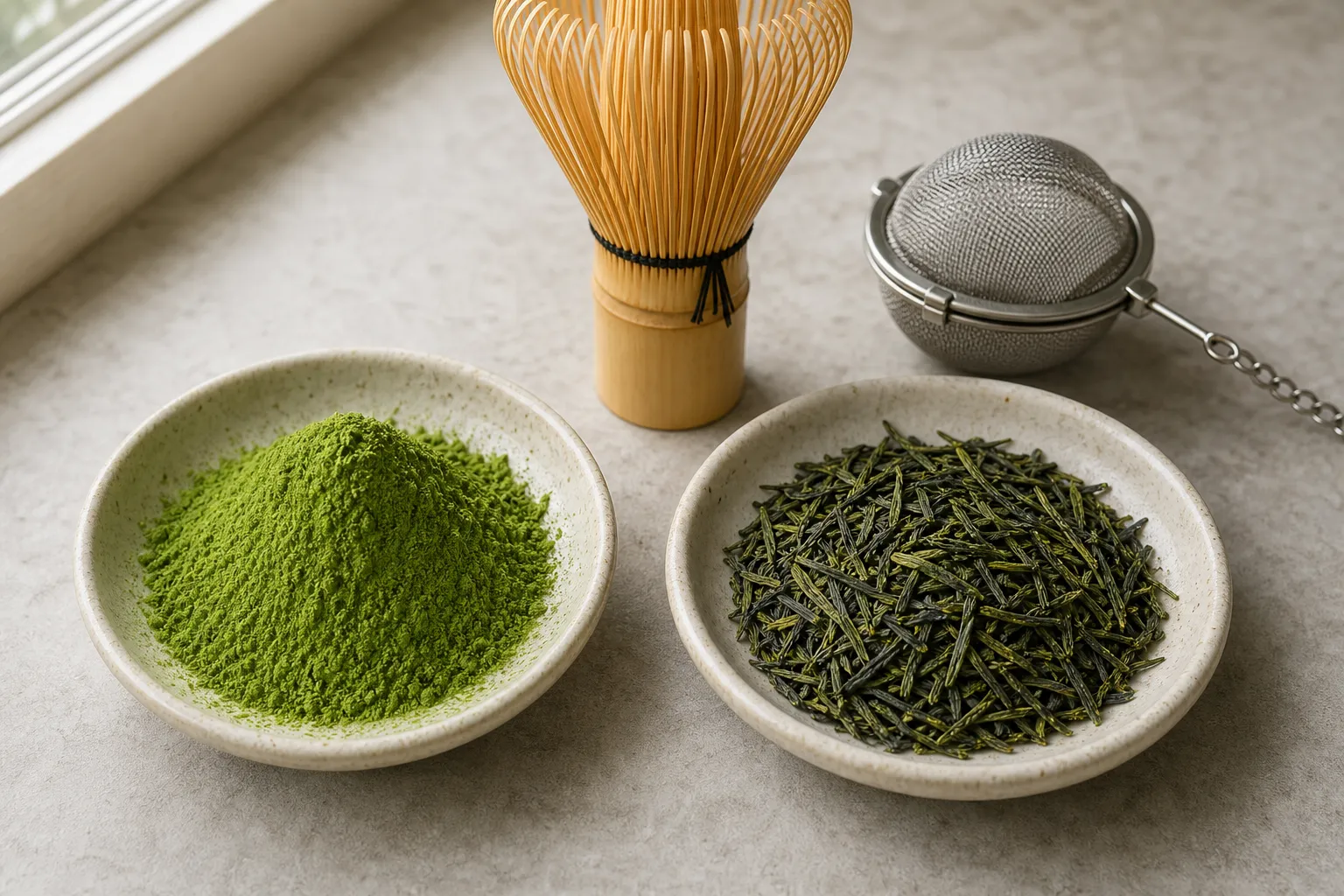
Before brewing
Matcha Powder
Fine green powder.
Loose Leaf Green Tea
Whole, broken, curled, flat, or needle-like leaves.
In water
Matcha Powder
Powder is whisked into the drink.
Loose Leaf Green Tea
Leaves are steeped and removed.
Cup texture
Matcha Powder
Opaque, suspended, often fuller-bodied.
Loose Leaf Green Tea
Clearer or lighter-bodied infusion.
Handling
Matcha Powder
Powder, bowl or cup, whisk or frother.
Loose Leaf Green Tea
Leaves, infuser, gaiwan, kyusu, teapot, or glass.
That is enough for most buying and brewing decisions. Powder and leaf are not interchangeable without changing the cup.
Why People Confuse Matcha With Loose Leaf Green Tea
The confusion is reasonable because “green tea” is a broad label. A package may say powdered green tea. A café menu may place matcha under green tea drinks. A shopper may see “whole leaf green tea” and “ground tea leaves” and assume they are just two presentations of the same thing.
At the broadest level, both are green tea products. But green tea is not one single preparation. Longjing Dragon Well, sencha, gyokuro-style teas, matcha, and many other forms can share the category while asking for different tools, water habits, and taste expectations.
The loose leaf green tea difference begins before water touches the tea. You can inspect the dry shape: flat, needle-like, curled, twisted, broken, or fine. With matcha, there is no leaf shape to read in the same way. You look instead at powder texture, color, clumping, aroma, and how it disperses when whisked.
So “is matcha loose leaf green tea” is usually the wrong framing. Matcha may be made from tea leaves, but once those leaves are ground into powder, it is no longer loose leaf in the everyday brewing sense. It follows a different preparation path.
Read the form first. The label comes after.
What Changes in Preparation
Loose leaves ask for steeping decisions. You choose leaf amount, water temperature, steep time, and vessel. Then you watch the liquor color and taste the balance of sweetness, bitterness, aroma, and body. If the cup is too sharp, you can shorten the time or lower the water temperature. If it is too thin, you can add leaf or steep a little longer.
Matcha asks for mixing decisions. You measure powder, add water, and whisk until the powder disperses. The foam is not only decoration; it is a preparation signal. If the powder clumps, the cup can taste uneven. If the water is too hot or the powder amount is heavy, bitterness may feel more forceful.
That is why “matcha whisked into water” matters. It explains the mouthfeel. The drink is usually more opaque, more concentrated in texture, and more immediate in flavor than a typical cup made from loose leaves steeped and removed.
Loose-leaf brewing is about extraction. Matcha preparation is about suspension. A small technical difference becomes a large sensory difference.
What Changes in Taste and Texture
A cup of loose leaf green tea can be pale, bright, grassy, nutty, marine, floral, toasted, or gently sweet depending on the tea and preparation. Longjing Dragon Well often points the drinker toward flat-leaf appearance and a softer pan-fired impression. Sencha can show greener aroma and a different kind of briskness. Those examples do not prove quality by themselves; they simply show how leaf style changes the cup.
Matcha often tastes more concentrated because the powdered tea remains in the drink. It may feel thicker, greener, more savory, or more intense than many steeped green teas. Some drinkers enjoy that density. Others prefer the cleaner separation of a loose-leaf infusion.
This is where matcha powder vs loose leaf green tea becomes a taste decision, not just a vocabulary question. If you want a lighter cup you can adjust steep by steep, loose leaf may feel more flexible. If you want a denser bowl or a drink that can hold its flavor in milk or a blended preparation, matcha is often the form people reach for.
Still, “matcha is stronger” is too broad by itself. Stronger color, thicker texture, sharper bitterness, higher powder concentration, and more direct green flavor are different observations. Name the cue you can taste.
Everyday Use Is Not the Same
Loose leaf green tea fits a rhythm of repeated steeping, quiet tasting, and small adjustments. You can brew in a gaiwan, glass, kyusu, teapot, or infuser. You can watch the leaves open and decide whether the next infusion needs hotter water or more time. The spent leaf remains visible, which helps you learn from the cup.
Matcha fits a different rhythm. It is portioned as powder and prepared quickly once you know your ratio. It can be whisked as a plain bowl or used in drinks where a loose-leaf infusion would not create the same body. Because the powder disperses into the drink, storage and handling matter; clumping, stale aroma, or dull color can show up quickly.
Neither form is automatically more serious, more traditional, or better for every drinker. A loose-leaf buyer may care most about leaf shape, harvest style, and how the tea performs over several infusions. A matcha drinker may care more about powder freshness, smooth mixing, and how the flavor sits with water or milk.
The practical question is not which one wins. It is which form matches the cup you want to make.
Where the Answer Needs Boundaries
This page can answer the form-and-preparation question clearly: powdered green tea is not the same everyday product as loose leaf green tea. Ground tea leaves behave differently from loose leaves steeped and removed.
More specific claims need narrower support. Details about matcha processing, shading, grinding methods, cultivars, origin terms, caffeine levels, antioxidant content, or nutrition depend on the actual tea, the amount used, and reliable references. This article should not turn those variables into fixed promises.
The same caution applies to wellness language. Matcha and loose leaf green tea both contain caffeine in ordinary tea contexts, but the amount in a cup depends on preparation and serving size. Some drinkers describe matcha as feeling more noticeable because the powder remains in the drink, but that is a daily-use observation, not a guaranteed effect. Anyone managing caffeine sensitivity, pregnancy-related guidance, medication interactions, or health conditions should rely on qualified clinical guidance rather than a tea comparison page.
For taste and use, your own cup can teach safely. For health-outcome claims, keep the boundary firm.
A Quick Buying and Brewing Check
- If the product is a fine green powder and the preparation says to whisk, blend, or mix it into water, treat it as matcha or powdered green tea. Expect an opaque drink and a more direct texture from the suspended powder.
- If the product is made of visible leaves and the preparation says to steep, infuse, strain, or remove the leaves, treat it as loose leaf green tea. Expect a brewed liquor that can be adjusted by water temperature, steep time, and leaf amount.
- If the label uses broad wording such as “green tea powder,” “whole leaf,” or “ground tea leaves,” slow down and read the preparation instructions. Marketing language may blur the category. The method usually clarifies the cup.
One question is enough: do you drink the tea material, or do you steep it and remove it?
FAQ
Is matcha just loose leaf green tea ground into powder?
In everyday brewing language, no. Matcha is handled as powdered green tea, not loose leaf. Once the tea is ground and prepared by whisking into water, it no longer behaves like leaves that are steeped and removed.
Can I brew matcha like loose leaf tea?
Not well. Matcha does not unfurl or infuse like loose leaves. If you leave it sitting in water without whisking or mixing, it can clump, settle, and taste uneven. It needs dispersion, not steeping.
Can I replace loose leaf green tea with matcha in a recipe?
Sometimes, but the result changes. Matcha brings color, suspended texture, and a more direct green tea flavor. A loose-leaf infusion brings aroma and brewed liquor without the same powdery body. Use the form that matches the texture you want.
Bottom Line
Matcha powder and loose leaf green tea are related, but they are not the same form. Matcha is powdered tea mixed into water; loose leaf green tea is brewed from leaves that are usually removed after steeping.
That difference changes what you see, how you prepare it, how the cup feels, and how you adjust flavor. If you want the simplest test, place the dry tea in your palm before brewing. Powder points toward whisking. Leaves point toward steeping.