
Green tea comparison
Matcha vs Loose Leaf Green Tea
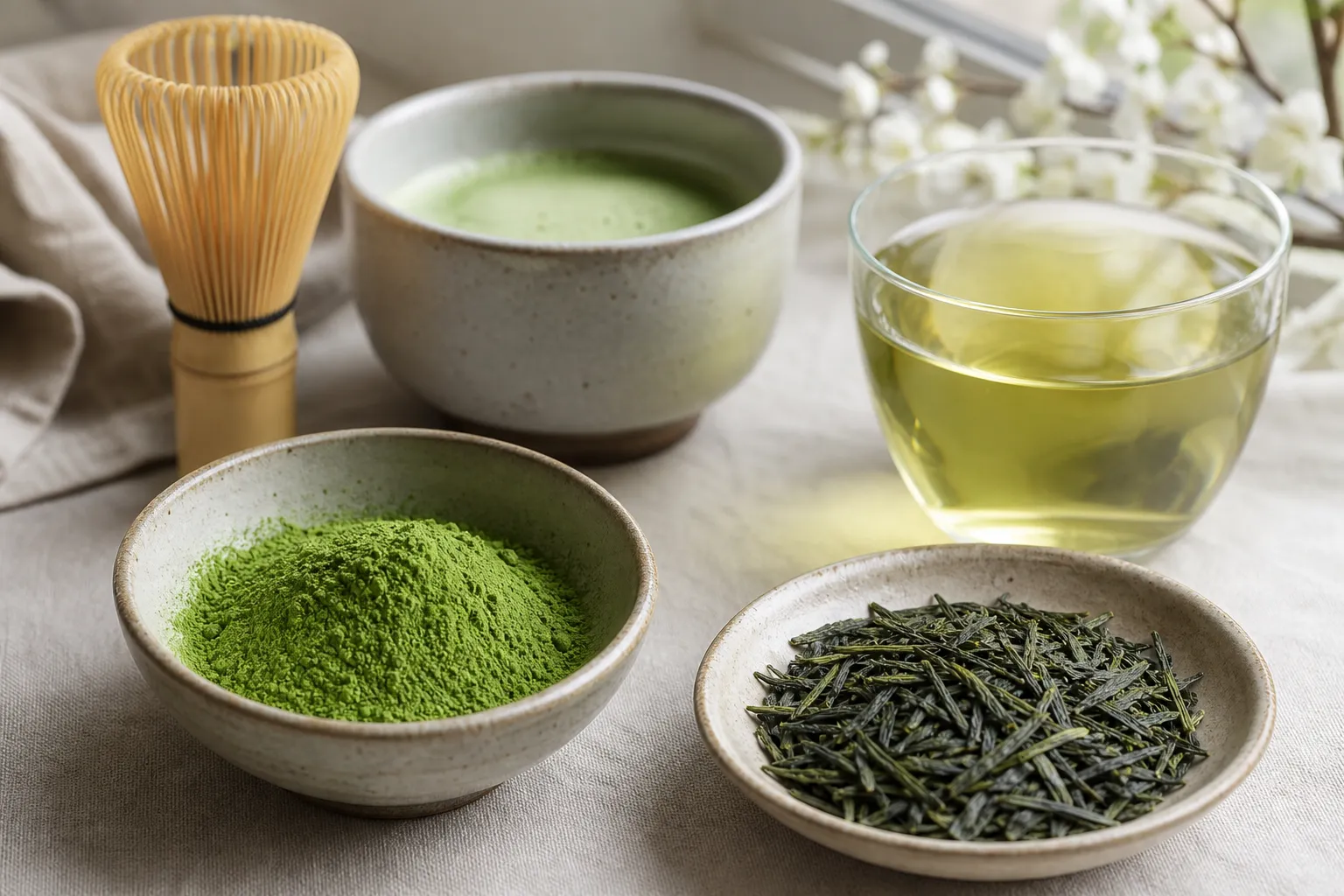
A bowl of matcha looks cloudy because the tea is still in the cup. A clear Longjing or sencha infusion looks different because the leaves have already given what the water could take, then been removed. That is the useful starting point for matcha vs loose leaf green tea: one is powdered green tea whisked into suspension, the other is whole leaf green tea prepared as an infusion.
Do not begin with which one is better. Begin with what is in front of you: powder or leaf. That single difference explains most of the change in texture, strength, cleanup, storage, caffeine expectations, and control.
upward
Read the full overview first
Use the broader guide first if you need the full scope before this page.
The Difference Starts With Powder and Leaf
Matcha is green tea ground into a fine powder. When prepared, the powder is mixed with water and remains in the bowl or cup. You drink the tea material itself, not only water that has passed through the leaf.
Loose-leaf green tea works by extraction. The leaves steep in hot water, then are removed or separated from the liquor. The drink carries dissolved flavor, aroma, color, caffeine, and other soluble compounds from the leaf, while the leaf itself stays behind.
That sounds simple, but it changes the cup.
Matcha has body. The surface may hold foam if it is whisked well. The liquid is opaque, sometimes bright green, sometimes duller if the powder is older, poorly stored, or not evenly dispersed. The texture can feel smooth, creamy, chalky, or gritty depending on powder fineness, clumping, and preparation.
Loose-leaf green tea usually gives more clarity. A Longjing infusion may lean pale yellow-green with a chestnut-like aroma; sencha may be greener, grassy, marine, or brisk. Other green teas can move toward floral, vegetal, nutty, or sweet. The leaf shape, breakage, color, and expansion remain visible, so the drinker gets more clues before and after steeping.
So, is matcha powder the same as loose leaf green tea? Only in the broad family sense. Both are green tea. They are not the same preparation. Matcha is powdered tea consumed in the cup. Loose-leaf green tea is usually steeped and separated.
The cup changes because the form changes.
Preparation Changes Taste, Texture, and Control
Matcha asks for mixing. A small amount of powder is sifted or added to a bowl, combined with water, then whisked until evenly suspended. The water is not only extracting flavor; it is carrying the powder. If the powder clumps, the cup tastes uneven. If the water is too hot, bitterness becomes more obvious. If the ratio is heavy, the bowl can feel intense before caffeine even enters the discussion.
Loose-leaf green tea asks for extraction. You choose leaf quantity, water temperature, steep time, and the number of infusions. A shorter steep can hold back bitterness. Cooler water can soften the edge in many green teas. A second or third infusion may bring a lighter body or a different aroma. The variables are easier to see.
That is why beginners often find loose leaf easier to adjust. If the tea tastes too bitter, shorten the next steep, cool the water, or use fewer leaves. If it tastes thin, increase the leaf amount or steep a little longer. The leaf gives you a visible way to learn.
Matcha is adjustable too, but the adjustments are different. You can use less powder, more water, cooler water, or better whisking. Still, because the powder is consumed, the cup remains more direct. There is no leaf basket to remove after thirty seconds. There is no second infusion in the same sense. Once the powder is in the bowl, the preparation is the drink.
This also answers a common question: can you steep matcha like loose leaf green tea? Not really. You can stir matcha into water, but steeping assumes the leaf or particles are extracted and then removed. Matcha is meant to be suspended, not brewed and strained like intact leaves. If it sits and powder settles at the bottom, that is settling, not a loose-leaf infusion.
The tools follow the material. Matcha benefits from a bowl, whisk, sifter, and attention to clumps. Loose leaf works with a gaiwan, kyusu, teapot, infuser, or cup with a strainer. The equipment is not just tradition; it fits the form.
Powder needs suspension. Leaves need room.
Why Matcha Tastes Different
Matcha often tastes more concentrated because the powder stays in the cup. Many drinkers describe it through umami, grassiness, sweetness, bitterness, and a thicker mouthfeel. A well-prepared bowl can feel rounded and savory; a poorly mixed one can taste harsh, dusty, or uneven.
Loose-leaf green tea usually gives a clearer sequence. Aroma may rise first, followed by sweetness, vegetal notes, nuttiness, or briskness, then a finish that shifts as the cup cools. Because the leaves are removed, the liquor often feels lighter than matcha, even when the flavor is vivid.
This does not mean matcha is always more bitter. Bitterness depends on powder quality, freshness, dose, water temperature, and how evenly it is mixed. Loose-leaf green tea can also turn sharp when brewed too hot, too long, or with too much broken leaf. A strong sencha steeped aggressively can feel harsher than a carefully whisked matcha. A delicate loose-leaf tea brewed cooler may taste softer than both.
What are you drinking?
Matcha: suspended powdered green tea.
Loose leaf: infused tea liquor after leaves are removed.
Why does it look cloudy?
Matcha: powder remains in the cup.
Loose leaf: fine particles may appear, but the main leaf is removed.
What controls strength?
Matcha: powder amount, water amount, water temperature, and whisking.
Loose leaf: leaf amount, water temperature, steep time, and re-steeping.
What changes texture?
Matcha: powder fineness, clumping, and suspension.
Loose leaf: leaf grade, small particles, extraction, and filtration.
Can it be re-steeped?
Matcha: not in the usual loose-leaf sense.
Loose leaf: often yes, depending on the tea and method.
Main beginner risk
Matcha: too much powder or uneven mixing.
Loose leaf: too-hot water or over-steeping.
Cloudy matcha versus clear tea is not a quality ranking by itself. Cloudy matcha is normal because matcha is suspended powder. Clearer loose-leaf liquor is normal because it is an infusion. Cloudiness in loose-leaf tea may come from small particles, broken leaf, heavy brewing, or processing style, but it does not make the cup work like matcha.
Read the cup before the claim.
Caffeine and Antioxidants Need a Smaller Claim
Both matcha and loose-leaf green tea contain caffeine. The amount in a cup varies with the tea, serving size, preparation, and how much powder or leaf is used. Matcha is often expected to feel stronger because the powder is consumed rather than removed after steeping, but that does not create one reliable caffeine ranking for every product and every serving.
A small, thin bowl of matcha may not feel like a heavy serving. A concentrated loose-leaf brew may feel more noticeable than a lightly prepared matcha. Some drinkers are sensitive to caffeine even at modest amounts; others barely notice the difference between cups. Timing, food, sleep, and personal sensitivity all matter.
Morning energy belongs in the same careful frame. Some people choose matcha for a more substantial morning cup because the texture and concentration feel direct. Others prefer loose leaf because it gives them a lighter start and more control across several infusions. Those are common tea-drinking preferences, not guaranteed effects.
Antioxidant language also needs restraint. Green tea contains polyphenols and other compounds often discussed in general nutrition context. Matcha may be discussed differently because the powdered leaf is consumed, while loose-leaf tea is an infusion. That can shape exposure to leaf compounds in a practical sense, but it does not mean matcha is automatically the better choice for every person.
A green tea antioxidant comparison can explain form and preparation. It should not turn “more concentrated” into “better,” “stronger” into “more useful,” or “antioxidant-rich” into a promised result.
Ordinary tea drinking should also stay separate from concentrated green tea extract products. Extracts and supplements are a different category from a bowl of matcha or a cup of steeped leaves. A practical tea comparison should not borrow dramatic claims from extract discussions, and it should not use extract concerns to make ordinary tea sound identical.
If you have health conditions, medication questions, pregnancy concerns, or known caffeine sensitivity, use qualified guidance for higher-stakes decisions.
For the cup, keep it simpler: both contain caffeine; individual response varies.
Storage and Freshness Are Different Problems
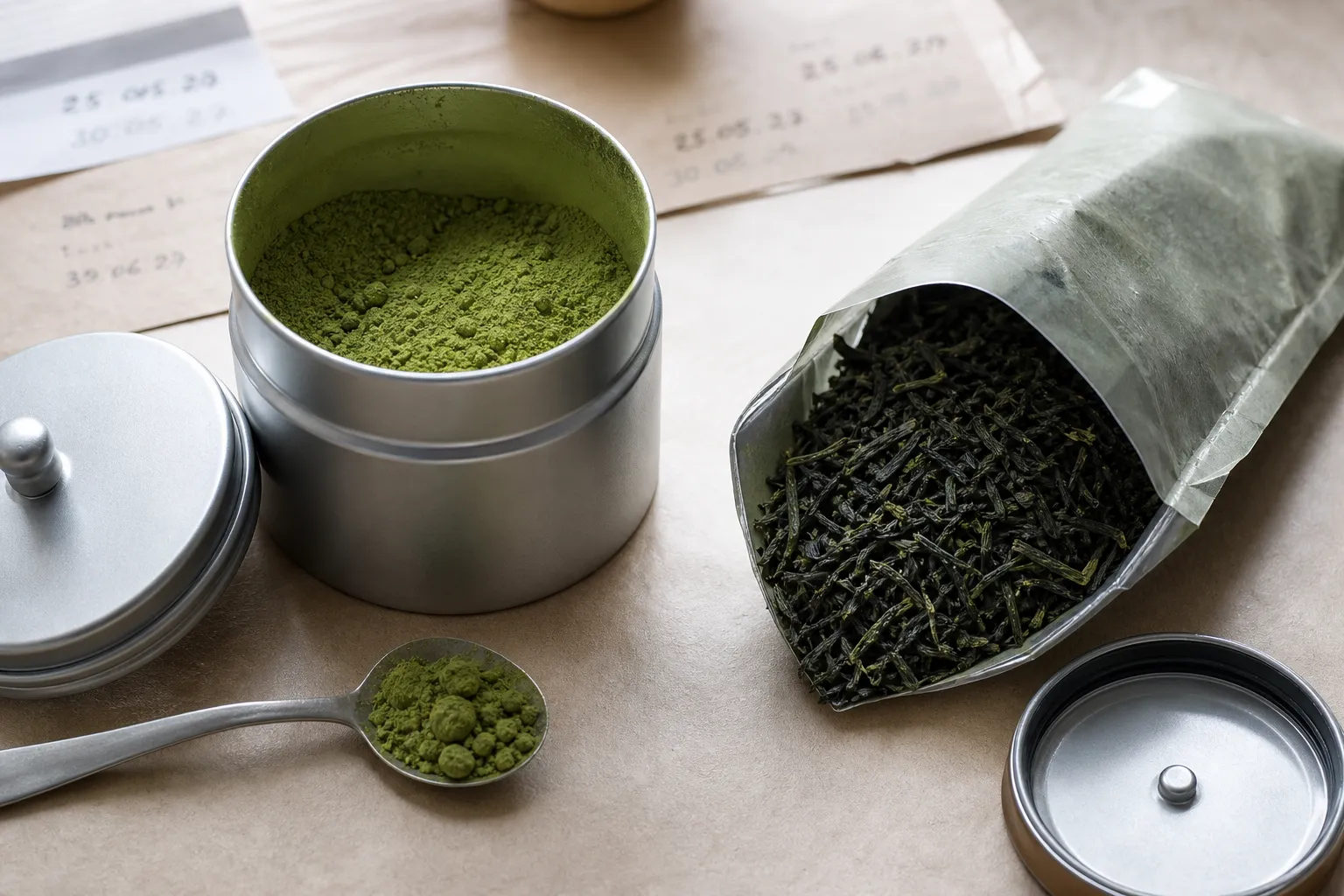
Matcha needs more protective storage because it is powdered. More surface area is exposed to air, light, humidity, and kitchen odors. Once opened, a tin or packet of matcha can lose aroma and color more noticeably if it is left warm, loosely sealed, or handled with a damp spoon.
Loose-leaf green tea also needs care. Heat, light, moisture, and oxygen can flatten aroma and make the leaf taste stale. But intact leaves are not the same as fine powder. Their shape gives them more physical structure, and the preparation may be more forgiving if the tea is still reasonably fresh.
The storage difference is practical. Matcha should be sealed tightly, kept dry, protected from light, and used steadily after opening. Loose leaf should also be sealed and kept away from heat and strong smells, but the urgency may feel less sharp depending on tea style, packaging, and how often the container is opened.
Freshness cues are observable. Matcha that has lost its lively aroma, turned dull, or clumped from moisture will not improve because the label says “premium.” Loose-leaf tea that smells flat, dusty, or stale will not become vibrant because the origin name sounds attractive. Storage protects what is already there; it does not rescue a tired tea.
Buying language can mislead here. Words such as ceremonial, premium, antioxidant-rich, or concentrated do not prove freshness, sourcing quality, or taste. Better cues include packaging condition, harvest or packing information when available, aroma after opening, powder texture, leaf integrity, and whether the seller explains the tea without leaning only on status terms.
A storage tin is not glamour. It is flavor insurance.
Which One Fits Your Daily Tea Routine?
Choose matcha when you want a direct, full-bodied cup and do not mind a little preparation ritual. It suits drinkers who enjoy whisking, like an opaque texture, want a stronger-tasting green tea presence, or use the powder in drinks where the tea itself becomes part of the body. It can be quick once the tools are ready, but it is less forgiving of clumps, stale powder, and careless water temperature.
Choose loose-leaf green tea when you want flexibility. It lets you adjust steep time, brewing temperature, and leaf quantity with each session. It also allows re-steeping, which can stretch one portion of leaves across several cups and show how flavor changes over time. If you enjoy watching leaf shape open, comparing Longjing with sencha, or tuning bitterness through water and time, loose leaf gives you more room.
For beginners, loose leaf may be easier if the goal is learning how green tea behaves. You can see the leaves. You can remove them. You can change one variable at a time. A simple gaiwan, kyusu, teapot, or infuser is enough to start.
Matcha for beginners is still approachable, but the first lessons are different. Use a modest amount of powder, avoid boiling water, break up clumps, and whisk until the surface and texture look even. If the bowl tastes severe, reduce the powder or add more water before deciding you dislike matcha altogether.
The loose leaf green tea substitute question depends on the use. If a drink or food needs matcha powder for color, body, and suspended tea flavor, loose leaf tea will not behave the same way. A strong loose-leaf infusion can add green tea flavor, but it will not create the same opacity or texture. If you only want a cup of green tea to drink, loose leaf can replace the role of “daily green tea,” not the physical function of matcha powder.
The reverse is also true. Matcha can stand in for a strong green tea moment, but it cannot be treated as re-steepable leaves.
Different format, different routine.
A Practical Decision Frame
Use the powder-or-leaf difference first, then decide from the cup you actually want.
Pick matcha if you want opacity, thickness, and a concentrated tea presence. Pick loose-leaf green tea if you want clarity, aroma shifts, visible leaves, and repeated infusions. If morning convenience matters, think about cleanup as much as preparation: a whisk and bowl feel quick to some people, while a basket infuser or teapot feels easier to others.
If bitterness is the concern, neither format escapes it automatically. Matcha can turn harsh with too much powder, poor mixing, stale storage, or hot water. Loose leaf can turn sharp with over-steeping, broken leaves, or aggressive temperature. The fix is not to declare one category better. Adjust dose, water, time, and freshness.
If caffeine is the concern, avoid assuming the label gives the whole answer. Matcha caffeine expectations are often higher because you consume the powder, but serving size and personal sensitivity still matter. Loose-leaf tea can be brewed lightly or strongly. Pay attention to your own response, especially later in the day.
If wellness language is driving the choice, slow down. Both forms belong in ordinary green tea culture, and both can be discussed in relation to caffeine and polyphenols. Neither should be treated as a shortcut to a promised health result. The more a product leans on dramatic claims, the more useful it is to return to visible cues: powder color, leaf shape, aroma, storage, preparation instructions, and how the cup tastes.
A calm choice looks like this
- Pick matcha for suspended powder, fuller body, opacity, and a more direct green tea texture.
- Pick loose leaf for clear infusion, adjustable steeping, visible leaves, and re-steeping.
- Use cooler water and smaller amounts when bitterness is the problem.
- Store matcha more carefully after opening because powder is more exposed.
- Treat caffeine, focus, and antioxidant claims as context, not a promise.
The next cup can answer more than the label. Whisk a small bowl of matcha beside a lightly brewed loose-leaf green tea, then compare only three things: color, texture, and finish. The better choice will be easier to see in the cup.
Sources
Sources and further reading
Reference links are limited to sources considered suitable for public citation in this page.