
Matcha preparation
Can You Steep Matcha Like Loose Leaf Green Tea
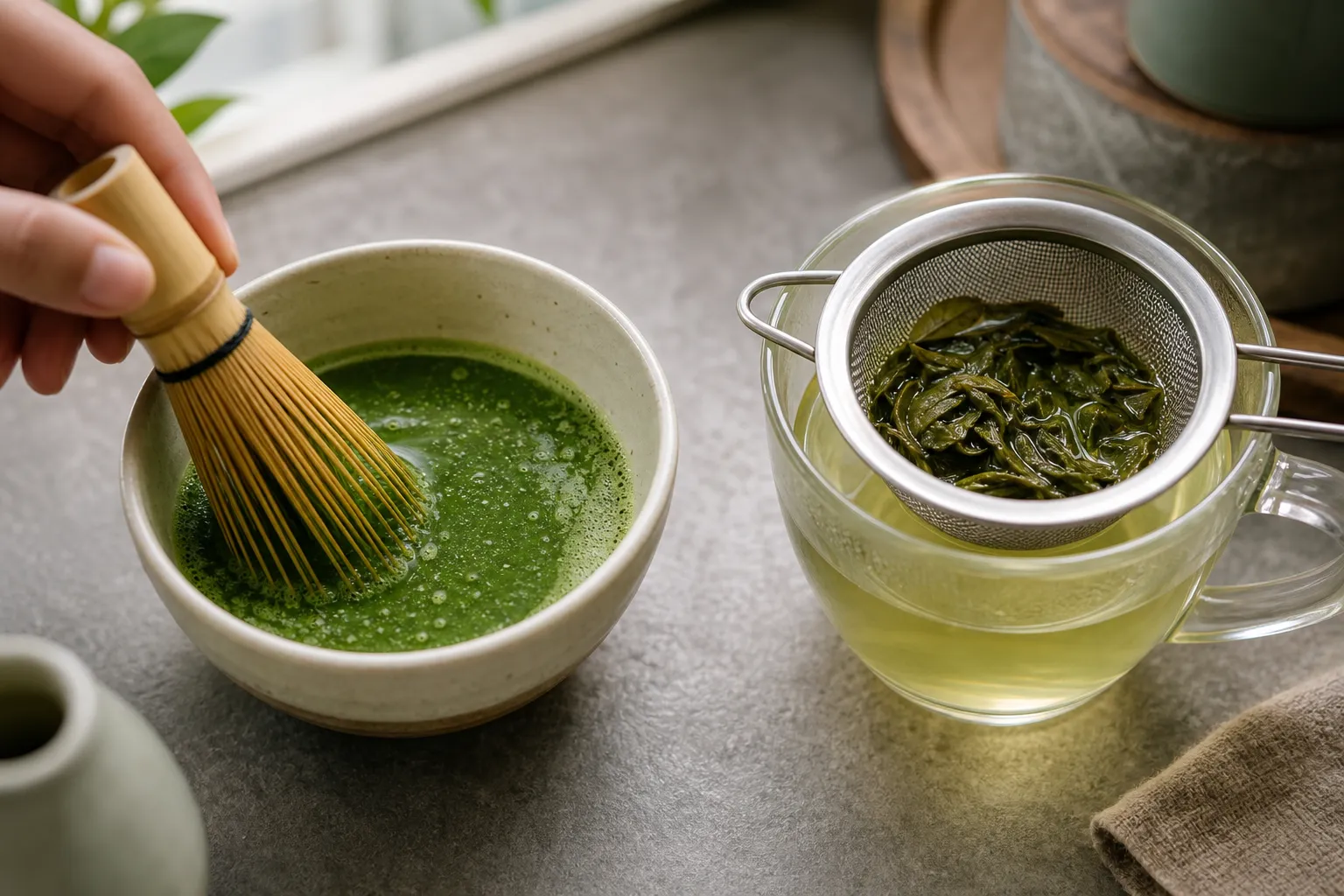
A spoon of matcha does not wait in water the way a basket of sencha or Longjing Dragon Well leaves does. The short answer to can you steep matcha like tea is: not in the loose-leaf sense. Matcha is powdered green tea, so the aim is not to soak leaves and remove them. The aim is to spread the powder evenly through the water.
You can put matcha powder in hot water and let it sit, but the cup will not behave like steeped green tea. The powder may clump, settle, taste thin at the top, and feel heavy at the bottom. Matcha needs movement, not just steep time.
upward
Read the full overview first
Use the broader guide first if you need the full scope before this page.
Matcha Powder Does Not Behave Like Tea Leaves
Loose-leaf green tea starts as visible leaf. Sencha needles, Longjing Dragon Well flat leaves, and other intact green tea shapes meet water, release flavor, and then stay behind in the pot, gaiwan, kyusu, basket, or strainer. The drinker separates the liquor from the leaf before the cup becomes too strong or too bitter.
Matcha changes that pattern. The dry tea is already a fine powder. When it meets water, the practical question is not “how long should this leaf sit?” but “how evenly can this powder be mixed?” That is why matcha is better understood as whisked or mixed green tea, not steeped green tea.
This explains the common disappointment with matcha in a loose-leaf infuser. A mesh basket is built to hold leaves back. Matcha is much finer; some powder may pass through, some may cling to the mesh, and some may collect in paste-like spots. One sip can taste weak, the next chalky, with a muddy layer at the bottom.
A tea bag has a similar problem. It can contain the powder, but it also limits movement. If the matcha stays compacted inside the bag, the cup may taste thin while much of the tea material remains trapped. That is restricted powder in water, not a clean leaf infusion.
What Happens If You Try To Steep Matcha Powder
A loose-leaf steep has a clear sequence: add leaf, add water, wait, separate. Matcha does not follow that sequence cleanly because there is no intact leaf to remove after flavor is released. The powder is part of the drink.
If you put matcha in a cup, pour water over it, and leave it alone, several visible signs may appear:
- Dry pockets float before they absorb water.
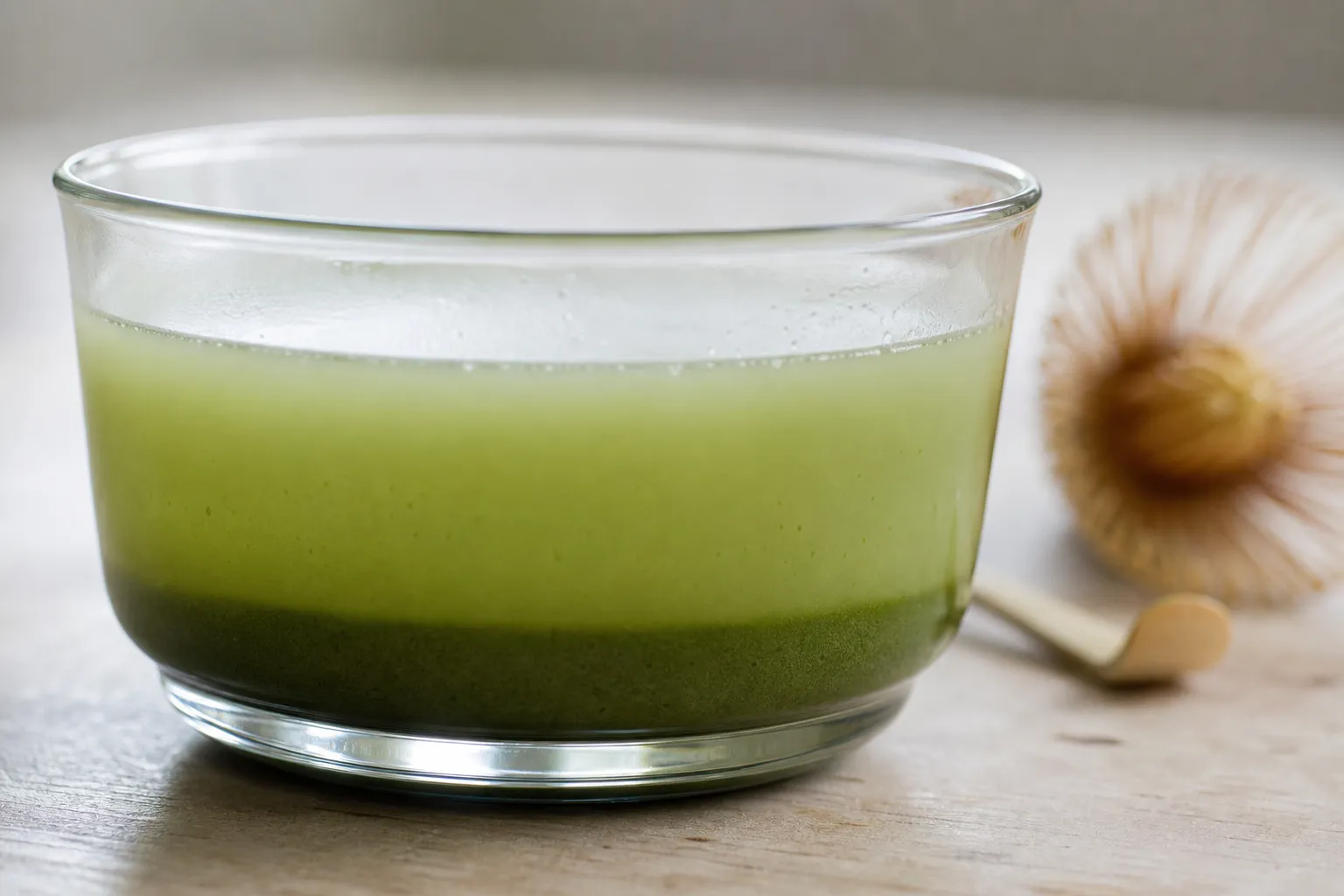
- Heavier particles sink into matcha powder sediment.
- The top looks pale while the bottom tastes stronger.
- The texture feels uneven because the powder has not dispersed.
- The cup seems weak even though powder remains stuck to the vessel.
Those signs do not automatically mean the matcha is poor quality. Fine powder can still clump if it meets water unevenly. A bright green surface can still hide sediment. A mild cup may have a mixing problem rather than too little tea.
That is the central difference between matcha powder and tea leaves. Leaves can open, release, and be removed. Powder must be mixed into the drink. Time alone rarely fixes the texture; it often makes the settled layer more obvious.
How To Prepare Matcha Without Making It Complicated
For an everyday cup, the useful idea is simple: make the powder move through the water before you drink it. A bamboo whisk is the familiar matcha tool, but the principle matters more than the tool. The powder needs enough motion to break up dry spots and create a more even liquid.
A small amount of water can help loosen the powder before you add the rest. Whisking, strong stirring, or shaking in a closed container can all work better than letting powder sit in an infuser. The goal is not ceremony; the goal is fewer clumps, less sediment, and a smoother sip.
This is where “matcha in a tea bag” and “matcha in an infuser” become misleading shortcuts. They borrow loose-leaf equipment, but matcha is not waiting to unfold like a leaf. If the tool prevents movement, it works against the main task.
The cup gives quick feedback. If the drink looks streaky, tastes watery at first, and ends with a thick green layer at the bottom, the powder was not evenly mixed. If the surface, body, and final sip feel more consistent, the preparation is closer to what matcha needs.
When “Steeping Matcha” Means Something Else
Some readers use “steep” loosely to mean “put tea in water.” Under that broad meaning, yes, matcha powder can be put into water. But if the question means steeping like loose-leaf green tea, with a waiting period and a separation step, matcha does not fit well.
Reader phrase
What it often means
Better preparation idea
Steep matcha powder
Add powder to water and wait
Mix or whisk so the powder disperses
Matcha like loose leaf tea
Use an infuser or strainer
Use a bowl, cup, whisk, shaker, or strong stirring
Matcha in a tea bag
Keep powder contained while brewing
Expect a weaker or uneven cup unless the product is made for that use
Matcha powder in water
Combine powder and liquid directly
Break up clumps before drinking
The main exception is product design, not loose-leaf brewing. Some blends or convenience packets may be made to mix more easily than plain matcha powder. Without that specific product context, the best check is still the cup: if the powder stays trapped, clumped, or settled, the method is not giving you an even drink.
Packaging words such as ceremonial, latte, premium, or authentic do not answer the steeping question by themselves. They may describe marketing position, intended use, or seller language, but the preparation issue is more basic: powder, water, movement, texture.
The Better Test: Infusion Or Suspension?
A useful way to decide is to ask what you are trying to separate from the water.
With loose-leaf green tea, you usually separate the drink from the leaf. The leaf has done its work for that infusion. Leaving it in longer may change strength, bitterness, and texture, so steep time matters.
With matcha, you are not separating the powder from the drink. You are trying to keep it suspended long enough to sip a balanced cup. The time question matters less than the mixing question. A long rest does not make matcha behave more like leaves; it can simply let the powder drop.
That distinction also explains weak matcha extraction in a bag or infuser. The liquid may turn lightly green, but much of the powder may not move freely into the cup. With loose leaf, limited movement can still produce an infusion. With matcha, limited movement can leave a patchy drink.
So the practical answer is this: do not treat matcha like loose-leaf green tea unless you are willing to accept a thinner, more uneven cup. Use movement instead of waiting. Read the texture before blaming the tea.
A Small Preparation Check Before You Change the Tea
If your matcha tastes weak, sandy, or uneven, check the method before changing brands or adding more powder.
Look at the cup:
- Does dry powder cling to the side of the bowl or mug?
- Does the first sip taste thin while the last sip tastes heavy?
- Is there a green layer at the bottom after a short rest?
- Did the powder sit inside a bag or infuser instead of moving through the water?
- Did you rely on steep time rather than mixing?
If several of these are true, the issue is likely preparation behavior. More powder may make the cup stronger, but it can also make clumping and sediment more noticeable. Better dispersion is the cleaner adjustment.
This does not require a large claim about wellness, energy, or formal tea culture. It is a cup-level observation. Powder in water needs movement. Intact leaves need infusion and separation.
FAQ
Can I put matcha in a loose-leaf infuser?
You can, but it is usually a poor match for the material. An infuser is designed for intact tea leaves, not fine powder. Matcha may pass through the mesh, clog it, or stay trapped in a dense patch, which can lead to uneven texture.
Can I make matcha without a whisk?
Yes, if your goal is an everyday mixed cup rather than a formal preparation. Strong stirring, shaking in a closed container, or another mixing method can help disperse the powder. Watch the drink itself: fewer clumps, less sediment, and a more even sip.
Is matcha just green tea that has been ground up?
For this question, the important point is that matcha is powdered tea rather than intact loose leaf. That changes preparation. Loose-leaf green tea is infused and separated; matcha is mixed into the water and remains in the cup.
Final Answer
You should not steep matcha like loose-leaf green tea if you want the usual matcha texture and taste. Loose leaf is infused; matcha is suspended. A tea bag or infuser may make the cup weaker, clumpier, or more uneven because the powder needs movement, not just time in hot water.
For the next cup, watch the bottom of the bowl or mug. If the green layer settles quickly, the answer is in the mixing, not the steep time.