
Cup-level answer
Why Matcha Looks Cloudy and Loose Leaf Green Tea Looks Clear
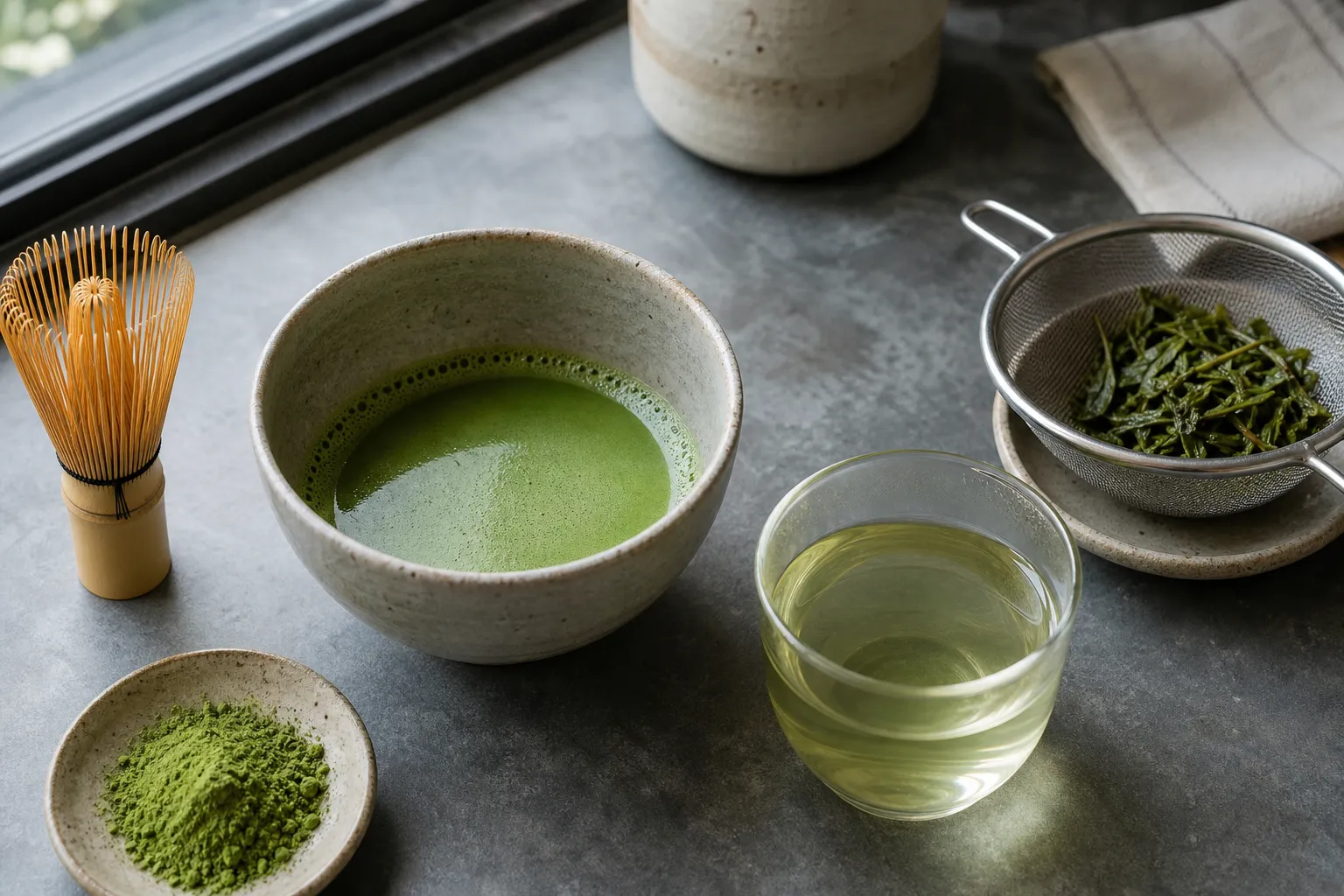
Matcha looks cloudy because the leaf is still in the cup. The tea has been ground into fine powder, then whisked or stirred into water, so tiny particles remain suspended instead of disappearing. Loose-leaf green tea usually looks clearer because the leaves are steeped, then held back by a pot, gaiwan, kyusu, infuser, or strainer.
So the short answer to “why is matcha cloudy” is simple: matcha is powdered leaf mixed into water; loose-leaf green tea is usually an infusion. One cup contains the leaf. The other mostly contains what water has drawn from it.
upward
Read the full overview first
Use the broader guide first if you need the full scope before this page.
The Difference Starts With Powder Versus Leaf
A bowl of matcha begins with ground green tea. The powder is meant to be mixed into the water and drunk, not steeped and removed. Even when the grind is fine, it is still physical tea material. Once water touches it, the particles spread through the bowl and make the liquid look opaque.
That is why cloudy matcha is usually expected. It is not automatically a sign of spoiled tea, poor preparation, or low quality. The bowl may look bright green, dull green, pale, thick, foamy, or lightly opaque depending on powder amount, water volume, whisking, and settling. The basic cloudiness comes from tea particles in water.
Loose-leaf green tea behaves differently. A Longjing Dragon Well leaf, a sencha needle, or another whole or broken green tea leaf sits in hot water for a short steep. The water takes on color, aroma, flavor, and body, while the larger leaf pieces usually remain in the vessel or are caught by a strainer. The liquor can look clear, yellow-green, pale gold, or slightly hazy, but it is usually more transparent than matcha.
The form decides the cup.
What Is Floating in Matcha?
In everyday tea language, matcha is a suspension: fine leaf particles are spread through water. The word sounds technical, but the visual clue is familiar. Powder mixed into liquid does not vanish in the same way sugar may seem to dissolve. Some compounds move into the water, but much of the ground leaf remains as tiny suspended material.
That suspended material changes the look and feel of the drink. Matcha often has more body than a clear green tea infusion because the cup contains fine leaf matter. It may feel fuller on the tongue, especially when prepared with more powder or less water. Foam from whisking can make the surface look lighter or creamier, while the liquid below remains cloudy.
Even mixing
A bamboo whisk, small kitchen whisk, or firm stirring motion helps break up clumps and spread the powder through the bowl. Good mixing usually gives a more even green body, with fewer dry islands or dark specks.
Light stirring
Light stirring may leave floating clusters, sediment at the bottom, or uneven streaks. Leave matcha untouched for a few minutes and some particles may drift downward.
The top can look thinner while the bottom becomes darker or more concentrated. A quick swirl brings the drink back together for a more even sip.
Cloudiness is part of the method. Clumps are a separate issue.
Why Loose-Leaf Green Tea Often Looks Clearer
Loose-leaf brewing is built around separation. The leaf opens in water, releases flavor, and is then left behind. With a gaiwan, teapot, kyusu, basket infuser, or simple strainer, most visible leaf material does not travel into the drinking cup. That is the main reason loose-leaf green tea often pours clear.
Clear does not mean empty. The liquor still carries color, aroma, bitterness, sweetness, umami, and texture from the leaf. Those parts are mostly not visible as floating particles, so the drink can taste full while still looking transparent.
Some green teas produce haze. Broken leaves, fine dust, heavy pouring, or very small leaf fragments can make a loose-leaf cup less clear. Deep-steamed sencha styles may release more tiny pieces than a large, intact leaf. The final pour from the bottom of a teapot can also carry more sediment.
Clear is common for loose-leaf green tea, not guaranteed. Leaf size, processing style, vessel, pouring method, and straining all affect what reaches the cup.
When Cloudiness Tells You Something Practical
Cloudy matcha is expected, but the type of cloudiness can still be useful. Smooth, even opacity usually means the powder has spread through the water. Dry lumps, gritty islands, or powder stuck to the sides suggest a preparation issue: sift the powder, add water more gradually, or whisk with more care.
Water amount also matters. A small amount of water with more matcha will look thicker and more opaque. A thinner preparation will still be cloudy, but it may look lighter and move more easily in the bowl. Appearance alone does not prove quality; it mostly reflects concentration and mixing.
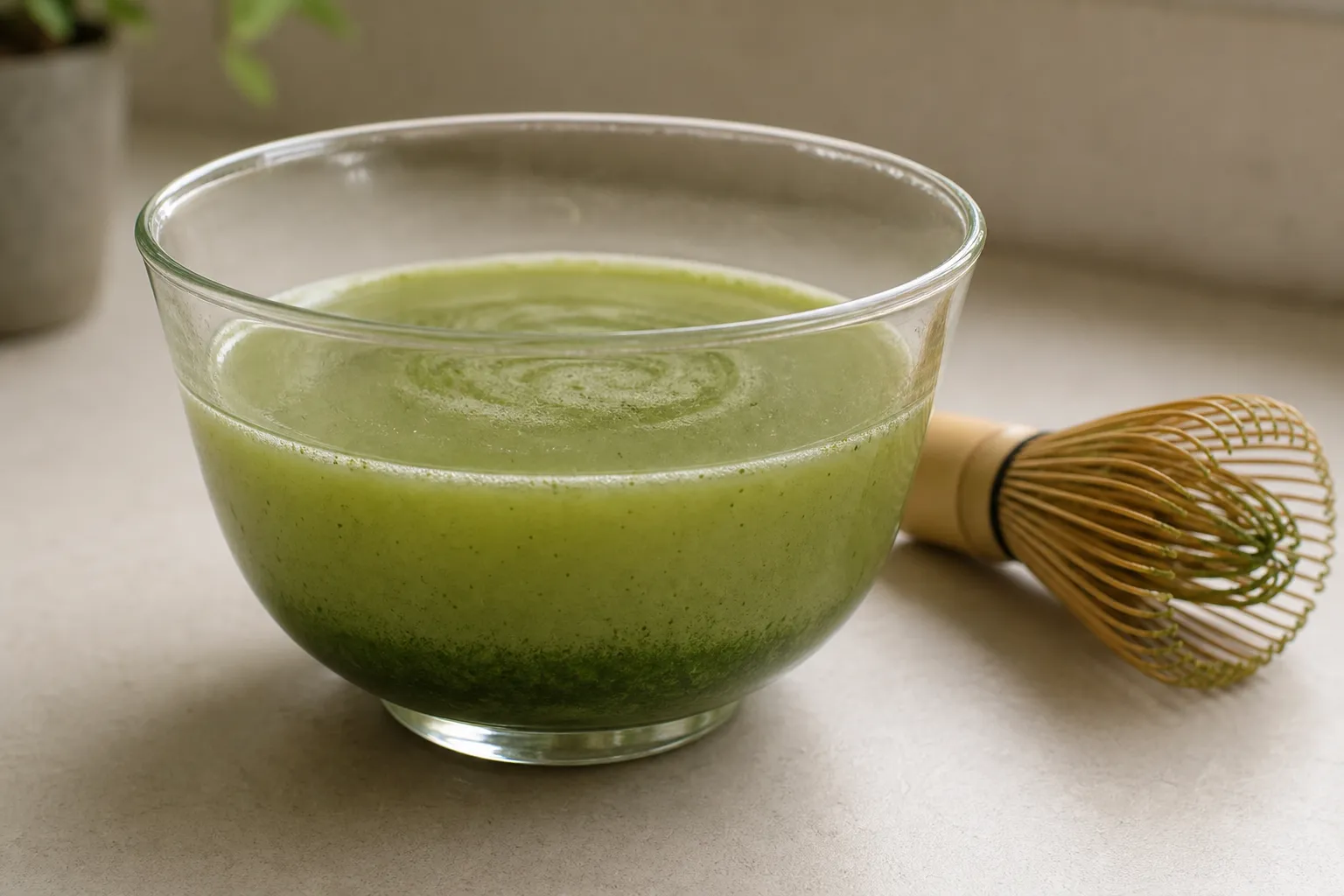
Temperature can change the drinking experience, but it is not the main reason matcha looks cloudy. Warm water often helps powder disperse more easily than cold water. Very hot water or rough preparation can make bitterness and texture feel stronger, depending on the tea and ratio. For this question, the visible cause remains powder in water.
Loose-leaf cloudiness has different clues. If a tea that usually pours clear suddenly looks murky, check for broken leaf fragments, dust at the bottom of the bag, heavy agitation, or a pour that carried sediment from the vessel. A longer steep can deepen color and taste, but visible haze often comes from small pieces entering the cup.
Watch the cup before judging the tea.
Common Confusions
Clear is not the standard for every green tea
That comparison does not work well for matcha. Matcha is not steeped and removed; it is powder that stays in the drink.
Cloudy does not mean fully dissolved
It is better to think of matcha powder as dispersed. The cup looks cloudy because particles remain in the water.
Cloudiness alone is not a quality grade
A cloudy bowl can be normal. A clear loose-leaf cup can be normal. A hazy sencha can be normal.
Foam and cloudiness are different clues
Foam sits on the surface after whisking and may fade quickly. Cloudiness describes the liquid itself.
Some parts of the leaf contribute flavor and color, but the ground material is still present. Dull aroma, stale taste, damp clumping, or excessive dust may raise separate questions, but cloudiness alone does not answer them. A bowl can have little foam and still look opaque because fine tea particles remain suspended.
The surface and the body of the drink are different clues.
A Simple Cup Check
Prepare the two teas side by side if you want to see the difference clearly.
- Put a small amount of matcha in a bowl, add water, and whisk or stir until the powder spreads. Notice the opaque green body, any foam on the surface, and any sediment that appears after the bowl sits. The cloudiness follows the powder.
- Then steep loose-leaf green tea in a pot or infuser and pour it into a clear cup. Notice how the leaves remain behind while the liquor carries color and aroma forward. If the cup is clear, that is the infusion showing itself. If it is slightly hazy, look for small fragments or dust before assuming anything is wrong.
This comparison also helps with buying and storage observations. Fine powder exposes more surface area and can show clumping if it has taken on moisture. Loose leaves show their condition through shape, aroma, broken pieces, and dust. Those are separate clues from whether the finished drink is cloudy or clear.
Ask one practical question: is the leaf meant to stay in the cup, or be removed before drinking?
The Boundary of This Explanation
This page stays with what the cup can show: powdered matcha disperses in water, while loose-leaf tea is usually infused and separated from most visible leaf material. That is enough to explain the difference in appearance without turning the question into a broad claim about grade, caffeine, antioxidants, or wellness.
Those wider topics need their own evidence and a separate frame. For this cup-level question, matcha cloudiness is usually the drink behaving like matcha, and loose-leaf clarity is usually the infusion behaving like loose leaf.
Next time, let the bowl sit for one minute and watch what settles. The leaf will show you the difference.