
Taste comparison
Why Matcha Tastes Different From Loose Leaf Green Tea
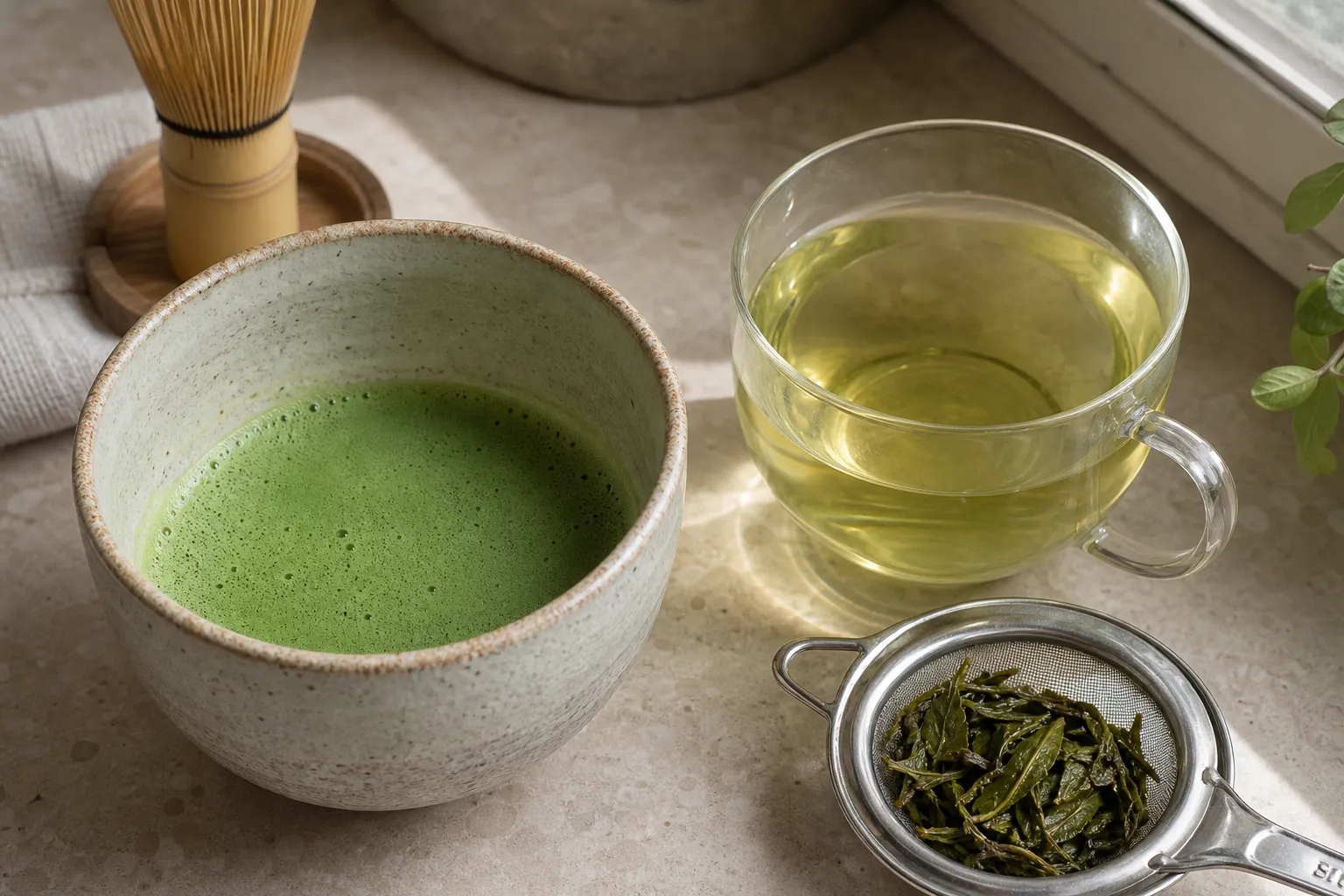
Matcha foam sits on the surface; loose leaves open, sink, and are lifted away. That is the simplest answer to why does matcha taste different from green tea: matcha is whisked powdered tea, while loose leaf green tea is usually an infusion made by steeping leaves and removing them. One keeps fine tea particles in the cup. The other pulls flavor into water, then leaves most of the leaf behind.
That form changes the matcha flavor before origin, grade language, or brewing style enters the conversation. Matcha often feels fuller, thicker, and more direct. Loose leaf green tea taste can feel clearer, more aromatic, and more changeable from one steep to the next. The cup tells you first.
upward
Read the full overview first
Use the broader guide first if you need the full scope before this page.
The Main Difference Is Powder Versus Infusion
A bowl of matcha is suspended powdered tea. When it is prepared well, the powder disperses through the water and gives the drink visible body: cloudy green color, fine texture, foam if whisked with enough motion, and a flavor that arrives quickly. You are not only drinking what water pulled from the leaf; you are drinking the finely powdered tea itself.
Loose-leaf green tea works differently. Sencha needles, Longjing Dragon Well flat leaves, curled leaves, or broken leaf pieces sit in water for a chosen steep time. The water takes on color, aroma, bitterness, sweetness, and savory notes, then the infused green tea leaves are separated from the liquor. The drink can still be strong, but it is usually less dense in the mouth than a powdered preparation.
This is why matcha vs green tea taste comparisons can become confusing. The difference is not only “stronger versus lighter.” It is contact style. Matcha stays in the cup. Loose leaf gives itself to the water and is removed.
First observation
If the drink feels opaque, soft, and coating, texture is part of the taste. If the drink feels clear, fragrant, and quick on the tongue, infusion is shaping the experience.
Texture Makes Matcha Taste More Intense
Matcha powder texture changes how flavor lands. Even when the powder is fine, the cup can feel more substantial than an infused tea. That body can make savory, grassy, bitter, or sweet impressions feel closer together because they are carried by the same suspended material.
A loose-leaf cup may smell fresh, grassy, nutty, floral, vegetal, or lightly marine depending on the tea and preparation. Matcha may use some of those same words, but the drinking experience is thicker. The flavor does not only pass over the tongue; it lingers with a fine-powder feel.
That texture can be pleasant or distracting. A smooth, evenly whisked bowl may taste rounded and full. A poorly dispersed bowl may taste chalky, dusty, or uneven, with bitter pockets where powder clumps have not opened into the water. That is less a separate flavor note than a preparation signal.
Loose leaf has its own texture signals, but they are usually subtler. A delicate infusion may feel silky or brisk. A stronger steep may feel drying at the sides of the mouth. If fine leaf fragments escape into the cup, it can taste heavier and more bitter than the same tea poured cleanly.
Texture is not decoration. It changes the taste.
Umami, Bitterness, and Aroma Arrive Differently
Many readers meet matcha through words like umami, creamy, grassy, smooth, or bitter. Those terms can be useful as tasting language, but they should not be treated as proof of quality, origin, or health value. For this page, the safer explanation stays at cup level: matcha and loose-leaf tea deliver taste differently because they are prepared differently.
In matcha, savory depth and bitterness may feel more concentrated because the powder remains suspended. The first sip can feel compact: green, thick, slightly sweet, savory, astringent, or bitter depending on powder freshness, water temperature, dose, and whisking. A small change in powder amount can make a large change in body.
In loose leaf green tea infusion, flavor often unfolds in clearer layers. The aroma may rise first from the warmed leaf or the cup. Bitterness may increase with hotter water or longer steeping. A second infusion may soften, sharpen, or shift depending on the leaf. A sencha can move differently from a Longjing Dragon Well; leaf shape, processing style, storage, and brewing choices all influence the cup. The practical point is enough: loose leaf separates leaf contact from drinking time, so the brewer has more obvious control over extraction.
Aroma also behaves differently. With loose leaf, green tea aroma often appears in stages: dry leaf, warmed leaf, wet leaf, poured liquor, then aftertaste. With whisked matcha, aroma is closer to the foam and surface of the bowl. The smell can be immediate, but the thicker body may make aroma and taste feel fused together rather than separated into neat layers.
If matcha tastes flat, the issue may be stale powder, poor storage, too much water, or weak whisking. If loose leaf tastes flat, the issue may be leaf age, water temperature, steep time, water quality, or too little leaf. The symptom is similar; the adjustment is not always the same.
Brewing Choices Can Make the Gap Wider or Smaller
The difference between matcha and loose-leaf tea is real, but preparation can exaggerate it. A dense matcha made with more powder and less water will feel far from a pale loose-leaf infusion. A thinner matcha made with more water may move closer to a light green tea, though it will still carry powder texture.
Water temperature matters because hotter water can make bitterness more noticeable in many green tea preparations. The useful advice is modest: if either cup tastes harsh, try cooler water before assuming the tea itself is poor. If the cup tastes dull, small changes in water amount, dose, or steep time may help.
Whisking also matters for matcha. A well-dispersed bowl tastes more even because the powder is distributed through the water. Foam is not a guarantee of better tea, but it can show that the drink has been aerated and mixed. A weakly stirred bowl may leave grit at the bottom, making the last sips stronger and more bitter than the first.
Loose leaf has a different control point: removing the leaves. Once the tea is poured off, extraction slows in the drinking cup. That is why a loose-leaf green tea infusion can taste cleaner and more transparent. The brewer can adjust steep time, then separate the liquor from the leaves. Matcha gives less of that separation because powder and drink remain together.
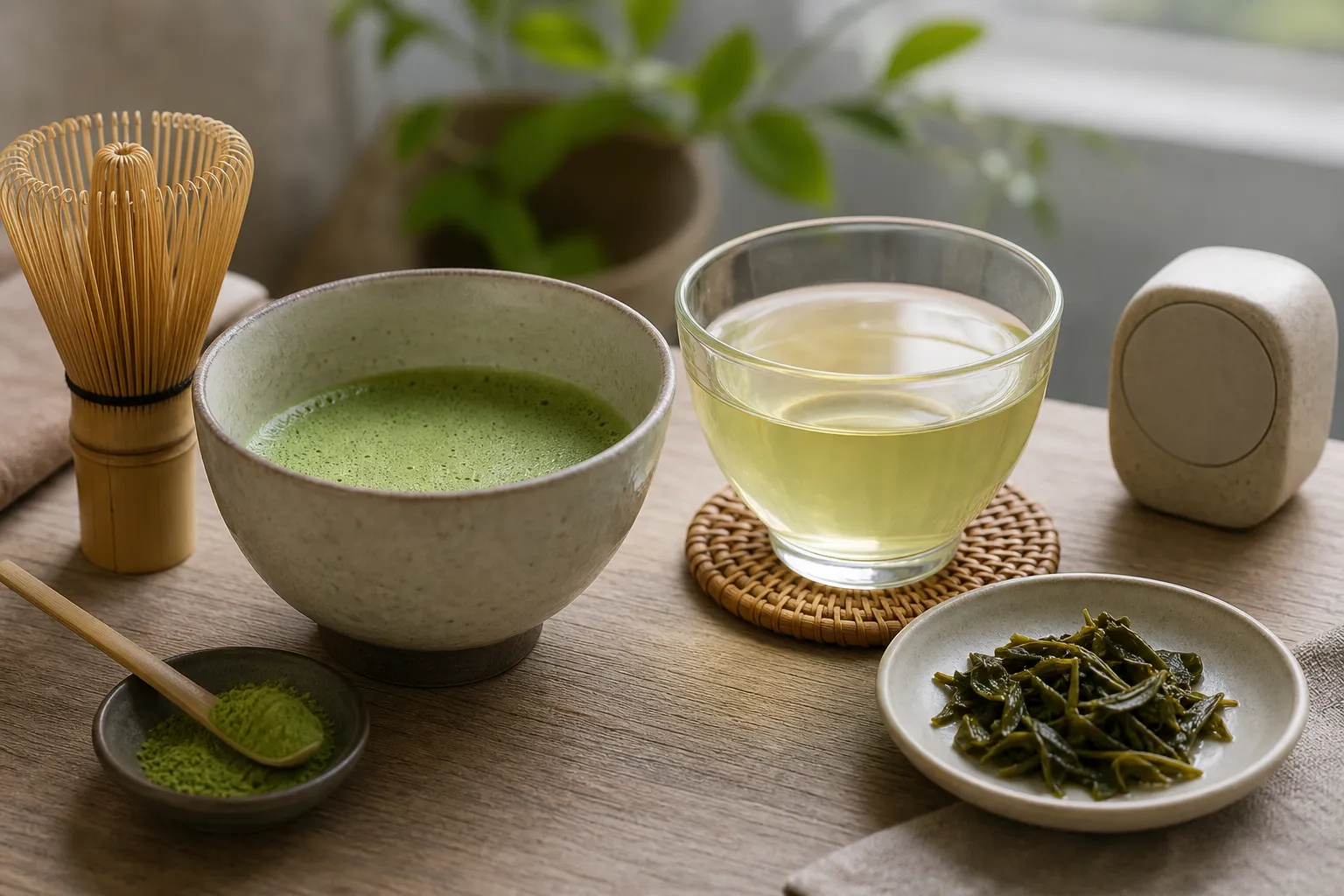
Side-by-side cup test
Prepare a light matcha and a light loose-leaf green tea side by side. Notice body first, not flavor words. Then notice where bitterness appears: immediately, after swallowing, or only as the cup cools.
Common Confusion: Matcha Is Not Just “Stronger Green Tea”
It is tempting to say matcha tastes different because it is simply stronger. Sometimes it is. But “stronger” can hide several separate things: more body, more suspended solids, more bitterness, more aroma, more leaf material in the cup, or a heavier aftertaste.
A strong loose-leaf tea can be bitter and aromatic without tasting like matcha. A thin matcha can still feel powdered even if it is not intense. This is why the question is better framed as matcha drinking experience versus loose-leaf infusion, not only as strength.
Another confusion comes from marketplace words. “Ceremonial,” “premium,” “smooth,” or “umami” may appear on tins, shop pages, and tasting notes. Those words can suggest what a seller wants the reader to expect, but they do not prove how the tea will taste in your bowl. Freshness, storage, water, dose, and preparation still matter. Read the cup before the claim.
There is also a wellness-adjacent confusion. Some readers connect matcha’s whole-powder format with caffeine, antioxidants, focus, or daily energy. Those topics should not be used to explain taste beyond general drinking context. This page is about flavor and preparation. If caffeine sensitivity or health concerns matter for you, use qualified guidance rather than a taste article as your decision point.
How to Tell What You Are Actually Tasting
When matcha tastes different, separate the signals before judging the tea.
Check body
If the drink coats the tongue, feels cloudy, or leaves a fine sediment impression, you are noticing matcha body and texture. That may be expected for powdered tea. If it feels gritty, the powder may not be fully dispersed.
Check bitterness
Bitterness that appears immediately can come from a concentrated bowl, hotter water, too much powder, or uneven mixing. Bitterness that builds in a loose-leaf cup may point toward longer steeping, hotter water, smaller leaf fragments, or simply a more assertive tea.
Check aroma
Loose leaf often gives more visible aroma checkpoints: dry leaves, wet leaves, cup, and empty vessel. Matcha gives fewer leaf-shape clues because the tea has already been powdered. Its aroma is more tied to the surface of the bowl and the freshness of the powder.
Check aftertaste
Matcha may leave a longer coating finish because the powder remains part of the drink. Loose leaf may leave a cleaner finish, a drying edge, or a returning sweetness depending on the tea and brew. Neither is automatically better.
These checks keep the question practical. If you like weight, foam, and concentrated green flavor, matcha may make more sense. If you like aroma changes, visible leaf shape, and multiple infusions, loose leaf may be the better route.
The Short Answer to Keep in Mind
Matcha tastes different from loose leaf green tea because the form changes the cup. Matcha is whisked powder, so its flavor often feels fuller, thicker, more immediate, and more textured. Loose leaf green tea is infused and removed, so its taste often feels clearer, more aromatic, and more adjustable through steep time and water.
The exceptions are preparation-based. A thin matcha can be gentle. A strong sencha or Longjing infusion can be bold. Poor storage can flatten either one. Hotter water can push bitterness forward in both.
For your next cup, do not start by asking which tea is better. Ask what changed first: powder texture, loose leaf infusion, green tea aroma, bitterness, or body. The answer is usually in the mouthfeel before it is in the label.