
Caffeine comparison
Does Matcha Have More Caffeine Than Loose Leaf Green Tea
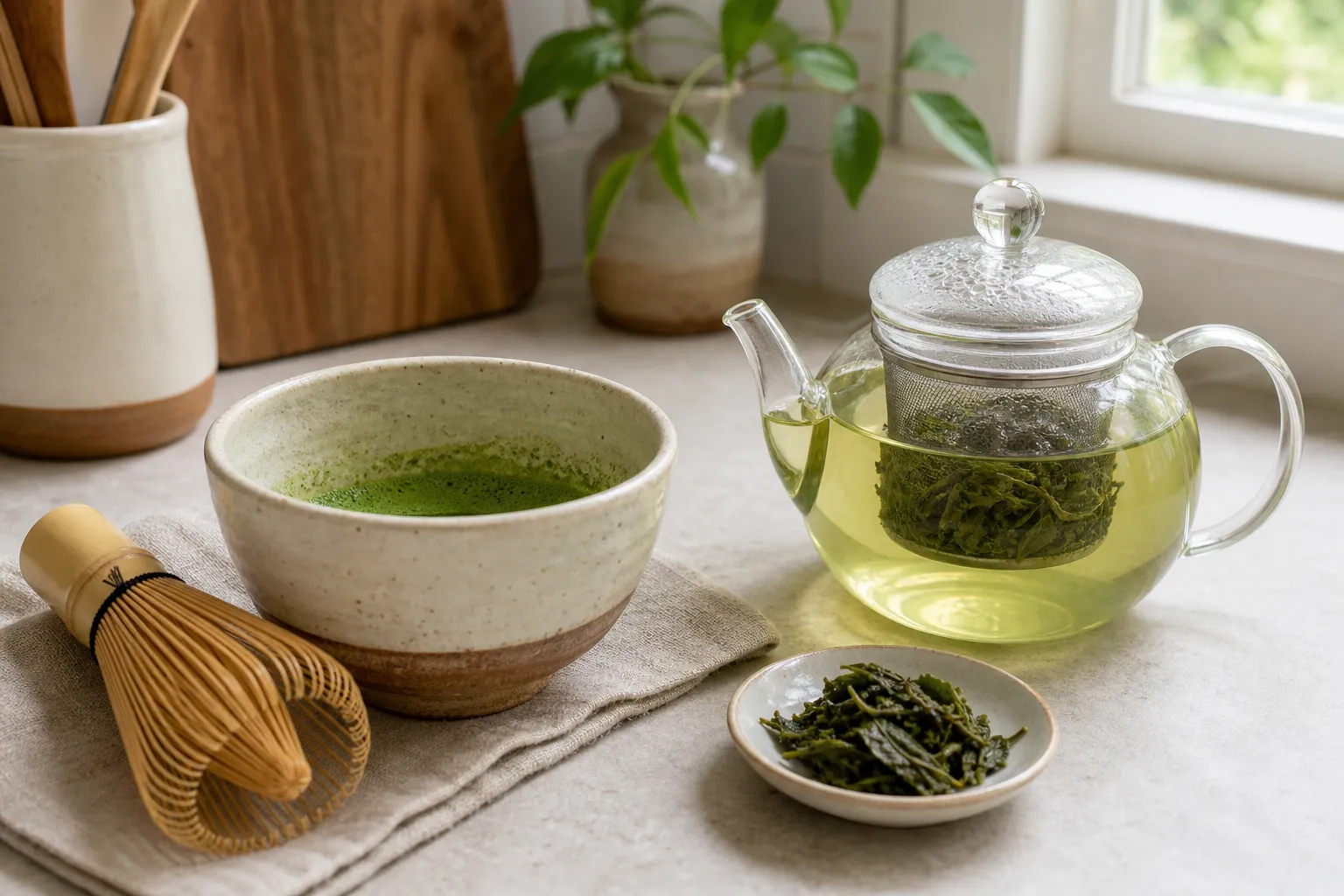
Matcha shows the answer before the first sip: the green powder stays in the bowl. Loose-leaf green tea is steeped, then the leaf is left behind. So yes, matcha often has more caffeine than a typical cup of loose-leaf green tea, especially when you compare a normal bowl of matcha with a normal brewed infusion.
The important word is “often.” Matcha caffeine changes with the amount of powder you whisk. Green tea caffeine in a loose-leaf cup changes with leaf weight, water temperature, steep time, tea style, cup size, and whether you drink several infusions. The real comparison is powder versus infusion.
upward
Start with the broader guide
Use the broader guide first if you need the full scope before this page.
Why Matcha Often Has More Caffeine
Matcha is powdered whole leaf. When it is whisked, the fine particles remain suspended in the drink, so the serving includes the tea leaf itself. That is different from Longjing Dragon Well, sencha, and other loose-leaf teas, where hot water extracts flavor, aroma, color, and some caffeine before the leaves are removed.
That physical difference makes matcha more likely to carry more caffeine per serving. A small bowl can feel concentrated because the powder brings body, umami, fine bitterness, and a thicker texture. The caffeine follows the powder.
Loose-leaf green tea is an infusion. The leaves release soluble compounds into water, then stop contributing once the tea is poured off or the leaves are taken out. A very strong sencha session may narrow the gap with a light matcha, but the usual comparison still leans toward matcha.
This is why “green tea caffeine” is too broad on its own. Matcha, sencha, Dragon Well, shaded teas, pan-fired leaves, bagged tea, and cold-brewed loose leaf do not share one fixed number. The cup changes with material and method.
The Serving Size Changes the Answer
Dose is the first checkpoint. A thin everyday matcha uses less powder than a richer bowl. A matcha latte may use more powder again. Because powdered whole leaf goes into the drink, changing the scoop changes the serving directly.
Loose-leaf tea has its own dose question. A large western-style mug may use a modest amount of leaf and a longer steep. A small kyusu or gaiwan session may use more leaf, less water, and several short infusions. The first pour may not describe the whole session.
Cup size matters too. A small matcha bowl and a large mug of loose-leaf green tea are not equal just because both are called one serving. A concentrated drink may taste intense; a larger infusion may spread its strength across more water.
A fair matcha vs green tea caffeine comparison starts with three notes:
- How much matcha powder or loose leaf was used
- How much water became the drink
- Whether the loose-leaf tea was steeped once or across several infusions
Without those notes, “more caffeine” is only a rough impression.
How Brewing Changes Loose-Leaf Green Tea
Loose-leaf green tea caffeine depends on brewing. Water does not extract everything from the leaf at one pace, and a short cooler infusion is not the same as a long hot one. One person’s gentle Dragon Well may feel soft; another person’s sencha brewed hotter may taste sharper and stronger.
Steep time matters, but taste is not a lab reading. Longer contact can pull more from the leaf, including bitterness and caffeine. A cup that turns brisk, drying, or rough may have been pushed harder, but bitterness alone cannot tell you the exact caffeine level.
Water temperature works the same way. Hotter water can make a green tea taste fuller, more astringent, or less sweet, depending on the leaf. It may also increase extraction compared with cooler water. Still, temperature sits beside leaf weight, cut size, tea style, and time.
Multiple infusions add another wrinkle. One loose-leaf steep is easier to compare with one bowl of matcha. A tea session with several pours spreads the intake across cups and time. If you drink every infusion, the total may be higher than the first small cup suggests.
The better question is not only “does matcha have more caffeine?” It is also “what did this cup ask from the leaf?”
Taste Strength Is Not the Same as Caffeine Strength
Matcha can taste strong for reasons beyond caffeine. Fine powder gives texture. Shaded leaf styles can bring savory depth. A thick whisked bowl may feel heavier than a clear loose-leaf infusion. Body, foam, umami, bitterness, and color can all make the drink seem more forceful.
Loose-leaf tea can mislead in the other direction. A pale Longjing infusion may feel gentle and still contain caffeine. A bright sencha may taste vivid because of aroma and astringency. A long steep may taste harsh before caffeine is the most useful question.
This is where many caffeine misunderstandings begin. A bitter cup is not a precise caffeine meter. A smooth cup is not automatically low in caffeine. A grassy aroma, cloudy liquor, or deep green color can tell you something about leaf style and preparation, but not a verified number by sight.
Marketing language can blur the question too. Phrases about calm focus or smooth energy may describe how some drinkers talk about the experience, but they should not be read as measured promises. Caffeine response varies by person, timing, food, sleep, and total daily intake.
Taste first. Then check the method.
When Loose Leaf Can Narrow the Gap
Loose-leaf green tea is not always the lower-caffeine choice in a real cup. A strong session can move closer to matcha, especially with more leaf, hotter water, longer steeping, or repeated infusions.
A small pot packed with sencha may produce a concentrated first pour. A gaiwan session with generous leaf can deliver several cups from the same tea. A mug left too long may taste more bitter and extract more than intended. These are practical exceptions, not contradictions.
The tea itself also matters. Cultivar, harvest timing, growing conditions, processing style, and product grade can influence caffeine potential, though broad public sources do not support a precise ranking for every green tea type. It is more useful to say that tea identity matters, while preparation controls much of what reaches the cup.
Avoid exact caffeine numbers unless the specific product, serving size, and preparation are clear. A food database can help when it names the beverage and serving, but a general entry cannot tell you what is in your scoop of matcha or your own loose-leaf infusion.
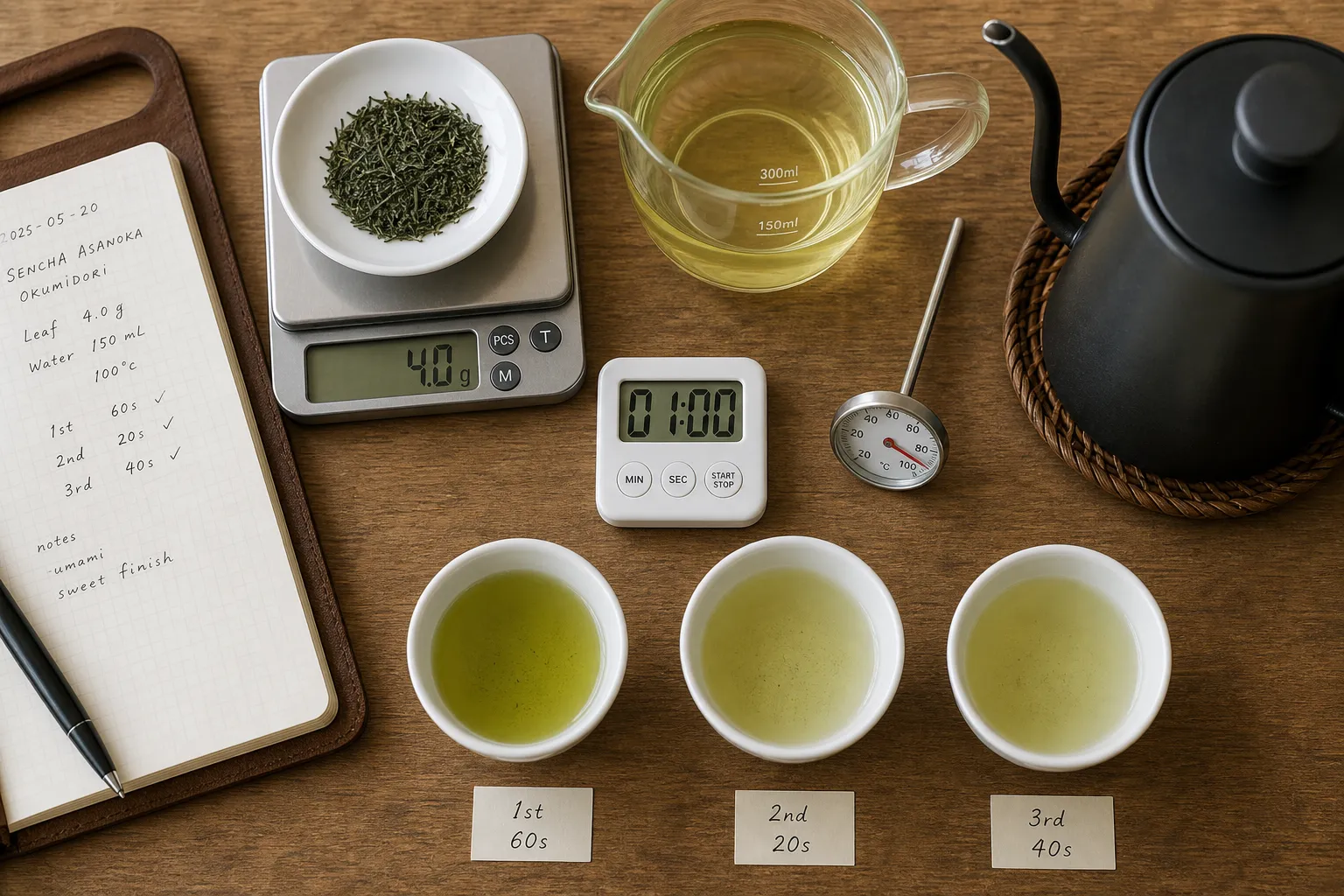
For daily use, track the preparation: powder amount, leaf weight, water volume, brewing temperature, and steep time. Those notes explain more than the label “green tea.”
A Practical Way to Choose
If you want a lighter caffeine moment, adjust the serving instead of relying on the category name. For matcha, use less powder or make a smaller bowl. For loose leaf, use a modest leaf amount, slightly cooler water, and a shorter steep, then notice whether the cup still tastes balanced.
If you want a fuller cup, change one variable at a time. More matcha powder makes the bowl more concentrated. More loose leaf deepens the infusion. Hotter water and longer steeping can increase body and bitterness, but they may also flatten sweetness or make delicate greens taste rough.
Cup choice
What is in the drink
Why caffeine may differ
Matcha
Powdered whole leaf suspended in water
The leaf is consumed, so powder amount matters directly
Loose-leaf green tea
Infusion made from leaves that are removed
Extraction depends on leaf weight, water, time, and temperature
Multiple loose-leaf infusions
Several pours from the same leaves
Total intake depends on how many infusions you drink
For most readers, this answers the practical question. Matcha often has more caffeine per serving than a typical loose-leaf green tea cup, but a strong loose-leaf session can change the comparison.
Caffeine Boundaries for Daily Tea Drinkers
Caffeine is a normal reason to compare matcha and loose-leaf green tea, and it is also personal. General consumer guidance from the FDA is useful for remembering that people respond differently to caffeine and that total daily intake matters. It does not tell you exactly how your matcha bowl compares with your sencha cup.
Be more cautious with stronger servings, afternoon drinking, multiple cups, or matcha lattes made with generous powder. If caffeine affects your sleep, anxiety, pregnancy-related decisions, medication routine, heart rhythm concerns, or another health question, use qualified guidance rather than a tea article.
That does not make matcha “too strong” or loose leaf automatically gentle. It means the better decision is specific: what serving, what time of day, what body response, and what total caffeine pattern?
A lighter cup is still green tea.
Quick Answers
Does matcha have more caffeine than regular green tea?
Often, yes. Matcha is powdered whole leaf consumed in the cup, while regular loose-leaf green tea is usually an infusion with the leaves removed. The answer can change with serving size and brewing.
Is loose-leaf green tea always low in caffeine?
No. Caffeine in loose-leaf green tea varies with leaf amount, cup size, steep time, water temperature, tea style, and multiple infusions. A strong loose-leaf session can be more substantial than the phrase “low caffeine” suggests.
Can I judge caffeine by bitterness?
Not precisely. Bitterness can increase when green tea is brewed hotter or longer, but taste intensity is not a reliable caffeine measurement. Use the brewing method as your first clue.
The Bottom Line
Matcha usually has more caffeine than a typical cup of loose-leaf green tea because matcha puts powdered whole leaf into the drink, while loose leaf gives you an infusion. The exception is preparation: a light matcha and a strong, repeated loose-leaf session can move closer together.
For your next cup, write down one thing: the scoop of powder or the weight of leaf. That small note will tell you more than the word “green tea.”
Sources
Sources and further reading
Reference links are limited to sources considered suitable for public citation in this page.