
Steamed Green Tea Reading
Sencha Tea Flavor and Steamed Green Tea Style
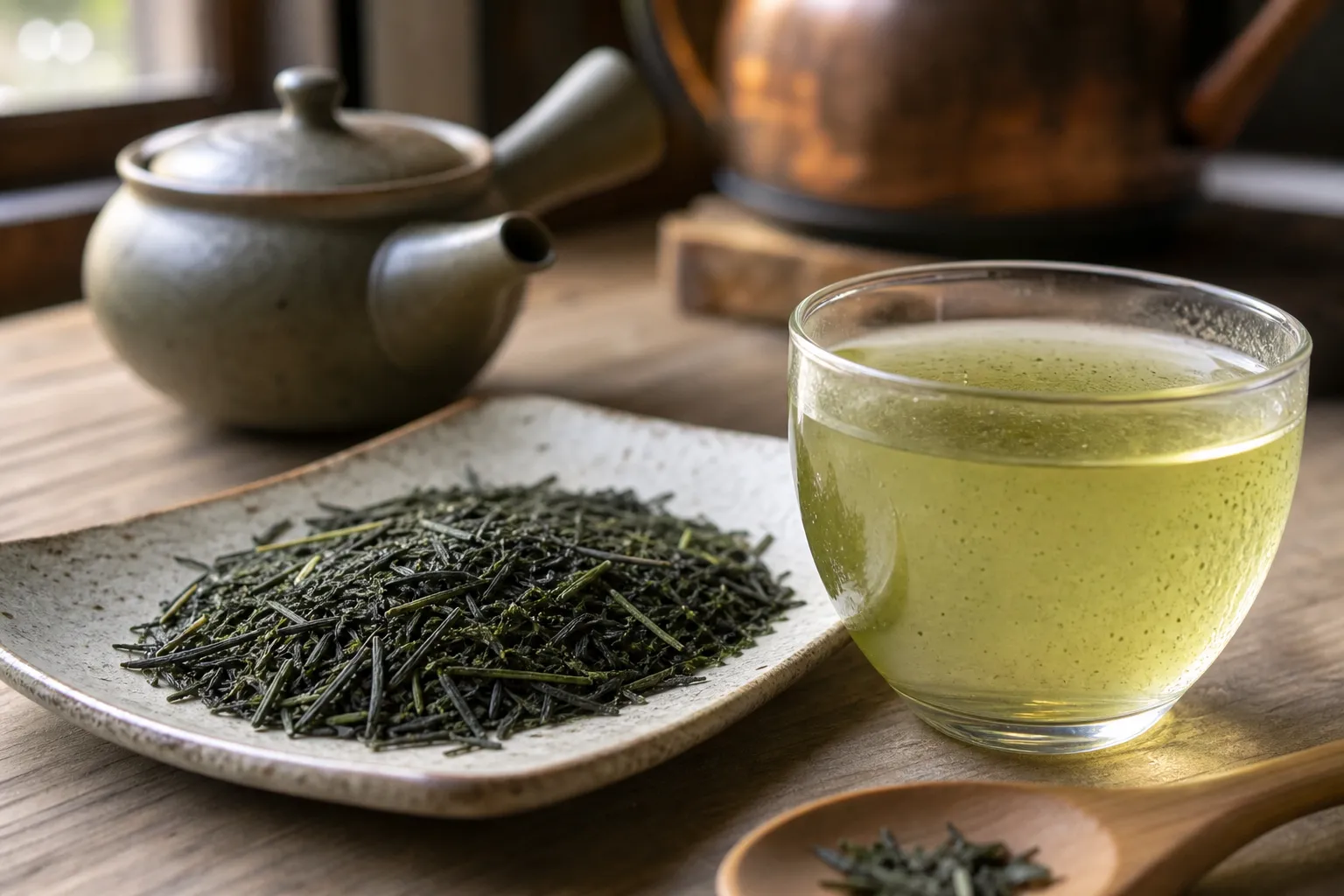
Dry sencha leaves give clues before the kettle is warm: narrow green pieces, a fresh plant aroma, and sometimes fine particles that hint at a fast-moving brew. Many readers come to sencha tea after seeing it described as grassy, ocean-like, bitter, sweet, cloudy, bright, or gentle. Those words can all point to something real, but only if they are tied back to leaf shape, liquor color, water temperature, and steep time.
This page reads sencha as a steamed green tea style, not as a wellness promise or a quality label by itself. The useful question is simple: what changed in the cup, and which variable likely changed it?
upward
Read the full overview first
Use the broader guide first if you need the full scope before this page.
What Does Sencha Tea Taste Like?
Sencha tea taste is better understood as a cluster than as one fixed flavor. A cup may seem fresh, green, lightly sweet, savory, brisk, grassy, or a little drying. The important move is to separate the sensation from the judgment.
A grassy sencha tea note often comes from the fresh, plant-like side of the liquor. Some drinkers think of cut grass; others notice steamed greens, young leaves, or a soft vegetable aroma. When the cup feels clean and lively, that green note can be pleasant. When it turns harsh or flat, the same leaf may be telling you the brew was pushed too hard.
Bitterness is a different signal. Bitter sencha tea can come from hot water, a long steep, too much leaf, or fine broken particles that release quickly. A small bitter edge can give structure. A hard, drying finish usually asks for an adjustment before the tea itself gets blamed.
Umami sencha tea belongs in the same practical vocabulary. In the cup, umami may feel savory, rounded, broth-like, or slightly sea-vegetable in aroma. When people mention a seaweed smell in sencha, they are often pointing toward this marine-savory family. The exact impression still depends on the leaf and the brew.
Start with the cup: smell the dry leaf, watch the liquor, sip while it is warm, then notice whether the finish is sweet, clean, drying, savory, or bitter. Taste first. Labels come second.
What Steamed Green Tea Means for Sencha
Sencha is commonly understood as a Japanese green tea shaped by a steamed green tea style. For the reader, the practical point is not a factory diagram; it is the way the style often points the cup toward green, fresh, vegetal, and sometimes marine notes.
Steaming language can help explain why sencha may taste more immediately green than some pan-fired green teas. It should not be treated as proof of quality, origin, freshness, or careful storage. “Steamed” names a style direction. The cup still has to support the claim.
That is why two sencha teas can feel very different. One may brew pale, clear, crisp, and lightly grassy. Another may brew deep green, cloudy, savory, and full. Leaf size, handling, freshness, storage, steaming intensity, and brewing choices all affect what reaches the sip.
Read “steamed” as a useful starting point, not a verdict. The leaf and liquor finish the sentence.
Light Steamed vs Deep Steamed Sencha
Light steamed sencha and deep steamed sencha are useful style labels because they prepare the reader for different brewing behavior. They should not be used as rigid promises. Two teas with the same label can still vary.
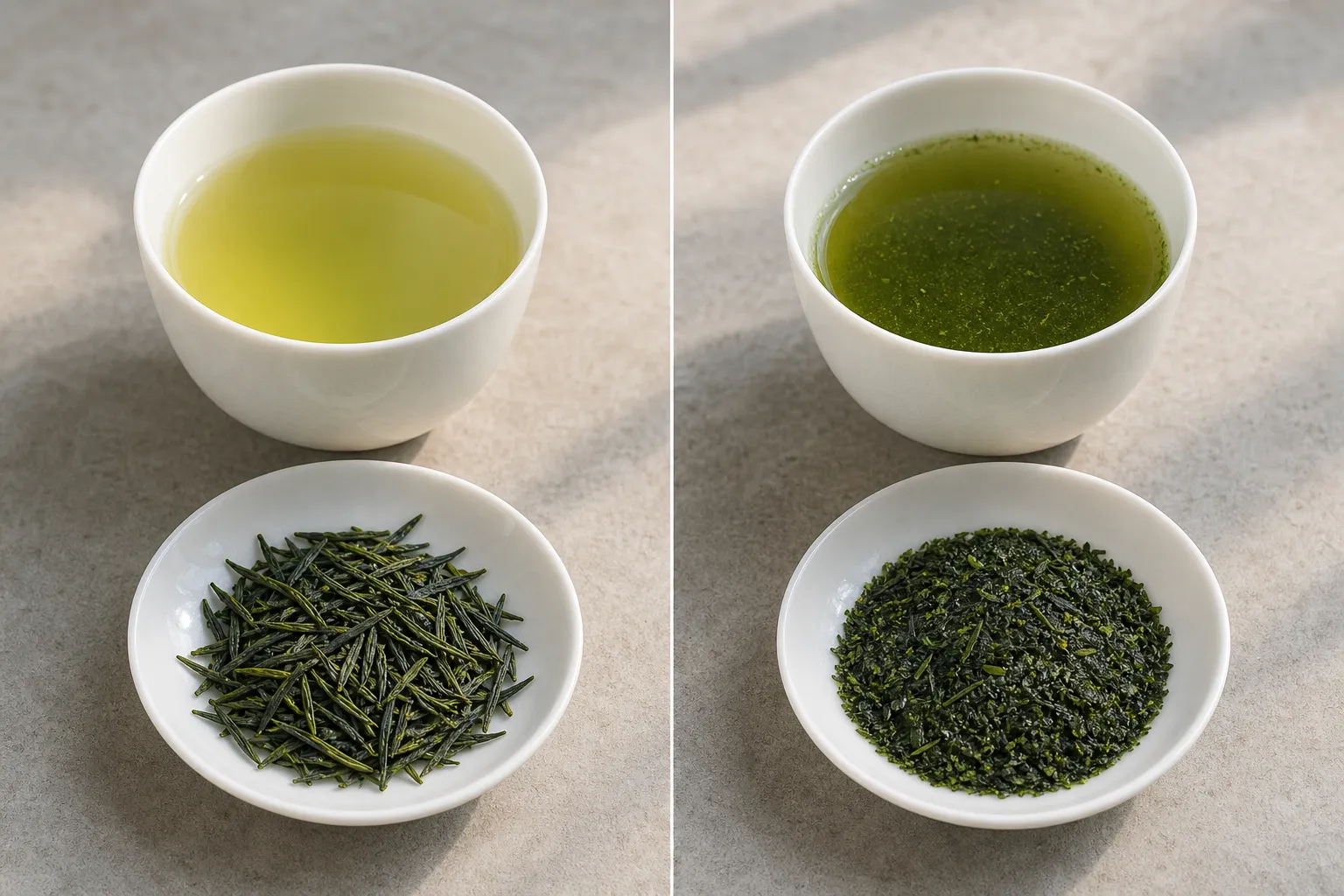
A lighter-steamed style is often associated with clearer liquor, more visible needle-shaped leaves, crisp green aroma, brightness, and a cleaner finish. That clarity can become sharp if the water is too hot or the steep runs long. Elegant leaves do not protect a cup from bitterness.
A deeper-steamed style often brings smaller leaf fragments, a richer green liquor, and a softer or fuller mouthfeel. This is where cloudy sencha tea often appears. Cloudiness is not automatically a flaw; fine particles can move into the liquor and make the cup look opaque. The tradeoff is speed. Smaller pieces can turn a round cup heavy if extraction runs too far.
Comparison Cues in the Cup
Light Steamed Sencha
- Leaf appearance: more intact, needle-shaped pieces.
- Liquor look: often clearer and brighter.
- Flavor direction: crisp, grassy, brisk, clean.
- Brewing sensitivity: can turn sharp with heat.
- Best reader habit: watch steep time closely.
Deep Steamed Sencha
- Leaf appearance: more broken pieces or fine particles.
- Liquor look: often greener and more cloudy.
- Flavor direction: fuller, softer, more savory or thick.
- Brewing sensitivity: can turn heavy or bitter quickly.
- Best reader habit: pour fully and avoid leftover water.
Use the comparison to guide attention, not to replace tasting.
Why Sencha Leaves Look Needle-Shaped
Needle shaped sencha leaves are one of the easiest cues to notice before brewing. The dry leaf may look narrow, twisted, dark green, and sometimes glossy. That shape gives the buyer or brewer something observable before market language enters the conversation.
Leaf shape can suggest how quickly a tea may brew. Longer, more intact pieces may open more gradually. Smaller fragments and fine particles may release color and flavor faster. The same steep time can produce a delicate cup from one tea and an intense cup from another.
The limit matters. A neat needle shape does not prove freshness, origin, grade, or storage quality by itself. A broken-looking tea is not automatically poor, especially when fine particles fit the style. Connect the dry leaf to the brewed cup: clean aroma, balanced liquor, and a finish that feels pleasant rather than stale or rough.
The leaf gives the first clue. The cup confirms or corrects it.
What Color Should Sencha Tea Be?
Sencha tea color can range from pale yellow-green to bright green or deeper cloudy green. A light cup may be delicate and aromatic. A vivid green cup may feel fuller and more vegetal. A cloudy cup may be normal for some deep steamed sencha, especially when fine leaf particles are suspended in the liquor.
Color becomes useful only when paired with taste. If the liquor is pale but fragrant, the brew may simply be light. If it is pale and flat, the water may be too cool, the steep too short, or the leaf amount too low. If the liquor turns dark and the first sip is harsh, the brew may have gone too far.
Cloudiness needs the same calm reading. If cloudy sencha tea brings sweetness, body, and a smooth finish, it may fit the style. If it brings muddy aroma, heavy bitterness, or a tired aftertaste, brewing or storage may be part of the problem.
Bright, cloudy, pale, or deep only matters when the sip explains it.
How Water Temperature Changes Sencha Flavor
Sencha water temperature is one of the most useful controls in the reader’s hands. Hotter water tends to pull flavor faster and can make aroma, body, bitterness, and astringency more obvious. Cooler water slows extraction and may make the cup feel softer, sweeter, or more savory; taken too far, it can also make the brew seem thin.
Adjustment Logic
- If the cup is bitter and drying, reduce water temperature, shorten steep time, or use slightly less leaf.
- If the cup is pale and quiet, lengthen the steep a little, warm the water slightly, or use more leaf.
- If the aroma is good but the finish is rough, keep the leaf amount and make the first steep gentler.
- If the cup is thick and cloudy but dull, pour more completely and avoid leaving the leaves in hot water.
Steep time matters just as much as temperature. A sencha that tastes balanced in a short first infusion may become bitter if forgotten in the pot. Fine particles, especially in deeper-steamed styles, move fast. A kyusu, small teapot, or clean strainer helps because it lets the brewer pour fully.
How many times can you steep sencha tea? Often more than once, if the leaf still gives aroma and taste. Later infusions are judged by the cup rather than the clock. If the second steep is sweet but light, enjoy it as a softer cup. If it is thin and rough, the useful flavor has likely passed.
Let the kettle explain the bitterness before judging the tea.
Common Misreads Around Sencha Flavor
Sencha is easy to misread because one word can describe either a good sign or a problem. “Grassy” can mean fresh and green, or harsh and raw. “Seaweed” can mean savory and marine, or stale and unpleasant. “Bitter” can give structure, or it can dominate the finish.
Market language can blur the cup even more. Words such as premium, spring, ceremonial, shade-grown, estate, or antioxidant-rich may appear around green tea, but they are not proof on their own. Treat them as vocabulary a buyer may encounter, then return to what can be observed.
A Dependable Reading Sequence
- What can I see? Leaf size, fine particles, color, and dry-leaf aroma.
- What did I do? Water temperature, steep time, leaf amount, and whether the pot was fully poured.
- What happened in the cup? Liquor color, aroma, sweetness, bitterness, umami, cloudiness, and finish.
That sequence prevents a common mistake: turning one tasting word into a final verdict. A bitter cup may be a brewing problem. A cloudy cup may be a style feature. A beautiful dry leaf may still taste tired if storage has been poor. A sourcing cue is useful only when the cup supports it.
Where Wellness Language Should Stay Cautious
Green tea drinkers often care about caffeine, focus, antioxidants, and daily routine. Those interests are understandable, but they should not take over a sencha tea flavor page.
The safer editorial frame is modest. Sencha is commonly discussed as caffeinated green tea, but the way a person experiences it can vary with leaf amount, steeping, sensitivity, and daily habits. Some drinkers describe green tea as feeling gentler than stronger caffeinated drinks; that is a personal-use observation, not a guaranteed result.
Antioxidant language belongs in broad green tea context only when supported by appropriate nutrition references. It should not be used to make a flavor note sound more important than it is. The reader’s practical decision here is not whether sencha changes health outcomes. It is how the leaf smells, how the water extracts it, and whether the cup fits the day.
If caffeine or other health-adjacent concerns matter, rely on qualified professional guidance rather than a tea article. Taste can be learned in the cup; personal tolerance deserves more care.
A Practical Way to Judge Sencha Tea
A good sencha reading does not need dramatic language. It needs a steady sequence.
Start with the dry leaf. Notice whether the pieces are long and needle-like, fine and broken, glossy, dull, fragrant, or faint. Then brew with one variable in mind. If you are testing bitterness, change water temperature or steep time, not everything at once. If you are testing body, compare a shorter infusion with a slightly longer one. If you are testing aroma, smell the wet leaf as well as the liquor.
Read the Cup in Layers
- First aroma: fresh grass, steamed greens, sea vegetable, sweetness, or flatness.
- First sip: light, brisk, savory, soft, thick, or sharp.
- Middle of the cup: balance between green notes, umami, and bitterness.
- Finish: sweet, clean, drying, heavy, stale, or pleasant.
- Second steep: still expressive, softer, thin, or too rough to continue.
This approach keeps sencha tea flavor grounded. Light steamed sencha may reward a clean, careful pour. Deep steamed sencha may give a fuller cup with more visible particles. A grassy note may be welcome in one brew and too sharp in another. A seaweed smell may point toward savory depth, but only the sip can show whether it works.
For the next cup, change just one thing: lower the water slightly or shorten the steep, then watch whether sencha sweetness changes with water and time.