
Sencha brewing note
Why Sencha Tea Can Taste Bitter
Sencha usually tastes bitter when the cup has been pushed too hard: water that is too hot, a steep that runs too long, too much leaf for the water, or leaves that have lost freshness can all bring the sharper side forward. That is the short answer to why sencha tea tastes bitter.
It does not always mean the tea is bad. It does not always mean you brewed it carelessly, either. Sencha naturally has a bright, grassy, sometimes brisk edge; the problem starts when that edge becomes the whole cup.
A better first question is simple: did the bitterness come from heat, time, leaf amount, or the leaf itself?
upward
Read the full overview first
Use the broader guide first if you need the full scope before this page.
The Fastest Cup Diagnosis
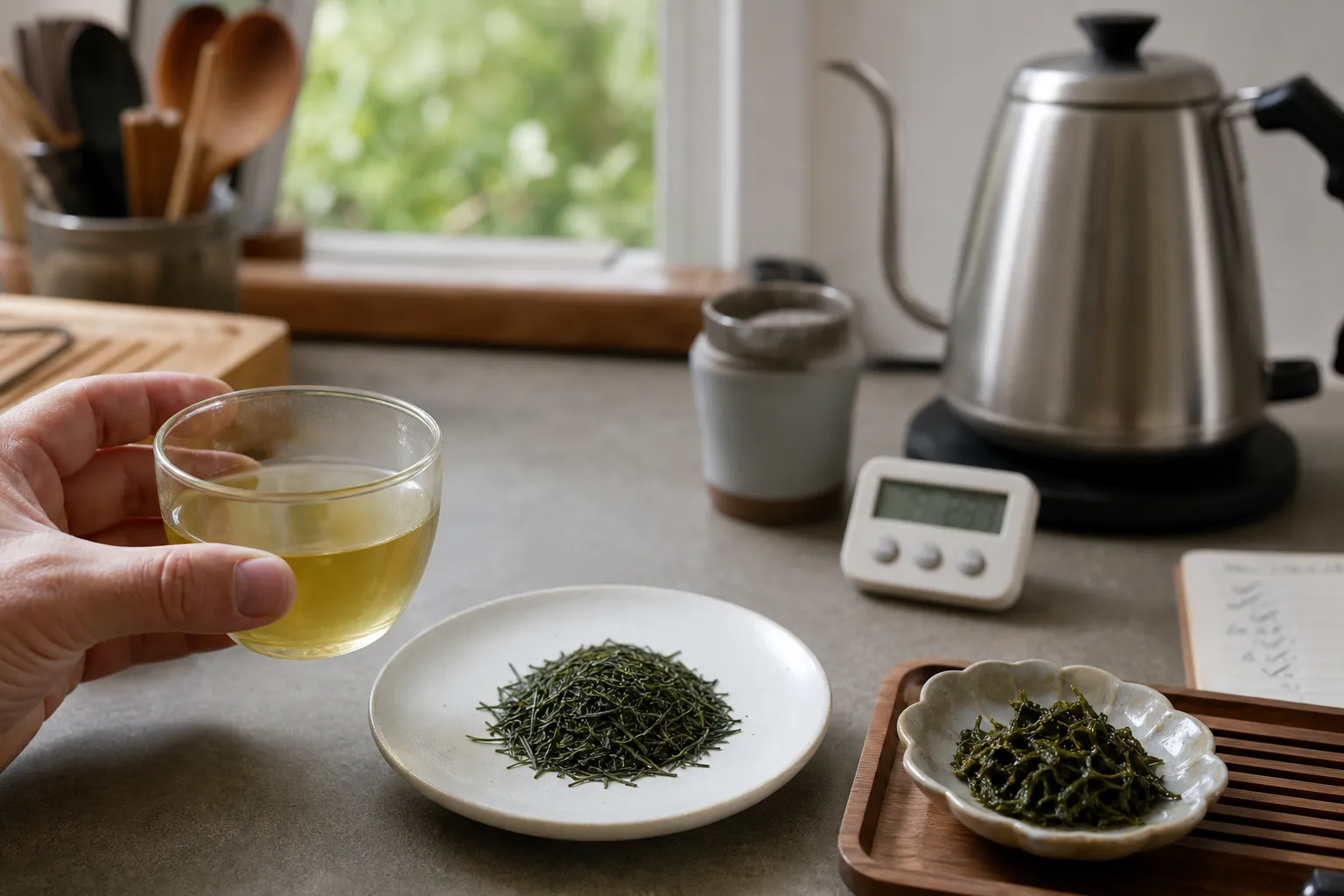
A bitter sencha often gives clues before you change the recipe. Look at the dry leaf, the wet leaf, the liquor color, and the first sip. You are not running a formal tasting; you are trying to notice which part of the preparation is speaking loudest.
Sharp from the first sip
If the liquor looks deeper than usual, the brew may be too concentrated.
Pleasant, then rough
If the finish turns drying, longer steeping may be making bitterness and astringency more noticeable.
Flat aroma and harsh taste
If the aroma feels dull as well as harsh, leaf condition or storage may be part of the answer.
These are practical observations, not lab measurements. The supplied source set for this page did not include usable public references for exact sencha brewing temperatures, steeping ranges, processing details, tea chemistry, caffeine, antioxidants, or health-related claims. So this answer stays narrower: read the cup, adjust one variable, and avoid turning a taste problem into a wellness claim.
For most everyday drinkers, the first useful test is to make the next cup gentler. Use cooler water than the bitter cup, shorten the steep, or use a little less leaf. Do not change everything at once if you want to learn from the cup. One change teaches more.
How Water, Time, and Leaf Amount Change the Taste
Water temperature confusion is one common reason green tea tastes bitter. Many drinkers treat sencha like black tea and pour very hot water over delicate leaves. Without pretending to give one exact rule for every sencha, the practical pattern is clear: hotter water can make the cup taste sharper, heavier, and more bitter. A little heat can bring body; too much can flatten sweetness and push the edge forward.
Steep time works in the same direction. Longer steeping and bitterness often arrive together because the leaf gives more to the water. That extra strength is not always bad. Some drinkers like a brisk cup with a firm finish. But if your sencha tastes sharp, dry, or mouth-puckering, the steep may be running past the point where the tea still feels balanced.
Leaf amount matters because concentration changes the whole cup. A generous scoop can make the liquor seem rich, savory, and full; it can also make an astringent green tea feel severe. If the same sencha tastes pleasant when brewed lighter, the tea may not be the main issue. The ratio may be.
A simple troubleshooting sequence works better than a complicated rule
- If the cup is bitter and thin, lower the water heat first.
- If it is bitter and heavy, shorten the steep first.
- If it is bitter and intense from the start, use less leaf.
- If it is bitter, stale, and flat, check the dry leaf and storage.
The point is not to chase a perfect formula. It is to find which brewing choice is amplifying bitterness in your own cup.
Bitterness Is Not the Same as Astringency
Many people say “bitter sencha” when they mean two related but different sensations. Bitterness is a taste. Astringency is the drying, tightening feeling in the mouth. Sencha can show both, especially when brewed strongly, but naming the sensation helps you choose the next adjustment.
If the tongue tastes sharp
Think first about water heat and concentration.
If the mouth feels dry
Think about steep time and strength.
If both happen at once, the brew is probably too forceful for the leaf or for your taste preference.
This distinction also explains why one drinker may call a cup “brisk” while another calls it harsh. A sharper green tea taste is not automatically a flaw. Some sencha is enjoyed for its vivid, green, assertive profile. The issue is balance: bitterness can frame sweetness and aroma, or it can cover them.
When a cup is balanced, the first impression may be grassy, marine, fresh, or lightly savory, with a clean finish. When the preparation is too aggressive, the finish can become rough and persistent. Let the aftertaste tell you what the first sip hides.
When the Leaf Condition Is Part of the Problem
Not every bitter cup can be fixed by the kettle. Sencha leaf condition cues can also point toward the answer. If the dry leaves smell muted, dusty, sour, or tired rather than fresh and green, the cup may taste flatter and harsher even with careful preparation. If the leaves are very broken, fine particles may brew quickly and make the liquor feel more intense.
Storage matters in ordinary kitchen terms. Tea that has been sitting open, exposed to air, light, moisture, or strong surrounding odors may lose the lively aroma that would normally soften its sharper notes. This page does not have vetted source material for detailed storage chemistry, so the useful claim is practical: stale-smelling tea often makes a less pleasant cup.
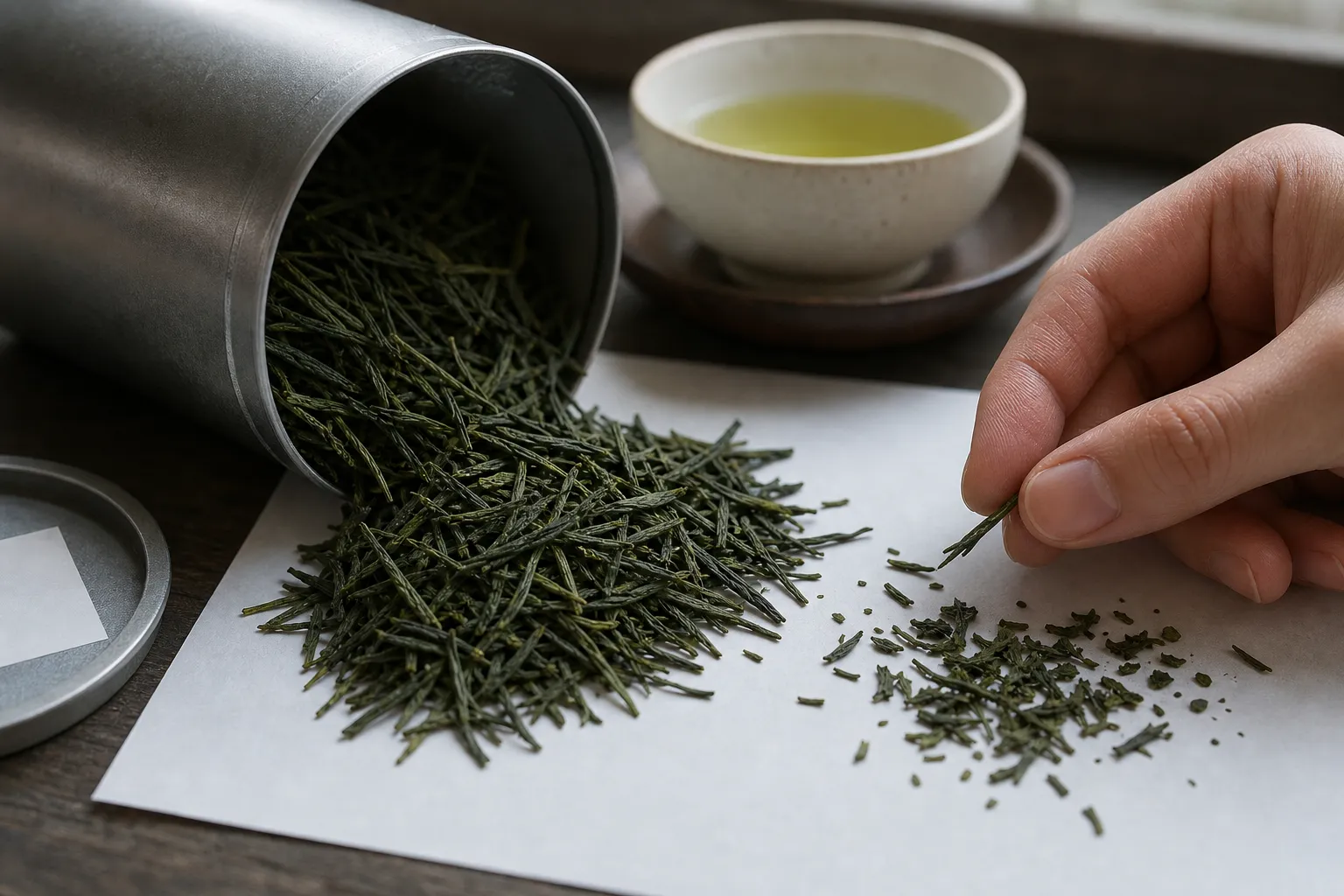
Packaging language can mislead here. Words like “premium,” “smooth,” or “mellow” do not prove how the tea will taste after opening, storing, and brewing. A sourcing cue may help you decide what to inspect, but the cup still has to confirm it. Dry leaf aroma, visible fragments, and the taste of a gentle brew are more useful than sales language.
If a gentler brew is still bitter, flat, and low in aroma, the leaf may simply be past its best condition. Lowering heat and shortening time can reduce harshness, but they cannot bring back freshness.
Why Sencha Can Taste Sharp Even When Nothing Is Wrong
Sencha is not meant to taste like every other green tea. A drinker coming from mild jasmine green tea, roasted teas, bottled sweetened tea, or very soft Longjing Dragon Well may expect sencha to be rounder than it is. That expectation alone can make normal briskness feel like a defect.
This is where “why green tea tastes bitter” becomes too broad. Different green teas have different leaf shapes, processing styles, aromas, and brewing habits. Sencha often sits closer to fresh green vegetal notes and a lively finish than to toasted sweetness or floral softness. The sharper edge may be part of the style, not a mistake.
Still, style should not excuse a bad cup. If bitterness blocks aroma, sweetness, or a clean finish, change the preparation. If the tea remains unpleasant after gentle brewing, the leaf may not match your preference. That is a valid conclusion. Not every good tea is a good fit for every drinker.
The useful standard is not whether sencha has any bitterness at all. It is whether the bitterness has a role. A small edge can make the cup feel clear. Too much edge makes it feel narrow.
A Small Reset for Bitter Green Tea Brewing
When sencha tastes sharp, reset the next brew rather than arguing with the last one. Use the same tea, the same cup, and a calmer method. Make only one or two changes so the result is easy to read.
Start by making the water less aggressive. Then shorten the contact time if the finish still feels rough. If the liquor remains too strong, reduce the amount of leaf. If the tea becomes weak but still unpleasant, the problem may be less about brewing and more about the leaf’s condition or your preference for a softer green tea.
A compact sencha preparation check looks like this
- Smell the dry leaf before brewing; muted aroma warns you to keep expectations modest.
- Watch the liquor color; a very deep cup may be more concentrated than you want.
- Taste early rather than waiting for the cup to become forceful.
- Separate bitterness from dryness so you know what to adjust.
- Repeat the gentler brew once before judging the tea.
That is the safest boundary for this page: heat, time, leaf amount, freshness, storage, and expectation can shape noticeable bitterness in sencha. Stronger claims about exact brewing standards, chemistry, caffeine, antioxidants, or wellness need better source support than the available material provides.
The Practical Answer
Sencha can taste bitter because the brew is too hot, too long, too concentrated, made with tired leaf, or judged against a softer green tea profile. A little bitterness or astringency can belong in the cup; noticeable bitterness becomes a problem when it covers aroma, sweetness, and a clean finish.
For the next cup, change one thing. Lower the water heat, shorten the steep, or use less leaf, then smell and taste again. Sencha sweetness changes with water and time.