
Cup-level culture check
Common Misconceptions About Chinese Green Tea Culture
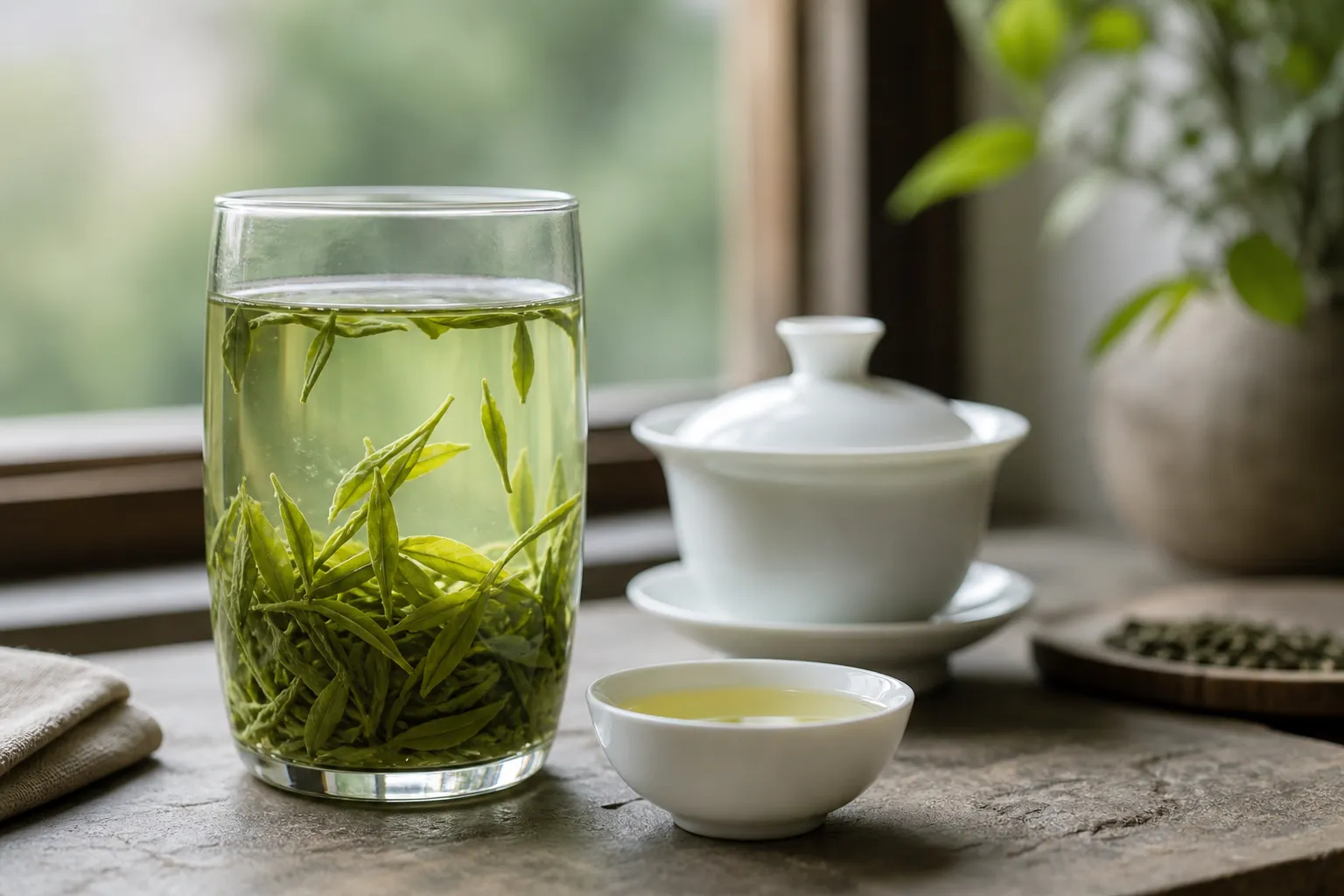
Flat Longjing leaves in a glass, pale yellow-green liquor, a grassy aroma, a slightly bitter first sip: these details often correct more confusion than a broad claim about “Chinese tea culture.” The short answer is that many Chinese green tea misconceptions come from treating a varied daily practice as one fixed ceremony, one flavor, one buying rule, or one wellness story. A better reading starts with the leaf, the water, the vessel, the setting, and the limits of what a label or tradition can show.
Because no usable public source pack was supplied for this page, the article stays narrow. It offers cautious cultural framing and cup-level checks, not a full history of green tea culture in China, verified regional claims, or nutrition guidance.
upward
Start with the broader guide
Use the broader guide first if you need the full scope before this page.
Misconception 1: Chinese Green Tea Is Mainly Ceremonial
A common Chinese green tea ceremony misconception is that Chinese tea drinking is mostly a formal performance with fixed steps, special language, and rare tools. That image may be how some readers first meet the subject, especially through tourism, staged tastings, or social media clips, but it is too narrow for everyday green tea practice.
A cup of Chinese green tea may be made in a glass, a gaiwan, a small pot, or an office mug. A careful tasting session may focus on dry leaf shape, warmed-leaf aroma, liquor color, bitterness, sweetness, and texture over several infusions. A daily cup may ask for less: leaf, hot water, a pause, and a drinkable temperature.
The correction is not that ceremony is false. It is that ceremony is not the whole culture. If a source frames every Chinese green tea as solemn ritual, look for the missing cup evidence: vessel, leaf amount, water temperature, steep time, and taste.
Misconception 2: All Chinese Green Tea Tastes the Same
Another overgeneralized assumption is that Chinese green tea has one expected taste: light, grassy, delicate, and mild. Some cups do land there, but the category is wider. Even without making precise regional claims here, a reader can notice differences in leaf shape, aroma, liquor color, body, bitterness, and aftertaste.
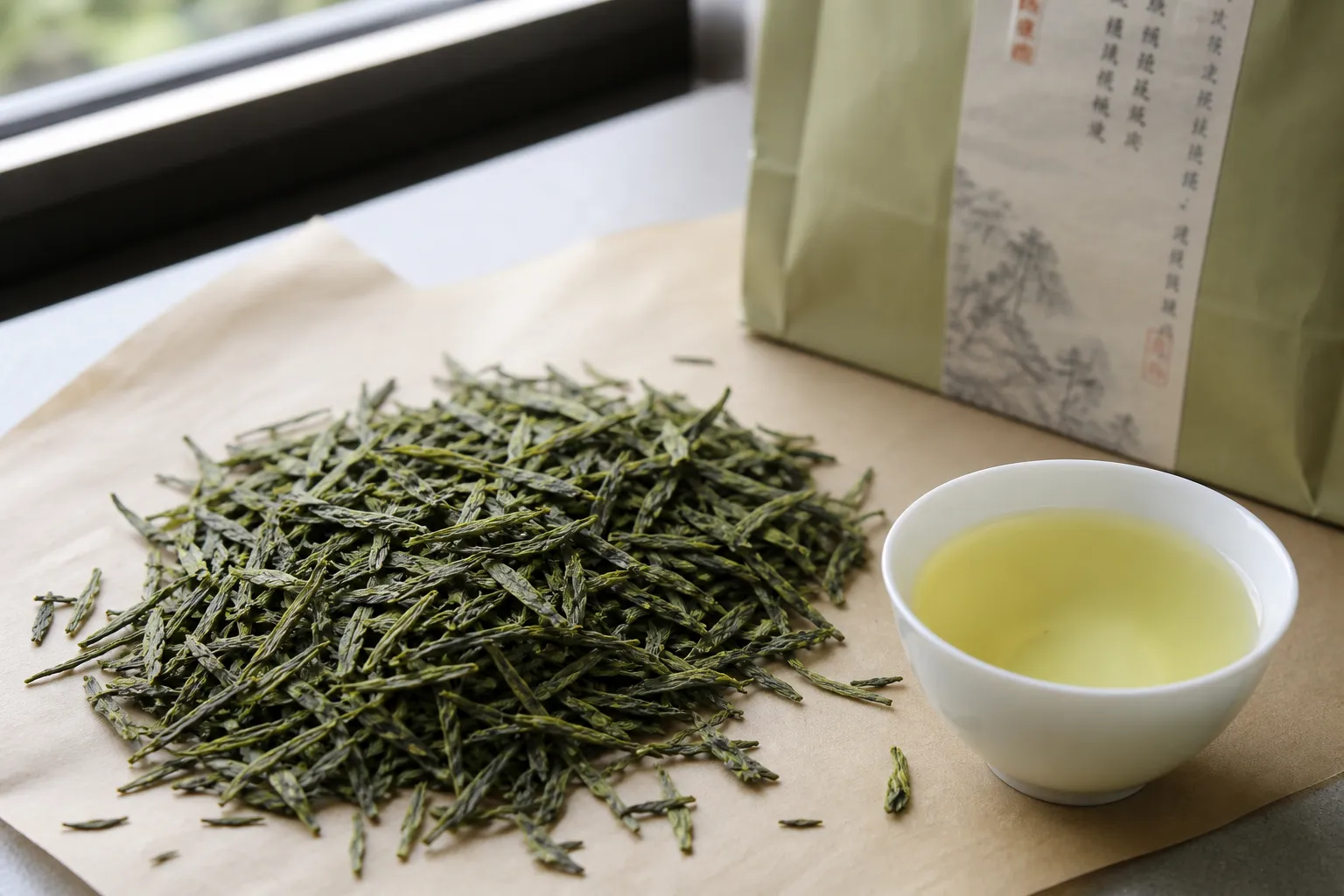
Longjing Dragon Well is often recognized by its flat leaf shape. Other loose-leaf green teas may look curled, twisted, needle-like, or broken. Those visible cues do not prove quality by themselves, but they do show that “Chinese green tea” is not one single sensory object. A greener-looking leaf can still brew harshly if the water is too hot. A less dramatic-looking leaf may make a softer cup when handled with care.
Preparation can also create false conclusions. A tea that tastes aggressively bitter may not be poor tea; it may have been pushed too hard. Hotter water and longer steeping commonly bring out more intensity, including bitterness and astringency. Cooler water and a shorter steep may let aroma and sweetness appear more gently.
Practical Check
Brew the same leaves twice. Make one cup with hotter water and a longer steep, then another with slightly cooler water and less time. If bitterness changes sharply, the misconception was not only about the tea. It was also about preparation.
Misconception 3: A Traditional-Sounding Label Proves Quality
Chinese tea market myths often begin with confident language: special origin wording, heritage phrasing, harvest romance, or premium-sounding grade names. Some of those details may matter when properly supported, but words on a package are not the same as proof in the cup.
Separate the buying cue from the conclusion. A named style tells you what the tea is claiming to be. A harvest note may suggest when it was made. A photo may show leaf shape. Packaging may show whether freshness was considered. None of these cues alone confirms taste, sourcing, or value.
Observable checks are more useful than prestige language. Look at whether the dry leaf appears reasonably intact for the style being sold. Smell for freshness rather than flatness or staleness. Brew a small amount and notice whether the liquor feels lively, dull, harsh, thin, or balanced. If a seller gives plenty of status language but little information about leaf appearance, storage, brewing, or harvest context, read the claim cautiously.
This matters with Longjing Dragon Well. Flat leaves tell part of the story, not the whole story. A familiar shape can be copied, damaged, poorly stored, or brewed badly. The better question is not “Does the label sound important?” It is “What can I verify before and after brewing?”
Misconception 4: Chinese Tea Culture Has One Correct Method
Chinese tea culture myths often look for one correct method: one vessel, one temperature, one steep time, one etiquette rule. That feels tidy, but tea practice is more flexible. The useful method depends on the leaf, the drinker’s taste, the vessel size, the leaf amount, the water temperature, and whether the goal is a quick daily cup or a more attentive tasting.
A glass can show leaf movement and liquor color. A gaiwan can make short infusions easier to compare. A small teapot may change heat retention and pour rhythm. None of these tools automatically makes the tea more culturally correct. They change what the drinker can observe.
The same applies to steeping. A stronger cup is not always better. A pale cup is not always weak in a negative sense. Some drinkers prefer lighter liquor because it protects aroma and reduces bitterness. Others prefer more body. The point is to connect method to result.
A useful instruction explains what will happen in the cup. If it only says a method is “proper” without explaining leaf, water, time, taste, or setting, it may be more performance than guidance.
Misconception 5: Wellness Language Explains the Culture
Green tea is often discussed alongside caffeine, antioxidants, focus, calmness, and daily energy. Those are common reader interests, but they can distort Chinese green tea cultural framing when they become the main story. Tea can be part of a daily routine; that does not make every cultural practice a wellness program.
Keep sensory experience separate from body claims. It is reasonable to say a cup tastes fresh, bitter, sweet, vegetal, nutty, or brisk. It is also reasonable to note, in broad terms, that green tea contains caffeine and is often discussed in general nutrition contexts. It is not appropriate to turn that into a predictable outcome for every drinker.
Caffeine also feels different from person to person. Some drinkers may find green tea gentler than coffee in their own routine; others may still feel sensitive, especially with stronger brews, larger servings, or late-day drinking. The practical move is to observe cup size, timing, and response instead of treating “green tea” as one universal wellness category.
Tradition can explain meaning, habit, and setting. Brewing can explain bitterness, aroma, and texture. Nutrition context can explain why people ask about caffeine or antioxidants. Those threads should not be blended into a sweeping result claim.
A Cup-Level Check for Broad Claims
The fastest way to test a claim about Chinese green tea culture is to bring it back to the leaf. Before accepting a broad statement, ask what is visible, brewable, or limited.
Use these checkpoints:
- Leaf shape: Is the tea flat, curled, twisted, broken, or powdery, and does the claim explain why that matters?
- Liquor color: Does the brewed tea look pale, yellow-green, deep, cloudy, or dull?
- Aroma: Is the scent fresh, toasted, grassy, nutty, floral, marine, stale, or muted?
- Bitterness: Does harshness change when water temperature or steep time is reduced?
- Setting: Is the tea described as daily drinking, careful tasting, gift tea, restaurant tea, or staged performance?
- Claim limit: Is the source explaining what can be observed, or asking you to trust prestige, ceremony, or wellness language without support?
This checklist does not replace deeper cultural or historical research. It simply keeps a claim from floating above the cup. Chinese tea culture evidence should meet the tea somewhere in water.
What This Page Cannot Settle
This page should not be read as a full historical account of green tea culture in China. It does not verify regional customs, origin claims, processing histories, ceremonial lineages, grade systems, or health research. Those topics need stronger public sources before they can be presented with confidence.
The safer conclusion is narrower: many misconceptions come from overgeneralizing. Chinese green tea is not only ceremony, not one taste, not confirmed by a label, not governed by one method, and not best understood through wellness marketing. It is better approached as a set of practices around leaf, water, vessel, time, place, and taste.
The next time a claim sounds too smooth, brew a small cup and adjust one variable. Let the leaf, water, and steep time answer first.