
Cup clarity
Why Steamed Green Tea Can Turn Cloudy
A cup of steamed green tea can turn cloudy when very fine leaf material stays suspended in the liquor, when broken leaf dust slips through the strainer, when pouring stirs the leaf bed, or when the brew is strong enough to look fuller rather than glass-clear. That is the practical answer to why steamed green tea turns cloudy: the cup is usually showing particles, handling, extraction, water, or cooling effects, not one single cause.
Cloudiness by itself does not prove the tea is bad, stale, unusually fresh, higher in caffeine, or richer in antioxidants. Read it first as a cup clue. Look at the leaf, the water, the steep, and the taste before turning a cloudy green tea cup into a quality judgment.
upward
Start with the broader guide
Use the broader guide first if you need the full scope before this page.
What Cloudiness Looks Like in the Cup
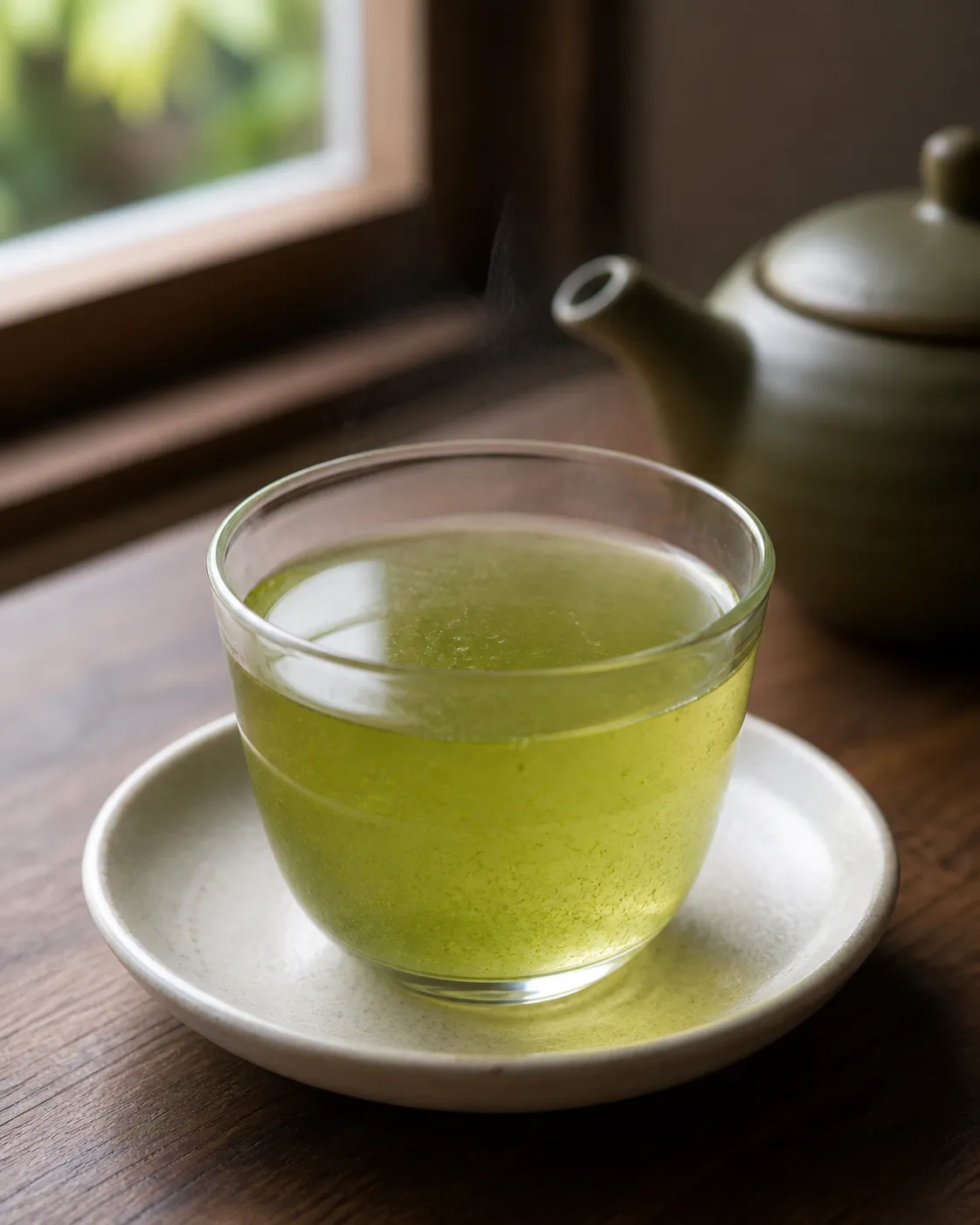
Cloudy steamed green tea does not always look the same. Sometimes the liquor is pale green with a soft veil, as if a fine mist is floating through it. Sometimes the cup looks dusty near the bottom. In a stronger steep, the whole infusion may look thicker, deeper, or slightly murky.
Haze
Haze hangs in the liquor and softens green tea cup clarity from rim to base.
Sediment
Sediment settles after a few minutes, often as tiny green flecks, powder, or leaf dust at the bottom.
A cup can show both: a cloudy body and a visible layer of fine material below. Steamed teas such as sencha often include narrow, delicate leaf pieces, and some styles release small fragments during brewing. That does not make every cloudy cup a defect. It means the tea is not behaving like a very clear, lightly extracted liquor. Read the particles first.
Why Steamed Green Tea Turns Cloudy
The most common explanation is physical: small steamed tea leaf particles are in the cup. Fine fragments can come from brittle leaves, handling during packing, shaking in a tin or pouch, or a strainer that still lets dust pass through. When those particles stay suspended, the liquor looks cloudy.
Brewing strength can add to the effect. More leaf, hotter water, longer steep time, or repeated agitation can pull more from the leaf and move more material into the cup. The result may be deeper color, stronger aroma, more body, and sometimes more bitterness. The cloudy appearance is then part of a more intense extraction.
Pouring and resting both matter
A fast pour from a kyusu, gaiwan, or small pot can stir the leaf bed and carry fine matter into the cup. Swirling the teapot before pouring can do the same. If the last few drops are thick with suspended tea particles, the cup may look clearer at first and cloudier as the pour finishes.
Cooling can change how the liquor appears. A hot infusion may look brighter at the surface, then seem duller or more opaque as it rests. Without stronger source coverage, it is better not to assign a precise chemical explanation. For a drinker, the useful question is simpler: was the tea cloudy from the first pour, or did it turn cloudy after sitting?
Water can also be a practical clue. Household waters vary in minerals, filtration, and taste, and those differences can change how a brewed cup looks and feels. This page does not have enough evidence to claim a specific mineral reaction for steamed tea clarity. If the same leaf looks clear with one water and hazy with another, water belongs on your checklist.
Read the Leaf Before You Blame the Tea
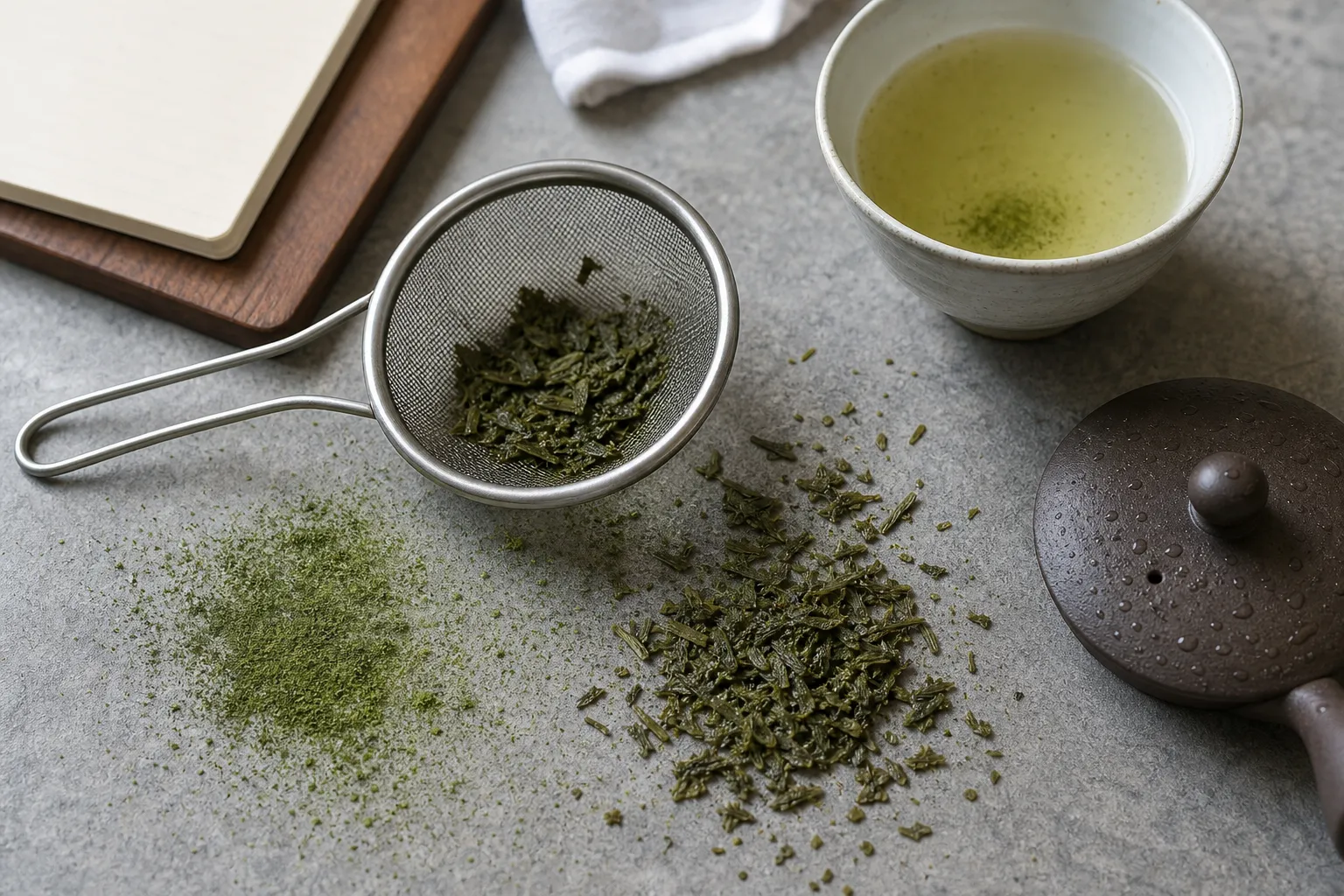
Start with the dry leaf. If the bottom of the bag is powdery, the tea may send more fine material into the cup. If the leaves are very broken, rubbed, or crushed, the infusion may look softer and less transparent than a cup brewed from larger, more intact leaf pieces.
Then check the brewed leaf. If the spent leaves include many tiny flakes, shredded edges, or powdery residue, the cloudy green tea cup may be mostly a particle issue. A very fine mesh strainer can help confirm this: brew the same tea once with your usual strainer, then again with a finer filter or a slower pour. If the second cup is clearer, physical leaf matter was probably the main cue.
Do not rush from cloudiness to poor quality. Some steamed greens naturally look more vivid, deep, or full in the cup than pan-fired styles such as many Longjing Dragon Well teas. That comparison is useful as a broad visual cue, not as a grade system. Longjing flat leaves tell only part of the story; steamed leaf shape and handling tell another.
Storage also deserves a look. A pouch that has been opened many times may collect broken pieces at the bottom. A tea tin that is shaken often can gather dust even when the tea was not dusty at first. If the first servings were clear and later servings are murkier, the bottom-of-bag effect may be part of the answer.
Brewing Checks That Usually Clarify the Cause
A practical tea cloudiness observation works best when you change only one thing at a time. Otherwise, a clearer cup may be hard to explain.
Try these checks
- Use slightly cooler water and keep the same leaf amount.
- Shorten the steep time while keeping the same teapot and strainer.
- Pour more slowly so the leaf bed is not stirred up.
- Stop before forcing out the thickest final drops.
- Use a finer strainer once, only as a comparison.
- Let the cup sit for two minutes and see whether particles settle.
If cooler water and a shorter steep make the cup clearer and less bitter, extraction was probably part of the cloudiness. If a finer strainer changes the appearance most, suspended leaf particles were likely the main cue. If the same method looks different with another water source, water may be contributing to the visible result.
Taste should stay beside sight. A cloudy cup that tastes sweet, grassy, marine, lightly umami, or pleasantly full may simply be a rich steamed tea brew. A cloudy cup that tastes harsh, dusty, flat, or stale points you toward grind, storage, over-steeping, or old leaf. The visual cue matters, but the sip completes the reading.
For matcha drinkers, the comparison can be misleading. Matcha is meant to be suspended powder, so opacity is expected. Loose-leaf sencha or another steamed green tea is different: some suspended material can be normal, but the drink is still an infusion rather than whisked powder. Do not judge both cups by the same standard.
What Cloudiness Does Not Prove
It does not automatically mean discard the cup
If the tea smells clean, tastes within its expected range, and the cloudiness looks like fine leaf matter, the appearance alone is not enough to make a strong judgment. At the same time, do not use cup clarity as reassurance if the dry leaf smells musty, sour, unusually damp, or visibly compromised.
It does not prove freshness
Fresh steamed green tea may brew vivid and full, but a murky cup can also come from broken leaf, dust, heavy steeping, or rough pouring. Freshness is better read through aroma, color, storage history, harvest context when available, and how the flavor opens in the cup.
It does not prove higher caffeine
Caffeine is a common reader concern with green tea, but visible haze is not a reliable caffeine meter. Leaf amount, tea type, water temperature, and steep time are more relevant practical variables. If caffeine affects your sleep, comfort, medication routine, or daily intake, use general caution and qualified guidance rather than reading cloudiness as a signal.
It does not prove a stronger wellness effect
Green tea is often discussed in relation to antioxidants, focus, and daily energy, but this page has no source basis for linking a cloudy steamed tea appearance to a health outcome. Keep wellness language separate from the cup cue. A cloudy cup is first a brewing observation.
When a Cloudy Cup Is Worth Changing
Change your method if the tea looks cloudy and tastes rough
Lower the brewing temperature, shorten the steep, use a little less leaf, and pour gently. These adjustments usually make the cup easier to read because they reduce intensity and agitation at the same time.
Change your tool if the cup is pleasant but too dusty
A finer strainer, a calmer pour, or leaving the final thick drops in the pot can improve clarity without changing the tea itself. This is especially useful for loose-leaf drinkers who like the flavor but dislike sediment.
Change your expectations if the tea is naturally full-bodied
Some steamed green teas will not look as transparent as a very light, tidy infusion. If the aroma is lively, the taste is balanced, and the particles settle cleanly, the cloudiness may simply be part of that brewing style. Clear is not always better.
Change the tea only after the cup gives more than one warning
Flat aroma, stale taste, excessive dust, poor storage, and unpleasant cloudiness together say more than haze alone. One visual cue is not enough.
A Simple Cup Test for Next Time
Brew the same steamed green tea twice. For the first cup, use your normal method. For the second, use slightly cooler water, a shorter steep, a slower pour, and a finer strainer if you have one. Keep the leaf amount the same.
Then compare three things: whether the liquor is clearer, whether sediment still gathers at the bottom, and whether the taste improves. If the second cup is clearer and sweeter, your cloudy steamed green tea was likely shaped by brewing and handling. If both cups look similar but taste good, the leaf may simply give a fuller liquor. If both are dusty and unpleasant, inspect the bottom of the pouch and the storage condition.
That is the most useful answer to a cloudy green tea cup: do not ask the haze to prove too much. Let the leaf, water, time, and taste explain it.