
Processing Clue
What Is Steamed Green Tea
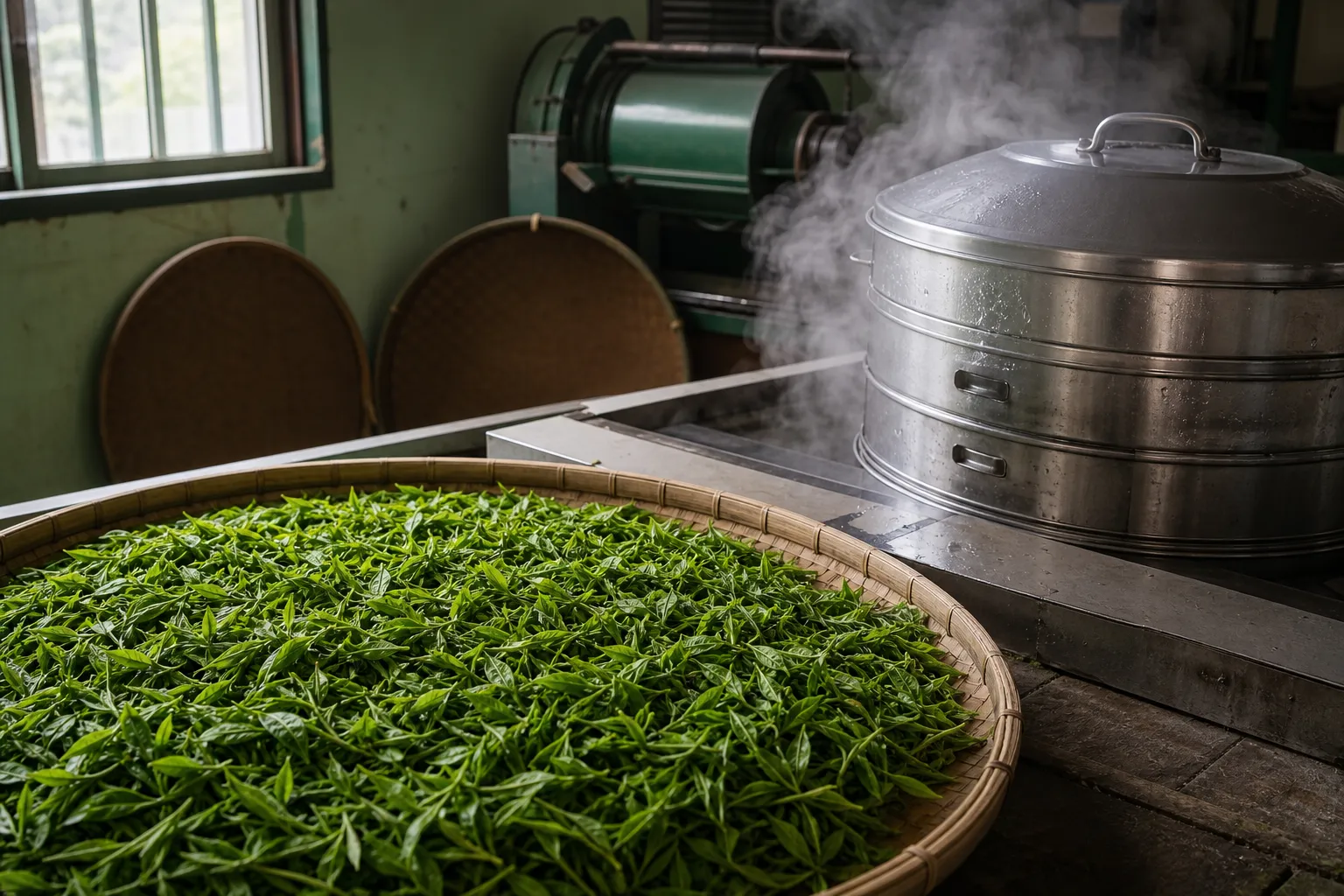
A cup of steamed green tea often gives a clue before the first sip: the dry leaf may look vivid, the warmed aroma may lean fresh and green, and the liquor can taste brisk, grassy, or savory depending on the tea and the steep. Steamed green tea is green tea whose fresh leaves are heated with steam early in processing instead of being heated mainly against a hot pan or other dry surface. That step is a form of green tea fixation; it helps hold the leaf in a greener style and shapes the cup that follows.
“Steamed” does not mean the finished tea is wet, soft, or already prepared. It names one processing choice. The useful question is what that choice can tell you about leaf appearance, aroma, taste, and brewing behavior.
upward
Start with the broader guide
Use the broader guide first if you need the full scope before this page.
What Steaming Means In Green Tea Processing
Fresh tea leaves do not become green tea just by being picked and dried. They need heat early in processing. In tea terminology, fixation means applying heat to slow the leaf’s movement toward a more oxidized style.
Steaming green tea leaves is one way to do that. The leaves are exposed to steam, then continue through later steps such as shaping and drying. The exact handling varies by producer and tea style, so steamed green tea is better understood as a processing family than as one fixed flavor.
A phrase such as “steam fixed tea leaves” points to the same idea. The finished leaf does not contain steam; steam was used early enough to influence what the tea becomes.
Detailed claims about exact temperature, timing, enzyme deactivation in tea, or regional standards need reliable processing sources. For the drinker, the safer first move is simpler: observe the leaf and the cup.
What Steamed Green Tea Can Look, Smell, And Taste Like
Steamed green tea taste is often described as fresh, green, grassy, marine, vegetal, or savory. These words are tasting cues, not guarantees. A steamed tea can show vivid green aroma and a quick leafy presence, but cultivar, harvest, finish, storage, and brewing still matter.
Look
Some steamed teas may show deeper green color, fine fragments, needle-like shapes, or a slight gloss. Others may look quieter. Steamed green tea appearance should be read with aroma and brewing behavior, not treated as proof by itself.
Smell
Warm the leaf and smell it. You may notice cut grass, spinach, seaweed-like savoriness, fresh herbs, or a soft sweetness. If the leaf smells flat, dusty, or stale, steaming will not rescue it. Processing can shape freshness; storage protects it.
Taste
In the cup, the first sip may feel bright and green. The middle may show umami, sweetness, or firm vegetal body. The finish may turn drying or bitter if the water is too hot, the leaf amount is high, or the steep runs long.
That is the practical value of the term. “Steamed” gives a starting expectation, not a final verdict.
Steamed Versus Pan-Fired Tea
Steamed versus pan-fired tea is useful, but easy to overstate. Steamed green tea is heated with steam. Pan-fired green tea is heated through contact with a hot surface. Both are green tea processing methods, and both can make good cups.
Steamed signal
Steamed teas are commonly associated with greener, grassier, or more savory impressions. These are helpful comparisons, not laws.
Pan-fired signal
Pan-fired teas are often described as warmer, nuttier, chestnut-like, or lightly toasted. These impressions can orient the palate, but the actual leaf still matters.
Longjing Dragon Well is a useful contrast because many drinkers know its flat leaf and warmer pan-fired profile. Sencha is a common steamed reference because many drinkers connect it with a vivid green cup and clear vegetal aroma. The examples orient the palate, but they do not replace the actual leaf.
The better question is not which method is better. It is which processing signal matches the cup you want today. Greener, brisker, more savory tea may point you toward steamed green tea. Rounder toasted warmth may point you toward a pan-fired style. Taste decides.
How Steamed Green Tea Behaves When Brewing
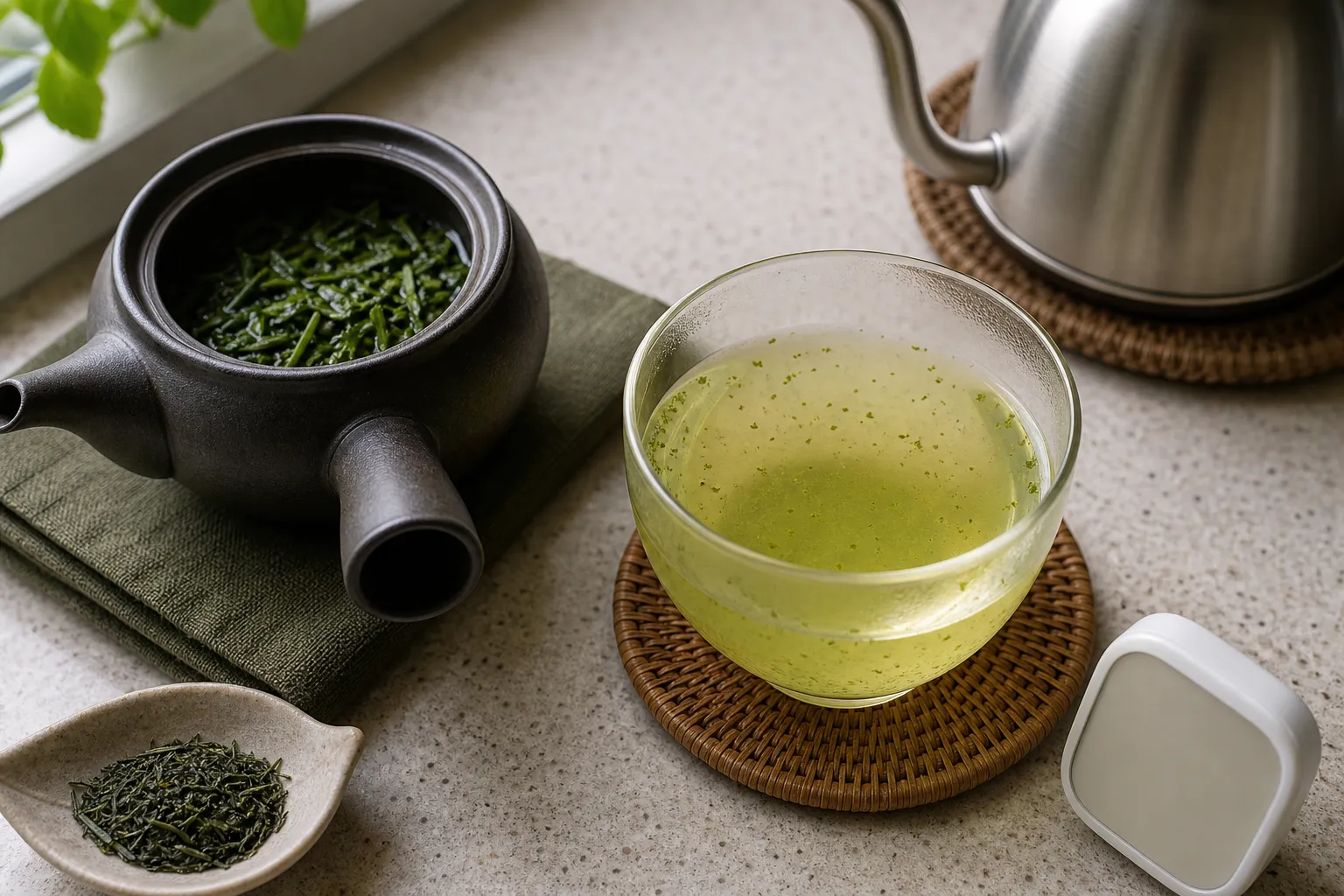
Steamed green tea brewing rewards attention to water and time. Many steamed teas release flavor quickly, especially when the leaves are fine, broken, or deeply steamed. Fast extraction can taste sweet and savory; pushed too far, it can taste sharp.
Start with cooler water than you would use for black tea and a shorter steep than you might use for a sturdier roasted green. This is not a universal rule, but it is a useful caution when a tea tastes grassy, sharp, or bitter. Change one variable at a time.
Small tasting sequence
- If the cup is thin, add a little more leaf or extend the steep slightly.
- If the cup is bitter, lower the water temperature or shorten the steep.
- If the aroma is fresh but the flavor is harsh, keep the leaf amount and reduce heat first.
- If the liquor turns cloudy or heavy, check whether the tea is very fine or over-steeped.
- If the finish tastes stale rather than bitter, look at storage before blaming the brewing method.
Leaf size matters. A fine steamed green tea can brew fast because more surface area meets the water. A larger, more intact leaf may open more slowly. Matcha is separate because it is powdered tea whisked into water rather than steeped and strained; loose-leaf steeping logic does not apply in the same way.
The cup gives the correction. Let water and time explain the bitterness.
What The Label Can And Cannot Tell You
“Steamed green tea” on a label tells you something about processing. It does not prove freshness, origin, harvest grade, storage care, or taste balance. It also does not tell you how the tea will fit your caffeine tolerance or daily routine.
Pair the processing term with visible cues
- Does the leaf color look lively rather than dull?
- Does the aroma smell clean and fresh rather than flat?
- Is the package protected from light, heat, air, and moisture?
- Does the seller give a harvest or packing clue without leaning only on vague premium language?
- Do the brewing notes match the leaf style, or are they generic instructions?
Green tea processing terminology can help you ask better questions, but it should not replace cup-level evidence. If a tea is called steamed but tastes mostly roasted, stale, or unusually smoky, the label may be incomplete, the storage may be poor, or the tea may be a mixed or differently finished style.
A sourcing cue is only a cue. The cup still has to confirm it.
Where Wellness Language Should Stay Modest
Steamed green tea is still green tea, so readers often connect it with caffeine, antioxidants, focus, or daily energy. Those topics belong in general context, not in promises. A processing method should not be turned into a health-outcome claim.
It is reasonable to say that green tea contains caffeine and is often discussed in relation to plant compounds found in tea. It is not careful to say that steamed green tea guarantees a specific effect, suits everyone, or changes health outcomes in a predictable way. Caffeine sensitivity varies, and personal health questions are better handled with qualified professional guidance.
For daily use, keep the observation simple. Notice how the tea tastes, how much you drink, when you drink it, and how your body responds. Processing style may shape the cup; it is not a wellness shortcut.
A Practical Way To Recognize Steamed Green Tea
If you are trying to understand steamed green tea meaning from the cup rather than the label, use a three-part check.
- First, warm the dry leaf in a small pot, gaiwan, or cup and smell it before adding water. Look for fresh green, vegetal, grassy, herb-like, or savory impressions. If it smells toasted or nutty, record that too.
- Second, brew gently. Use moderate leaf, cooler water, and a short first steep. Watch how fast the color and aroma appear. A steamed tea that releases flavor quickly may need less time than your usual loose-leaf green.
- Third, taste the finish. Freshness, umami, and green aroma can suggest you are near the steamed green tea family, but bitterness tells you about brewing as much as processing. Lower the heat before you dismiss the leaf.
Steamed green tea is best understood as a processing clue with sensory consequences: steam fixes the fresh leaf early, and the finished tea often asks for attentive brewing. Read the leaf, smell the warmed cup, and adjust the next steep by water or time.