
Green tea processing comparison
Pan-Fired vs Steamed Green Tea
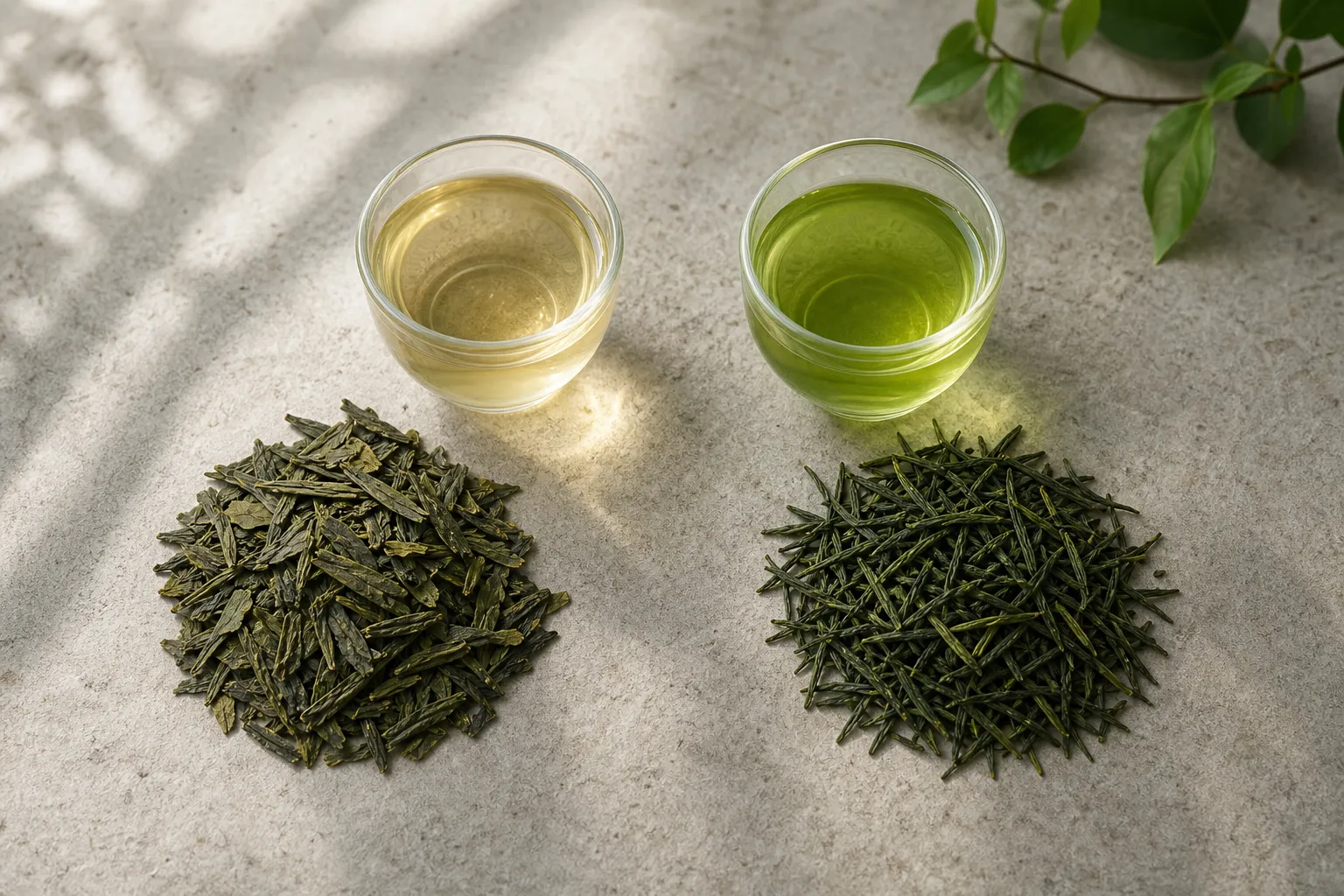
A dry green tea leaf can look flat, curled, needle-like, broken, glossy, dull, deep green, yellow-green, or almost olive. The cup can taste toasted and round, fresh and grassy, or somewhere between the two. That is why pan-fired vs steamed green tea is a useful comparison, but not a tidy rule.
The processing label gives you a first clue. Pan-fired and steamed are two heat-treatment paths used in green tea processing, and they often shape aroma, color, and brewing behavior. The finished cup also depends on cultivar, harvest timing, leaf grade, rolling, drying, storage, and water. Processing matters. It does not speak alone.
upward
Start with the broader guide
Use the broader guide first if you need the full scope before this page.
What Is Pan-Fired Green Tea?
Pan-fired green tea is green tea that receives its main heat treatment through contact with a heated surface. Depending on the tea and region, people may describe this as firing, roasting, or wok-style heating. Without a strong public source set attached to this draft, the better wording stays practical rather than overly technical.
For the drinker, “pan-fired” is most useful when it points toward a possible cup direction: warmer aroma, less raw-grass intensity, and more toasted, chestnut-like, or lightly nutty impressions. Those words are sensory shorthand. A poorly stored pan-fired tea can taste flat; a carefully made one can still taste bright and green.
Common pan-fired cues
- Dry leaf that looks flat, twisted, curled, or slightly darker depending on style.
- Liquor that leans yellow-green, pale gold, or soft green.
- Aromas of warm grain, toasted seed, cooked greens, or soft nuttiness.
- A cup that may feel forgiving at moderate brewing temperatures, though delicate lots can still turn bitter.
The key word is “may.” Pan-firing suggests a family of cues; it does not certify quality, origin, freshness, or daily wellness value.
What Is Steamed Green Tea?
Steamed green tea is green tea that receives its early heat treatment through steam rather than direct contact with a hot pan. As a buying and tasting label, it often helps explain a greener, fresher, more vegetal cup.
Many drinkers associate steamed green tea with cut grass, spinach, seaweed-like savoriness, sweet green vegetables, or a vivid fresh-leaf aroma. That association is common in tea language, not universal. Steaming length, leaf condition, rolling, drying, particle size, and storage can all change the cup.
Common steamed cues
- Leaf that appears deeper green, finer, or more needle-like in some styles.
- Liquor that looks greener, brighter, or slightly cloudy when small particles enter the cup.
- Aromas that lean grassy, marine, vegetal, or sweetly green.
- A brew that can become assertive quickly if the water is too hot or the steep runs long.
If pan-fired tea often asks you to notice warmth, steamed tea often asks you to watch freshness. Water and time matter.
Pan-Fired vs Steamed Green Tea Taste Differences
The simple comparison is useful: pan-fired green tea often leans warmer and rounder; steamed green tea often leans greener and more vegetal. The better comparison comes from smaller cup-level clues.
Pan-fired green tea can taste nutty or toasted because heated-surface processing may encourage warmer aroma notes. For the drinker, the practical observation is enough: if the cup reminds you of warm grain, chestnut, or roasted greens, processing may be part of the reason, but storage and brewing still shape the result.
Steamed green tea can taste grassy or vegetal because the cup often carries a fresher green-leaf character. If it smells like spinach, seaweed, spring vegetables, or fresh-cut greens, the steamed label may fit the pattern. Still, no label promises sweetness, brightness, or balance in every steep.
Taste is a clue, not a verdict.
Does Pan-Firing or Steaming Change Green Tea Color?
Color is one of the first green tea observable cues, and one of the easiest to misread. A steamed tea may pour greener than a pan-fired tea, especially when the leaf is fine or the liquor contains suspended particles. A pan-fired tea may look more yellow-green or pale gold. These are common expectations, not fixed rules.
Dry leaf color can also mislead. Deep green may suggest freshness, but cultivar, shading, rolling, drying, and storage all affect appearance. A dull leaf may be old, poorly stored, or simply made in a style that does not aim for bright green color. Gloss can look appealing without proving better taste.
Cloudiness deserves a separate note. Steamed green tea can turn cloudy when fine leaf fragments or stronger extraction enter the liquor. That is not automatically a flaw; it may come with thicker body and stronger vegetal character. If cloudiness arrives with stale aroma, harsh bitterness, or a flat aftertaste, the issue may be age, storage, or brewing.
Look at color, then smell the cup. Aroma gives the better clue.
Is Pan-Fired Green Tea Less Grassy Than Steamed Green Tea?
Often, yes in everyday tasting language; not always in the cup. Pan-fired green tea is commonly expected to taste less raw-grassy because its heat style can move aroma toward warmer notes. Steamed tea is commonly expected to preserve a more vivid green character. Those expectations help beginners choose a first direction.
The mistake is turning the comparison into a ranking. “Less grassy” does not mean better. Some drinkers want the clean, bright, vegetal edge of steamed tea. Others want the softer toast and nutty warmth often associated with pan-fired styles. The better question is which flavor direction fits your palate and brewing habits.
If you dislike grassy notes, start with pan-fired green tea or brew steamed tea with cooler water and a shorter steep. If you enjoy a fresh vegetable-like cup, steamed green tea may suit you, but watch the temperature closely. A few degrees and a short oversteep can move a bright cup toward roughness.
The palate decides before the label does.
Does Pan-Fired Green Tea Need Different Brewing Than Steamed Green Tea?
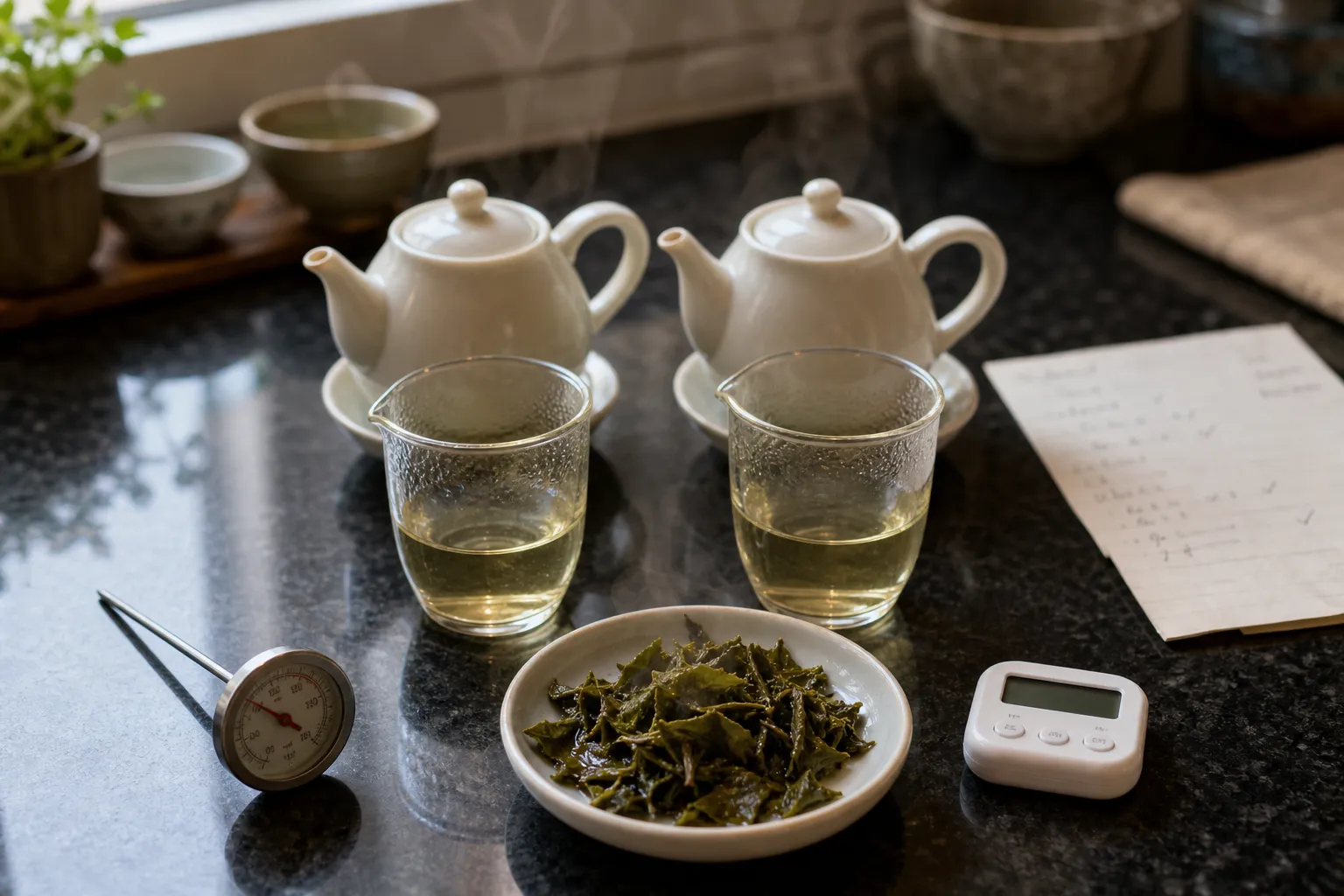
Pan-fired and steamed teas do not need entirely different brewing systems, but they often reward different attention. For a fair comparison, change only one variable at a time: water temperature, steep time, or leaf amount.
For pan-fired green tea, a moderate brewing temperature often gives the cup room to show soft aroma without pulling too much bitterness. If the tea tastes thin, increase the leaf slightly or lengthen the steep. If it tastes smoky, harsh, or dry, use cooler water or shorten the infusion.
For steamed green tea, cooler water and shorter timing can help protect the sweet, vegetal side of the cup. If the tea tastes flat, it may need a little more leaf or a slightly longer steep. If it turns sharply bitter, unpleasantly cloudy, or too grassy, reduce heat first.
A practical first session
- Use the same cup or pot size for both teas.
- Start with moderate water rather than boiling water.
- Keep the first steep short enough to taste the processing style before bitterness dominates.
- Smell the wet leaf after pouring; it often explains more than the dry leaf.
- Adjust one variable on the second steep.
This is where pan-fired vs steamed green tea becomes useful in the kitchen. It gives you a first adjustment, not a complete recipe.
Can You Tell If Green Tea Was Pan-Fired or Steamed by Looking at It?
Sometimes you can make a reasonable guess. You cannot identify the process from appearance alone.
Leaf shape is shaped by more than heat treatment. Rolling, pressing, cutting, drying, grade, and style tradition all matter. A flat leaf may suggest pan-fired tea; a fine needle-like leaf may suggest steamed tea. Those associations can help, but they are not proof. Country labels can be imperfect too. Many readers associate pan-fired methods with many Chinese green teas and steamed methods with many Japanese green teas, but origin is a shortcut, not a processing record.
Use a three-part check
- Dry leaf: Look at shape, color, breakage, and aroma.
- Liquor: Notice color, clarity, body, and how quickly flavor develops.
- Wet leaf: Smell for toasted warmth, cooked greens, fresh vegetation, or savory green notes.
If all three cues point the same way, your guess becomes stronger. If the label, leaf, and cup disagree, trust the cup more than the marketing phrase.
Buying Expectations: What the Label Can and Cannot Tell You
A processing label can help you choose a flavor direction. It cannot prove that a tea is fresh, carefully stored, fairly priced, or better for daily use.
For pan-fired green tea, useful product language usually describes aroma and handling rather than leaning only on prestige words. “Nutty,” “toasted,” “chestnut,” or “warm grain” can help if those notes match the leaf and cup. Broad claims about rarity, superiority, or special wellness value need more support than a product page usually gives.
For steamed green tea, freshness language is common, but freshness still has to be checked through packaging date, storage conditions, aroma, and color. A steamed tea may lose its vivid edge after exposure to heat, light, moisture, or too much time. A bright green photo is not enough.
A careful buyer can ask
- Does the seller name the processing style clearly, or only imply it through origin?
- Are harvest, storage, and packaging details visible?
- Do the tasting notes describe the cup in concrete terms?
- Is the tea being sold through sensory cues or broad superiority claims?
- Does the dry leaf smell alive, stale, smoky, grassy, toasted, or flat?
The label opens the door. The leaf still has to answer.
Antioxidants, Caffeine, and Wellness Language
Green tea readers often ask whether pan-firing or steaming affects antioxidants, caffeine, focus, or daily energy. Keep that question separate from taste guidance. The available material for this draft does not support a public comparison of antioxidant levels between pan-fired and steamed green tea, so do not choose one process as the “healthier” one based only on the label.
Caffeine is not settled by pan-fired or steamed wording alone. Leaf material, cultivar, harvest, shading, grade, powder versus whole leaf, serving size, and brewing method can all matter. Some drinkers may feel a clearer lift from one cup than another, but that is not a reliable processing rule.
For everyday use, choose by taste, tolerance, and timing. If caffeine affects your sleep or comfort, use smaller servings, drink earlier in the day, or ask a qualified professional for personal health concerns. The cup is food and drink, not a result guarantee.
A Beginner Decision Frame
If you are new to this comparison, do not start with a country argument or a product ranking. Start with the flavor you want to find or avoid.
Choose a pan-fired direction if you want
- Less emphasis on raw grassy notes.
- A warmer aroma that may suggest nuts, grain, or light toast.
- A cup that often feels familiar to drinkers who like softer green teas.
- A label that may pair well with slightly rounder brewing.
Choose a steamed direction if you want
- A fresher, greener, more vegetal cup.
- A brighter aroma that may feel spring-like, savory, or grassy.
- A style that can show vivid color and quick extraction.
- A brewing session where cooler water and timing make a clear difference.
If you are comparing two teas at home, use equal leaf weight, similar water, and the same steep time for the first cup. Then adjust each tea separately. Pan-fired tea may open with a little more time; steamed tea may need cooler water before it shows sweetness. Let the kettle explain the difference.
The Practical Difference
Pan-fired vs steamed green tea is useful when it helps you predict taste, aroma, color, and brewing behavior. It becomes misleading when it is used as a shortcut for quality, health value, national style, or personal preference.
Pan-fired green tea often points toward warmth, toast, and nutty softness. Steamed green tea often points toward vivid green aroma, vegetal flavor, and quick extraction. Between those two poles are many real cups shaped by harvest, leaf handling, storage, and your own water.
For your next brew, place the dry leaf beside the finished liquor and ask one question before judging the label: does the cup taste warmer, greener, softer, sharper, fresher, or flatter than you expected? That observation will teach you more than the processing word alone.