
Processing cue
What Is Pan-Fired Green Tea
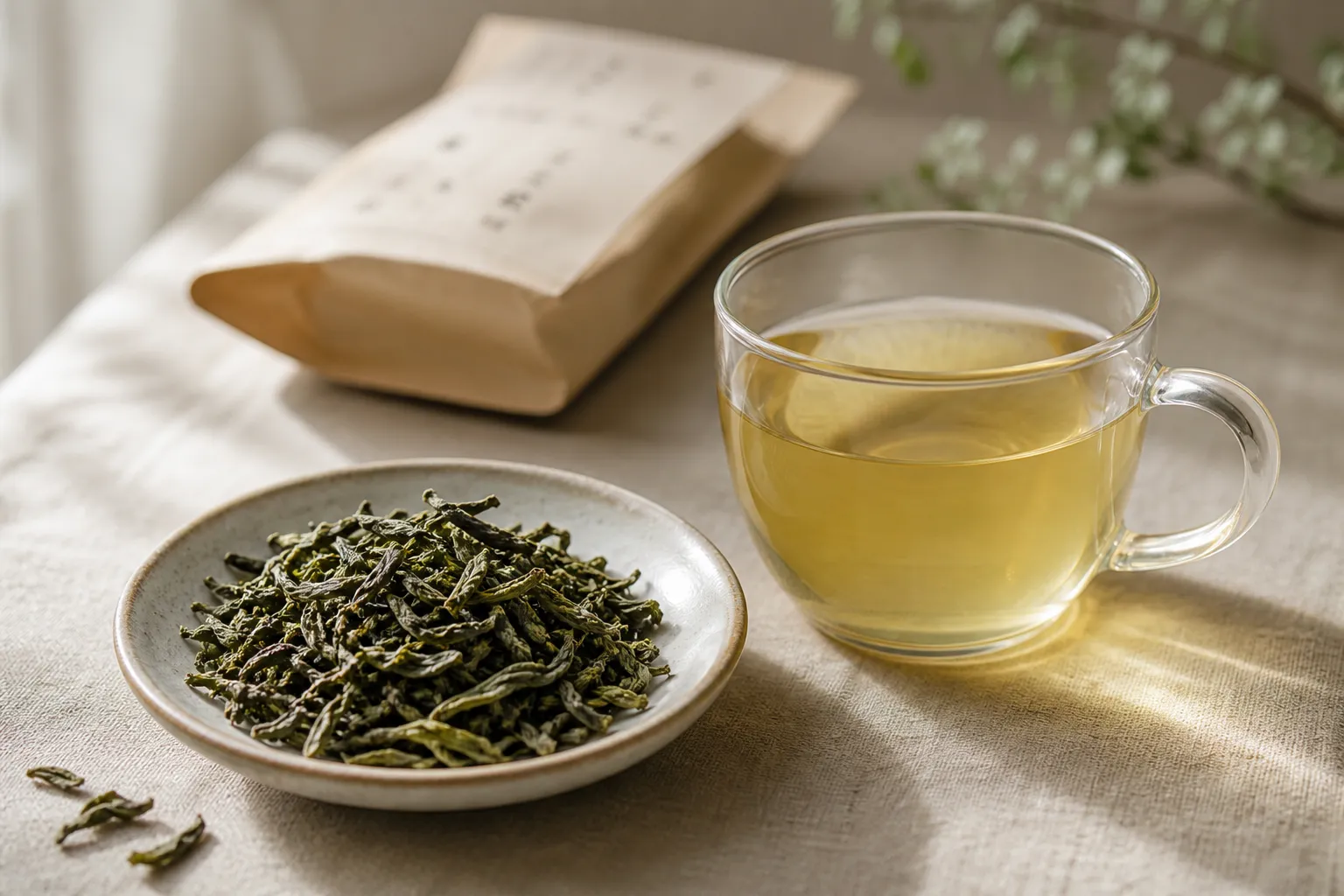
A dry leaf with a warm, faintly toasted scent can make a tea label feel more specific than it really is. The short answer to what is pan-fired green tea is this: pan-fired green tea is green tea described as being heated with dry contact heat, often on a pan-like or heated surface, rather than being defined by steaming or another moisture-led method.
That answer is useful, but it has a boundary. “Pan-fired” points to a green tea processing style; by itself, it does not prove origin, grade, freshness, exact equipment, flavor quality, or wellness value. Read the leaf before the claim.
upward
Read the full overview first
Use the broader guide first if you need the full scope before this page.
The Basic Meaning of Pan-Fired Green Tea
Pan-fired green tea meaning starts with heat. Fresh tea leaves are processed so they stay within the broad green tea family rather than moving toward darker, more oxidized tea styles. In common tea language, pan-firing refers to applying dry heat during processing, often as part of the step that fixes the leaf and shapes its later aroma, color, and brewing behavior.
For a reader looking at a package, the practical pan-fired green tea definition is simple: the term is about processing, not a promise of a better cup. It suggests that dry heat had a role in making the tea. It does not tell you how carefully the leaves were handled, how recently they were made, or whether the final cup will suit your palate.
Taste range, not a guarantee
A pan-fired green tea may be described as nutty, warm, chestnut-like, lightly roasted, grassy, vegetal, or mellow. Those are possible tasting directions, not guaranteed results. Leaf material, harvest condition, firing skill, storage, brewing temperature, and steep time can all move the cup.
The safer reading is clear: pan-fired green tea is a processing cue. It is not a full identity card.
How Dry Heat May Show Up in the Leaf and Cup
A dry heat green tea invites three checks first: the dry leaf surface, the aroma after warm water touches the leaf, and the way bitterness appears as the cup cools. These are observable cues, not proof of method.
Dry Leaf
Pan-fired green tea leaves may look shaped, flattened, curled, twisted, or uneven depending on the tea. The label term alone does not let you reliably guess leaf shape.
Warmed Aroma
Dry heat is often associated with aromas that feel less seaweed-like and more warm, grainy, nutty, or lightly toasted, but the comparison should stay modest.
Liquor Behavior
A pan-fired green tea cup may seem rounder or less sharply grassy than some other green teas, especially when brewed gently.
A flat leaf is not automatically pan-fired, and a curled leaf is not automatically steamed or made another way. Shape can reflect processing, cultivar, regional style, sorting, and breakage.
A stale tea can also smell dull or roasted in an unpleasant way; a fresh tea made with another method can still taste sweet, vegetal, or full.
Water can confuse the signal. Hotter water can draw more bitterness and body from many green teas. A longer steep can make a delicate tea seem heavy. Cooler water can soften edges that might otherwise be blamed on processing.
Taste the cup before trusting the label.
Pan-Fired vs Other Green Tea Processing Styles
A green tea processing comparison is useful only when it stays narrow. Pan-fired vs other green tea does not mean good versus bad. It means dry heat is being named as one processing idea among several ways green tea can be made.
Steamed language
Steamed green teas are often discussed as fresher, greener, or more marine-vegetal, though the actual tea matters more than the category.
Pan-fired language
Pan-fired green teas are often described with warmer, nuttier, or less oceanic language.
Overlapping language
Baked or oven-finished teas may also carry dry-heat notes, so the words can overlap. The cup does not always separate categories cleanly.
The main difference is not a single flavor switch. It is the processing emphasis: dry contact heat is part of the story for pan-fired green tea processing, while other styles may rely more on steam, hot air, baking, rolling sequences, or mixed methods. Without reliable information for the specific tea in front of you, the label cannot confirm the full workflow.
This matters because green tea processing styles are often compressed into attractive marketing phrases. A package may say “pan-fired” because the term sounds traditional, careful, or flavorful. That may be fair for some teas, but the word alone is not enough. A useful seller should be able to explain origin, harvest window, storage, and brewing guidance without leaning on one processing term.
Processing language is a clue. The cup is the check.
What the Term Can and Cannot Prove on a Label
“Pan-fired green tea” can reasonably tell you that the seller wants you to understand the tea through a dry-heat processing frame. It may help you decide what to taste for: warmth, gentle roast-like aroma, leaf texture, and how the liquor responds to water temperature.
It cannot prove grade
Good pan-firing requires skill, but the phrase does not show that skill. A lower-quality tea can carry the same wording as a better one. A well-made tea can also be stored poorly and lose freshness before it reaches your cup.
It cannot prove exact origin
Some tea styles are strongly associated with particular regions or traditions, but this page’s available material does not support specific regional claims. If a label gives a famous origin name, treat that as a separate sourcing cue that needs its own evidence.
It cannot prove freshness
Freshness is better checked through aroma clarity, leaf condition, packaging date if available, storage, and the first infusion. A tired tea may still be pan-fired. A fresh tea may not need heavy processing language to taste lively.
It cannot prove wellness value
Green tea contains naturally occurring compounds and may contain caffeine, but a processing term should not be used as a wellness guarantee. If caffeine sensitivity, medication use, pregnancy, sleep disruption, or a diagnosed condition matters for you, use qualified medical guidance rather than a tea label.
A sourcing cue is not a wellness answer.
A Practical Way to Read a Pan-Fired Green Tea
When you see the term, start with the simplest question: what decision does this help me make? If you like green teas with warmer aroma and less sharp greenness, pan-fired green tea may be worth considering. If you prefer very vivid steamed-green notes, the term may point in another direction, though it does not settle the matter.
Then check the details around the term. A useful tea page or package may mention harvest period, leaf grade, origin, storage advice, brewing temperature, steep time, or tasting notes that match the actual product. A weak label may repeat “pan-fired” without giving enough information to brew or judge the tea.
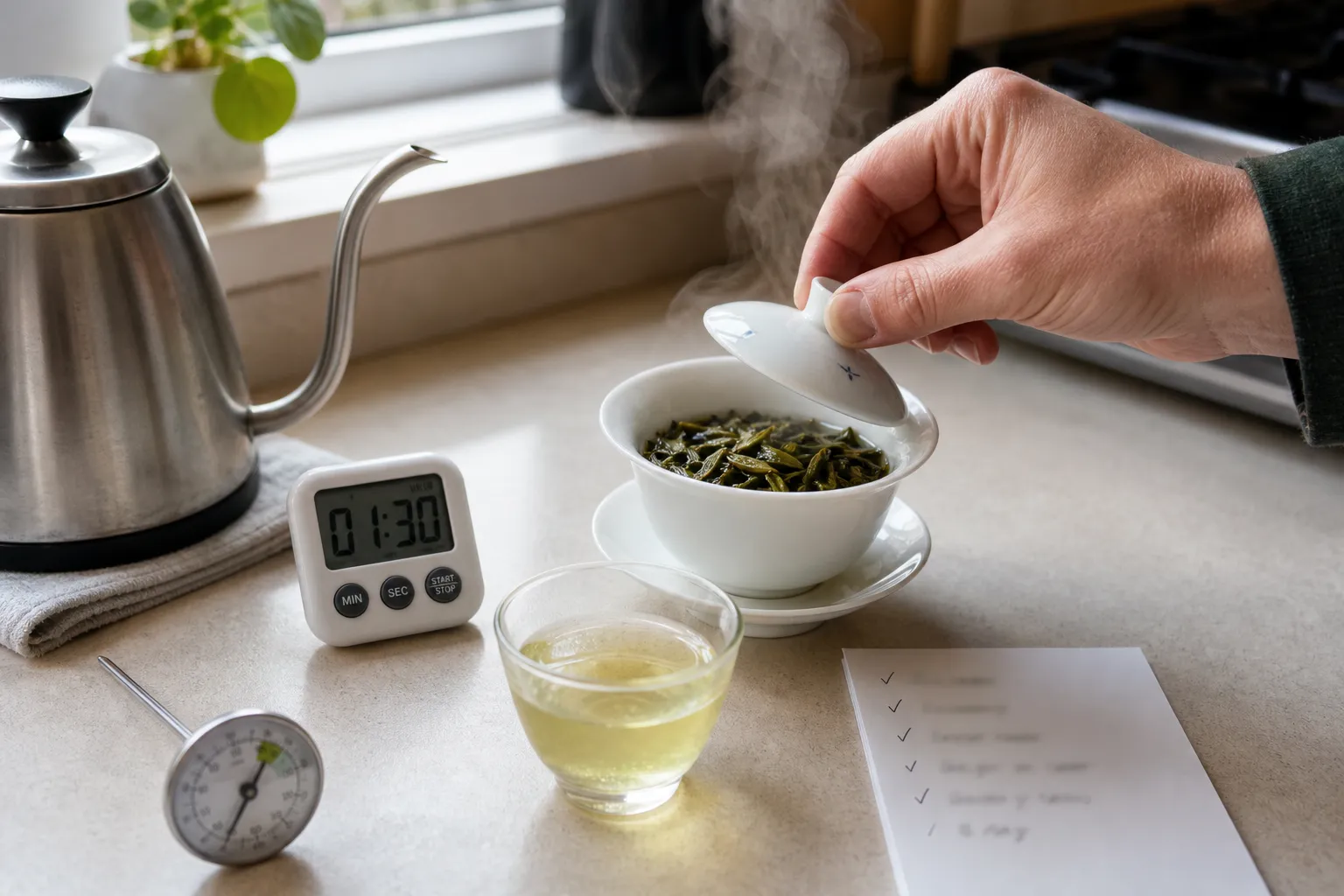
At-home cup check
- Use moderately warm water rather than boiling water.
- Keep the first steep short.
- Notice whether the cup opens with sweetness, warmth, grassiness, bitterness, or a flat roasted note.
- If the tea tastes harsh, lower the water temperature, shorten the steep, or use slightly less leaf.
- If it tastes thin, increase the leaf amount a little before pushing heat too high.
Those observations tell you more than the category word alone. Processing style matters, but water and time are often louder in the cup.
One label word starts the question; brewing answers more of it.
Common Confusions About Pan-Fired Green Tea
Pan-fired is not the opposite of fresh
Dry heat does not automatically mean old, roasted, or dull. A green tea can be made with dry heat and still taste lively if the leaf, processing, packing, and storage are good.
Pan-fired does not prove handmade
A pan-like method may sound small-batch or artisanal, but the phrase does not prove manual work. It may describe a processing principle rather than the exact tool, scale, or labor involved.
Pan-fired is not a flavor guarantee
The term may point toward warm or nutty expectations, but leaf quality and brewing choices can move the cup in several directions. A delicate pan-fired tea can become bitter with aggressive water. A modest tea can taste cleaner when brewed carefully.
Pan-fired is not a buying shortcut
It is better used as one filter among others: leaf appearance, aroma, harvest information, storage, seller clarity, and how the tea performs across one or two infusions.
A good label helps. It does not taste the tea for you.
The Evidence Limit for This Page
The available research pack for this page did not include usable public sources, technical references, standards documents, producer notes, or confirmed firsthand tasting material. That limits how specific this article should be. It should not pretend to verify exact temperatures, machinery, regional examples, historical claims, chemical changes, or precise wellness differences tied to pan-firing.
For now, the most reliable reader-facing use of the term is modest: pan-fired green tea generally points to dry heat as part of green tea processing, and it gives you a reason to observe aroma, leaf condition, liquor texture, and bitterness with care. Stronger claims need stronger sources.
If you are comparing teas, write one line beside the cup: label term, water temperature, steep time, first aroma, and aftertaste. That small note will tell you whether “pan-fired” is meaningful for your own buying and brewing decisions. Let the next cup test the word.