
Cup-level answer
Why Steamed Green Tea Tastes Grassy or Vegetal
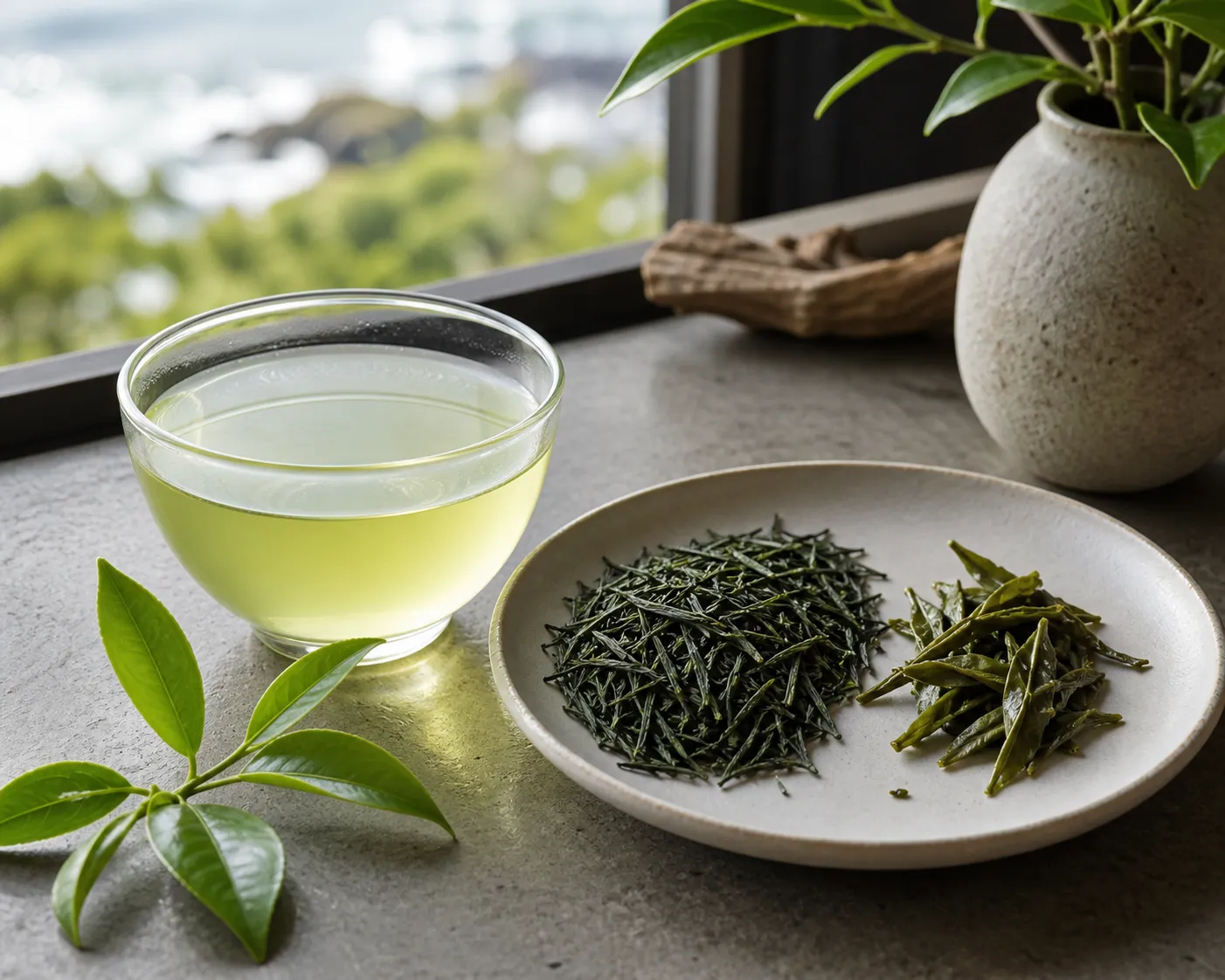
A cup of steamed green tea often tastes grassy or vegetal because this style tends to keep a fresh-leaf impression in the brew. Depending on the leaf and the way it is steeped, that can read as cut grass, spinach, young greens, sea breeze, broth, or sweet garden peas.
That is the short answer to why steamed green tea tastes grassy: the flavor is often part of the tea’s expected range, not an automatic sign that something is wrong.
The better question is smaller: does the green taste feel fresh, sweet, and clean, or does it turn harsh, flat, sour, or muddy? Read the cup first.
upward
Start with the broader guide
Use the broader guide first if you need the full scope before this page.
What “Grassy” or “Vegetal” Means in the Cup
Grassy and vegetal are tasting words, not precise diagnoses. One drinker may call a sencha grassy because the aroma reminds them of fresh lawn clippings; another may call the same cup vegetal because it feels closer to steamed spinach, green beans, or soft herbs. Both can be fair descriptions when the tea has a green, leaf-forward profile.
A fresh grassy or vegetal tea usually feels lively. The aroma rises quickly, the liquor looks clear rather than dull, and the finish may move toward sweetness, umami, or a light marine note. It can taste green without tasting raw.
A less pleasant version feels different. The cup may smell stale, damp, overly bitter, or tired and cooked. The aftertaste may cling with roughness instead of fading cleanly. If the tea tastes vegetal but also flat, dusty, or sour, the issue may be storage, age, water, or brewing rather than the steamed tea flavor itself.
Cup cues to read first
Fresh grass, young greens, clear aroma
Normal grassy notes in green tea.
Spinach, broth, seaweed-like edge, soft savoriness
Vegetal or umami green tea notes.
Green aroma plus honeyed or pea-like finish
Sweet notes balancing the leafiness.
Green taste plus dry scrape or heavy bite
Bitterness from brewing or leaf style.
Dull green, cardboard, damp cupboard
Possible age or storage problem.
Use this as a practical tasting aid, not a chemical explanation. The cup gives clues; it does not prove the mechanism.
Why Steamed Tea Flavor Can Lean Green
Steamed green teas are commonly associated with vivid green aromas and leafier cups than some pan-fired styles. That comparison is useful, but it should stay modest. The available material for this page does not provide public references strong enough to explain every grassy or vegetal note through processing chemistry.
As a tasting frame, steaming is often described as keeping the cup close to fresh green leaf character. In the drinker’s bowl or cup, that can show up as grassy notes, vegetal notes, marine edges, or a soft savory impression. Sencha is the clearest example for many drinkers. Matcha can also carry green, marine, or vegetal tones because the powdered leaf remains suspended in the drink.
These are style expectations, not guarantees.
The same words can hide different experiences. “Grassy” may mean fresh and lively in one cup, but rough and unbalanced in another. “Vegetal” may mean pleasant spinach-like sweetness, or it may mean the tea feels overcooked. “Marine” may suggest sea breeze, nori, or broth-like depth; if it turns fishy or stale, that is a separate warning sign.
So the better question is not only “Is this grassy?” It is “What kind of grassy?”
Brewing Choices That Make Green Notes Louder
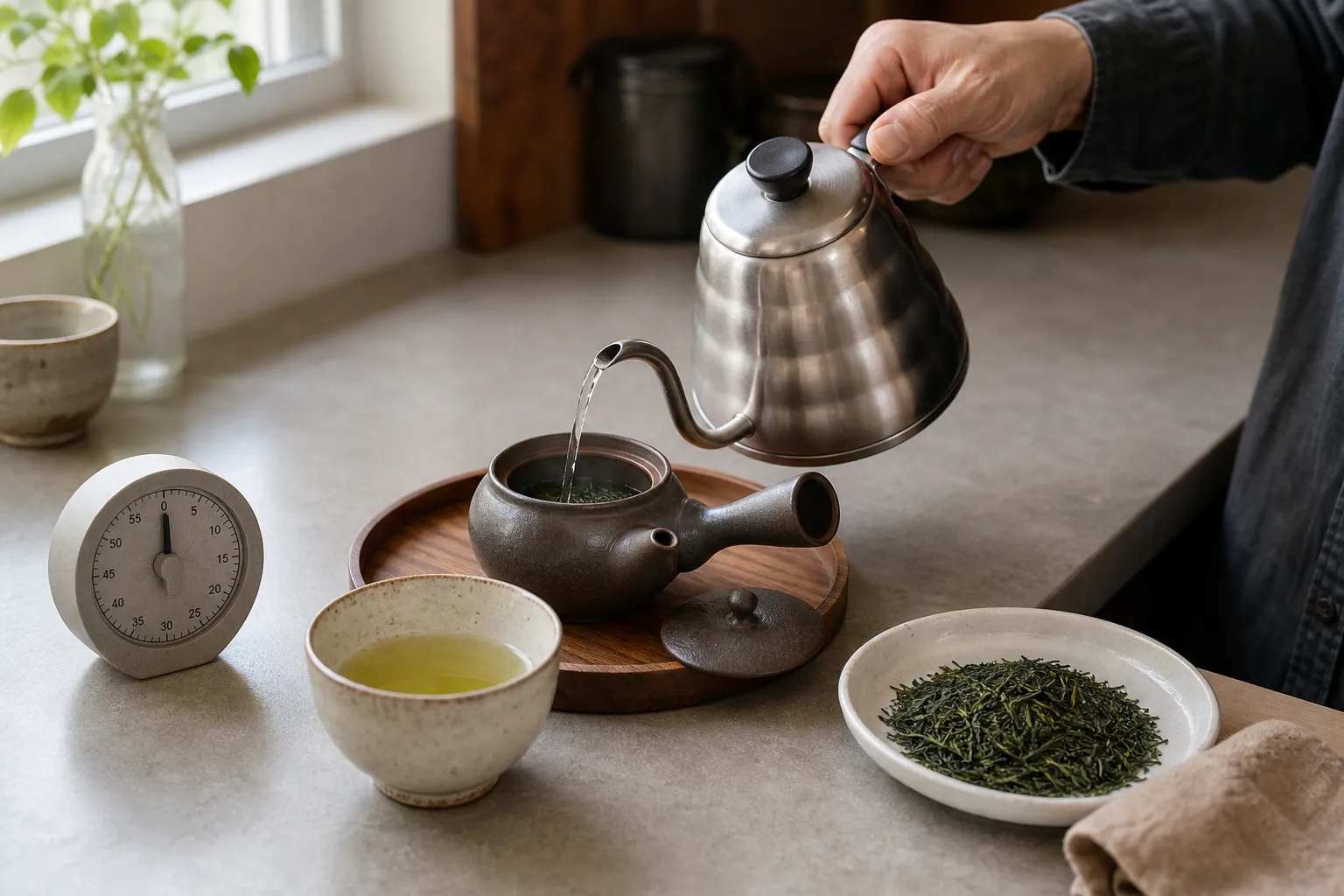
Water and time can push a grassy or vegetal tea in different directions. A hotter brew or longer steep may make the cup fuller, darker, and more forceful; it can also bring out more bitterness or a rougher green edge. Cooler water or a shorter steep may soften the bite and let sweetness or aroma show before bitterness takes over.
If the tea tastes too grassy in a sharp way, change only one variable:
- Use slightly cooler water on the next steep.
- Shorten the steep time before changing the leaf amount.
- Use a little less leaf if the liquor feels dense and biting.
- Taste the second infusion separately; it may be sweeter or calmer.
- Avoid judging the tea from one over-steeped cup.
The point is not to erase the steamed tea flavor. A steamed green tea with no green character at all may taste thin or muted. The goal is balance: green aroma, enough body, and a finish that does not feel punishing.
Leaf amount matters too. A generous scoop can make a good sencha taste concentrated and savory, but it can also make bitterness arrive faster. A sparse amount may reduce the bite while leaving the cup watery. If your green tea tastes vegetal but weak, the answer may be a slightly stronger leaf-to-water ratio with a shorter steep.
Small changes are easier to read than big resets. Let the kettle and timer answer one question at a time.
Freshness and Storage Checks Before Blaming the Tea
Dry leaf gives clues before water touches it. A steamed green tea with life often smells clean, green, sweet, or lightly marine when the bag or storage tin opens. The color may look vivid for its style, though color alone is not proof of quality. The leaves should not smell like a damp cabinet, old paper, cooking oil, or mixed pantry odors.
Storage can make a grassy or vegetal tea harder to interpret. Opened green tea is usually better kept sealed, dry, cool, and away from strong smells. That is a practical storage habit, not a promise that every aroma will stay intact.
If the cup tastes grassy but still clear and sweet, storage may not be the problem. If it tastes flat, stale, or oddly savory in a tired way, check the basics:
- Was the packet opened for a long time?
- Was the tea stored near spices, coffee, or cooking smells?
- Was the bag left loosely folded instead of sealed?
- Did the dry leaf smell dull before brewing?
- Did the first cup taste muddy even with careful water and time?
A storage tin can protect aroma only if the tea was sound when it went in. It cannot turn stale loose-leaf into fresh spring tea. Read the leaf before the claim.
When Grassy Is a Feature, Not a Fault
Some drinkers arrive at steamed green tea expecting roasted nuts, soft flowers, or the chestnut-like warmth associated with other green tea styles. When the cup instead tastes like young greens, sea air, and broth, it can feel surprising. That surprise does not automatically mean the tea is bad.
Vegetal green tea can be enjoyable when the notes are layered. A first sip may open with grass or spinach, then settle into sweetness, umami, or a clean drying finish. The aroma may feel sharper than the taste. The second infusion may become softer. These shifts are part of interpreting grassy tea flavor through observable cup cues rather than judging one word in isolation.
Longjing Dragon Well offers a useful contrast without becoming the center of the page. Many drinkers look to Longjing for flatter leaves and a different balance of warm, nutty, or sweet-green impressions. Sencha often points more directly toward steamed leaf aroma and marine-green savoriness. Those are broad tasting expectations, not fixed identities for every origin, grade, or batch.
Matcha complicates the picture because the powder is whisked into the drink rather than removed after steeping. A matcha bowl may feel creamy, green, and savory at once. If it tastes harshly grassy, the powder amount, water temperature, whisking, age, and storage all deserve attention before the tea is dismissed.
The same word can be either a compliment or a complaint. The cup decides.
Common Confusion Around Grassy Green Tea Taste
The most common confusion is treating all grassy notes as poor quality. A green, leafy aroma can be normal for a steamed tea. The problem is not grassiness by itself; the problem is imbalance, stale aroma, or bitterness that blocks the rest of the cup.
Another confusion is assuming “vegetal” means “raw.” Vegetal notes in green tea may feel cooked, steamed, sweet, savory, marine, or herb-like. A soft spinach-like note is different from a raw lawn-clipping smell. Better green tea tasting language separates the sensation into smaller parts: aroma, first sip, body, bitterness, sweetness, and aftertaste.
A third confusion is using wellness language to explain taste. Caffeine, antioxidants, focus, and daily energy are common reader interests around green tea, but they do not answer this sensory question. A grassy cup is better interpreted through leaf, water, time, storage, and style before it is turned into a broader wellness claim.
Marketing language can blur the issue too. Words such as premium, ceremonial, estate, or first harvest may suggest a better cup, but they do not prove that a tea will taste balanced to you. Observable cues matter more: dry leaf aroma, liquor clarity, bitterness level, sweetness, and how the finish behaves after the sip.
What This Page Can and Cannot Claim
This page can describe practical tasting observations: steamed green tea may taste grassy, vegetal, marine, sweet, bitter, or umami; brewing temperature, steep time, leaf amount, freshness, and storage are reasonable things to check when the cup feels unbalanced.
This page cannot responsibly claim a verified chemical cause for those flavors from the supplied research packet. No public reference links were available for this article, so claims about specific compounds, cultivar effects, harvest timing, steaming chemistry, or controlled storage outcomes should wait for stronger sources. The safer approach is to stay with the cup.
That boundary does not make the question unanswerable. It keeps the answer useful. If the grassy note is fresh, clear, and balanced by sweetness or savoriness, it may be part of the steamed green tea style. If it is harsh, stale, or muddy, adjust water and time first, then check the dry leaf and storage.
Next time the cup tastes too green, do not change everything. Brew the same leaf once more with slightly cooler water or a shorter steep, then compare the finish. The answer is often in the second cup.