
Taste comparison
Pan-Fired vs Steamed Green Tea Taste Differences
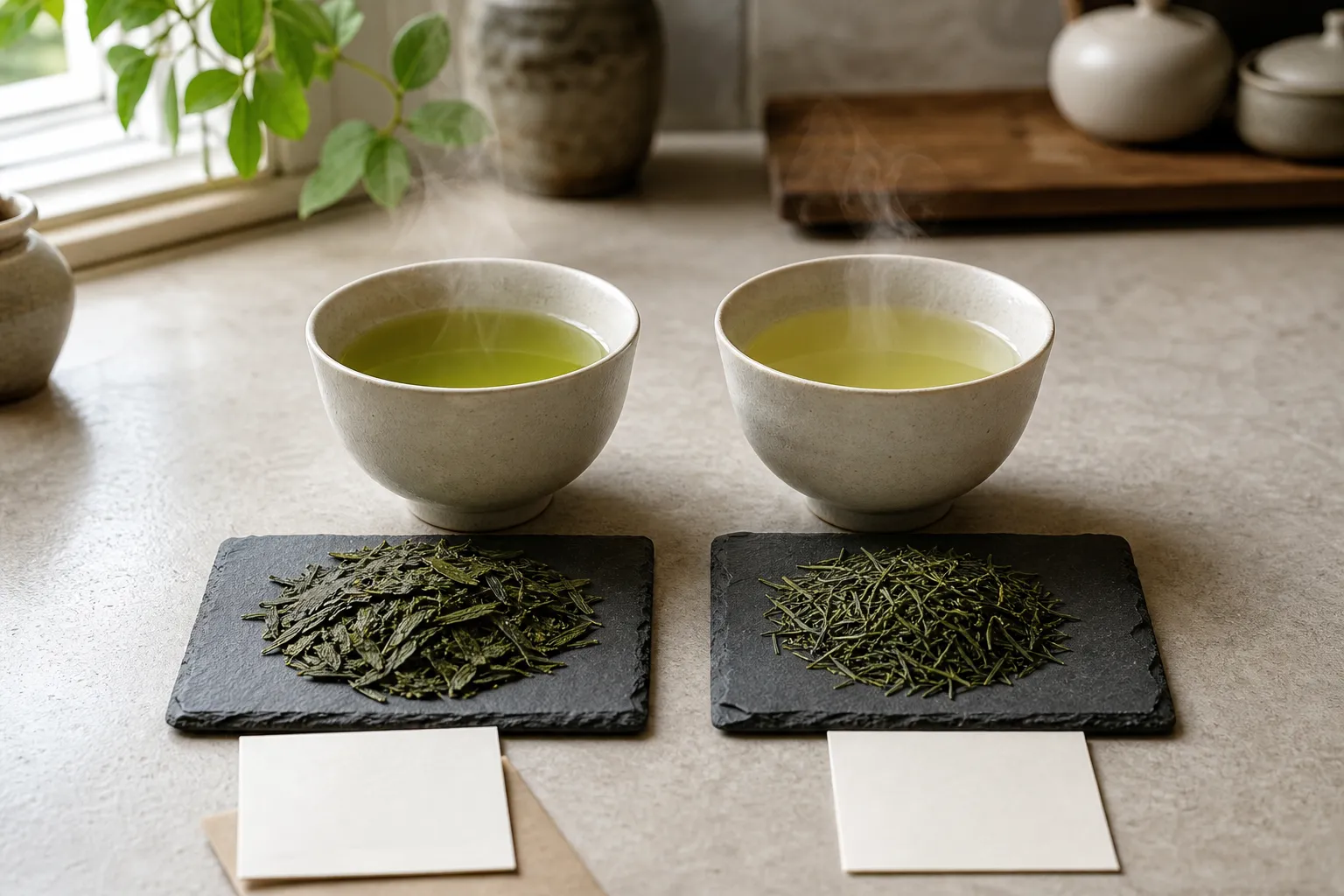
Flat dry leaves, fine needles, broken pieces, and bright powder can all sit under the green tea label. The processing word on the packet is useful, but it is not the whole cup.
The short answer: pan-fired vs steamed green tea taste is best treated as a cautious tasting contrast. Pan-firing and steaming use different heat steps to halt oxidation, so they can point your expectations in different directions. Still, the research material supplied for this page does not verify specific flavor notes, regional examples, brewing temperatures, or chemical mechanisms.
So the practical answer is narrower: let the processing label shape your first question, not your final verdict. Pan-fired green tea flavor and steamed green tea flavor may differ, but cultivar, harvest timing, leaf grade, storage, water temperature, steep time, and freshness can change the result just as much.
upward
Read the full overview first
Use the broader guide first if you need the full scope before this page.
The Direct Taste Expectation
When a tea is described as pan-fired, the label suggests that the leaves were heated against a hot surface. When a tea is described as steamed, it suggests that steam was used as the heat step. Those words can help you approach the cup, but they should not be treated as a complete flavor map.
A better first sip question is not “Which one is better?” It is: what does this cup actually show?
Aroma
Does the dry leaf smell gentle, sharp, warm, fresh, muted, or stale?
Body
Does the liquor feel thin, rounded, soft, brisk, or heavy?
Bitterness
Does bitterness appear early, or only after a longer steep?
Aftertaste
Does the finish fade quickly, linger, dry the mouth, or feel smooth?
Leaf behavior
Do the leaves open evenly, release flavor quickly, or need more time?
Those observations matter because processing is only one driver of green tea taste differences. A packet may say pan-fired or steamed, but the cup still depends on the leaf itself and how it was handled after processing. Read the leaf before the claim.
Why the Label Helps, But Does Not Decide
Pan-firing and steaming point to an important processing step. They can guide a buyer or drinker toward a broad expectation about how heat may have shaped the leaf. The limit is that the supplied material for this page does not give usable public sources for specific taste contrasts, regional traditions, brewing behavior, or sensory vocabulary.
That means the answer should stay modest. It would be too strong to say every pan-fired tea tastes one way, or every steamed tea has one fixed profile. Green tea is too variable for that, and the source base here does not support that level of certainty.
Read the processing label beside these cues
- Cultivar or leaf type: Plant material can change aroma, body, and bitterness.
- Harvest timing: Younger and later-picked leaves may behave differently in the cup.
- Leaf shape and size: Whole leaves, fragments, and powder release flavor at different speeds.
- Storage condition: A tight storage tin can protect aroma better than a warm, loose, humid shelf.
- Water temperature: Hotter water can make many green teas feel stronger and more bitter.
- Steep time: Longer contact between leaf and water usually increases extraction.
- Freshness: A faded tea may hide the character the processing label led you to expect.
That is the heart of the pan-fired and steamed comparison: processing can influence green tea taste expectations, but it does not override everything else. The kettle still has a vote.
How to Taste the Difference Without Overreading It
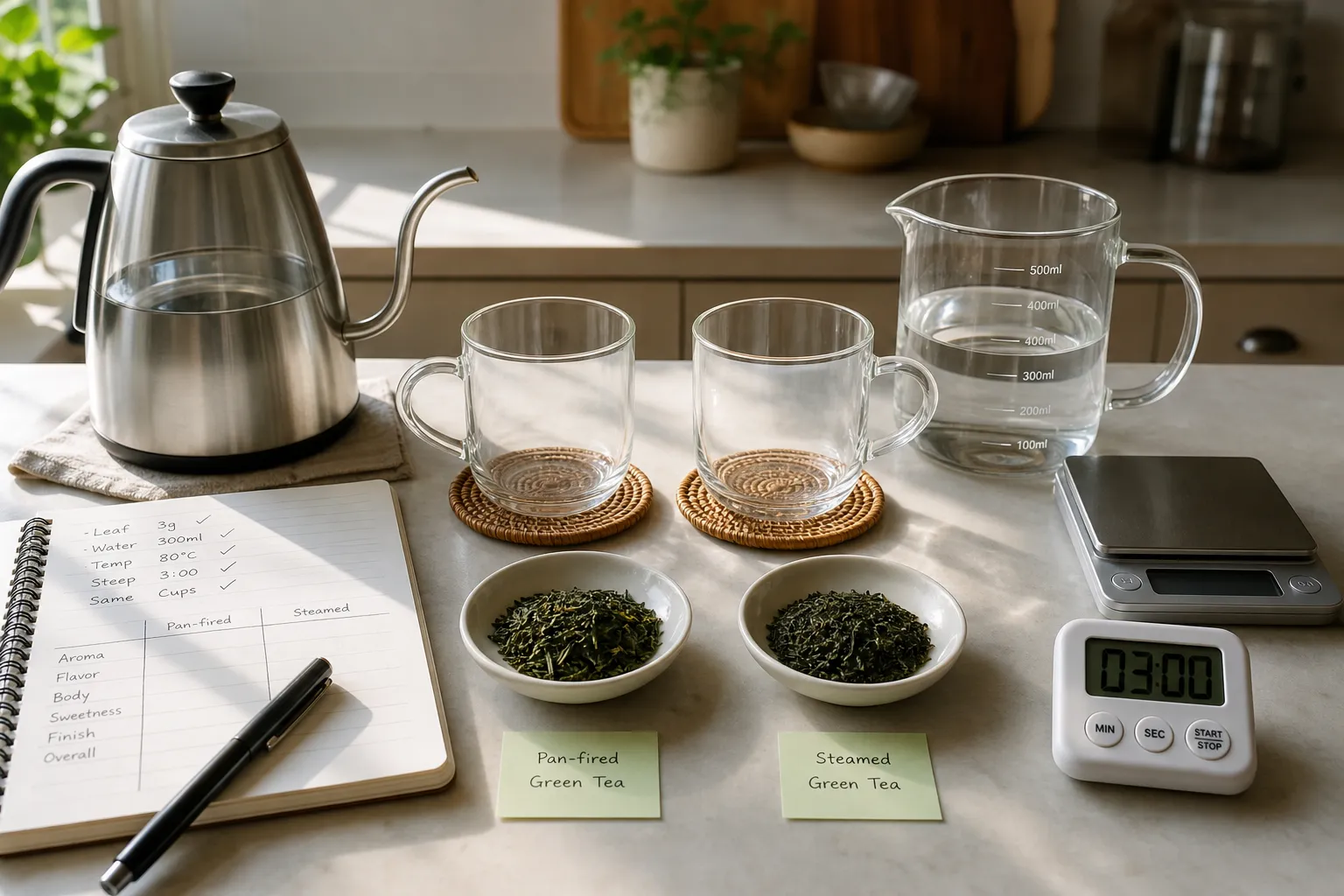
A useful comparison does not need to be formal. Use the same cup, the same amount of leaf, the same water, and the same steep time for both teas. If one variable changes, keep it visible in your notes.
Start with the dry leaf. Notice the shape, color range, broken pieces, and aroma intensity. Do not decide the answer yet. A label may guide your expectation, but the leaf may already show storage age, rough handling, or uneven sorting.
Then brew both teas as simply as possible. If you usually drink loose-leaf green tea with cooler water, use that routine for both. If you normally brew stronger cups, keep that habit consistent. The goal is not a universal tasting standard; it is to avoid blaming the processing method for a difference caused by water or time.
-
1. Aroma before taste
What rises from the cup before you drink?
-
2. Opening flavor
What appears in the first few seconds?
-
3. Middle body
Does the tea feel light, firm, smooth, drying, or full?
-
4. Finish
What remains after swallowing?
This makes the green tea sensory explainer more useful than a single adjective. A tea can smell appealing but taste thin. Another can taste intense but turn bitter if steeped too long. A third can seem quiet at first and show more texture as the cup cools.
If one tea seems harsh, adjust gently before drawing a conclusion. Shorten the steep time, cool the water slightly, or use a little less leaf. If the cup improves, the first result may have been a brewing issue rather than a pure processing difference.
Taste in the cup, not in the label.
Common Confusion: Processing, Origin, and Variety
A famous tea style, a country, a leaf shape, and a processing method are not the same category. Longjing Dragon Well, sencha, matcha, loose-leaf green tea, and powdered formats each carry their own expectations, but the supplied material is not strong enough to use them as proof for specific pan-firing or steaming taste claims.
That does not make the labels useless. It means they need to be read in the right order.
A tea name may suggest a tradition. A processing word may suggest a heat step. A leaf shape may suggest how the tea was made or handled. A price or grade term may suggest market positioning. None of these alone proves what the cup will taste like.
This matters when shopping. A buyer may see “pan-fired” and expect one kind of aroma and body. Another may see “steamed” and expect another. Those expectations can be reasonable starting points, but they are still starting points.
The stronger buying check is concrete information: harvest season, storage condition, leaf appearance, packing date if available, and brewing guidance that does not sound exaggerated. A sourcing cue is not proof of flavor by itself. It is a reason to inspect the leaf.
What Can Change the Answer at Home
Even when two teas are honestly labeled, home brewing can make the pan-firing and steaming taste question harder to read. Green tea is sensitive to small changes. A cup that seems balanced at one temperature may become sharp at another. A short steep may emphasize aroma; a longer steep may emphasize body and bitterness.
Check water temperature first. Without making a universal rule, very hot water can make many green teas taste more forceful. If your comparison turns bitter too quickly, lower the temperature before deciding that one processing style is naturally harsher.
Check steep time next. A steamed or pan-fired label cannot protect a tea from oversteeping. If flavor arrives fast, shorten the brew. If the cup feels weak, extend time slowly rather than jumping to a long infusion.
Then look at leaf condition. Small pieces release flavor quickly. Intact leaves may open more gradually. Powder behaves differently from whole leaf because the leaf material is suspended or consumed rather than infused in the same way. Do not compare matcha powder with a loose-leaf tea and call the result only a processing difference.
Storage also matters. Green tea kept open near heat, light, air, or moisture can lose aroma and turn dull. Storage cannot make a tired tea vivid, but it can protect what is already there. A tight container and a cool, dry place are practical safeguards.
If your cup disappoints, change water, time, and storage assumptions before blaming the method.
The Evidence Boundary
This article stays cautious because the supplied research material contains no visible, verifiable external sources. It does not provide authoritative processing descriptions, professional tasting notes, field reports, laboratory explanations, regional histories, or firsthand comparison logs. For that reason, this page avoids presenting familiar flavor words as confirmed facts.
It also keeps taste separate from wellness expectations. Green tea contains caffeine, and some readers care about energy, focus, or antioxidants, but this packet does not support detailed nutrition or wellness statements for pan-fired versus steamed tea. If caffeine sensitivity, pregnancy, medication use, or a diagnosed health concern affects your tea routine, use qualified guidance rather than a flavor article.
The practical boundary is simple: this page can help you ask better tasting questions, but it cannot certify what every pan-fired or steamed tea will do in your cup.
For stronger confidence, look for sources that give clear processing detail, transparent tasting conditions, and careful language about exceptions. A good comparison should say what was brewed, how it was brewed, how fresh it was, and what limits apply. Without those details, the claim is only a clue.
A Simple Cup Check
If you have one pan-fired tea and one steamed tea, brew them side by side with the same leaf weight, water amount, vessel, and steep time. Write down only five observations: dry aroma, liquor color, first sip, bitterness point, and finish.
Then brew each one again with a small adjustment. Use slightly cooler water if bitterness dominated. Use a shorter steep if the cup felt crowded. Use a little more time if the tea seemed flat. The second round often tells you whether the flavor contrast came from the leaf, the process label, or your brewing choices.
That is the most useful way to approach pan-fired vs steamed green tea taste: let the label guide the question, then let the cup answer it.