
Cup-level answer
Why Pan-Fired Green Tea Tastes Nutty or Toasted
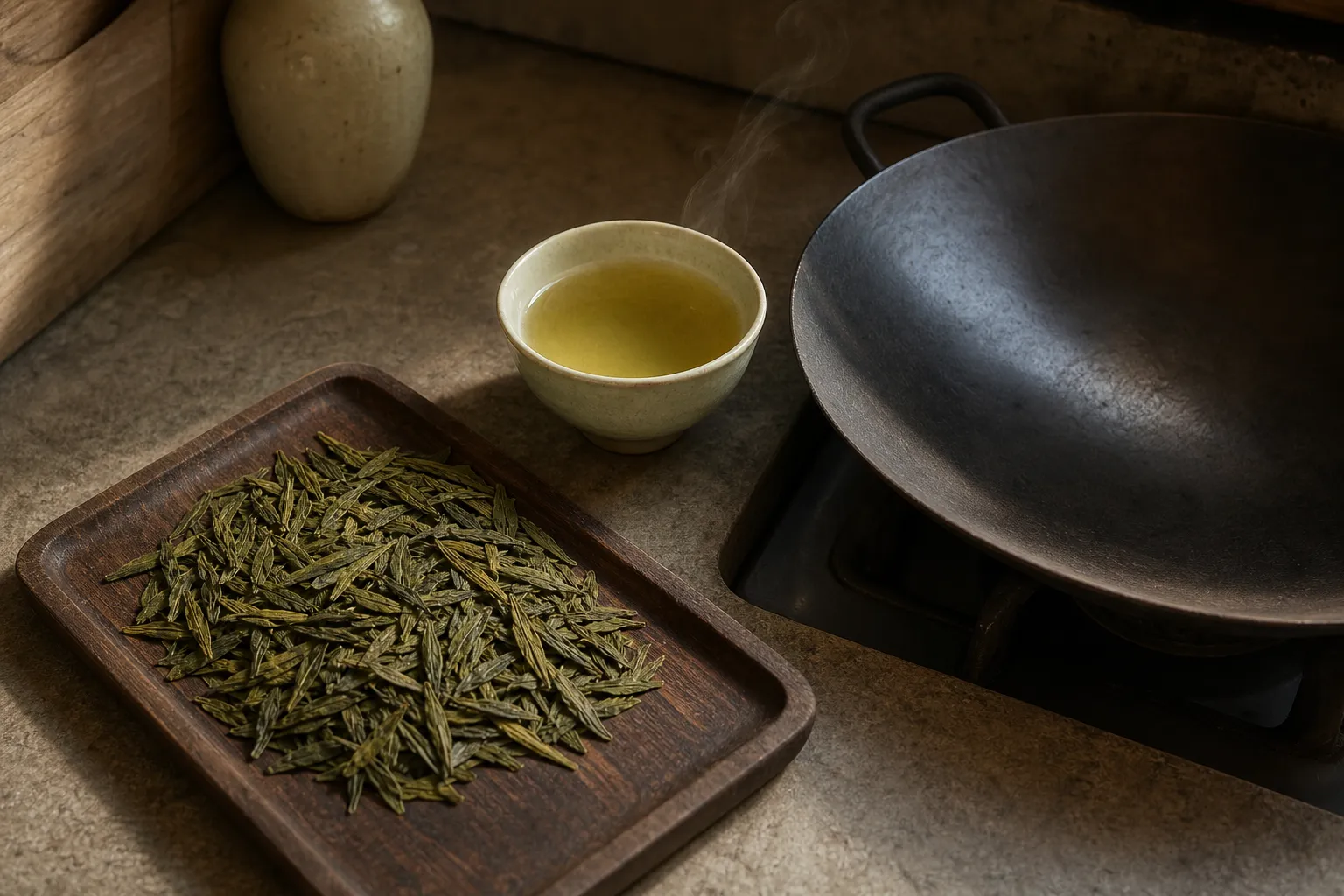
A warm cup of pan-fired green tea can smell like toasted grain, soft nut skin, dry chestnut, or a clean roasted edge before the first sip. The short answer to why pan-fired green tea tastes nutty is simple: the leaves meet dry heat during processing, and that heat can leave a gentle toasted impression in the aroma and finish.
That answer has limits. The available source set for this page is not strong enough to name exact pan temperatures, aroma compounds, or regional production rules. At the cup level, though, the clue is still useful: pan-fired tea often tastes less grassy than some steamed green teas and more rounded, warm, and nut-like when the leaf, storage, and brewing are in balance.
“Nutty” is a sensory note. It is not proof that the tea is darker, stronger, higher quality, more caffeinated, or from a specific place.
upward
Start with the broader guide
Use the broader guide first if you need the full scope before this page.
The Toasted Note Starts With Heat
Pan-firing points to contact with a heated pan or similar dry-heat surface during green tea making. In tasting language, that dry heat is why drinkers often connect pan-fired tea aroma with chestnut, toasted grain, warm nuts, or a gently roasted green tea note.
This does not mean the tea has been heavily roasted. A pan-fired green tea may still look green, brew pale yellow-green, and taste fresh. The toasted green tea flavor usually sits beside sweetness, mild bitterness, and vegetal character. When it is balanced, it feels like a warm edge around the cup rather than the whole cup.
Longjing Dragon Well is often discussed this way because many drinkers notice flat leaves and a chestnut-like aroma. The name alone still does not prove flavor, origin, or process details. A flat leaf, a pan-fired label, or a chestnut note can guide your expectation; the brewed tea has to confirm it.
Smell in stages: dry leaf, warmed leaf, first infusion. If the nutty tea flavor belongs to the tea, it usually appears as clean warmth: toasted grain, light chestnut, soft nut skin, or dry baked sweetness. If it comes across as harsh smoke, bitter scorch, or flat staleness, the cause may be processing, storage, or brewing pressure rather than pleasant pan-fired character.
What Makes the Flavor Louder
Production gives the tea a direction; brewing decides how much of that direction you taste.
Water temperature
Hotter water can pull more body, bitterness, and roast-like edge from the leaf. That may make a toasted tea aroma seem stronger, but it can also make the cup rough. Cooler water often softens the bitter line and lets sweetness sit closer to the nutty note. If a pan-fired green tea tastes too roasted or dry, lower the water temperature first.
Steep time
A short steep may show aroma and sweetness before bitterness builds. A long steep can make the same leaf taste heavier, more drying, and less distinct. When someone asks why green tea tastes toasted, the answer may be partly processing and partly time in hot water.
Leaf amount
More leaf in the same water gives a denser cup. That can help a delicate tea show more aroma, but it can make a gently roasted green tea feel blunt if the steep is also long or hot. Less leaf, slightly cooler water, and a shorter infusion can make the toasted note cleaner.
Storage
A fresh pan-fired tea may carry a lively warm aroma; a poorly stored tea can become flat, papery, or stale. Those dull flavors are easy to mistake for roast. A storage tin cannot improve tired tea, but it can help protect the leaf from air, light, moisture, and kitchen odors.
Nutty, Toasted, Roasted, or Burnt
Tea labels use these words loosely. The cup is the better judge.
Nutty
“Nutty” usually points to a warm, rounded aroma. It may remind you of chestnut, almond skin, toasted grain, or dry seed-like sweetness. It should still leave room for green tea freshness. A nutty green tea does not have to taste like actual nuts; the word is a comparison, not an ingredient.
Toasted
“Toasted” suggests a little more dry heat. It may appear in the aroma or in the finish after swallowing. In a balanced pan-fired green tea taste, toasted does not mean smoky or dark. It means the green character of the leaf has a dry, warmed edge.
Roasted
“Roasted” is stronger language. Some drinkers use roasted green tea taste for any warm note, but the word can imply a deeper heat impression than many pan-fired teas actually show. If the cup is lightly warm and chestnut-like, “gently roasted” may be more accurate.
Burnt
“Burnt” is different. Burnt notes feel sharp, smoky, acrid, or unpleasantly drying. They cover sweetness instead of supporting it. If a tea tastes burnt no matter how gently you brew it, calling it toasted will not make the cup cleaner.
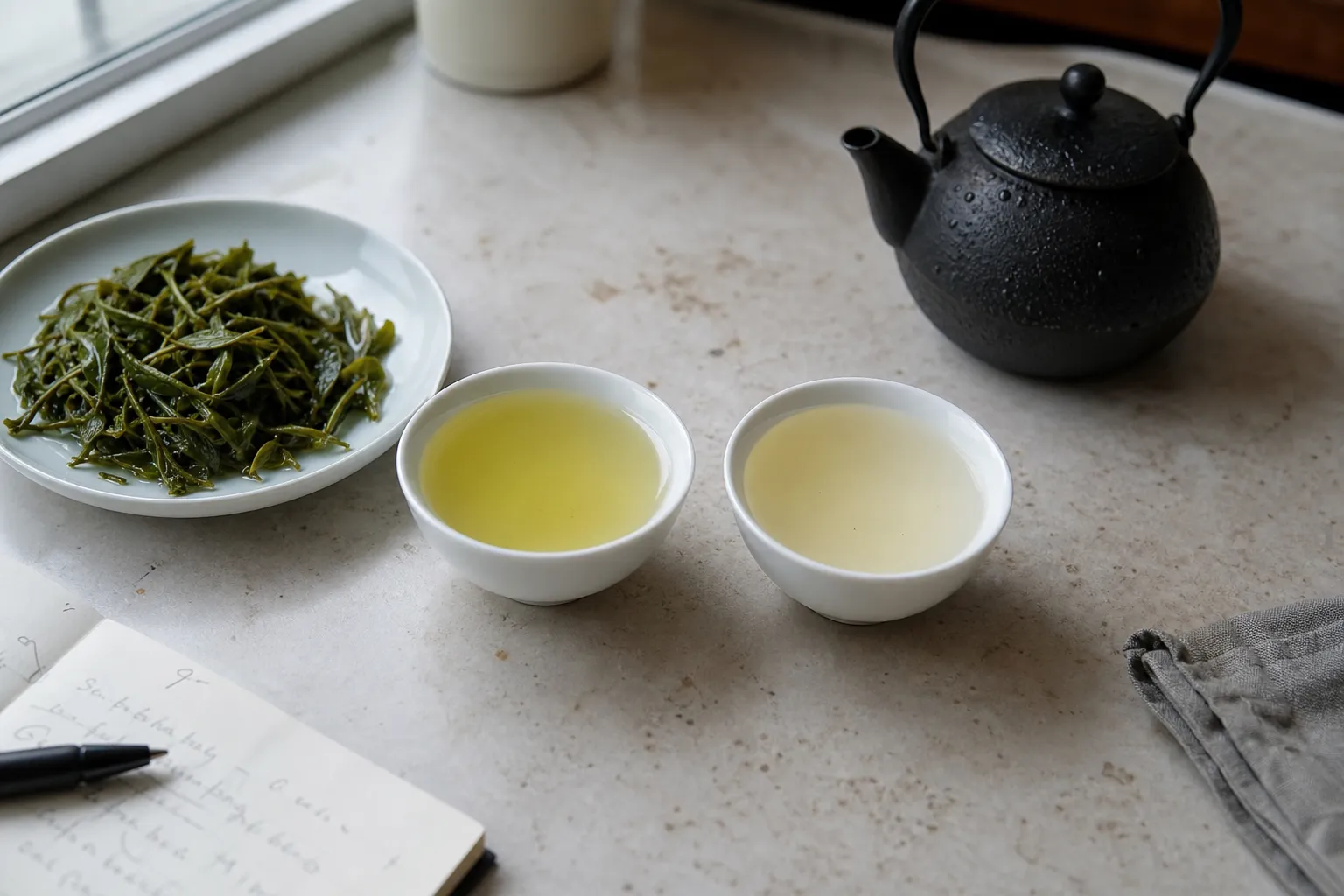
Try a second infusion. Pleasant pan-fired tea aroma often remains recognizable but softer. Harsh bitterness or scorch may become more obvious as the leaf opens. The second cup tells the truth.
Common Misunderstandings
Pan-fired does not always mean nutty. The label may describe a broad production style, while the actual flavor depends on leaf material, handling, freshness, storage, and brewing. Some pan-fired green teas taste sweet and vegetal with only a faint warm edge. Others are more chestnut-like. Some are plain.
Nutty does not mean better. A clear grassy tea, a marine sencha, a creamy matcha, and a chestnut-like pan-fired loose-leaf can all be well made in their own styles. Flavor vocabulary describes what is in the cup; it should not become a ranking system.
A toasted note does not prove origin. Words such as pan-fired, wok-fired, chestnut, roasted, and nutty are useful buying cues, not guarantees. If origin matters, look for clearer sourcing information, harvest context, and seller transparency rather than relying on one aroma word.
Brewing can create the problem. Water that is too hot, a steep that runs too long, or too much leaf can push a pleasant toasted tea aroma toward bitterness. Green tea is sensitive to small changes in water and time. Let the kettle explain the bitterness before blaming the leaf.
Toasted flavor also says little about wellness effects. This page is about taste. Green tea contains caffeine and is often discussed in general antioxidant contexts, but a nutty or roasted note should not be treated as a sign of stronger effects, special energy, or added health value. Keep sensory language separate from wellness language.
A Simple Cup Check
If you are trying to understand your own tea, do not start with the label. Start with three small observations.
- First, smell the dry leaf. A pan-fired tea with a nutty direction may smell warm, dry, and lightly sweet. If it smells stale, dusty, smoky, or like nearby kitchen odors, storage may be interfering before water touches the leaf.
- Second, brew gently. Use cooler water than you would for black tea, and avoid a long first steep. The exact time and temperature depend on the tea, but the principle is simple: give the leaf enough heat to open without forcing out rough bitterness.
- Third, compare the first sip with the finish. Nutty and toasted notes often appear in the aroma, mid-sip, or aftertaste. Bitterness tends to grip the sides or back of the mouth. Sweetness may sit underneath the warm note. If the cup begins pleasant but ends harsh, shorten the next steep. If it is thin but aromatic, use a little more leaf or a slightly longer infusion.
This keeps the explanation practical. You are not proving a processing theory at the kitchen counter. You are asking whether the warmth is part of the tea’s character or a result of brewing pressure.
Where This Explanation Stops
The current research material for this page does not include publishable external references, confirmed firsthand tasting reports, technical tea-processing sources, or usable production documentation. For that reason, this article stays modest. It does not claim exact heat levels, fixed regional practices, or a precise chemical pathway for nutty and toasted aromas.
That limit matters because tea writing often borrows confident language from sellers, tasting cards, and broad food-roasting comparisons. Those can help describe what drinkers notice, but they should not be treated as proof. A label that says “chestnut” or “wok-fired” may tell you what to look for; it does not prove quality by itself.
The practical conclusion still holds: when a pan-fired green tea tastes nutty or toasted, the most reasonable cup-level reading is that dry heat in processing, combined with brewing choices, is shaping the aroma. Brew the tea a little cooler or shorter, then see whether the warmth becomes cleaner, sweeter, and more leaf-like.
One cup should taste like tea, not like a claim.