
Green tea brewing
What Grandpa Style Means for Chinese Green Tea
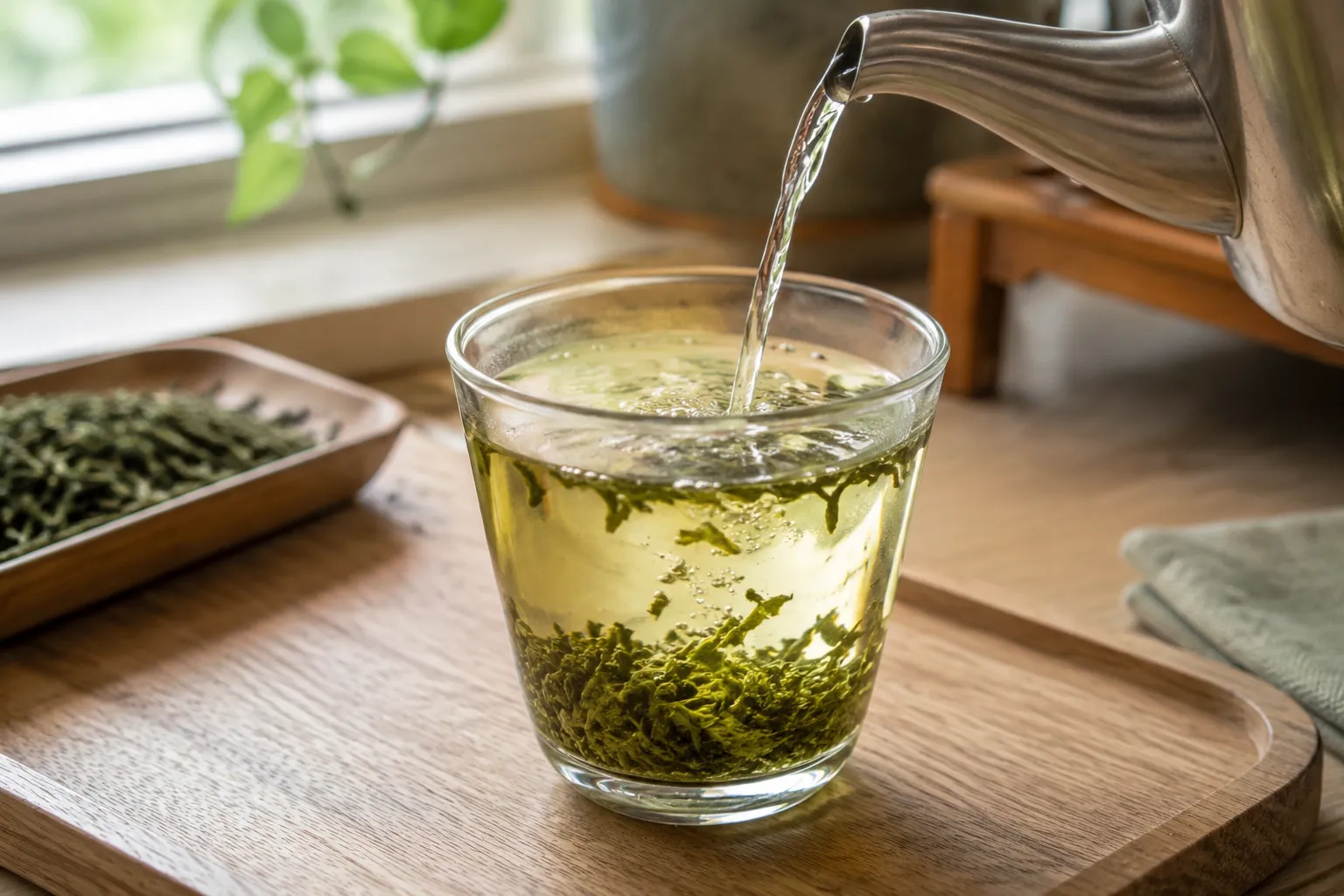
When loose green tea leaves sit directly in your cup or glass, you are looking at the basic idea behind grandpa style green tea. The leaves are not separated with a teapot, infuser, or filter; they stay in the drinking vessel while you sip around them. When the infusion becomes light, you add more hot water to the same leaves.
The direct answer
This is an everyday Chinese loose-leaf brewing habit, not a tea variety and not a fixed ceremony. The name describes the method: leaves remain in the cup as brewing and drinking happen together. It does not establish a tea’s origin, grade, freshness, or quality.
upward
Read the full overview first
Use the broader guide first if you need the full scope before this page.
What It Looks Like in the Cup
A grandpa style cup usually contains whole or relatively intact leaves placed directly on the bottom. Hot water softens and opens them. Some may float at first; others gradually sink as they become hydrated.
The changing appearance is part of the process. You can watch the leaves open, see the color of the infusion develop, and choose when to sip from the clearer liquid near the top. There is no need to produce a perfectly clear cup or remove every leaf before drinking.
Unlike a fully separated infusion, this method has no single steep followed by a complete pour-off. The leaves continue to share the vessel with the tea. Each refill changes the balance between dilution and continued contact with the water.
That makes the cup both brewing vessel and drinking vessel. The method is simple because the leaf stays where it is.
Why It Is Considered Casual Brewing
The routine uses little equipment. There is no separate pot to warm, no infuser to lift, and no need to transfer the entire infusion before each sip. That can make loose-leaf tea easier to fit into a workday or an ordinary household routine.
“Casual” does not mean careless. It means the drinker makes small decisions as the cup develops: when to add water, how much of the clearer liquid to sip, and whether the current strength suits the moment.
The method is therefore more open-ended than a preparation with a measured steep and a planned pour. You may taste the tea while the leaves are still moving, after they have settled, or after a refill has softened the infusion. The same tea can taste different from one cup to the next because the result depends on the leaf, water, volume, contact time, and refill timing.
How Grandpa Style Green Tea Works
- Place loose green tea leaves directly in a cup or glass.
- Add hot water.
- Give the leaves time to soften and open.
- Sip from the clearer upper part of the cup, or adjust the angle to keep leaves away from your mouth.
- Add more hot water when the infusion becomes too light or the cup needs refilling.
This is a working framework rather than an official recipe. The available material does not establish one universal leaf quantity, brewing temperature, waiting time, or refill schedule. Those details depend on the tea and on the taste the drinker wants from the cup.
Observation is more useful than chasing a fixed formula. If the infusion tastes too strong, more water can dilute it. If it tastes too light, allowing more contact between leaf and water may produce a fuller cup. If leaves reach your mouth, waiting for them to settle or changing the cup’s angle may be enough.
The leaves do not need to disappear. They need to remain workable while you drink.
What Changes the Taste
The leaf is the first variable. Broad, intact leaves behave differently from small or broken pieces. They may open at a different pace and release flavor differently as the session continues.
Water contact also matters. Because the leaves remain in the cup, the infusion is less controlled than one poured away after a planned steep. The tea continues to change while you drink.
A refill changes the balance again. Fresh hot water dilutes the liquid already in the cup, while the leaves continue to contribute flavor. The next sip may seem lighter, softer, or simply different from the one before it.
Temperature is another brewing choice, but this page does not have verified source material for a universal range. Adjust it cautiously according to the tea’s behavior and your taste. If the cup becomes sharp or overly intense, the combination of temperature, contact time, leaf amount, and water volume may be contributing; a packet label cannot explain every result.
Taste should remain separate from quality claims. Bitterness, sweetness, aroma, texture, and color are observations about the prepared drink. They do not independently verify origin, harvest, grade, or a seller’s description. A stronger infusion is not automatically better, and a pale cup is not automatically inferior.
Read the leaf before the claim.
What the Method Does Not Mean
Grandpa style green tea is not the name of a particular Chinese green tea. Longjing Dragon Well, another Chinese green tea, or a loose-leaf tea sold under a different regional name may be prepared this way. The brewing method does not identify the variety.
It also does not prove that the tea was prepared according to one historical standard. The current material does not provide independently attributable cultural-history evidence for broad claims about the method’s age, original source, or social meaning. Those claims should not be treated as established by the name alone.
The term does not establish that a tea is authentic or premium. A seller may use appealing language around a brewing style, but preparation cannot verify what appears on a packet. A closer assessment requires the available label and seller information, along with the leaf and cup in front of you; even those observations have limits.
Nor is this a wellness category. Green tea contains caffeine, but the amount in a particular cup depends on the tea, serving, and preparation, and people can respond differently to caffeinated drinks. The available material does not support conclusions about focus, energy, antioxidants, or individual sensitivity. Those subjects require separate evidence and should not be inferred from the brewing method.
Grandpa style describes what happens in the cup. It does not establish what happens in the body.
Common Questions About Leaves in the Cup
Are the leaves supposed to stay there?
Yes. Leaves remaining in the cup are the defining visible feature of this approach. Their presence is not, by itself, a sign that the tea was prepared incorrectly.
Do I need to drink the leaves?
No. You can sip around them. Waiting for the leaves to settle or changing the angle of the cup can make the liquid easier to drink.
Is this the same as steeping loose leaf in a teapot?
The materials may be similar, but the workflow is different. With a teapot or infuser, the leaf is commonly separated from the liquid after a steep. With grandpa style brewing, the leaf remains in the vessel while you drink and may receive more hot water.
Does this method prove that the tea is Chinese?
No. The method is described here as an everyday Chinese loose-leaf brewing habit, but a brewing style alone cannot authenticate a tea’s country, region, variety, or seller description.
Is a stronger cup better?
Not necessarily. Strength is both a preparation result and a matter of preference. The leaf, water, timing, and refill pattern all influence how intense the cup feels.
What to Observe in the Next Cup
Instead of looking for a perfect recipe, notice four things:
- Leaf movement: Are the leaves floating, opening, or settling?
- Liquid clarity: Is there enough clear tea to sip comfortably?
- Taste direction: Does the cup feel too intense, too light, or balanced for you?
- Refill response: What changes after more hot water is added?
These observations keep the method separate from the marketing around it. In practical terms, grandpa style green tea means brewing and drinking loose leaves in the same cup, with additional water added as part of an informal routine.
Cultural history, fixed recipes, and health-related conclusions need separate, topic-specific support. For the next cup, start with what the leaves are doing and what the infusion actually tastes like.