
Gift meaning
Chinese Green Tea as a Gift: What the Gesture Means
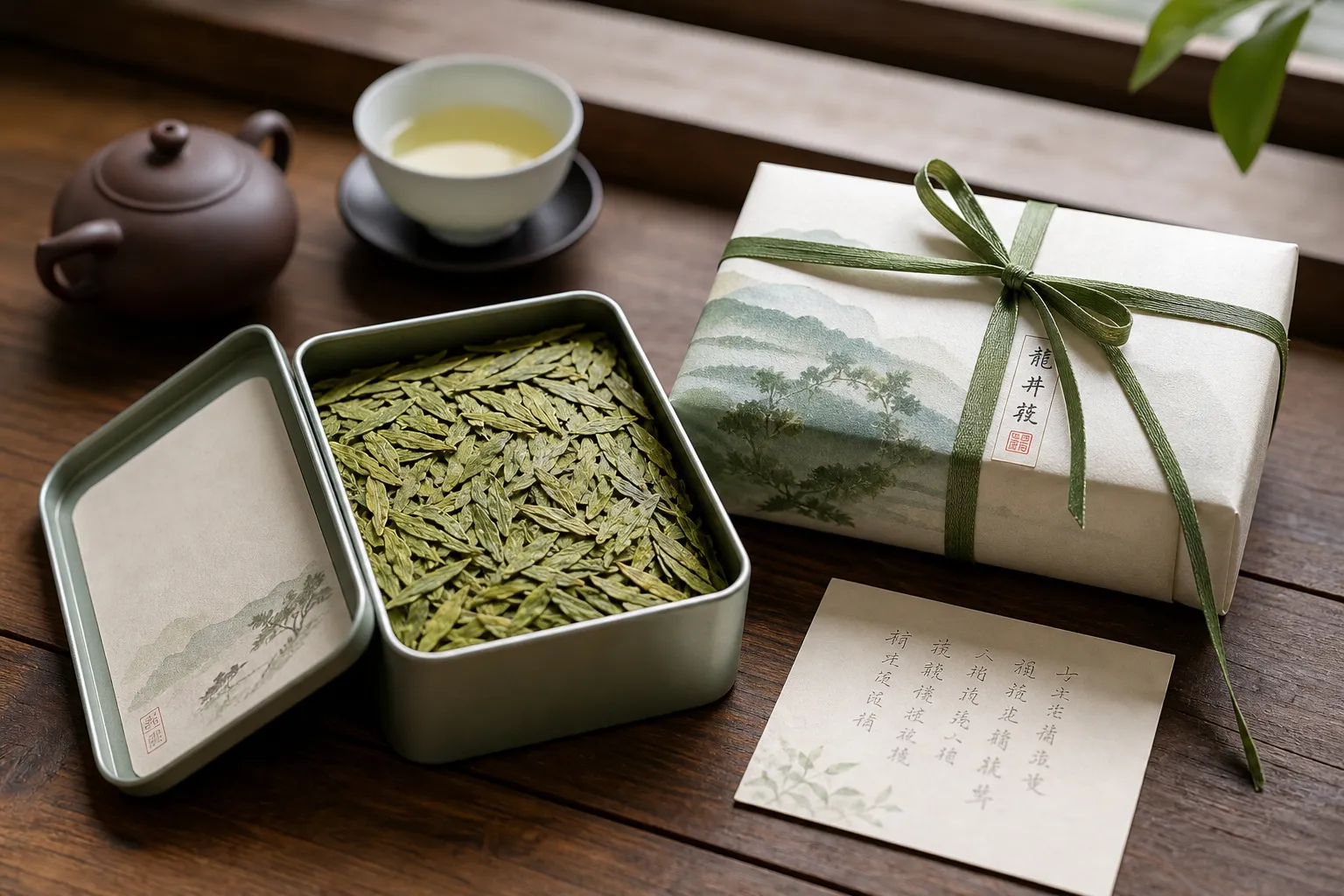
Flat Longjing leaves in a small tin, a pouch of fresh loose-leaf green tea, or a neatly wrapped box of Chinese tea usually says less about a secret symbol and more about attention. The practical answer is this: the Chinese green tea gift meaning is usually relational. It may suggest respect, gratitude, hospitality, calm good wishes, or care when the tea suits the recipient, the occasion, and the way it is presented.
It does not carry one fixed meaning in every Chinese family, region, or setting. A green tea gift feels thoughtful when it is fresh, drinkable, and appropriate; it feels weaker when the gesture depends only on expensive packaging, vague wellness language, or a famous tea name with no fit for the person receiving it.
upward
Start with the broader guide
Use the broader guide first if you need the full scope before this page.
What giving Chinese green tea usually communicates
A Chinese green tea gift can read as a quiet, considerate gesture because tea has long belonged to Chinese cultural life, hosting, and shared conversation. Broad tea-culture sources support that larger place for tea, but the meaning of a boxed gift still depends on the relationship in front of you.
In everyday tea gifting, the gesture may communicate:
- Respect for the recipient’s taste, age, role, or household.
- Hospitality, especially when tea is linked to hosting or receiving guests.
- Gratitude after a visit, favor, meal, business exchange, or family gathering.
- Calm good wishes, because tea is often associated with a measured daily rhythm.
- Attentiveness, when the variety, freshness, and format fit how the person actually brews tea.
The leaf matters here. A fresh tea leaves gift with a clean aroma, tidy dry leaf, and clear label feels more personal than a generic box chosen only because it looks formal. Longjing Dragon Well, for example, may be appreciated by someone who already likes Chinese green tea; its flat leaf shape and chestnut-like aroma are recognizable cues. But a famous name is not proof of suitability. If the recipient mostly drinks tea bags at work, loose-leaf tea without an infuser may create friction instead of ease.
That is why “green tea as respect” is best understood through fit. The better question is not “What does green tea always symbolize?” It is “Will this tea be easy for this person to receive, brew, and enjoy?”
The meaning changes with occasion and relationship
Tea gift etiquette is not only about the object. Presentation, timing, and relationship shape the message.
Hosts and family visits
For a host, a small box of Chinese green tea can feel like thanks for hospitality. A family visit may reward practical choices, such as a tea the household can brew for guests.
Elders, teachers, and colleagues
For an elder, teacher, colleague, or family friend, it may read as a restrained sign of regard. For a tea drinker, a recognizable variety or origin note can show that the giver noticed their habit.
Seasonal or professional settings
A Lunar New Year tea offering may carry seasonal warmth and good wishes. A business or professional gift may need neat packaging, no inflated claims, and a price level that does not create discomfort.
Wedding tea ceremony context
In many Chinese wedding settings, tea service can express respect and gratitude toward parents or elders, but that is not the same as handing someone a box of green tea for a holiday, thank-you, or visit.
For someone who rarely drinks tea, a mild and approachable tea may be kinder than a rare style that asks for careful brewing. Tea service and tea gifting touch the same cultural ground; they are not identical leaves in the same cup.
What makes the gift feel thoughtful
A respectful tea gift does not need to be the most expensive box on the shelf. It needs to look cared for, taste plausible, and fit the person receiving it.
Good practical cues include:
- Freshness: dry leaves should smell clean, grassy, nutty, floral, or gently roasted depending on the tea, not flat, dusty, or stale.
- A recognizable tea type: Longjing Dragon Well, Biluochun, Huangshan Maofeng, or another named Chinese green tea can help the recipient understand what they are receiving.
- Clear basic labeling: harvest season, tea style, place name, or brewing notes can be useful, though labels are not proof by themselves.
- Modest, tidy packaging: presentation matters, but heavy packaging should not replace leaf quality.
- Brewing fit: loose-leaf tea suits someone with a gaiwan, glass cup, infuser, or teapot; a beginner may appreciate simple brewing instructions.
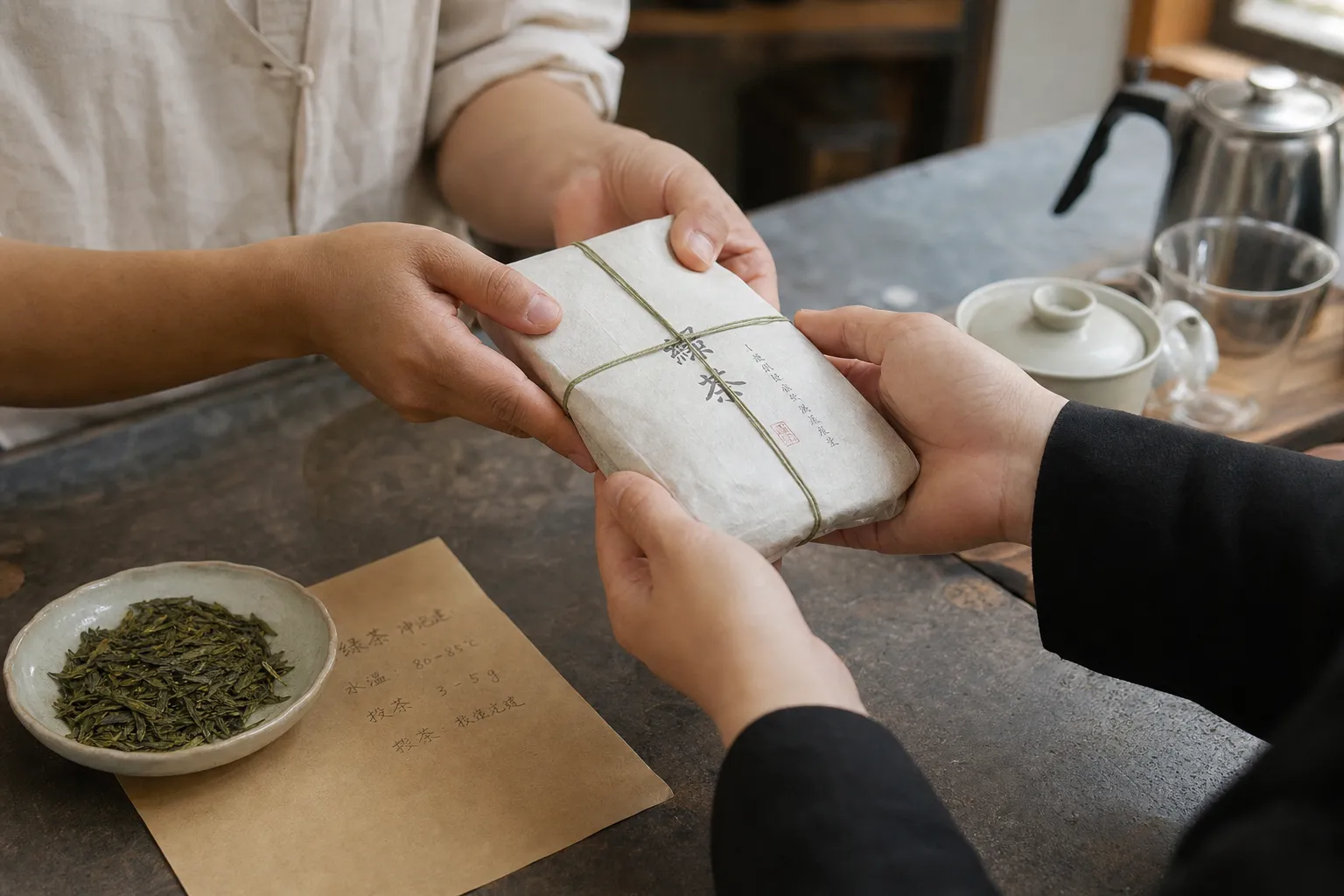
For green tea gift presentation, restraint usually works better than performance. Give the tea with both hands if the setting is formal, keep the wrapping clean, and say something simple: that you thought they might enjoy it, or that it is a small thank-you. In some settings, people may decline a gift once or twice as part of polite exchange; the exact rhythm varies, so it is better to stay calm than to act out etiquette you do not know well.
If the recipient opens the tea later, your visible choices will speak. Fresh leaf. Clean aroma. A tea they can brew.
Common confusion around Chinese green tea gifts
Confusion 1: treating green tea as a fixed code
Some commercial pages attach broad words to tea gifts: purity, prosperity, elegance, health, friendship, apology, and more. Those words reflect common buyer language, but they are too broad to use as certain cultural meanings. A Chinese green tea gift can carry good wishes; it does not automatically announce one precise message.
Confusion 2: wellness language
Green tea contains caffeine and plant compounds often discussed in general wellness writing, and some drinkers connect tea with lightness, clarity, or a calmer routine. That is different from giving tea as a health-outcome gift. Avoid presenting the tea as something meant to change the body, answer illness claims, or suit every person. If the recipient is sensitive to caffeine, pregnant, avoiding stimulants, or managing a health condition, a tea article cannot decide what is appropriate for them.
Confusion 3: formality
Retailer etiquette pages can make tea giving sound like a choreographed ritual, with every gesture carrying strict meaning. Some formal tea-serving settings do involve posture, order, and visible respect, such as serving elders first. Everyday gift giving is usually more situational. A neat handoff, sincere words, and an appropriate tea are often more important than copying ceremonial moves from the wrong context.
Confusion 4: modern slang
In some online Chinese-language contexts, “green tea” can appear in unrelated slang. That does not define a literal gift of Chinese green tea. If you are giving actual tea in a clear, respectful setting, the object and presentation usually do the clarifying.
A simple way to decide if green tea is the right gift
Before buying, check three things: the person, the occasion, and the cup.
The person
If the person already drinks green tea, a better loose-leaf selection can feel attentive. If they prefer black tea, oolong, coffee, or herbal infusions, green tea may still be polite, but less personal. If you do not know their habit, choose a mild, approachable style and avoid making the gift sound rare, medicinal, or demanding.
The occasion
If the occasion is a visit, thank-you, seasonal greeting, or host gift, Chinese green tea can sit naturally among other respectful gifts. If the occasion is very formal, sensitive, or tied to workplace rules, consider whether any gift could create pressure. The meaning of tea is still shaped by context.
The cup
If the cup is realistic, the gift has a better chance of being used. A recipient with a glass mug can brew many Chinese green teas simply by using cooler water and short steeps. Someone with a gaiwan may enjoy a more leaf-forward style. Someone without tools may appreciate an infuser, a small brewing note, or a tea that is forgiving with water temperature.
Do not overexplain the symbolism. A short note is enough: “I thought you might enjoy this green tea,” or “A small thank-you for your hospitality.” The cleanest gift meaning often comes from not forcing one.
Where the evidence is limited
The available source material supports a cautious cultural explanation, not a universal symbolism chart. Institutional, educational, and tea-culture sources can show that tea has a deep cultural presence in China and that gift giving is shaped by relationship, timing, and presentation. More exact claims about what Chinese green tea “means” as a gift often come from commercial gift guides, tea retailers, wedding pages, social posts, or forum discussions. Those sources are useful for spotting common language and anxieties, but they should not be treated as firm authority.
So the safest answer stays modest: giving Chinese green tea may suggest respect, hospitality, gratitude, and calm goodwill when it is chosen thoughtfully. It should not be sold as a coded promise of prosperity, a health result, a formal apology, or a wedding-style ritual unless the actual setting supports that meaning.
Read the leaf before the claim. If the tea is fresh, suitable, and presented with care, the gesture has already done most of its work.
Short answers
Is Chinese green tea a good gift?
Yes, it can be a good gift when the recipient drinks tea or would welcome a calm, practical present. Choose fresh leaves, clear labeling, and packaging that feels tidy rather than showy.
Does Chinese green tea always mean respect?
No. It can suggest respect in many settings, especially when given to hosts, elders, teachers, colleagues, or family friends, but the meaning depends on the relationship and occasion.
Should I mention health when giving green tea?
Usually no. It is better to present the tea as something enjoyable to brew and share. Keep the focus on taste, freshness, and thoughtfulness; let the cup stay a cup.
Sources
Sources and further reading
Reference links are limited to sources considered suitable for public citation in this page.