
Everyday tea culture
What Chinese Green Tea Culture Means in Everyday Drinking
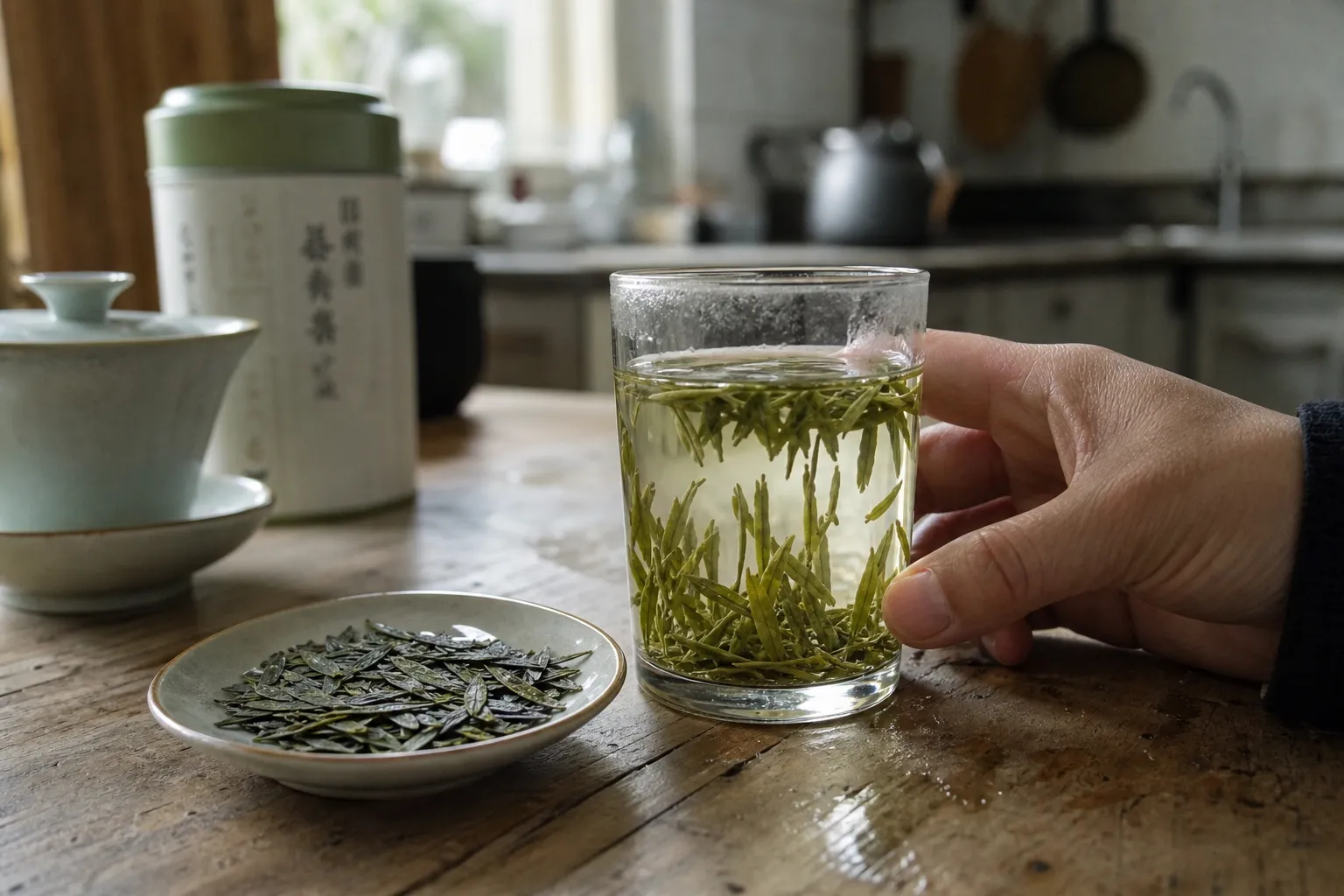
Flat Longjing leaves in a glass, a few loose leaves opening in a lidded cup, or a pale green liquor beside a meal can say more than a formal ceremony. In everyday drinking, Chinese green tea culture means treating tea as a daily material: leaf, water, time, taste, and company. It is less about performance and more about attention.
The practical answer is simple: Chinese green tea culture in ordinary drinking is the habit of making tea responsive to the moment. The same leaves may be brewed lightly for an easy afternoon cup, made stronger for a fuller taste, shared with a guest, or refilled as the flavor changes. The meaning sits in the repeated act: notice the leaf, adjust the brew, and let the cup fit the day.
upward
Start with the broader guide
Use the broader guide first if you need the full scope before this page.
The everyday meaning is in the cup
A common misunderstanding is to imagine Chinese tea culture only through formal rooms, rare teaware, strict gestures, or expensive leaves. Those settings can exist, but they do not explain ordinary green tea drinking by themselves. For a daily drinker, the more useful lens is smaller.
Look at what changes in the cup. Dry green tea may look flat, curled, needle-like, or broken, depending on the tea and processing style. Once hot water touches it, the leaves soften, sink, float, turn, and release color. A pale cup may taste gentle and grassy; a stronger cup may feel fuller, more bitter, or more astringent. Those are not abstract cultural symbols. They are the drinker’s first evidence.
This is why everyday Chinese tea drinking is often best understood as a practice of adjustment. The drinker watches how the leaf behaves, then changes water temperature, steep time, leaf amount, or the number of infusions. A cup that tastes sharp may need cooler water or a shorter steep. A cup that tastes thin may need more leaf or a longer wait. Culture appears as a habit of paying attention.
That attention does not require a collection of tools. A glass, mug, small pot, gaiwan, or travel tumbler can all hold a green tea routine. The vessel changes the experience, but it does not create the whole meaning. The everyday center remains leaf, water, and timing.
A modest cup can still be a cultural act.
What ordinary green tea drinking often emphasizes
It would be too broad to claim one pattern for all green tea in China. Regional habits, household routines, tea types, teaware, and social settings vary. Still, for a practical tea reader, everyday Chinese green tea culture can be described through careful, observable themes rather than sweeping claims.
Continuity
Green tea is not only saved for special occasions; it can sit at a desk, beside a meal, in a thermos, during a visit, or inside a quiet pause. The cup is repeatable. That repeatability matters because the drinker learns through small differences: fresher aroma, older leaf, hotter water, longer steep, thinner second infusion.
Flexibility
Chinese loose leaf tea habits are often discussed through repeated infusions, visual contact with the leaf, and adjustment rather than a single fixed recipe. Treat that as a working frame, not a rule for every tea or every household. Some leaves tolerate several rounds of water; others lose sweetness quickly. Some drinkers prefer a brief, concentrated brew; others let leaves sit in a glass and drink around them.
Social ease
Tea can mark hospitality without becoming theatrical. Offering a cup, refilling water, or placing tea within reach can carry a small social meaning: the guest is noticed, the conversation has a center, and the table has something warm to return to. That is different from saying every cup has deep symbolism. Often, the meaning is practical kindness.
Sensory restraint
Many green teas are valued for clarity, freshness, aroma, and a balance between sweetness, bitterness, and astringency. If the cup becomes harsh, the answer is usually not to romanticize the bitterness. It is to change the brewing condition. Water and time speak plainly.
Preparation choices change the reading
The same tea can feel different when brewed in a clear glass, a small lidded bowl, a pot, or a large mug. A clear glass makes the leaf visible; it turns the brew into something watched as well as tasted. A small vessel can make the infusion more concentrated and responsive. A large mug can make tea feel casual and practical. None is automatically more authentic without context.
Leaf amount changes the message too. A light pinch of loose-leaf green tea gives a soft cup, especially when the leaves stay in the vessel. More leaf can create aroma and body quickly, but it can also bring bitterness forward. In everyday Chinese green tea culture, this adjustment is more useful than a rigid claim about the correct amount.
Water temperature matters because green tea is sensitive. Very hot water can pull out stronger bitterness and astringency, especially from delicate leaves or small broken pieces. Cooler water may preserve a gentler taste, though it can also make the cup seem quiet. The practical decision is not “hot” or “cool” in the abstract. It is whether the cup tastes balanced for the leaf in front of you.
Steep time carries the same lesson. A short steep can keep a cup bright and light. A long steep can deepen color and body, but it may also make the finish rough. If the leaves remain in the cup while you drink, the flavor keeps changing. That slow change is part of ordinary green tea drinking: the first sip and the last sip are not always the same tea.
Refilling water is another useful cue. Some green teas open gradually, giving a fragrant first cup, a rounded second cup, and a fading later cup. Other teas drop off quickly. The number of infusions should be read from the leaves and the taste, not from a marketing promise. Watch the cup.
Where people overread Chinese green tea culture
One national habit
One overreading is to turn green tea in China into a single national habit. That flattens real variation. A person drinking Longjing Dragon Well from a glass, someone using a small lidded vessel for another green tea, and someone carrying tea in a bottle during work are not necessarily performing the same routine. They may share an everyday tea language, but the details can differ.
Loose leaf as proof
Another overreading is to treat loose-leaf tea as proof of quality by itself. Whole or intact leaves can be a useful sourcing cue, especially when compared with dusty, stale-looking tea, but leaf appearance alone cannot prove origin, freshness, handling, or taste. Flat leaves may invite a Longjing comparison; they do not confirm the full story. A sourcing cue is a starting point, not a verdict.
Culture as luxury
A third confusion is to make culture sound like luxury. Words such as premium, rare, estate, or traditional may appear in the market, but they do not replace sensory checks. Does the dry leaf smell fresh or flat? Does the liquor look lively or dull? Does the cup taste clean, bitter, sweet, nutty, grassy, marine, roasted, or stale? Culture becomes more useful when it helps the reader observe, not when it pressures the reader to admire.
Wellness certainty
A fourth confusion is to mix green tea culture with wellness certainty. Green tea contains caffeine, and some drinkers describe it as fitting well into a focused daily routine. Green tea is also commonly discussed in relation to plant compounds and general wellness interests. Those points should stay modest. A tea article should not turn a cup into a promised body outcome. People with health conditions, medication questions, pregnancy concerns, caffeine sensitivity, or sleep problems should rely on qualified medical guidance beyond a tea page.
Taste is observable. Wellness language needs restraint.
What changes the answer from one cup to another
The meaning of Chinese green tea everyday drinking changes with the setting. A cup alone at a desk may be about rhythm and attention. A cup offered to a visitor may be about hospitality. Tea beside food may be about refreshment and balance. Tea made from a careful seasonal purchase may be about noticing leaf quality and storage. The same leaves can carry different social weight.
The tea type also changes the reading. Longjing Dragon Well is often approached through its flat leaf shape and gentle nutty-green profile, but a reader should still judge the actual cup. Other Chinese green teas may lean more grassy, floral, roasted, brisk, or soft depending on processing, storage, and brewing. It is safer to start from the visible leaf and the tasted liquor than from a broad label.
Storage changes the experience quietly. Green tea tends to be vulnerable to air, light, moisture, heat, and time. A tin that closes well, a cool cabinet, and smaller buying quantities can protect aroma better than a loose bag left open. Storage is not glamorous, but it affects daily culture because it decides whether the next cup still has freshness.
The drinker’s tolerance matters too. Caffeine can feel mild to one person and disruptive to another. A late afternoon cup may be pleasant for one drinker and too stimulating for someone else. Everyday green tea culture should leave room for that difference. The practical choice is when and how strongly to brew.
Even the cup size changes the relationship. A small cup invites more attention to change between infusions. A large mug invites ease and fewer decisions. Neither is wrong. They simply create different ways to stay with the leaf.
A practical way to read the next cup
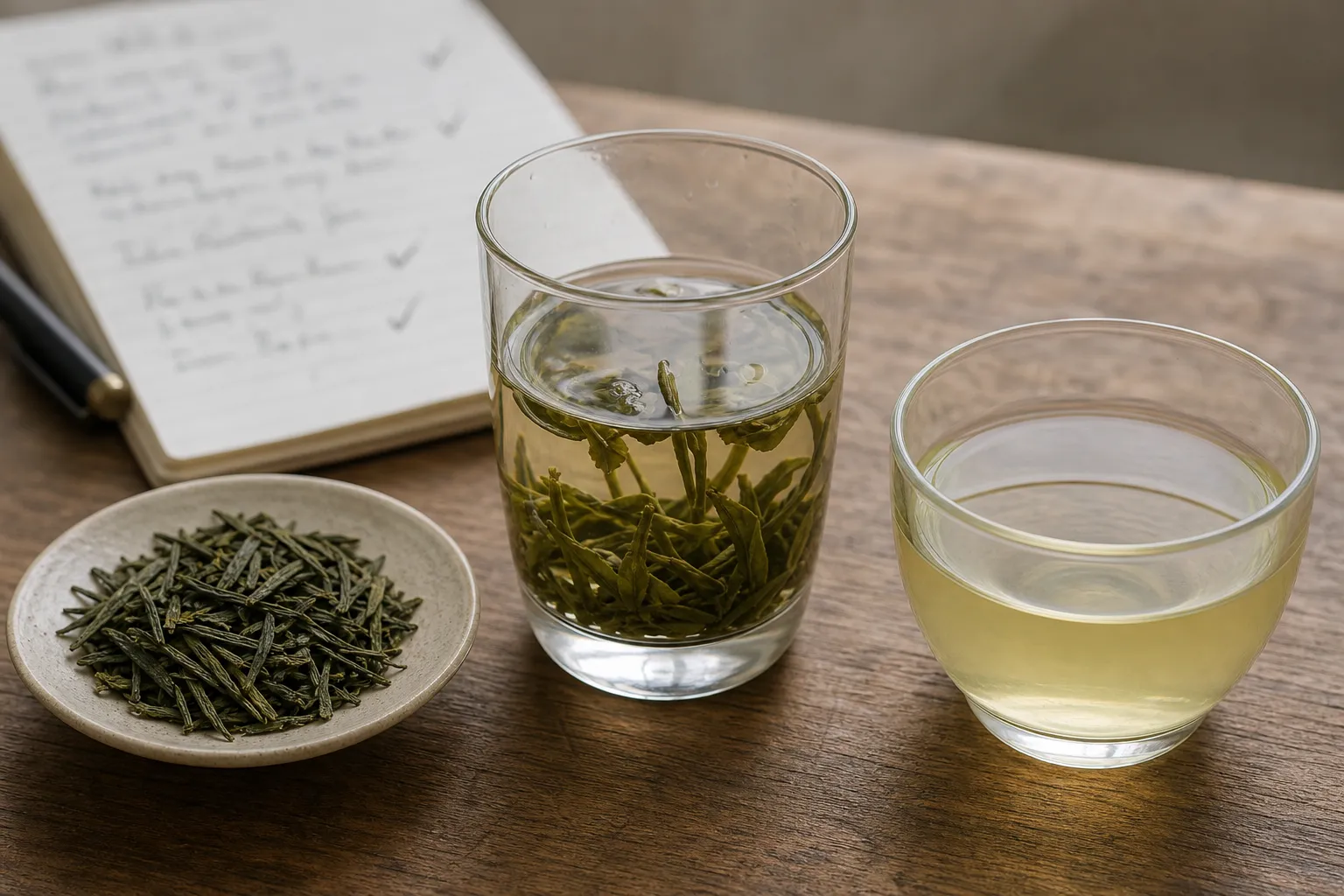
To understand Chinese tea drinking culture without turning it into a performance, read the next cup in four steps.
First, look at the dry leaf.
Notice shape, color, broken pieces, and aroma. Do not force a conclusion from appearance alone; just begin there.
Second, watch the water meet the tea.
Does the liquor color appear quickly or slowly? Do the leaves open evenly? Does the cup become cloudy, bright, pale, or deep? These are preparation clues.
Third, taste in sequence.
The first sip may show aroma, the middle may show body, and the finish may show bitterness or sweetness. If the cup is too sharp, shorten the steep or lower the heat next time. If it is too faint, increase leaf or time. Let the kettle explain the bitterness.
Fourth, notice the setting.
Are you drinking alone, sharing, refilling for someone, or keeping tea beside work? That setting is part of the meaning. Chinese loose leaf tea culture is not only what the tea is; it is how the cup is used.
This answer stays narrow on purpose. The current source pool for this page does not provide usable public references for detailed historical, regional, market, or nutrition claims. So the safest useful answer is practical: observe the leaf, adjust the brew, and keep cultural claims modest.
Chinese green tea culture in everyday drinking is not a secret hidden behind rare tools. It is the repeated care of making a leaf taste clear in the life you actually have. For the next cup, change only one thing: water temperature, steep time, leaf amount, or storage. Then taste what the leaf says.