
Cup Color Check
What Color Should Brewed Longjing Tea Be
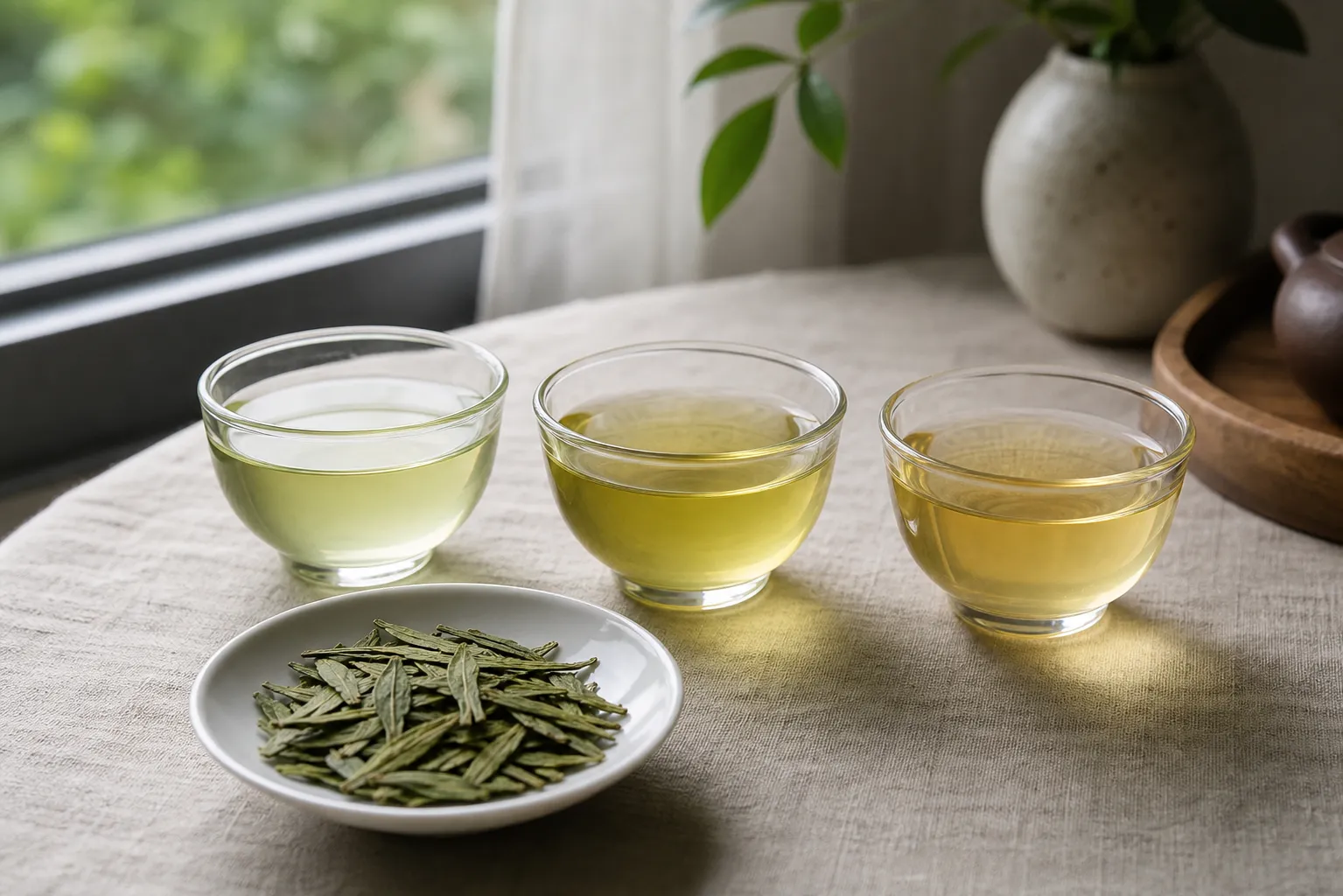
Brewed Longjing tea should usually look light, clear, and green-leaning rather than dark, muddy, or brown. In everyday cup terms, a normal Longjing tea color may be pale green, yellow-green, or straw-gold with a faint green edge. The useful test is not one exact shade; it is whether the liquor looks bright and whether the aroma and taste agree with it.
There is no usable public source set attached to this page that defines an official Longjing color standard. So this is practical cup guidance, not a grading rule. Color is a clue. It is not proof by itself.
upward
Read the full overview first
Use the broader guide first if you need the full scope before this page.
The Normal Longjing Cup Color Range
A normal Longjing cup sits on the light side of green tea liquor: pale green, yellow-green, or quiet golden green. In a glass cup or white tasting bowl, it should usually look clear enough to see through. If the liquor looks heavy, reddish brown, gray, or murky, check brewing and storage before calling it normal.
The first steep can look delicate without being weak. Longjing Dragon Well is often appreciated for a layered cup: gentle color, soft aroma, and a taste that may move through chestnut-like warmth, fresh vegetal notes, light sweetness, or mild bitterness depending on preparation. Read the color with the sip.
A very pale cup can be fine if the aroma is clean and the flavor has presence. A yellow-green cup can also be normal if it tastes balanced. A darker Longjing tea color becomes more concerning when it comes with flat aroma, harsh bitterness, stale notes, or a rough finish.
What Changes Longjing Tea Color in the Cup
The same leaves can brew to different shades when water, time, leaf amount, and cup shape change. That is why Longjing tea color is better understood as a range, not a paint chip.
Water and time
Hotter water and a longer steep generally draw more from green tea leaves. In the cup, that can mean deeper color, fuller body, and sometimes more bitterness or astringency. A shorter steep may keep the liquor lighter and softer, but it can taste thin if there is too little leaf or too little contact time.
Leaf amount
A generous amount of flat Longjing leaves in a small cup will color the water faster than a sparse amount in a larger vessel. If the cup turns dark very fast, the ratio may be the issue. If it stays nearly colorless and tastes empty, try more leaf or a slightly longer steep before judging the tea.
Teaware and perception
A clear glass makes pale green easier to see. A dark mug hides the line between green and yellow. A white bowl shows whether the liquor is bright or dull. If you are troubleshooting Longjing color changes, pour a little into a clear or white cup first.
Pale Green, Yellow-Green, or Darker
A pale green Longjing tea is often the shade people expect first. It can point to a delicate steep, a light extraction, or leaves that release color slowly. If the fragrance is fresh and the sip feels clean, pale color is not a problem. If it is pale and flavorless, adjust the brew before blaming the leaf.
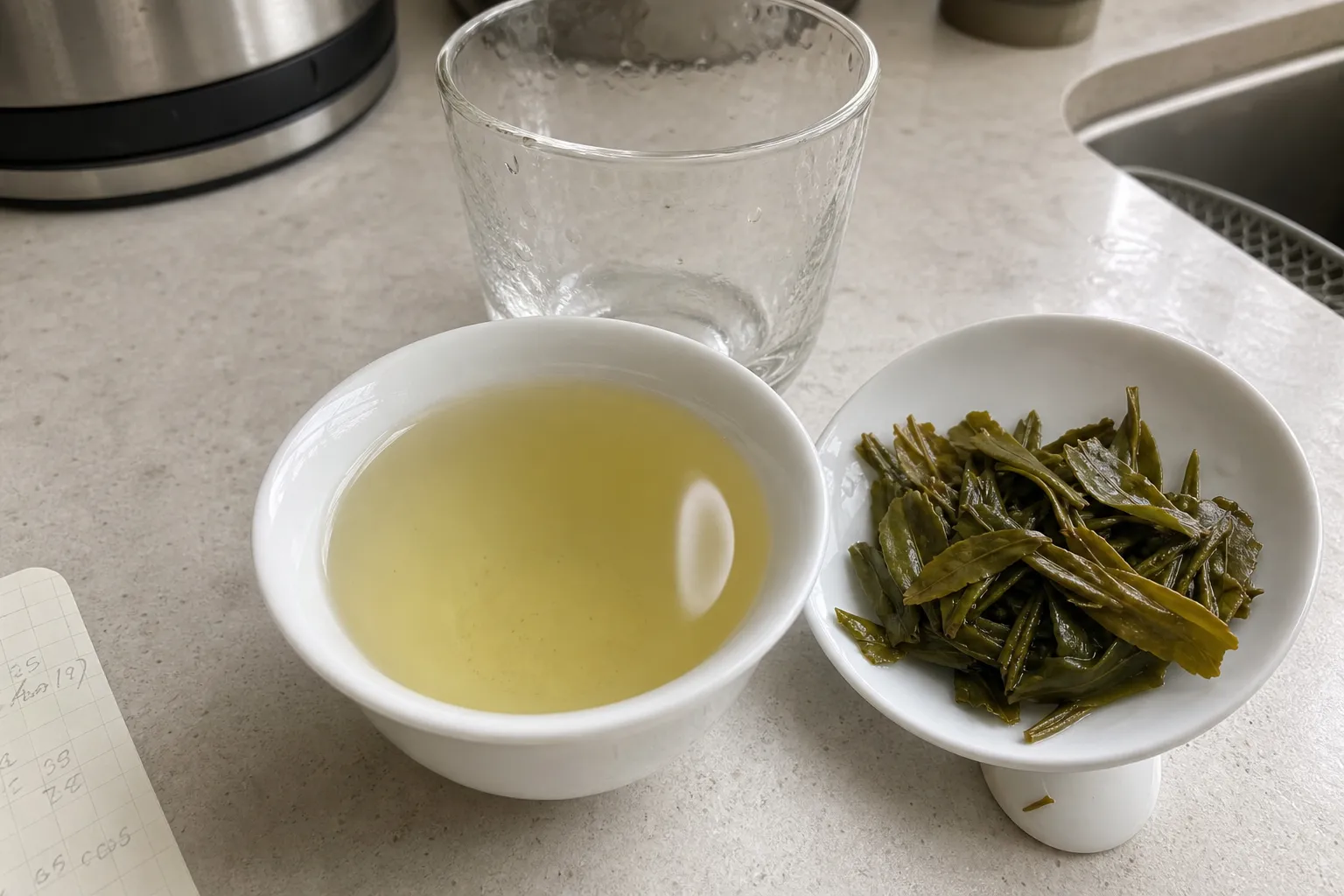
Yellow-green Dragon Well tea liquor is also within the practical range many drinkers encounter. Longjing should not be judged like matcha, where powdered tea makes the bowl opaque and vivid. Loose-leaf Longjing is usually transparent. A clear yellow-green cup can still be a good cup.
A darker cup needs context. If the liquor turns deeper yellow or amber after a long steep, hotter water, or extra leaf, brewing may explain it. If it turns brownish quickly, looks dull, or tastes stale, leaf condition and storage deserve more attention. Darker color is not automatically bad; it asks you to check smell, clarity, bitterness, and finish.
Cloudiness is a separate clue. This page does not have strong enough source material to assign one precise cause to haze. Still, heavy murkiness, floating dust, or a gray cast is different from a clear yellow-green brew. When the cup looks unclear, smell the wet leaves before deciding what went wrong.
Freshness, Storage, and Leaf Condition
Longjing freshness and color often get discussed together, but without better tea-specific references, the safer point is practical: clean aroma, lively taste, and bright liquor should be judged as a set. A pretty color cannot rescue a flat cup.
Dry leaves give context before brewing. Longjing is commonly recognized by its flat leaf shape, but shape only tells part of the story. If the dry leaf smells dull, dusty, sour, or old, brewed color may not be the main issue. If the wet leaves smell clean and the liquor is clear, a lighter or more yellow cup may simply reflect your steep.
Storage belongs in the check. Green tea is sensitive to air, light, moisture, and heat in ordinary kitchen conditions. If a tin has been open for a long time, stored near the stove, or left in a warm bright place, the cup may taste flatter even if the color still looks acceptable.
Sourcing language can help set expectations, but it cannot prove quality on its own. Harvest terms, origin claims, grade names, and premium labels should not replace observation. Look at the dry leaf, smell the warmed leaf, watch the liquor, and taste the finish.
Quick Troubleshooting by Cup Color
Use this as a practical check, not a formal grading chart.
| What you see | What to check next | Practical adjustment |
|---|---|---|
| Very pale, almost colorless liquor | Aroma and taste may be too faint | Use slightly more leaf or steep a little longer |
| Clear pale green cup | Taste may be delicate but clean | Keep the method if the sip feels balanced |
| Clear yellow-green cup | This can still be normal Longjing tea color | Judge by aroma, sweetness, bitterness, and finish |
| Dark yellow or amber cup | Extraction may be strong | Shorten steep time, use less leaf, or lower water temperature |
| Brownish, dull, or murky liquor | Storage, age, leaf dust, or over-brewing may be involved | Compare with a gentler steep in a clear cup |
| Dark color with harsh bitterness | Brewing is likely part of the problem | Shorten the next steep first |
The most useful Longjing tea troubleshooting move is to change only one variable at a time. If the cup is too dark and bitter, shorten the steep first. If it is pale and empty, add leaf before making the water hotter. If it looks fine but tastes stale, review storage rather than chasing a brighter shade.
Common Confusion About Dragon Well Tea Liquor Color
Expecting matcha color
Matcha is powdered tea suspended in water, so the bowl can look vivid and opaque. Longjing is loose-leaf green tea; its liquor should usually be transparent. A clear cup is not a flaw.
Assuming greener is always better
A bright green impression may be appealing, but color is only one sensory cue. A balanced yellow-green cup may be more enjoyable than a greener-looking cup that tastes sharp, thin, or forced by brewing.
Judging darker color too quickly
A strong leaf ratio or long steep can deepen the liquor even when the leaves are serviceable. The better question is whether the darker color arrives with rough bitterness, stale aroma, or dull wet leaves.
Trusting product photos as standards
Online images are affected by lighting, cup thickness, background color, editing, and brew strength. They may shape expectations for Longjing cup color, but they are not a reliable standard for your kitchen.
Where the Boundary Sits
Without a stronger source set, this page cannot support a precise claim such as “Longjing must be exactly this shade” or “this color proves this grade.” That boundary matters because tea color can easily become overconfident buying advice. Use color as the first observation, then confirm with aroma, clarity, taste, leaf condition, and storage.
This also applies to wellness language. Longjing is a green tea and may appear in everyday conversations about caffeine, antioxidants, focus, and routine, but brewed color should stay a sensory question. A pale or yellow-green cup does not show a wellness effect, and a darker cup does not carry reliable health meaning.
If you need a buying decision, do not use liquor color alone. Compare how the tea smells dry and wet, how it brews under a consistent method, whether bitterness feels pleasant or harsh, and whether the seller gives clear product information without leaning only on prestige terms. Longjing flat leaves tell only part of the story.
A Simple Way to Check Your Next Cup
Brew the tea in a clear or white cup and watch the liquor before the first sip. Name the color plainly: pale green, yellow-green, golden green, amber, brownish, bright, dull, clear, or murky. Then smell the wet leaves and taste slowly.
If the cup is pale but fragrant, keep the method. If it is yellow-green and balanced, that can be a normal Longjing tea color. If it is darker and bitter, shorten the next steep. If it is dark, dull, and stale-tasting even with a gentler brew, check the leaf age and storage.
The best answer is not a single shade. Brewed Longjing tea should look light, clear, and alive in the cup; the final judgment comes from color plus aroma, taste, and leaf condition. Next time, change only the steep time and watch what the cup tells you.