
Beginner choice
Which Green Tea Variety Should You Try First
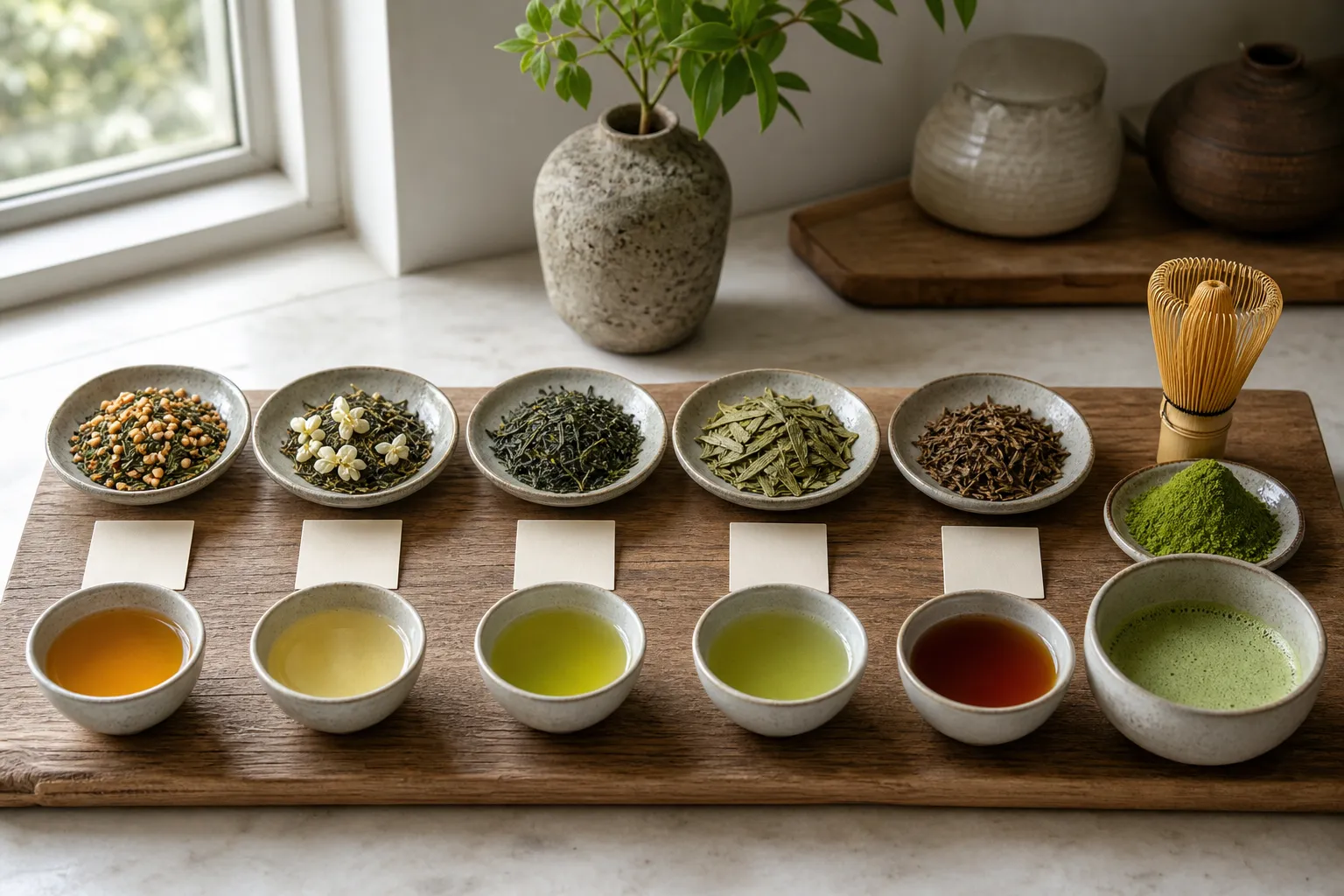
Flat Longjing leaves, toasted rice, jasmine scent, bright matcha powder: the green tea shelf can look bigger than your first cup needs to be. If you are wondering which green tea variety to try first, start with genmaicha if you want the most forgiving everyday cup, jasmine green tea if fragrance is your main bridge, or a mild sencha if you want a clearer green-tea taste from the beginning.
That is a practical answer, not a ranking. A good beginner green tea should be pleasant even when your steeping is imperfect, close to the flavor you actually want, and simple enough that one cup teaches you something useful.
upward
Read the full overview first
Use the broader guide first if you need the full scope before this page.
The Short Answer
For most new drinkers, genmaicha is the easiest first green tea because roasted rice softens the sharper edges many people notice in plain green tea. The cup can taste warm, grainy, lightly sweet, and less exposed to small brewing mistakes.
If you already like floral drinks, jasmine green tea may be the better first step. The scent makes the cup feel familiar before you have learned to judge leaf shape, liquor color, or steep time. The tradeoff is that jasmine can cover the base tea, so it may teach you less about plain green tea flavor.
If you want to understand classic green tea early, choose a gentle sencha or Longjing Dragon Well from a seller that gives basic brewing guidance. Sencha can show freshness, light grassiness, and some savory depth. Longjing often feels softer and nuttier when brewed gently. These are starting paths, not proof that every bag with the name will taste the same.
Matcha is a good first choice only if the whisked routine appeals to you. You drink powdered leaf suspended in water, so texture, freshness, bowl, whisk, and quick drinking matter more than they do with loose-leaf tea.
Match the Variety to the Cup You Want
A first green tea should answer one honest question: what flavor would make you want another cup tomorrow?
Soft, roasted, low-pressure
Try genmaicha or hojicha. Genmaicha keeps a green tea base but adds toasted rice. Hojicha is usually chosen for its roasted character; it can feel closer to toasted grain, wood, or mild cocoa than fresh-cut grass.
Fresh and recognizably green
Try sencha. It may bring grassy notes, light sweetness, and a little umami. It can also become bitter if the water is too hot or the steep runs too long, so it rewards a little attention. Approachable does not mean careless.
Aroma first
Jasmine green tea is an easy choice. The cup has an immediate identity: floral, lifted, and familiar to many new drinkers. Choose it when enjoyment matters more than studying pure leaf flavor.
Smoother loose-leaf with a nutty edge
Longjing Dragon Well is a useful candidate. Its flat leaf shape is easy to recognize, and the taste is often described in everyday tea language as mellow, chestnut-like, or softly savory. Treat that as tasting guidance, not a rule for every tea labeled Longjing.
Density, foam, and a tactile drink
Try matcha when you are ready for the routine. Matcha foam is a preparation signal; it is not a quality guarantee by itself.
Brewing Tolerance Matters More Than the Name
Green tea for new drinkers often goes wrong in the kettle, not in the variety. Hotter water and longer steeping can draw out more bitterness and astringency from many green teas. Cooler water and shorter steeping usually make the first cup easier to read.
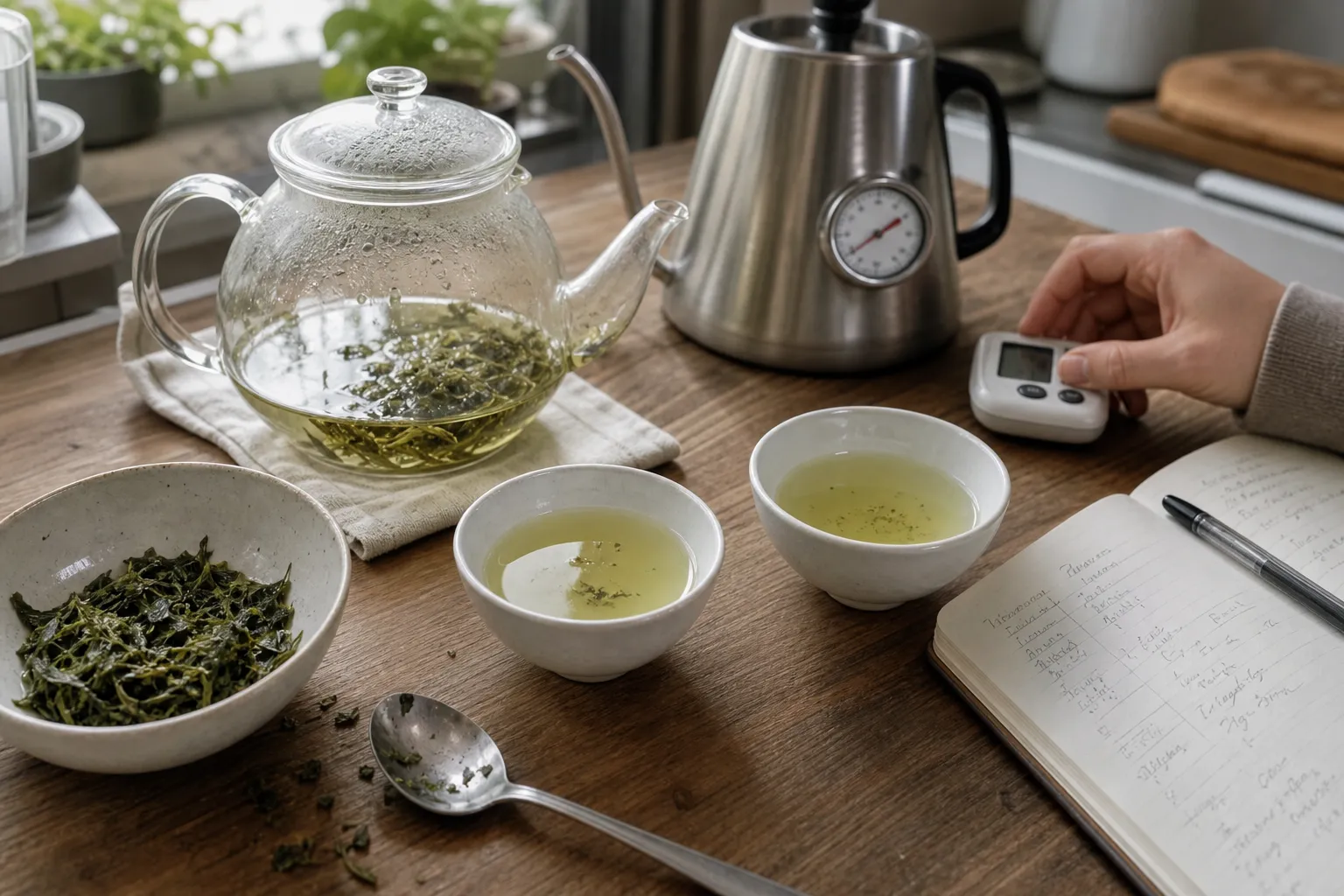
For loose-leaf green tea, begin gently. Use water that is hot but not boiling, steep briefly, and taste before adding more time. If the cup is thin, extend the next steep. If it is harsh, lower the temperature or shorten the time. That small adjustment tells you more than switching varieties after one bitter mug.
Genmaicha and hojicha tend to be more forgiving because their roasted notes can stay pleasant even when the steep is a little rough. Jasmine green tea can also feel easy because aroma leads the cup. Sencha and matcha show both freshness and mistakes more clearly.
Try one small test
- Choose one tea, not five.
- Brew it gently the first time.
- Taste the first sip, the middle of the cup, and the finish.
- Notice whether the problem is bitterness, thinness, aroma, or texture.
- Adjust water or time before deciding you dislike the variety.
Leaf, water, time.
A Practical First-Choice Map
Use this as a starting point, not a buying rule.
A mellow, grainy cup
Try genmaicha
Toasted rice can soften the first impression.
A roasted, cozy cup
Try hojicha
Roasty notes may feel less grassy.
A floral, aromatic cup
Try jasmine green tea
Scent makes the cup immediately approachable.
A classic fresh green cup
Try sencha
Shows brightness, light grassiness, and possible umami.
A smoother loose-leaf cup
Try Longjing Dragon Well
Often chosen for flat leaves and a gentler nutty profile.
A fuller powdered drink
Try matcha
Best if you want whisking, texture, and stronger tea presence.
The most important column is the first one. A beginner who wants a cozy evening cup may be happier with hojicha than with a famous spring green tea. A drinker who already likes seaweed, broth, or savory snacks may enjoy sencha earlier than someone who only wants floral softness.
Do not let market language make the decision for you. Words such as premium, ceremonial, estate, early harvest, or origin names can be useful sourcing cues when they are backed by clear product details, but they do not guarantee that the cup will suit you. Read the leaf before the claim: look for leaf form, aroma after opening, brewing instructions, and plain sensory description.
Where Beginners Misread the First Cup
The first mistake is treating bitterness as the whole personality of green tea. Bitterness can come from the leaf, but it can also come from water that is too hot, too much leaf, or steeping too long. Before abandoning sencha, Longjing, or another plain green tea, make one gentler cup.
The second mistake is assuming matcha is the obvious first choice because it is familiar from cafés. Matcha in a sweet milk drink is not the same experience as whisked matcha with water. Without milk or sugar, the powder can feel more intense, more textured, and more sensitive to freshness.
The third mistake is thinking fragrant tea is automatically less serious. Jasmine green tea can be a useful beginner route when aroma is what keeps the cup enjoyable. The limit is simple: if the floral scent dominates, you may learn less about the base tea’s own sweetness, bitterness, or body.
The fourth mistake is choosing by wellness language before learning taste. Green tea contains caffeine, and some drinkers describe the cup as gentler than coffee, but individual response varies. Antioxidant language belongs in general context, not as a reason to force a variety you dislike. If caffeine intake, pregnancy, medication, sleep, anxiety, heart concerns, or another health factor affects your choice, use qualified medical guidance rather than a tea article.
When the Answer Changes
Start with genmaicha if you are unsure. Change the answer if one of these conditions sounds more like you.
Choose jasmine green tea first
Choose it if aroma is your main bridge into tea. You will know quickly whether floral fragrance makes the cup easier to enjoy.
Choose hojicha first
Choose it if you dislike grassy flavors or want something more roasted than fresh. It can be a softer entry for people coming from coffee, toasted grains, or darker teas.
Choose sencha first
Choose it if you want a more direct green tea lesson. It gives you a clearer view of how water temperature, steep time, sweetness, bitterness, and umami interact.
Choose Longjing Dragon Well first
Choose it if you want a loose-leaf tea that feels calm, visual, and easy to observe. The flat leaves, pale liquor, and gentle nutty direction make it a useful first comparison point, as long as you do not treat the name alone as proof of quality.
Choose matcha first
Choose it if the preparation appeals to you as much as the drink. A bowl, whisk, powder texture, and quick drinking rhythm are part of the experience. If that sounds like friction, wait.
The Evidence Limit
The available source pack for this article did not include usable public references, institutional tea material, food-science sources, or curated tasting records. The recommendations here should therefore be read as cautious editorial guidance based on observable tea traits and beginner decision logic, not as verified rankings, health findings, origin claims, or product endorsements.
That limit matters most around sourcing, caffeine, antioxidants, and variety labels. This page can help you choose a first cup by taste, aroma, brewing tolerance, and routine. It should not be used to judge authenticity, compare health outcomes, or settle claims about a specific farm, grade, or market label.
For a first purchase, keep the decision small: buy a modest amount, store it clearly, follow gentle brewing, and observe the cup before buying more. Fresh aroma and a drinkable first steep matter more than a grand claim on the package.
A Good First Green Tea Decision
If you want one practical answer, make it this: try genmaicha first for the most forgiving start, jasmine green tea first for fragrance, sencha first for classic green tea flavor, hojicha first for roastiness, Longjing Dragon Well first for a smoother loose-leaf path, and matcha first only if the whisked routine sounds appealing.
Your first green tea does not need to be the most famous or expensive. It needs to teach you one clear preference: roasted warmth, floral aroma, fresh grassiness, savory umami, smooth nutty leaf, or powdered texture.
Brew gently, taste plainly, and change only one variable next time. The first answer is in the cup.