
Variety decision guide
How to Choose a Green Tea Variety
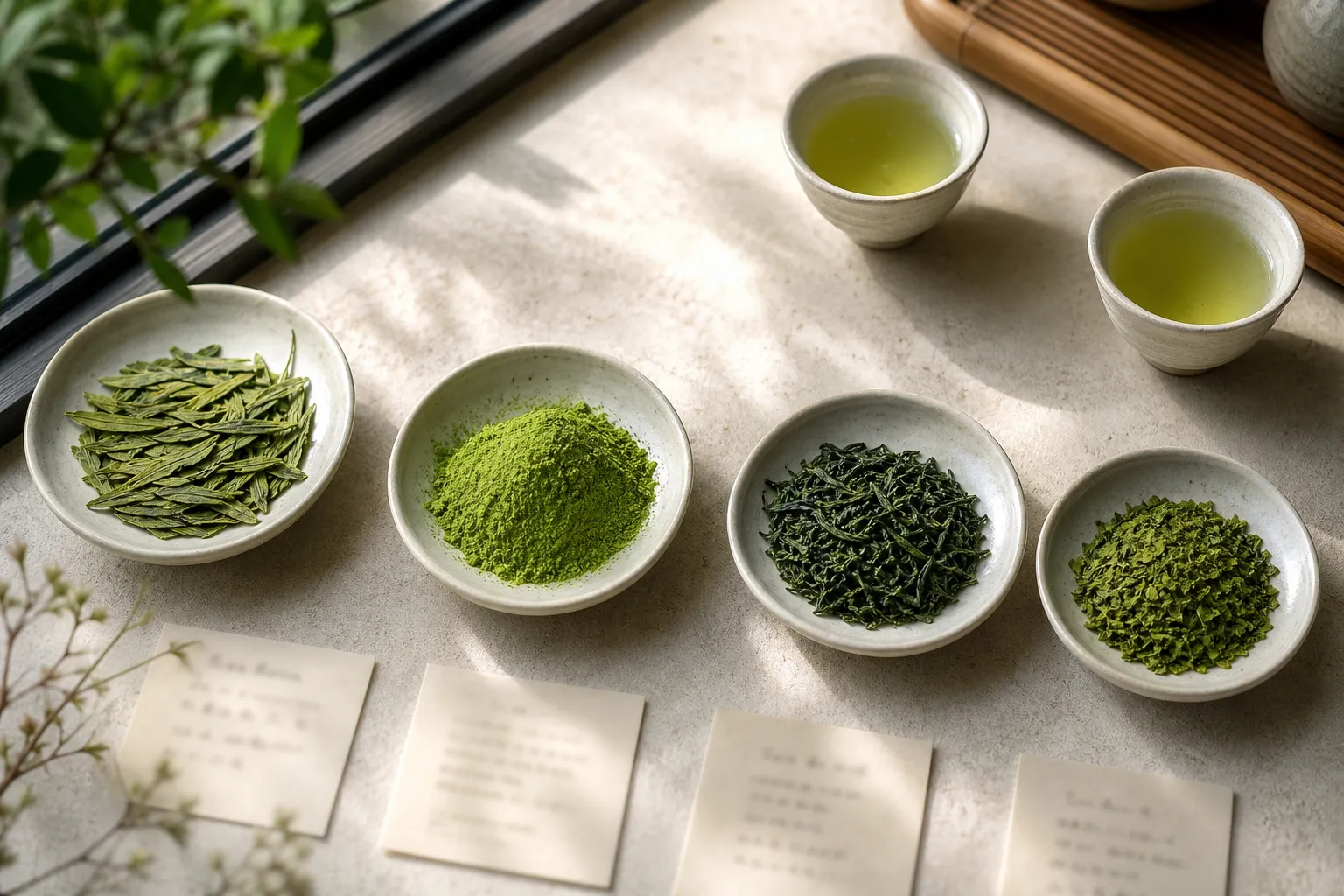
Flat leaves, fine powder, curled needles, bright green fragments: the first decision is not which green tea is “best,” but which cup you want to drink often enough to understand. To choose a green tea variety, start with cues you can actually test: flavor notes, bitterness tolerance, aroma, leaf form, preparation effort, freshness, and the way the tea fits your day.
The source pool for this article did not include public variety standards, producer documentation, tasting panels, or strong health evidence. So this page treats green tea selection as practical editorial guidance, not an authority-backed ranking. Use it to narrow your next choice by leaf, water, and cup.
upward
Start with the broader guide
Use the broader guide first if you need the full scope before this page.
Start with the Taste You Want
The best green tea for taste preference is usually the one that matches your first-sip expectation. Some drinkers want a soft, sweet cup. Others want vivid grassy aroma, savory umami, a roasted edge, or a clean daily tea that does not ask for much attention.
Softer sweetness
Look toward mild loose-leaf styles and cooler brewing. Watch for stale aroma, flat liquor, or vague “premium” wording.
Savory depth
Look toward matcha or steamed Japanese-style teas such as sencha. Watch for more sensitivity to water temperature and strength.
Nutty warmth
Look toward pan-fired styles such as Longjing Dragon Well. Watch freshness and storage; older tea can lose lift.
Toasted comfort
Look toward roasted green tea styles. Expect less springlike brightness; the appeal is warmth.
Cold refreshment
Look toward loose leaves that brew gently in cool water. Cold brewing softens edges but cannot rescue stale tea.
These are starting points, not fixed rules. Variety name, harvest timing, storage, water temperature, and steep time can all change the cup. A famous name can still taste dull if the tea has been poorly stored; a modest tea can drink clearly when fresh and brewed with restraint.
Choose the flavor family first. Then judge the leaf.
Match the Tea to Your Bitterness Tolerance
Bitterness is one reason beginners think they dislike green tea. Sometimes the variety is the issue; often the brewing is. Hotter water, longer steep time, too much leaf, or a heavy powder preparation can make a cup sharper than expected.
If you want the least bitter green tea for beginners, do not rely on the name alone. Choose a style that gives you room to adjust. Mild loose-leaf teas, cooler water, shorter steeps, and cold brewing can make the cup easier to approach.
A simple bitterness filter
- Choose loose-leaf over powder if you want more control.
- Use cooler water when bitterness appears quickly.
- Shorten steep time before changing varieties.
- Try cold brewing if hot green tea often tastes harsh.
- Avoid judging a variety from one oversteeped cup.
Matcha needs its own expectation. Because the powder is whisked into the drink rather than infused and removed, it can feel fuller and more concentrated. Some drinkers love that body; others prefer the cleaner separation of leaf and liquor. If bitterness bothers you, start with a thinner bowl before deciding matcha is not for you.
Let the kettle explain the bitterness before the label does.
Choose by Flavor Notes, Not Just Variety Names
Green tea variety names help, but they can also blur the decision. A name may point toward a region, processing style, leaf form, or market category; it does not prove freshness, storage quality, brewing behavior, or personal fit. How to choose green tea by flavor notes is often more useful than choosing by the most familiar word.
Use the language of the cup
- Grassy: fresh, green, sometimes brisk; good if you like vivid plant-like aroma.
- Savory or marine: deeper umami impressions; useful when you want broth-like richness.
- Nutty: warm, round, sometimes chestnut-like; helpful if sharp grassy notes bother you.
- Toasted: cozy and mellow; a good route toward green tea without grassy taste.
- Floral: light aroma and lift; better for delicacy than weight.
- Astringent: drying on the tongue; not always bad, but unpleasant when it dominates.
- Sweet: soft finish or gentle aroma; often easy for daily drinking.
If you dislike grassy flavor, do not force yourself into the greenest-smelling tea because it looks fresh or popular. A nutty green tea taste, a toasted green tea taste, or a softer pan-fired cup may fit better. Longjing Dragon Well is often chosen by drinkers who want flat leaves and a warmer profile, though the actual cup still depends on leaf condition and brewing.
If you want green tea for umami flavor, look toward styles commonly prepared for savory depth, such as matcha or sencha. Keep the expectation modest: umami is a taste impression in the cup, not a guarantee that every tea under that name will taste the same.
Taste first. Category second.
Let Leaf Form Decide Brewing Effort
Leaf appearance helps you choose green tea because it hints at how the tea may behave in water. It does not prove origin, grade, or value by itself, but it can guide preparation.
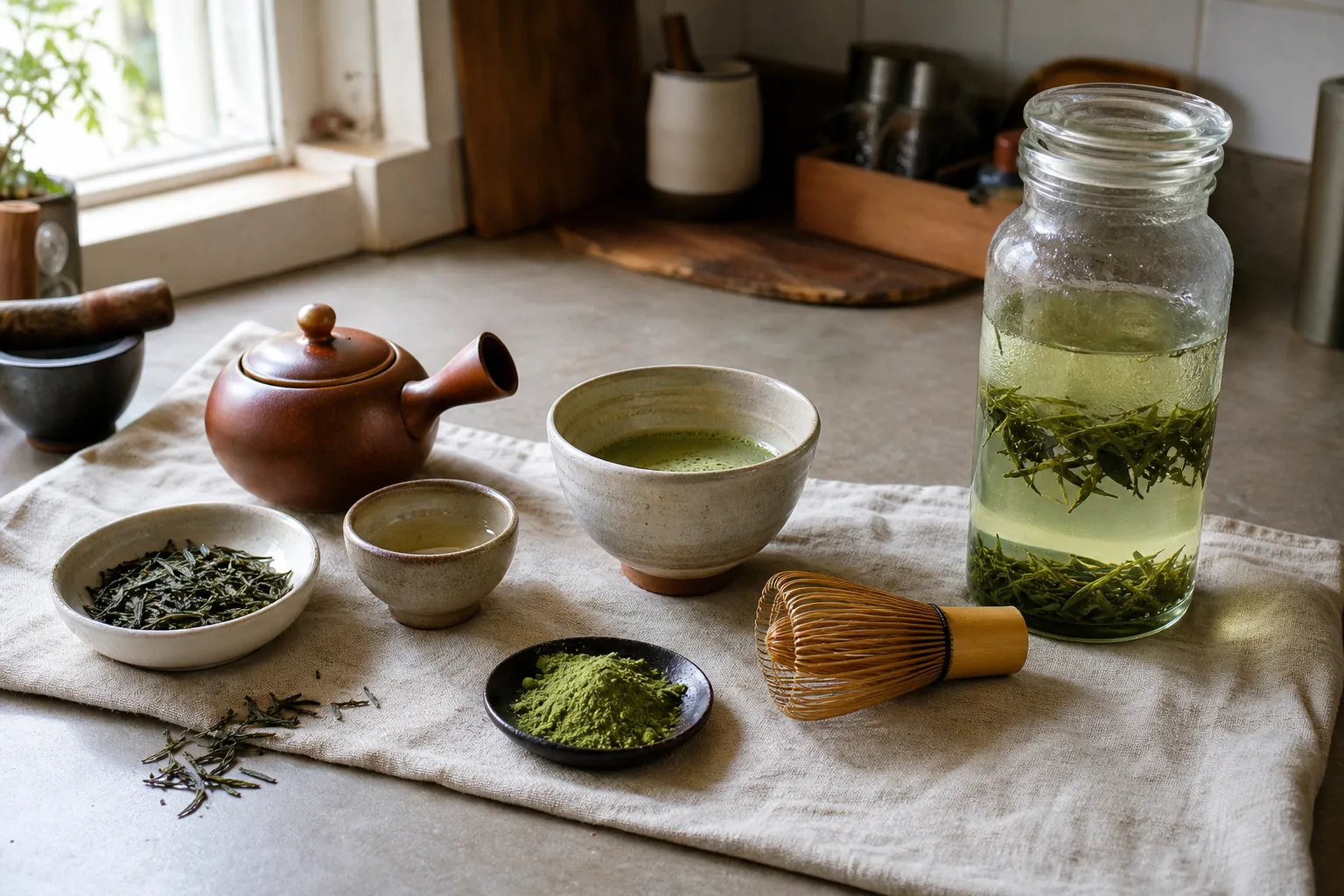
Loose whole leaves give the most visible feedback. You can watch them open, adjust the steep, and smell the wet leaf after brewing. Broken leaves and smaller fragments may infuse faster, which can be convenient but less forgiving. Powdered tea, especially matcha, asks for a different routine: bowl, whisk, sifting if needed, and attention to texture.
Very low effort
Tea bags or simple loose-leaf infusions can support easy daily use, fewer tools, and quick cleanup.
Moderate effort
A mug infuser, gaiwan, or small pot gives more control over leaf amount, time, and water.
Focused preparation
Matcha with a bowl and whisk can fit drinkers who want a full-bodied cup and powder texture.
Make-ahead routine
Cold-brew loose-leaf green tea can offer gentle extraction and easy fridge storage.
Tasting practice
Small repeated steeps are useful for noticing aroma, bitterness, and finish.
If you want green tea for daily drinking, choose a format you will actually prepare on an ordinary day. A beautiful tea that needs more attention than you want may sit unused. A modest loose-leaf tea that brews cleanly in your usual cup may serve you better.
Brewing effort is not a moral scale. It is a routine choice.
Use Freshness and Storage Cues Carefully
Freshness matters because many green teas are valued for lively aroma, clear color, and a clean finish. But freshness is not a single fact you can fully confirm from a product page or package phrase. Without stronger sourcing evidence, treat freshness cues as prompts for closer judgment, not proof.
Look for practical signs
- Dry leaf or powder should smell clean, not musty, stale, or dusty.
- Color should look consistent for the style, without relying on brightness alone.
- Packaging should protect the tea from air, light, heat, and moisture.
- Smaller quantities may be wiser if you drink slowly.
- A storage tin or sealed pouch helps preserve aroma after opening.
Leaf shape can help inspection. Flat Longjing-style leaves, fine matcha powder, needle-like leaves, curled leaves, or broken fragments all offer clues about handling and brewing speed. Still, green tea leaf appearance has limits. A neat-looking leaf does not automatically prove careful sourcing, and a less dramatic leaf is not automatically poor.
Storage is the quiet part of choosing. Better storage protects flavor; it cannot bring back a tired tea.
Buy for your pace.
Decide When Caffeine and Antioxidants Matter
Caffeine and green tea antioxidants are common comparison points, but they should not take over the decision unless they affect your daily routine. Green tea contains caffeine, and some drinkers describe its effect as gentler or steadier than other caffeinated drinks. That experience can vary by person, serving size, preparation, and sensitivity.
Green tea caffeine considerations are practical: when you drink it, how strongly you brew it, how your body responds, and whether you have personal health circumstances that make caffeine more important. If you are caffeine-sensitive, pregnant, managing medication questions, or making a higher-stakes health decision, rely on qualified guidance rather than a tea article.
Antioxidants belong in the same cautious frame. They are part of why many readers are interested in green tea, but they should not decide which variety you buy by themselves. The available material here is not enough to rank varieties by antioxidant content or connect one choice to a specific health outcome.
For everyday selection, taste and repeatable preparation usually matter more. A tea you enjoy and brew consistently is more useful than one bought for a wellness phrase you cannot evaluate.
Separate the cup from the claim.
Which Green Tea Variety Should You Try First?
Your first choice should reduce friction. Pick a tea that matches your flavor preference, bitterness tolerance, and brewing routine, then learn from the cup before branching out.
For the easiest starting point
Try a mild loose-leaf green tea prepared with cooler water and a short steep. It gives you control and makes it easier to tell whether you dislike the variety or simply brewed it too hard.
For savory depth
Try sencha or matcha, but expect more preparation sensitivity. Sencha can show sweetness, green aroma, and umami when brewed carefully; matcha can feel richer because the powder becomes the drink itself. Start light before increasing strength.
For nutty warmth
Try Longjing Dragon Well or a similar pan-fired style. Watch the dry leaf, smell the warm wet leaf, and keep the steep restrained. The goal is a rounded cup, not a bitter one.
For less grassy flavor
Look for toasted or warmer flavor notes. A roasted green tea style may be a better fit than a bright springlike cup. That is not a downgrade; it is preference alignment.
For cold brewing
Choose a leaf that tastes clean and not stale when brewed gently. Cold water often softens sharpness, but it also makes dull tea taste merely dull. Freshness still matters.
Common Mix-Ups When Choosing Green Tea
People often mix together variety, grade, origin, wellness language, and brewing method. That confusion makes choosing harder than it needs to be.
“Premium” wording is not a flavor description
A product can sound elevated and still be wrong for your taste. Ask what the tea is expected to taste like: grassy, sweet, umami, nutty, toasted, floral, brisk, or mellow.
Bitterness does not always mean poor tea
Sometimes bitterness may reflect rough leaf material or poor storage, but it can also come from water that is too hot, too much tea, or a steep that ran too long. Adjust the brew before you dismiss the whole category.
Matcha is not simply stronger green tea
Matcha has its own appeal, but it is a powder-based preparation with different texture, body, and cleanup. It may not fit someone who wants a light infused tea.
Wellness language is not a buying shortcut
Caffeine, antioxidants, and daily energy are real reader concerns, but broad package language cannot tell you whether the tea will taste good, suit your timing, or agree with your sensitivity.
Read the leaf before the claim.
A Simple Decision Frame
Use this short path when you are choosing your next tea:
- Name your flavor target. Sweet, grassy, umami, nutty, toasted, floral, or clean.
- Set your bitterness limit. If you dislike sharpness, choose forgiving loose-leaf tea and brew cooler.
- Choose your format. Loose leaves for control, powder for body, bags for convenience, cold brew for low-effort refreshment.
- Check freshness cues. Smell, color, packaging, quantity, and storage plan.
- Keep wellness claims in proportion. Caffeine and antioxidants may matter, but they do not replace taste and fit.
- Buy a small amount first. Let one or two careful brews teach you more than a label can.
The right variety is not the one with the loudest description. It is the tea whose leaf form, aroma, brewing effort, and cup character fit your actual day.
For your next brew, choose one variable to test: cooler water, shorter time, a nuttier leaf, a more savory tea, or a cold steep. The cup will answer more clearly than the package.