
Shincha Meaning in Japanese Green Tea Culture
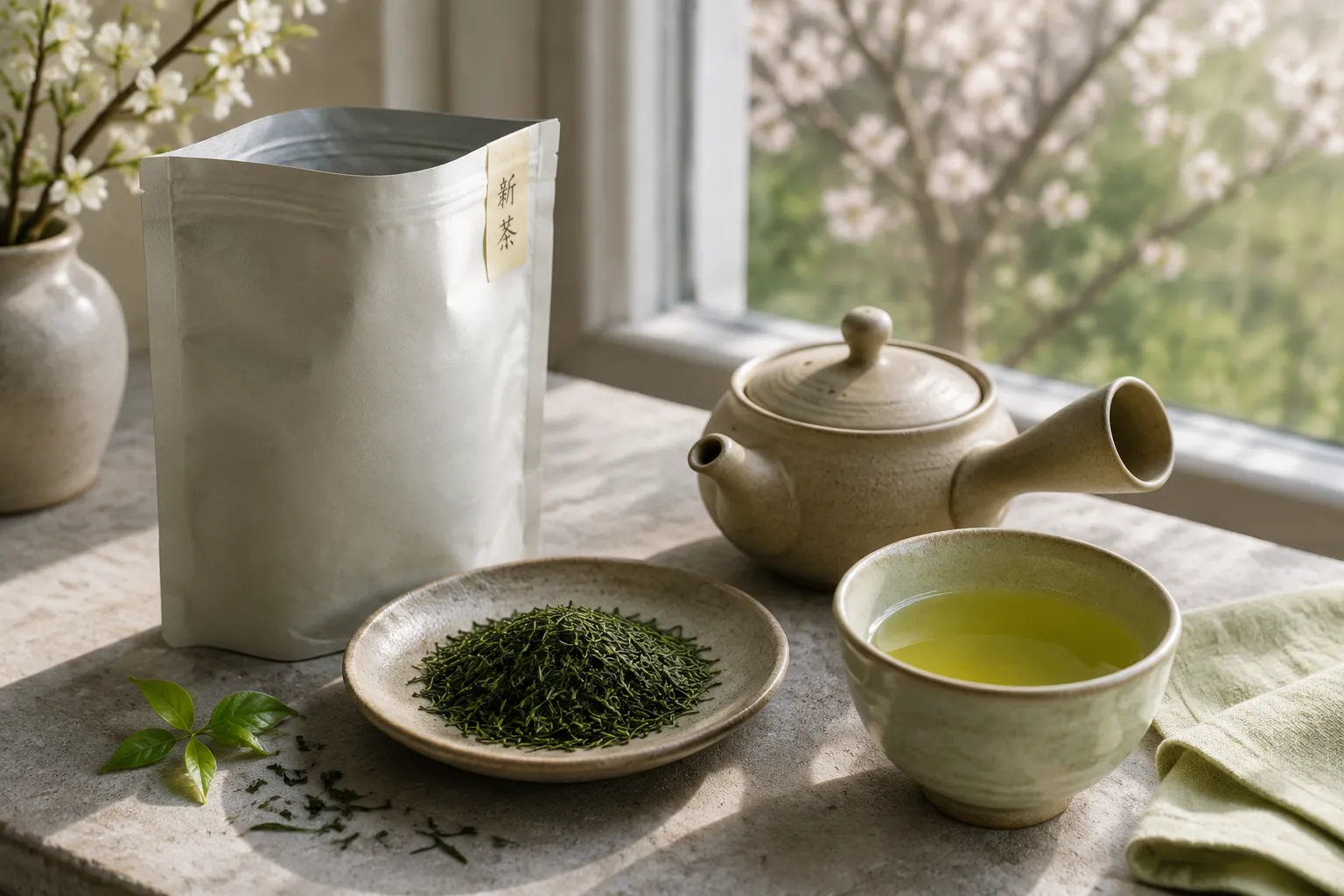
Open a packet labeled shincha and the first clue is timing, not a separate tea type. The shincha meaning is "new tea," usually the first new Japanese green tea released from the early spring harvest. For a daily drinker, that points to seasonality: a fresh annual arrival, often sold in English as first flush sencha, first harvest Japanese tea, or Japanese spring tea.
That wording can help you expect a brighter, spring-like cup and read the packet with more care. It does not prove the tea is better, fresher by the time you drink it, or more beneficial than another well-made green tea. Shincha is a seasonal cue first. The leaf still has to brew well.
upward
Start with the broader guide
Use the broader guide first if you need the full scope before this page.
What Shincha Means on a Tea Packet
Shincha is commonly translated as "new tea." In Japanese green tea culture, it is tied to the first new tea of the year, especially the early spring harvest that reaches shops as a seasonal release.
English-language labels often circle the same idea with slightly different wording:
The careful reading is this: shincha tells you where the tea sits in the seasonal calendar. It does not tell you the cultivar, steaming level, region, storage condition, or how forgiving it will be in the pot.
Shincha Is Seasonal, Not a Separate Tea Category
A common mistake is to place shincha beside sencha, gyokuro, matcha, or hojicha as if they were the same kind of label. They are not.
Sencha describes a broad style of Japanese green tea. Matcha is powdered tea prepared by whisking. Gyokuro is a shaded Japanese tea style. Shincha is better read as a seasonal designation: the tea is being presented as the new tea of the season, usually from the first spring harvest.
That is why many packets appear as shincha sencha. The tea may be processed and brewed much like sencha, while shincha names its seasonal release. If a shop writes "first flush sencha," it is often translating the same buying moment for English-language readers.
The distinction matters when you buy. If you want the spring-release experience, look for shincha, first harvest, or new harvest language. If you want a specific style, still check whether the packet is sencha, kabusecha, gyokuro, or another form. The season is not the whole identity of the leaf.
Shincha vs Sencha and Shincha vs Ichibancha
Shincha vs sencha
Shincha vs sencha is mostly a category mismatch. Much shincha is sold as sencha, but not all sencha is shincha. A regular sencha may come from a later harvest, a stored batch, or a non-seasonal release. Shincha points to the new spring arrival.
Shincha vs ichibancha
Shincha vs ichibancha needs a finer reading. Ichibancha is commonly used for the first harvest or first picking. Shincha emphasizes the new tea released from that early harvest. In retail language, the two terms can overlap, and sellers do not always use them with the same precision.
A practical reading is simple: ichibancha leans toward harvest order; shincha leans toward seasonal release. Use the terms as clues, then look for supporting label details.
Shincha Season and Harvest Timing
Shincha season is a spring idea rather than a single date. Many retail examples point to late April and May, with earlier picking possible in warmer southern regions and later timing elsewhere. The useful pattern is a south-to-north spring movement, not one calendar week that works every year.
Weather, cultivar, elevation, producer decisions, processing, packaging, and shipping can all affect when a tea is picked and when it reaches a buyer. A preorder in April may not land in your cup at the same moment as another tea labeled spring harvest in May or early summer.
This is where the cultural meaning becomes practical. Shincha sits inside Japan's spring rhythm: new leaves, seasonal arrivals, and the first release after winter. That explains the urgency around annual batches without turning the tea into a quality seal.
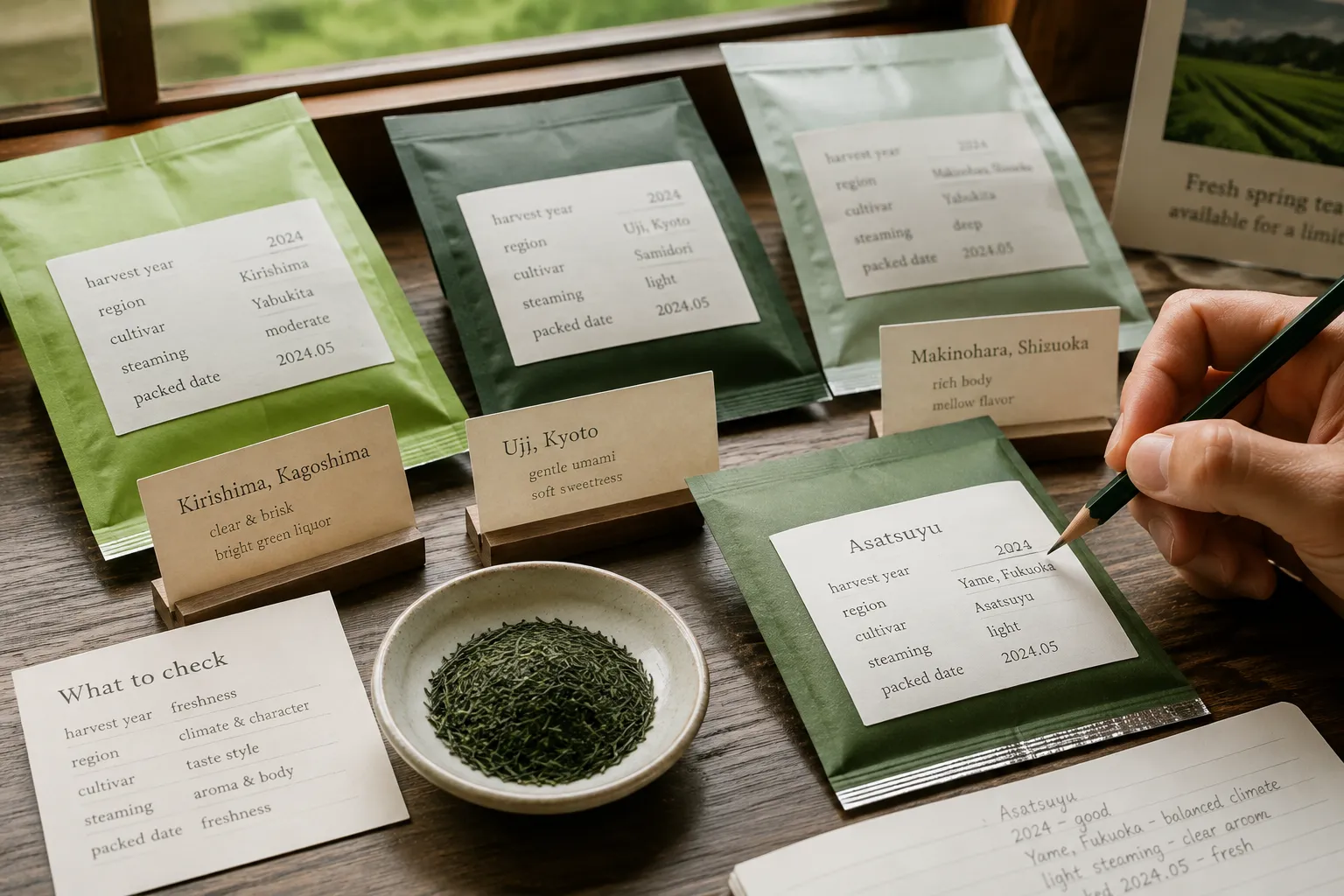
A useful packet check is to look for harvest year, region, cultivar, processing style, packing date, or storage advice. "Limited release" tells you the seller is presenting the tea as seasonal. It does not tell you how carefully the tea was handled after processing.
What Shincha May Taste Like
Shincha tasting notes are often described with fresh aroma, gentle sweetness, grassy spring notes, clear green color, and a lively first impression. Those descriptions are useful buying vocabulary, especially for early-season Japanese green tea, but they are still expectations rather than promises.
The cup can move in several directions. A lightly handled early tea may feel bright and aromatic. A deeper-steamed version may brew more opaque and soft. Water that is too hot can push bitterness forward, especially with delicate Japanese green tea. A long steep can flatten the freshness that made the packet appealing.
For a first brew, follow the packet if it gives clear instructions. If it is vague, use a cautious sencha-style approach: moderate water temperature, short steep time, and enough leaf to show aroma without extracting harshness too quickly. Adjust from the first cup. Shincha is seasonal, but water still makes the decision.
How to Read Shincha Buying Language
Shincha label meaning becomes clearer when you separate useful cues from retail pressure.
Useful cues include harvest year, spring harvest, first harvest, first flush, region, cultivar, steaming style, packaging date, and storage advice. These details help you understand what the seller is claiming and how quickly you may want to drink the tea after opening.
Softer cues include earliest tea, annual batch, preorder, limited release, small batch, vibrant flavor, or fresh spring aroma. They may reflect real seasonality, but they do not verify quality on their own. A tea can be first harvest and still be poorly stored. Another tea can be less seasonal and still brew beautifully because it was processed, packed, and kept well.
Be cautious with broad wellness or nutrient language. Green tea contains caffeine, and caffeine response varies by person. Brewed green tea is also different from concentrated extract products, so a cup of shincha should not inherit claims made about supplements or isolated compounds. For this page, the safer reading is narrow: shincha is a seasonal Japanese green tea term, not a health-outcome label.
Common Misreadings to Avoid
"New tea" does not mean any recently packaged green tea. In this context, shincha points to the early new harvest season, not just a bag packed last week.
"First harvest" does not automatically mean best. It tells you timing. Taste still depends on cultivar, growing region, processing, steaming level, storage, shipping, and brewing.
"Shincha" does not prove origin by flavor alone. A bright green cup or fresh aroma may fit the seasonal impression, but taste cannot verify provenance. The label and seller transparency do more work than aroma.
"Limited release" does not always mean rare in a meaningful way. Sometimes it reflects the normal annual rhythm of tea production. Once the year's batch is gone, it is gone; that does not make every packet exceptional.
"Shincha vs sencha" is not a clean either-or choice. If the packet says shincha sencha, it is likely telling you both style and season: sencha in form, shincha in release timing.
The Practical Meaning for Your Next Cup
The short answer is: shincha means Japanese "new tea," usually the first new spring release of the year. It often appears as first flush sencha or first harvest Japanese tea, and its cultural meaning comes from seasonality, fresh-harvest language, and anticipation around the first leaves.
The limit is just as important. Shincha is not a separate tea family, not a quality seal, not a wellness shortcut, and not automatic proof of freshness once the packet reaches your shelf. It is a seasonal sourcing cue that needs support from the label and confirmation in the brew.
When you taste it, start with the surface evidence: dry-leaf aroma, packet details, water temperature, steep time, liquor color, and first-sip bitterness or sweetness. If the tea tastes sharp, shorten the steep or lower the water temperature before judging the harvest. Read the leaf, then read the claim.
Sources
Sources and further reading
Reference links are limited to sources considered suitable for public citation in this page.