
Tea culture guide
Japanese Green Tea Culture
A pale green cup of sencha can tell you more than a dramatic bowl of matcha if you know what to notice. The leaf is thin and needle-like, the aroma may lean grassy or marine, and the taste changes quickly when the water is too hot or the steep runs long. Those small shifts are part of Japanese green tea culture, not a side note to it.
The common public image splits the topic in two: formal matcha ceremony on one side, bottled tea and daily sencha on the other. The useful answer sits between them. Japanese green tea culture includes ceremony, but it is also built from ordinary preparation choices, shared cups, seasonal leaves, meal settings, and attention to taste.
upward
Read the full overview first
Use the broader guide first if you need the full scope before this page.
What Japanese Green Tea Culture Means in Everyday Drinking
Japanese green tea culture is not one single ritual. It is a group of habits around steamed green teas, powdered matcha, seasonal harvests, household teaware, hospitality, and taste expectations. A reader who only knows the formal image may miss how practical much of the culture is.
Sencha is the easiest starting point. Its dry leaves are usually slender rather than flat like Longjing Dragon Well. In the cup, Japanese green teas may show clear green, yellow-green, or deeper cloudy liquor depending on tea type, processing, and preparation. Aroma words often include grass, seaweed, cooked greens, sweetness, or fresh spring leaf; useful clues, not proof of quality on their own.
Setting changes the meaning. A formal tea gathering has its own vocabulary, sequence, tools, and discipline. A morning pot of sencha at home has a different purpose. Tea served with rice, fish, pickles, sweets, or a simple snack belongs to the rhythm of the meal rather than to performance. Both can matter culturally, but they should not be read the same way.
This is where many Japanese tea misconceptions begin. Ceremony language can make every tea sound rare, spiritual, or superior. Everyday drinking pulls the topic back to leaf, water, time, cup size, and food. Read the cup before the claim.
Why Sencha Is Central to Japanese Green Tea Culture
Sencha culture matters because it represents daily brewed leaf tea rather than powdered tea whisked in a bowl. It is often the practical center of Japanese green tea types: familiar enough for routine drinking, varied enough to show differences in steaming, harvest timing, leaf grade, and brewing.
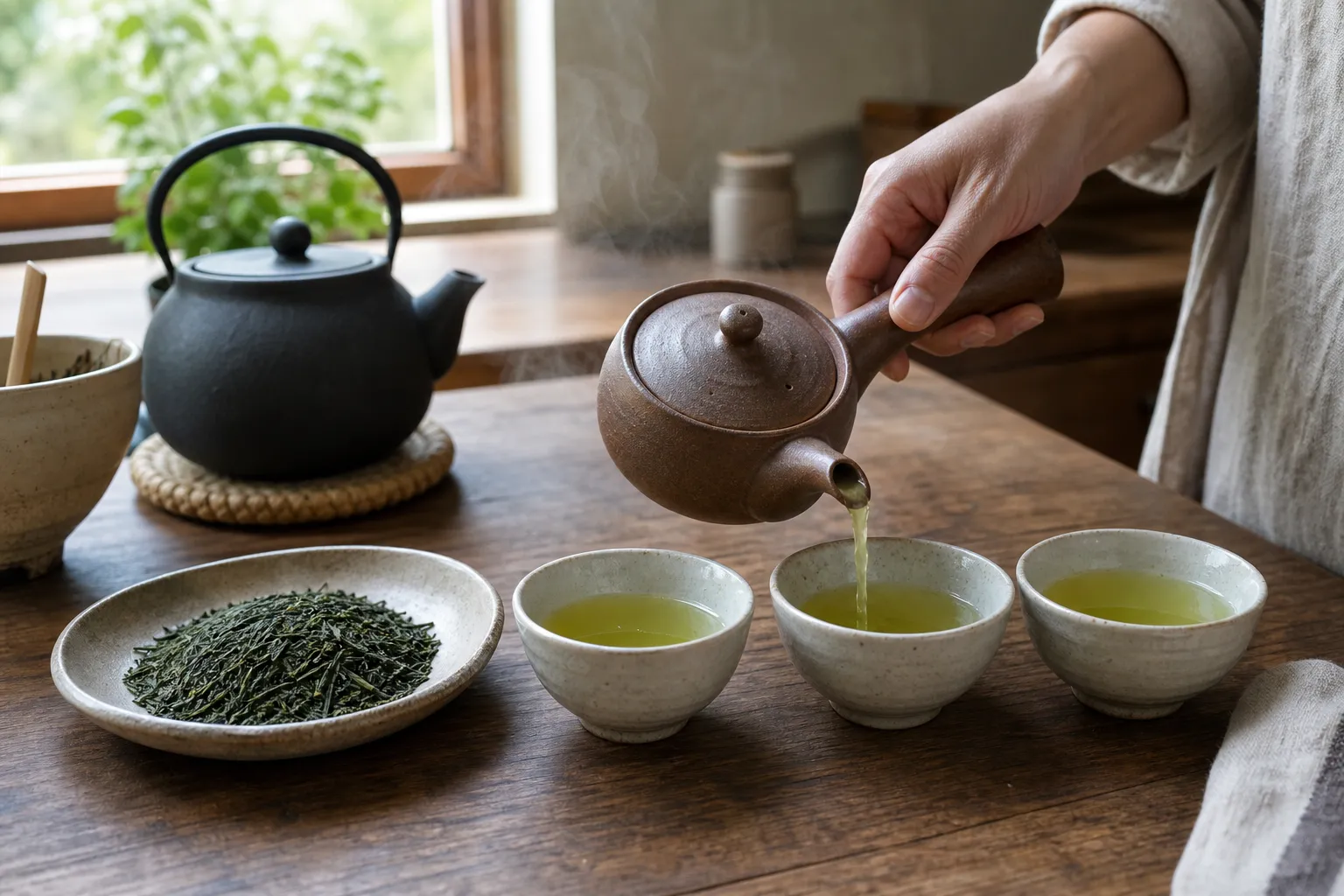
A sencha session asks for attention without demanding theatrical formality. The leaves open in a teapot, commonly a kyusu, and the drinker adjusts brewing temperature and steep time to manage sweetness, astringency, and umami. Hotter water can bring more briskness and bitterness. Cooler water often softens the cup and may make savory notes easier to notice. These are brewing tendencies, not fixed rules.
Everyday sencha habits also explain why Japanese green tea should not be reduced to matcha. Sencha is infused from whole or broken leaves; matcha is powdered tea suspended in water. Sencha is often poured in smaller portions from a teapot; matcha is whisked in a bowl. Sencha can sit naturally beside meals; matcha may appear in chanoyu, casual home whisking, café drinks, sweets, or cooking. The tools change the meaning.
A useful sencha question is simple: what is the preparation trying to protect? Aroma, sweetness, savory depth, or a stronger bite with food? The answer changes the tea.
Japanese Green Tea Etiquette for Guests and Hosts
Japanese green tea etiquette is easier to understand as attention rather than a rigid list of gestures. In everyday hospitality, the host’s task is to serve tea in a way that fits the moment: not too hot to enjoy, not carelessly weak, and not unevenly poured so one guest receives only the first light liquor while another gets the concentrated finish.
One practical habit in small-pot tea service is pouring across cups in stages. Instead of filling one cup completely before moving to the next, the host may pour a little into each cup, then repeat. This helps even out strength because tea in the pot keeps extracting as the leaves sit. The final drops can be more concentrated, so they matter.
For guests, the etiquette can stay modest: receive the cup with attention, notice the temperature, and avoid turning every tea moment into formal ceremony unless the setting clearly asks for it. A casual cup of genmaicha after a meal does not need the same reading as a structured matcha gathering. Context sets the level of form.
Ceremony sources are useful for terms such as chanoyu and for formal matcha context, but they should not take over everyday sencha culture. A guest can respect tea without making every cup ceremonial.
What a Kyusu Means in Japanese Green Tea Culture
A kyusu is more than a teapot shape, but it is not proof of quality. It is a practical tool for loose-leaf Japanese teas, especially sencha. Many kyusu are designed for controlled pouring and leaf management, often with a side handle and an internal filter or screen. The form supports short steeps, full pours, and repeated infusions.
Kyusu tea preparation changes what the drinker notices. A small pot makes the relationship between leaf amount, water temperature, steep time, and pour speed more visible. If the cup turns sharp, the next adjustment may be cooler water or a shorter steep. If the taste feels thin, the next attempt may need more leaf, slightly warmer water, or a longer rest.
The kyusu also carries a cultural signal: Japanese green tea is often prepared with attention to extraction, not simply soaked in a large mug. Still, the tool does not decide everything. A careful brewer can make a balanced cup with simple equipment, and an expensive pot cannot rescue stale leaf or careless water. The teapot helps; the cup still tells the truth.
Why Japanese Green Tea Is Often Steamed
Steamed Japanese green tea is one of the clearest production cues readers can use. In broad tea education, steaming is a heat treatment used to slow oxidation and preserve a green character. For many Japanese teas, that processing cue helps explain vivid color, fresh vegetal aroma, and the oceanic or savory impression people often associate with sencha and related teas.
Steaming should be read carefully. It can influence taste, but it does not automatically make a tea better. A lightly steamed tea, a deeper-steamed tea, and a powdered tea behave differently in the cup. Leaf condition, freshness, storage, cultivar, harvest timing, and brewing still matter.
This is one reason Japanese green tea culture can feel different from Chinese green tea culture. Longjing Dragon Well, for example, is known for flat pan-fired leaves and a different flavor direction. Japanese steamed tea often leads readers toward grassy aroma, softness, umami, and briskness. The contrast is useful, but it is not a ranking.
Let the processing cue guide expectations, not claims.
Shincha Meaning in Japanese Green Tea Culture
Shincha is commonly understood as new-season tea, and its value comes from freshness and seasonality. It is not simply a luxury word. For readers, the practical question is what freshness changes in the cup and what it cannot prove.
A fresh spring tea may show lifted aroma, lively green color, and a vivid first impression when stored and prepared well. Seasonal language can also be overused. “New” does not guarantee careful handling, and a harvest label alone does not tell you how the tea was stored, shipped, or brewed. A sourcing cue is useful only when it connects to observable leaf and cup behavior.
Shincha also shows how Japanese tea culture values timing. The first cup of a seasonal tea can feel tied to weather, harvest, and short-lived aroma. That meaning is cultural as much as sensory. The reader’s check stays simple: smell the dry leaf, watch the liquor, taste the balance between sweetness and bite, and notice whether freshness survives a second infusion.
Season is a clue. The cup confirms only part of it.
Sencha vs Gyokuro in Japanese Tea Culture
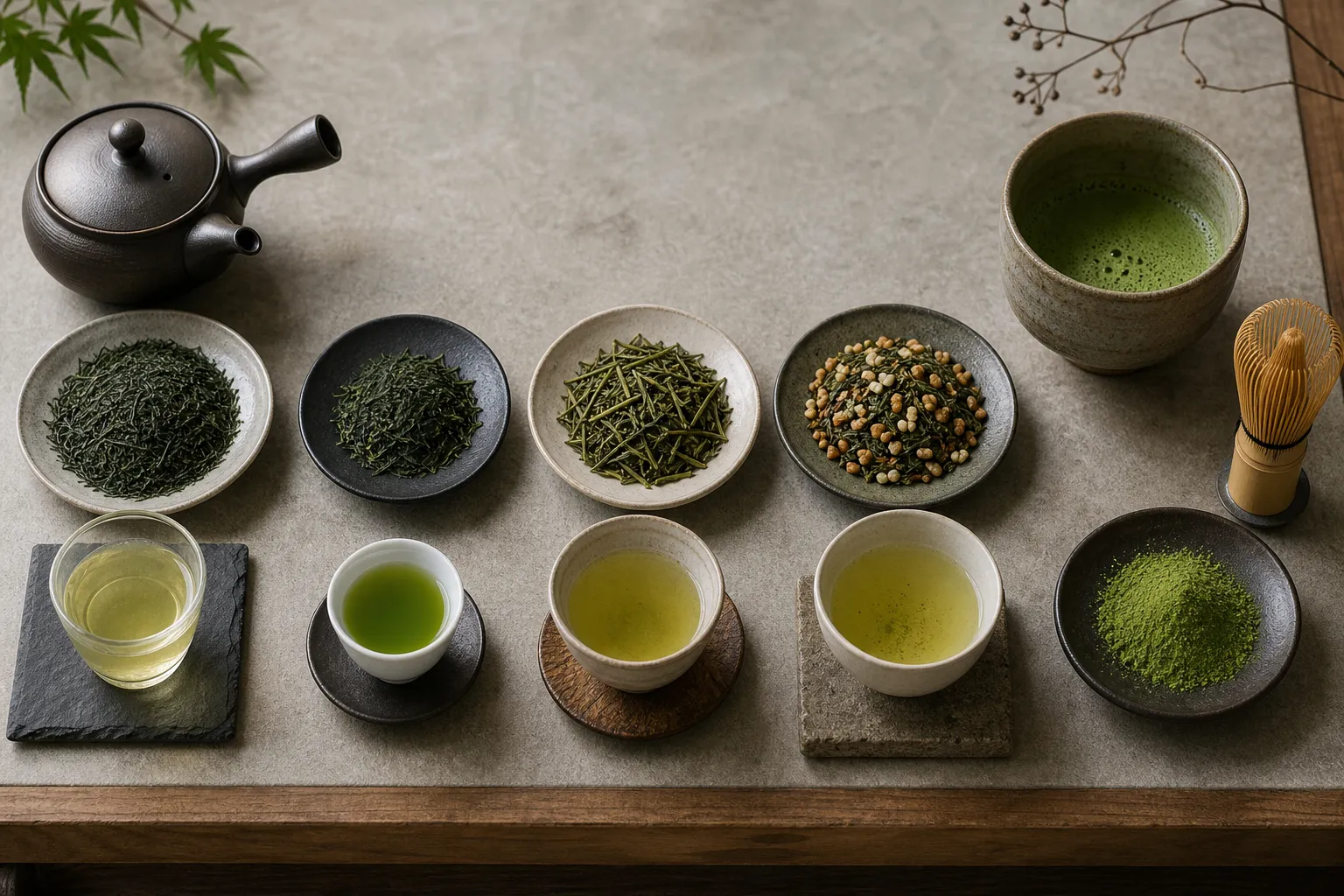
Sencha vs gyokuro is a useful comparison because it shows how growing and preparation expectations can change the meaning of a tea. Sencha is usually treated as the more everyday reference point. Gyokuro is commonly associated with shaded tea, a more concentrated profile, and slower, cooler preparation that emphasizes umami and texture.
That does not make gyokuro simply “better sencha.” It asks for a different mood and method. A small amount brewed cool and concentrated may produce a dense, savory cup that feels closer to sipping broth than drinking a brisk meal tea. Sencha can be brighter, more refreshing, and easier to fit into daily rhythm.
The difference also matters for buying language. Higher-status names can tempt readers to assume superiority before tasting. A careful approach asks: do you want a refreshing cup with moderate astringency, or a richer, lower-temperature brew with more savory weight? Do you want tea with food, or a small focused serving on its own?
The better choice depends on use. Taste before rank.
What Kukicha and Genmaicha Say About Everyday Japanese Tea
Kukicha and genmaicha keep Japanese green tea culture grounded. Kukicha, often understood as stem tea, points to everyday resourcefulness and a different texture of flavor. Stems can bring sweetness, lightness, and a softer impression compared with some leaf-heavy teas, though the exact cup depends on the material and preparation.
Genmaicha feels casual in Japanese tea culture because roasted rice changes the mood. The aroma can become warm, toasty, and comforting, making the tea easy with meals or snacks. It is a good reminder that Japanese green tea is not always about intensity, ceremony, or rarity. Sometimes the point is a friendly cup that works with food.
These teas also challenge a common quality mistake. If a tea is casual, blended, stem-based, or meal-friendly, that does not automatically make it inferior. It may be designed for a different role. A refined gyokuro, a fresh sencha, a bowl of matcha, a stem tea, and a rice-blended tea can each make sense in the right setting.
Everyday tea is not lesser tea. It has a different job.
Japanese Green Tea With Meals
Green tea with meals usually means balance rather than spectacle. A brisk sencha can stand up to oil or salt. A softer cup can sit beside rice and vegetables without dominating them. Genmaicha can echo toasted flavors. Kukicha may feel gentle enough for repeated cups. The pairing is practical; it is not a promise that tea changes what food does in the body.
Temperature matters here. Tea that tastes elegant on its own may feel too delicate with food, while a slightly stronger brew may become useful beside a meal. Bitterness is not always a flaw. In small amounts, it can make the next bite feel cleaner or sharpen the finish. Too much bitterness, however, usually points back to water temperature, steep time, leaf amount, or leaf condition.
Meal tea also separates culture from performance. A cup served after food, poured for a visitor, or kept in a household routine may carry respect without formal structure. The meaning is in timing, sharing, and fit.
Good meal tea knows its place.
Matcha Ceremony Context Without Confusing It With Daily Tea
Matcha ceremony context is important, but it needs the right frame. Chanoyu refers to a formal tea practice with inherited forms, utensils, gestures, and cultural language. It can show readers that tea is not only a beverage; it can be a disciplined social and aesthetic practice. But chanoyu is not the whole of Japanese green tea culture.
Matcha itself crosses settings. It may appear in formal tea rooms, casual home preparation, modern drinks, sweets, and culinary uses. A bowl with fine foam can show good whisking technique, but foam alone does not prove origin, quality, health value, or cultural depth. Matcha powder is sensitive to storage, age, grind, color, and preparation. Ceremony terms do not remove those practical checks.
The main confusion is category mixing. Sencha is infused leaf. Matcha is powdered tea. Chanoyu is a formal cultural practice. Daily tea is a broader routine. A reader can appreciate ceremony and still understand that much Japanese green tea drinking happens outside it.
Matcha deserves context, not exaggeration.
Wellness, Caffeine, and the Limits of Tea Language
Japanese green tea contains caffeine, though the amount varies with tea type, serving size, leaf quantity, and preparation. Some drinkers describe alertness or a steadier daily rhythm when they drink tea, but those experiences belong in ordinary language. Caffeine sensitivity varies, and readers with pregnancy concerns, medication questions, sleep issues, or other health concerns should rely on qualified medical guidance rather than a tea article.
Antioxidant language needs the same restraint. Green tea is often discussed in relation to plant compounds, but that does not turn a cup into a guaranteed outcome. Culture, taste, and routine are enough reasons to care about Japanese tea. Wellness language should not become the center of the page.
The available source coverage for this topic is also uneven. It supports broad Japanese tea education, formal ceremony context, and general caffeine caution better than it supports detailed everyday sencha habits, teaware practice, regional production, storage, or sensory vocabulary. For those areas, the most reliable writing stays close to observable cues: leaf appearance, aroma, liquor color, temperature, steep time, bitterness, umami, and meal setting.
Tea can be part of a routine. It should not be asked to prove more than the cup shows.
Common Misconceptions About Japanese Green Tea Culture
Only matcha ceremony
Ceremony is one important thread, but daily sencha, seasonal teas, household pots, meal tea, and casual blends carry much of the everyday culture.
Ceremonial language proves quality
It does not. A tea still has to show itself through color, aroma, texture, freshness, storage condition, and preparation.
All cups should taste the same
Some cups are brisk, grassy, toasty, concentrated, savory, or bitter when brewed too hot or too long. The range is part of the culture.
Wellness is the main reason
Interest in caffeine, focus, or general wellbeing may be part of the picture, but the culture is better understood through practice.
Words around tradition can add context, but they cannot replace tasting. Japanese green tea culture is better understood through the pot, the bowl, the meal, the season, the guest, and the repeated adjustment of water and time.
A good next cup test is simple: brew sencha once a little cooler and once a little warmer, then compare aroma, bitterness, and umami. Japanese green tea culture becomes clearer when the leaf explains the difference.
Sources
Sources and further reading
Reference links are limited to sources considered suitable for public citation in this page.