
Japanese green tea comparison
Sencha vs Gyokuro in Japanese Tea Culture
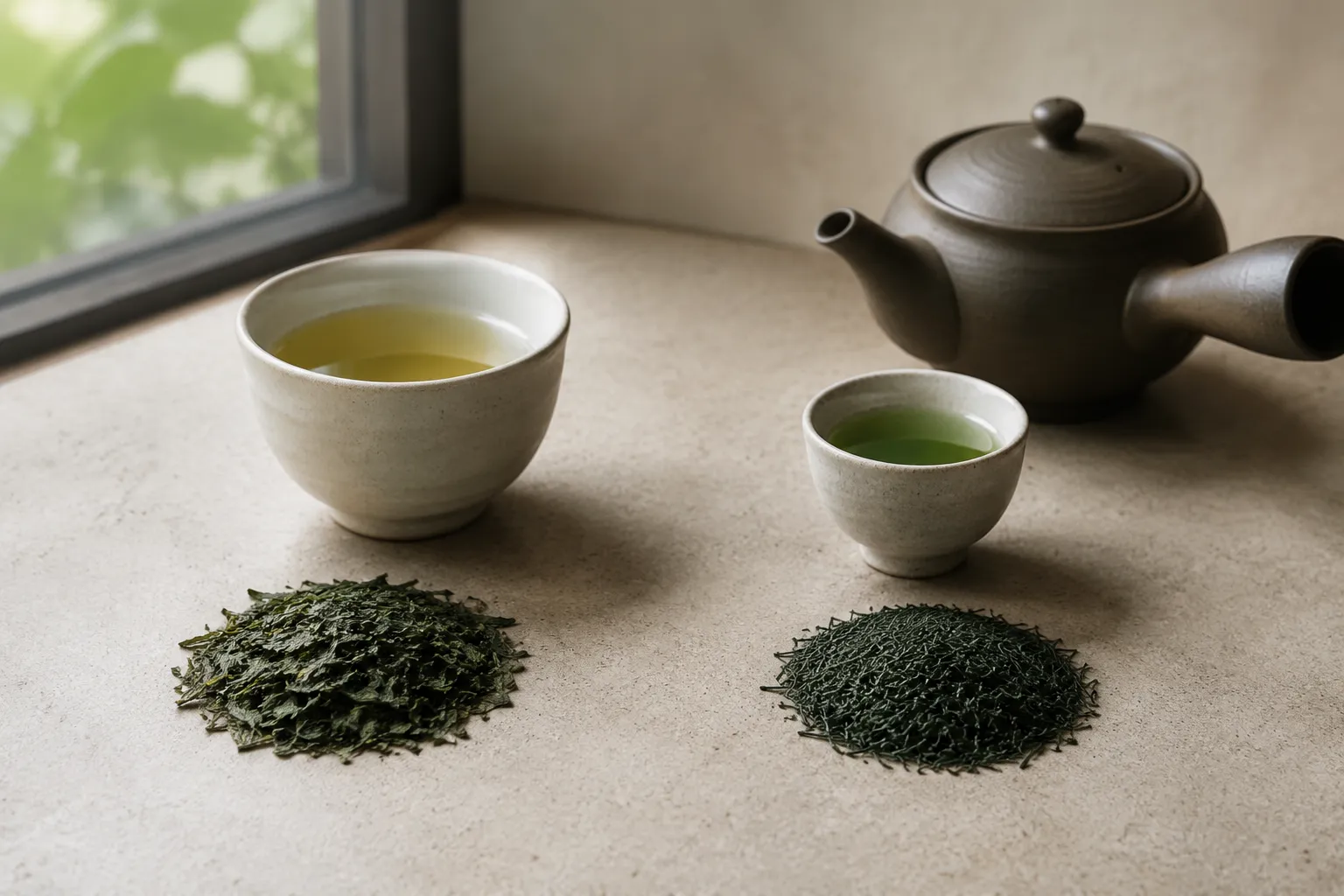
Dry sencha needles and gyokuro needles can look close enough to confuse a new buyer, but they ask for different cups. The clearest answer to sencha vs gyokuro culture is this: sencha is usually the repeatable Japanese green tea for ordinary drinking, while gyokuro is a shaded, concentrated tea often prepared in a smaller, slower way.
That is not a quality ranking. Sencha can be vivid, layered, and beautifully made. Gyokuro can be rich and memorable, but it is not “better” just because shops often frame it as special. The difference is role: sencha fits more easily into daily rhythm; gyokuro asks for more attention from the leaf, water, and drinker.
upward
Read the full overview first
Use the broader guide first if you need the full scope before this page.
The cultural difference is in the cup, not just the name
A cup of sencha usually makes sense when you want green tea to be present without taking over the moment. It can sit beside food, a work break, or a second infusion after breakfast. Its flavor may be grassy, vegetal, lightly bitter, sweet, brisk, or quietly umami-rich depending on the tea and how you brew it.
Gyokuro sits differently on the table. It is commonly understood as a Japanese shaded green tea, and its usual preparation points toward a smaller, denser cup. The liquor may feel softer and more concentrated, with sweetness, savory depth, and a longer umami finish at the center.
That is why “everyday tea vs special tea” is a useful shortcut, as long as it does not become a status ladder. Sencha’s everyday role is part of its importance. Gyokuro’s special-use image comes from shaded cultivation, concentrated brewing, and market language around prestige. Better wording: repeatable versus attentive.
How shading changes the expectation
Both sencha and gyokuro are commonly presented as steamed, rolled Japanese green teas for steeping. The main production cue people notice is shading before harvest, but it needs a careful boundary.
Gyokuro is commonly described as being shaded before harvest. Tea sellers and educators often connect that shading with a sweeter, softer, more umami-oriented cup. Sencha is generally associated with more sun exposure and a brighter, brisker profile.
Useful, but not absolute. Some sencha may be shaded, and kabusecha is often used as a middle category between familiar sencha and gyokuro. Kabusecha should not take over this comparison, but it prevents a common misunderstanding: not all sencha is simply “full sun,” and gyokuro is not the only shaded Japanese tea.
So treat “gyokuro shaded before harvest” as a meaningful sourcing cue, not a full proof of what is in the packet. It does not verify shading duration, cultivar, region, grade, compound levels, storage, or vendor honesty. A sourcing cue is not the whole cup.
Sencha flavor: bright, grassy, brisk, and still deep
Sencha often shows the clearer, fresher side of Japanese green tea. Many drinkers look for a sencha grassy brisk flavor: cut grass, steamed greens, fresh herbs, light seaweed, or a clean vegetal edge. Some sencha leans sweet and round. Some is sharper, more astringent, or lightly bitter.
That range matters. Sencha is not defined by simplicity. A good cup may balance sweetness, bitterness, grassiness, astringency, aroma, and umami. Compared with gyokuro, its depth often appears inside a more refreshing structure.
This is why sencha works as an everyday tea. It can handle more situations: a meal, a quick pot, a second steep, a quiet afternoon cup. It still needs reasonable brewing temperature and steep time, but its posture is more flexible. Attentive, not precious.
If sencha tastes harsh, do not assume the leaf is poor. The water may be too hot, the steep too long, or the leaf amount too high. Sencha sweetness changes with water and time.
Gyokuro flavor: sweet, savory, and concentrated
Gyokuro is usually described through density more than brightness. The expected cup may be sweet, savory, brothy, soft, thick, and persistent. Its aroma can feel less grassy than a typical sencha, with a deeper shaded-leaf character. The first sip may seem closer to a small broth than a large refreshing tea.
That is why gyokuro sweet umami flavor appears so often in tea descriptions. It points to a real tasting expectation, but it should not be used as proof. Taste alone cannot verify origin, shading time, grade, or measured compounds. A sweet, savory cup may fit the gyokuro style; it does not authenticate the packet.
The slower role of gyokuro is also tied to quantity. A gyokuro small slow cup is not just romantic language. Gyokuro is often prepared with more leaf relative to water, cooler water, and a concentrated infusion. The result is usually less liquid and more intensity per sip.
That style changes the pace of drinking. You are not filling a desk mug. You are making a small pour and noticing texture, sweetness, and finish. The water matters. The pour matters.
Sencha vs gyokuro brewing: where the culture becomes visible
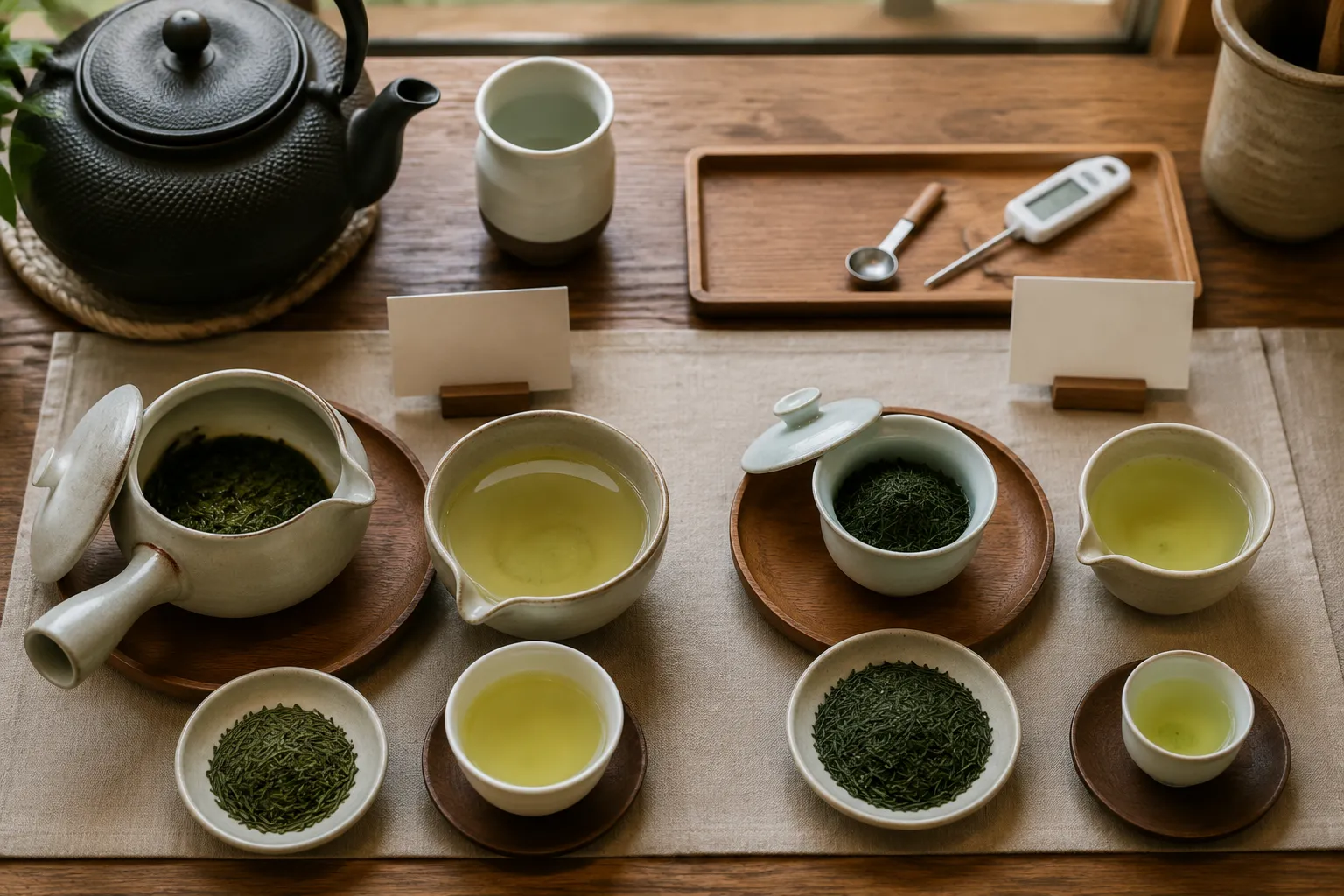
The brewing difference is where sencha and gyokuro separate most clearly for a daily drinker. Sencha is commonly brewed as a lighter, more repeatable cup. Gyokuro is often brewed with cooler water, more leaf, less water, and a slower extraction.
Exact recipes vary by tea, producer guidance, and personal taste, so think in adjustments rather than fixed rules.
For sencha
Start by protecting freshness and avoiding excessive bitterness. Use water below boiling, watch the steep time, and taste before changing too much. If the cup is thin, use slightly more leaf or a little more time. If it is bitter and drying, lower the temperature, shorten the steep, or reduce the leaf.
For gyokuro
Move away from the casual mug. Use more leaf than you would for a broad cup of sencha, less water, and a lower brewing temperature. The goal is not a large drink; it is a small concentrated infusion. If it tastes flat, it may need more leaf or a longer rest. If it tastes heavy, reduce the concentration before blaming the tea.
Research on Japanese green tea extraction supports the narrow practical point that leaf amount, water volume, temperature, and steep time can change what ends up in the cup. That is a brewing boundary, not a promise about how either tea will make a person feel.
Both sencha and gyokuro contain caffeine. How strong a cup feels depends on serving size, leaf ratio, infusion style, and the drinker. A concentrated gyokuro preparation may feel different from a lighter sencha serving, but the tea name alone does not predict your response. Notice your own cup.
Is gyokuro better than sencha?
No. “Gyokuro better than sencha” is the wrong frame for this comparison.
Gyokuro may be rarer in ordinary routines, more expensive in many shops, and more often surrounded by prestige language. That does not make sencha a lesser tea.
Sencha has its own cultural strength: repeatability. It is the tea you can return to, brew with meals, adjust easily, and drink without turning every cup into an event. It can be bright, complex, aromatic, and satisfying.
Gyokuro has a different strength: concentration. It rewards patience, cooler water, and a smaller serving. It brings sweetness, body, and umami forward in a way many drinkers find distinctive. Its role is not to replace sencha. It slows the drinking moment down.
If you are choosing between them, choose by occasion first:
- Choose sencha when you want a refreshing, repeatable Japanese green tea for regular drinking.
- Choose gyokuro when you want a small, focused cup built around sweetness, body, and umami.
- Choose neither by prestige language alone; read the label, brew carefully, and taste with limits in mind.
Label cues that help, and what they cannot prove
A packet labeled gyokuro should point toward shaded Japanese loose-leaf tea for steeping. A packet labeled sencha usually points toward steamed and rolled Japanese green tea with a more everyday brewing role. Those names help you set expectations for water temperature, cup size, and flavor.
But labels are not lab reports. They cannot tell you by themselves how the tea was handled after harvest, how fresh it is, how carefully it was stored, or whether the flavor will match your preference. Price can suggest market positioning, but it is not a clean measure of drinking pleasure.
Taste has limits too. A brisk grassy cup may fit sencha expectations. A sweet, brothy cup may fit gyokuro expectations. Still, taste cannot prove origin, shading duration, grade, cultivar, or compound level. It tells you what is happening in this brew, with this water, at this time.
Storage can blur the comparison. Both teas are sensitive to air, light, heat, and time. A tired gyokuro can taste dull; a fresh sencha can be vivid. Before deciding you dislike a category, check the age of the packet, the storage tin, and the brewing water.
A brief boundary: gyokuro vs matcha
Some confusion comes from the fact that gyokuro and matcha are both associated with shading. The difference is final form and preparation. Gyokuro is rolled loose leaf and is steeped. Matcha is powdered tea and is whisked into the water.
So the gyokuro vs matcha difference is not simply shaded versus unshaded. It is loose-leaf infusion versus powdered tea suspension. For this page’s question, matcha is only a boundary note. The real decision remains sencha’s daily cup versus gyokuro’s slower, concentrated cup.
The practical answer to carry into your next brew
Sencha and gyokuro differ most clearly in role. Sencha is the everyday tea that can be bright, grassy, brisk, refreshing, and still complex. Gyokuro is the shaded, concentrated tea that usually asks for a smaller cup, cooler water, more leaf, and slower attention.
Do not rank them before brewing them properly. Put the same kettle beside two different intentions: sencha for a repeatable cup, gyokuro for a small focused pour. Then taste body, bitterness, sweetness, and finish. The leaf will make the comparison clearer than the label alone.
Sources
Sources and further reading
Reference links are limited to sources considered suitable for public citation in this page.