
Everyday Japanese tea
What Kukicha Says About Everyday Japanese Green Tea
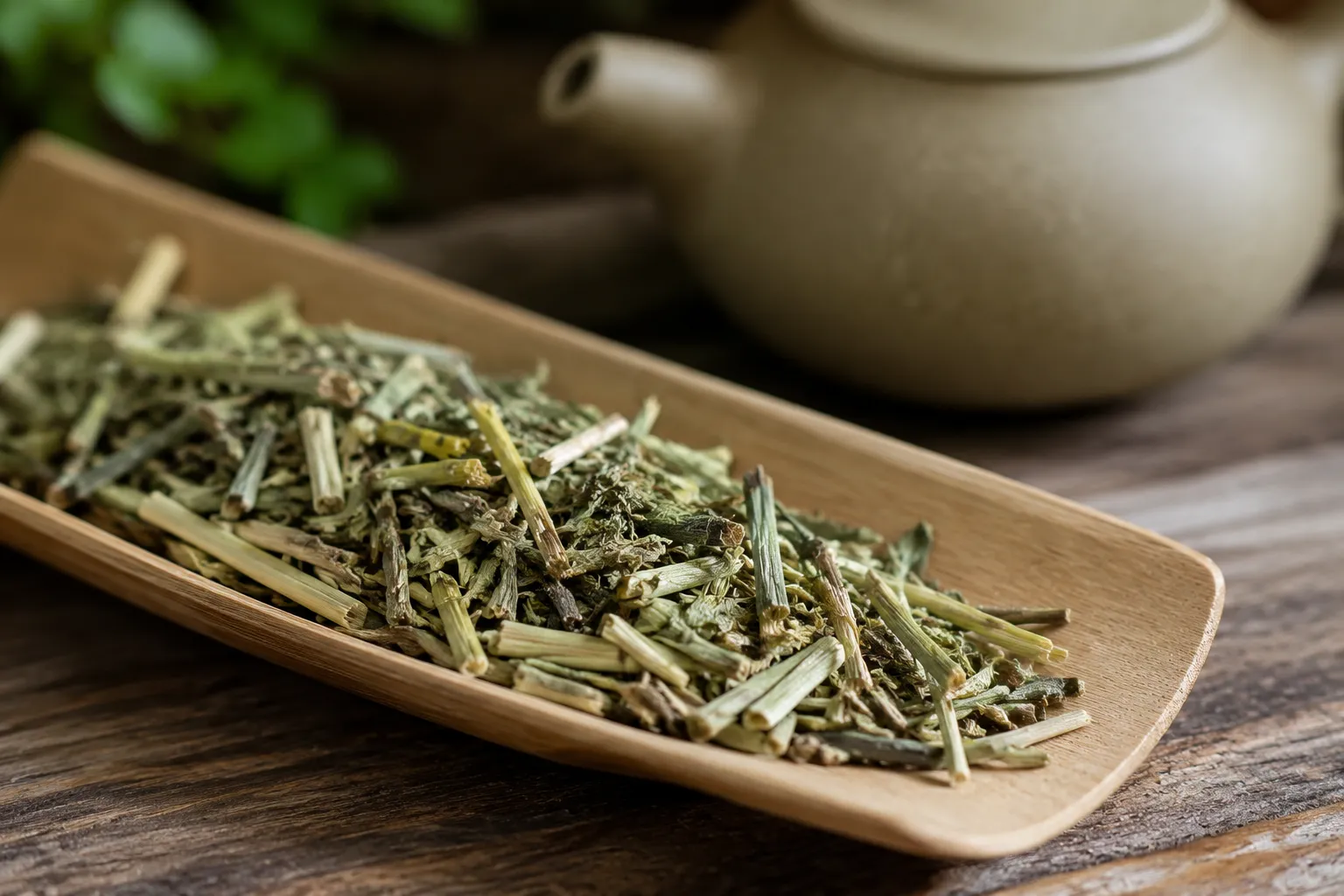
Pale stems in a scoop of kukicha tell a quieter story than bright sencha needles or powdered matcha. Kukicha says that everyday Japanese green tea culture is not only about the most polished leaf; it is also about careful sorting, practical use, and a cup that can be mild, sweet-edged, and easy to drink.
The short answer: kukicha Japanese green tea culture shows how stems, stalks, twig-like pieces, veins, and some leaf fragments can become a valued daily tea instead of leftover material. Its meaning is practical. You can see the material, taste the softer cup, and adjust the brewing without turning the tea into a ceremony.
upward
Read the full overview first
Use the broader guide first if you need the full scope before this page.
Kukicha Meaning Starts With The Stem
Kukicha is commonly explained as Japanese stem tea or twig tea. The name points back to the dry tea itself: pale green or yellow-green stems, slender twig-like pieces, leaf veins, and occasional broken leaf. It is still green tea, but it does not look like a tidy field of fine sencha needles.
That visible mix matters because it makes the refining side of Japanese tea easier to notice. After tea is processed and sorted, not every useful part looks like the leaf shape shoppers often expect. Stems and related material can be separated, named, and brewed as their own tea. Kukicha is a small lesson in handling, sorting, and everyday use.
Common confusion
This also clears up a common misunderstanding. Kukicha is not about “steam” as a meaning. For this page, the useful reading is stem, twig, stalk, and sorted tea material. The dry leaf explains the word better than a wellness claim does.
The public source base for kukicha is limited, so the stronger reading stays close to what can be observed: how the tea is named, what the material looks like, and how the cup tends to behave.
What The Cup Says About Everyday Tea
A typical expectation for kukicha is a mild Japanese green tea with less sharpness than many leaf-heavy green teas. Tea shops often describe it as smooth, sweet, nutty, lower in bitterness, or lower in astringency. Those words are useful as shelf language, but they are expectations, not guarantees.
The reason is sensory rather than mysterious. A tea made with more stems and less leaf surface can feel different from one made mostly from fine leaf material. The liquor may come across lighter, softer, or rounder. Some drinkers choose kukicha when they want green tea without the strong bitter finish that can appear in brisk sencha.
Mild does not mean blank. Better cups can carry toasted-grain hints, sweet grass, pale vegetable notes, or a rounded savory texture. The exact profile depends on the parent tea material, stem-to-leaf ratio, freshness, storage, and brewing. Kukicha made from sencha-related material will not necessarily taste like a gyokuro-associated stem tea.
This is where everyday Japanese tea becomes visible. Kukicha is not trying to perform the role of ceremonial matcha or compete with a pristine high-end leaf grade. It belongs naturally on the daily shelf: repeated cups, quick comparison, small brewing adjustments. Ordinary tea can still be specific.
Kukicha, Karigane, Shiraore, And Bocha
Tea naming can make kukicha look simpler than it is. Kukicha is the broad term many readers meet first: Japanese stem tea, kukicha stem tea, kukicha twig tea. Related names also appear in tea shops and writing, and they should not be flattened into one label.
Karigane
Karigane is often used for stem tea associated with gyokuro or higher-grade shaded tea material. That does not make every kukicha karigane.
Shiraore and bocha
Shiraore and bocha also appear around Japanese stem or twig tea. Treat these terms as naming cues, not proof of quality by themselves.
Buying language
The useful question is what material is being claimed, and whether the cup shows more sweetness, umami, or softness.
The available material is not strong enough to build a full taxonomy here. These names can help you ask better questions, but they do not replace looking at the tea, smelling it, and brewing it.
This matters for buying language. Some retail pages imply that all kukicha is gyokuro-derived or unusually refined. A narrower reading is better. Some stem teas may come from gyokuro-related material; others may come from sencha refining or other sorted green tea material. The name opens the question. It does not settle the cup.
Brewing Shows The Tradeoff
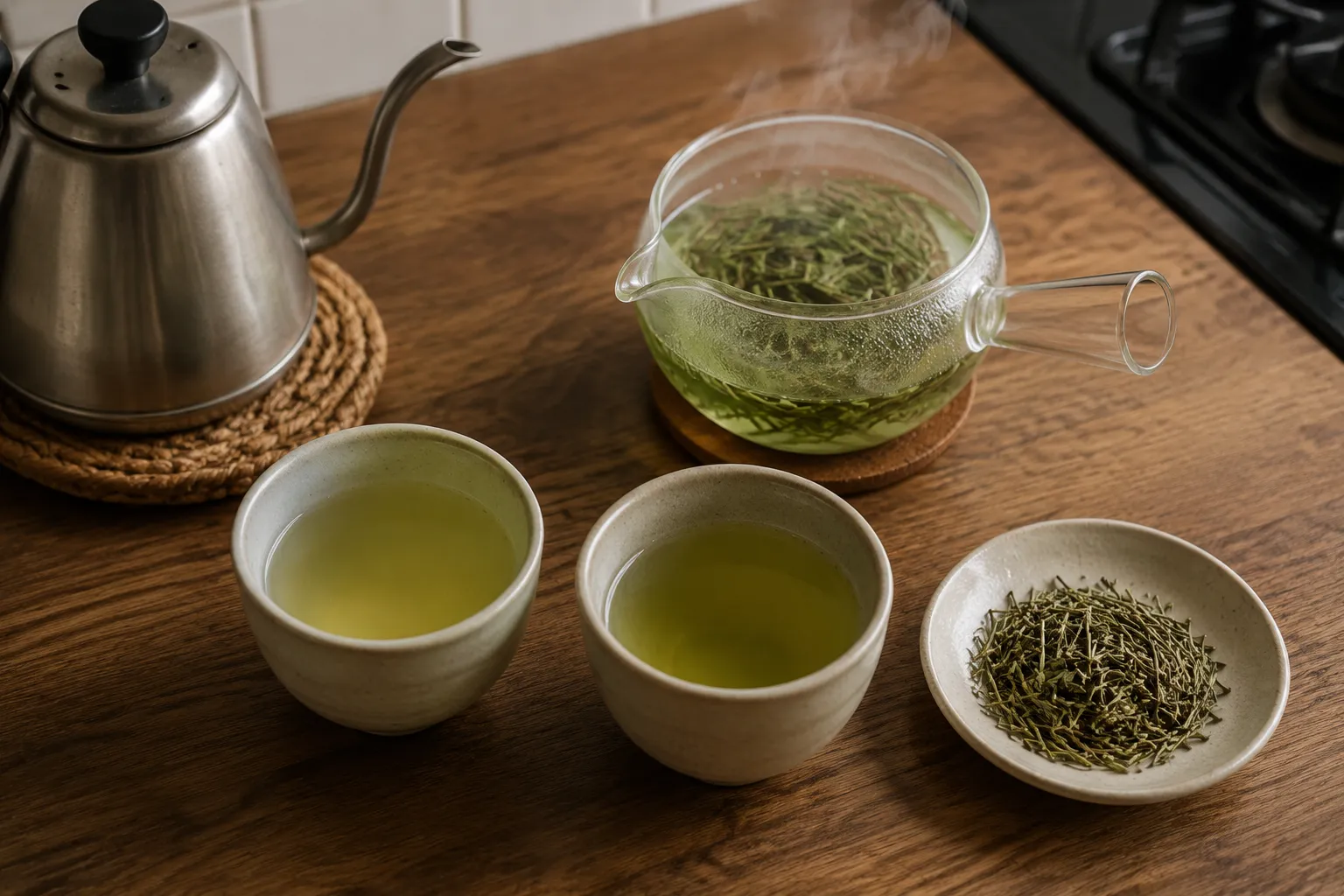
Kukicha is often described as forgiving, and many drinkers do find it easier to brew than more delicate leaf-heavy Japanese green teas. Still, water and time matter. Hotter water can bring more body and stronger flavor; it can also pull out bitterness. Cooler or shorter brewing may preserve the tea’s softer, sweeter side.
Adjust from the cup
- If the liquor tastes thin, use slightly hotter water, a little more tea, or a longer steep.
- If it turns harsh, reduce time first, then lower the brewing temperature if needed.
- Small changes are usually enough.
One external firsthand example gives a clear boundary for this point. In a Leafhopper essay, Max Falkowitz describes brewing a karigane/kukicha with 4 g of tea, about 150 ml water capacity, 90 seconds, and boiling water in a shiboridashi. The cup is described as bolder, with some bitterness and a viscous umami texture. That is one tea writer’s brewing note, not a universal instruction, but it shows the tradeoff well: kukicha can take hotter water, yet heat can push it toward a firmer and more bitter cup.
For an everyday drinker, that is the useful lesson. Do not assume mild tea means careless brewing. Kukicha may give you more room than some sencha, but the kettle still changes the cup.
Caffeine Claims Need A Narrower Reading
Kukicha is often marketed and commonly chosen as a gentler, lower-caffeine style than many leaf-heavy Japanese green teas. That fits how many people talk about stem tea, but the available source pool does not support a stable caffeine number for kukicha.
The weaker commercial and social claims often conflict. Some give one number per cup, others give a range, and others use loose comparisons without clear measurement conditions. They usually leave out details that matter: grams of tea, cup volume, stem-to-leaf ratio, cultivar, harvest, water temperature, steep time, and testing method. Without those details, a precise caffeine figure looks more certain than it is.
Cautious boundary
The practical line is this: kukicha contains caffeine, and the amount varies. It may feel gentler for some daily tea drinkers than stronger leaf-heavy brews, but it should not be treated as caffeine-free or suitable for every sensitive drinker. If caffeine affects your sleep, anxiety, medication routine, or other health concerns, use qualified health guidance rather than a tea page as the deciding source.
The same caution applies to antioxidant and catechin language. Those topics often appear in green tea marketing, but the material available for this page is not strong enough to support specific nutrition claims about kukicha. Keep the claim at cup level: taste, material, brewing behavior, and daily use.
What Kukicha Reveals, And What It Does Not
Kukicha reveals a practical side of Japanese green tea culture. It shows that sorted stems and veins can have their own place, that mildness can be a positive character rather than a flaw, and that an everyday tea can teach you about processing without demanding ceremony.
It also shows the limit of tea language. Words like “twig tea,” “stem tea,” “karigane,” or “gyokuro stem tea” help orient the reader, but they do not prove flavor, caffeine level, freshness, or value in a specific package. A sourcing cue is useful only when it leads back to the leaf and cup.
Read kukicha with three checks
- Look at the dry material: stems, veins, twig-like pieces, and leaf fragments should make the category visible.
- Brew it once gently and once a little hotter, then compare sweetness, body, and bitterness.
- Keep caffeine language modest unless the seller gives meaningful measurement context.
That is what kukicha says about everyday Japanese green tea: not every valued cup begins with the most celebrated leaf shape. Sometimes the ordinary stem gives the clearer lesson.
Sources
Sources and further reading
Reference links are limited to sources considered suitable for public citation in this page.