
Buying cue
Is First Flush Green Tea Always Better
A pale spring liquor can smell bright before the first sip: cut grass, young leaves, a little floral lift, sometimes a quick edge of bitterness. That is why first flush green tea gets attention. It can be a useful buying and tasting cue when you want a fresh, tender, early-season cup.
But first flush green tea is not always better. The phrase points to harvest timing, not a finished-cup ranking. A better tea is the one whose cultivar, origin, processing, storage, and brewing fit the cup you want. Early leaf can be beautiful. It can also be thin, sharp, poorly stored, overpromised, or simply less satisfying than a later harvest.
upward
Read the full overview first
Use the broader guide first if you need the full scope before this page.
What first flush actually tells you
First flush, first harvest green tea, early harvest green tea, and spring flush tea are usually used for the first seasonal picking after winter or during the early spring harvest window. The exact timing changes by region, weather, elevation, cultivar, and local tea practice, so the phrase is not one global standard.
As a sourcing cue, it can still tell you something. The tea may come from young seasonal growth, and sellers often connect that with tender leaf, lighter body, fresh aroma, briskness, and a cleaner green impression. In many green tea traditions, early spring teas are prized because the first tender growth can produce delicate cups with vivid aroma and fine texture.
That does not mean all early spring green teas taste alike. Research on early spring green tea quality components supports a narrower, more useful point: teas from the same broad seasonal window can still vary meaningfully. Two teas can both be first flush and still differ in bitterness, aroma, umami, liquor color, body, and aftertaste.
Read the harvest cue as a starting note, not the verdict.
When first flush can be the better choice
First flush green tea is often the better direction when you want a lighter, more aromatic cup and you are willing to brew with care. It suits drinkers who enjoy spring-like notes: fresh greens, young shoots, soft florals, gentle sweetness, or a quick, lively finish.
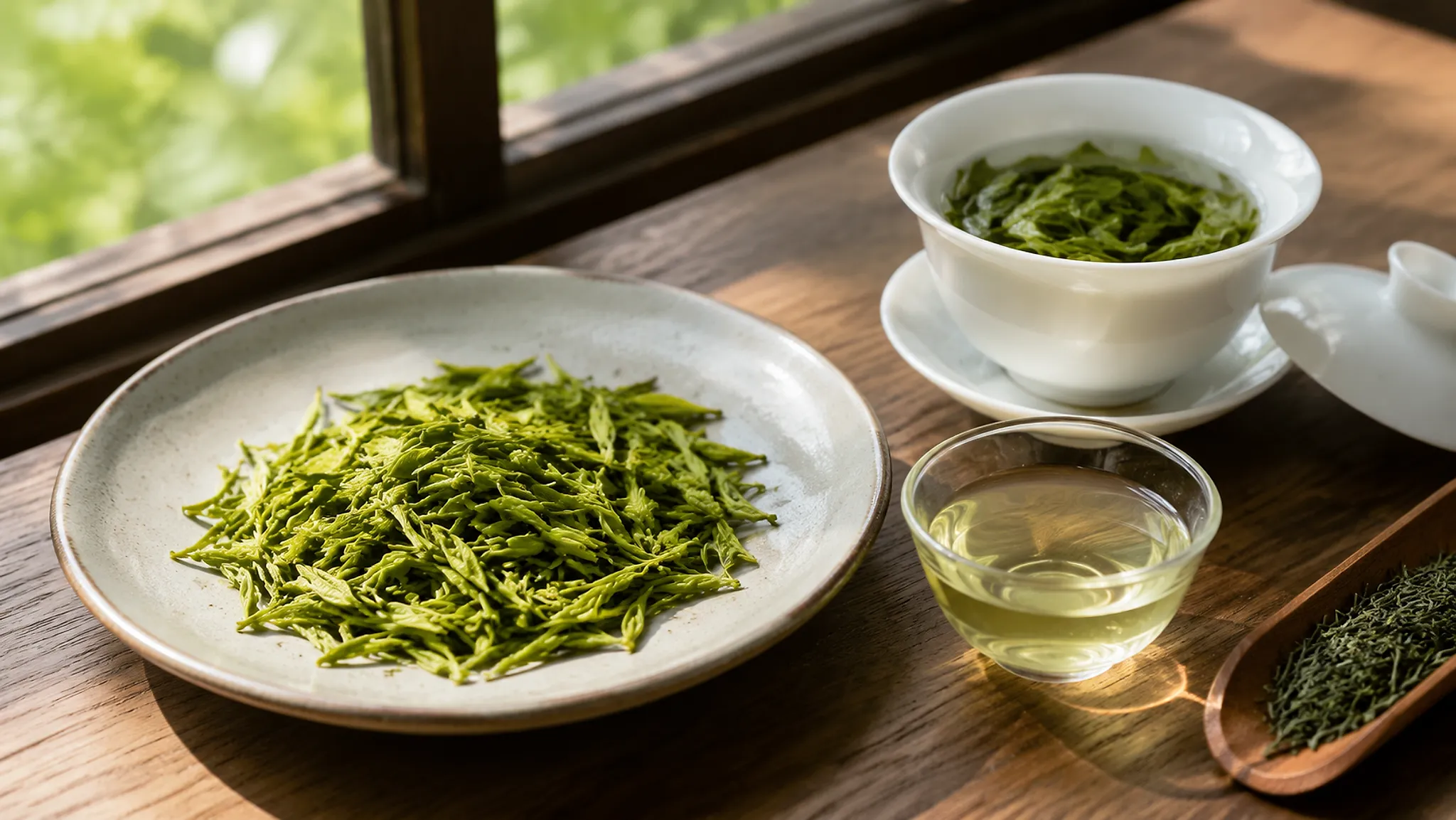
Look at the leaf before trusting the phrase. A careful early harvest tea should usually give you more than a label: visible leaf shape, a believable harvest date or seasonal note, origin information, processing style, and packaging that protects freshness. For Longjing Dragon Well, that might mean flat, intact leaves with a fresh nutty-green aroma. For sencha, it might mean a clear green fragrance and a liquor that balances sweetness, umami, and briskness without turning harsh.
Freshness is a real sensory expectation, but only if the tea was handled well. Spring language loses force if the leaves have been exposed to heat, oxygen, light, or long storage after opening. A spring tea kept badly can taste dull faster than a later harvest that was processed and stored carefully.
Brewing also decides whether early leaf gets a fair reading. Delicate spring green teas may become sharp when steeped too hot or too long. If the first cup tastes thin and bitter at the same time, the tea may not be poor; the water may be too hot, the leaf dose too high, or the steep too long. Lower the brewing temperature, shorten the steep time, and taste again.
Early leaf asks for attention.
Useful checks before trusting the label
- Harvest context: a believable harvest date or seasonal note, not only the phrase first flush.
- Tea identity: origin, tea type, cultivar when available, and processing style.
- Visible material: leaf appearance that matches the tea, such as intact flat Longjing leaves or clear sencha fragrance.
- Freshness protection: packaging and storage information that guard against heat, air, light, and moisture.
- Brewing fit: guidance that treats delicate early leaf with lower heat or shorter steeping when needed.
Why first flush is not enough to prove quality
First flush green tea quality depends on more than harvest timing. The leaf is an agricultural product, and the finished cup is shaped by many steps after the shoot is picked.
Cultivar matters because different tea plants bring different balances of aroma, bitterness, sweetness, and umami. Origin matters because climate, elevation, shade, soil, and local processing habits shape the cup. Processing matters because green tea is heated to limit oxidation, then shaped and dried; uneven handling can flatten aroma or leave rough edges.
Post-harvest handling is one important limit. Research on Japanese-styled green tea has shown that storage time and temperature after harvest can affect quality-related compounds and finished-tea character. The practical takeaway is simple: a first harvest leaf is not protected by the calendar alone. If fresh leaves wait too long or are handled under poor conditions before processing, the final tea can lose the qualities buyers hoped the early harvest would provide.
Storage can override the harvest story too. Heat, air, light, and moisture are hard on delicate green aromas. A well-made later harvest green tea stored in a sealed pouch or tin may taste cleaner than a first flush tea that sat warm or open for too long.
The label tells you when the leaf began. It does not tell you how well the leaf survived.
First flush taste versus later harvest taste
The question is not only “first flush vs second flush green tea.” It is “which cup are you trying to drink?”
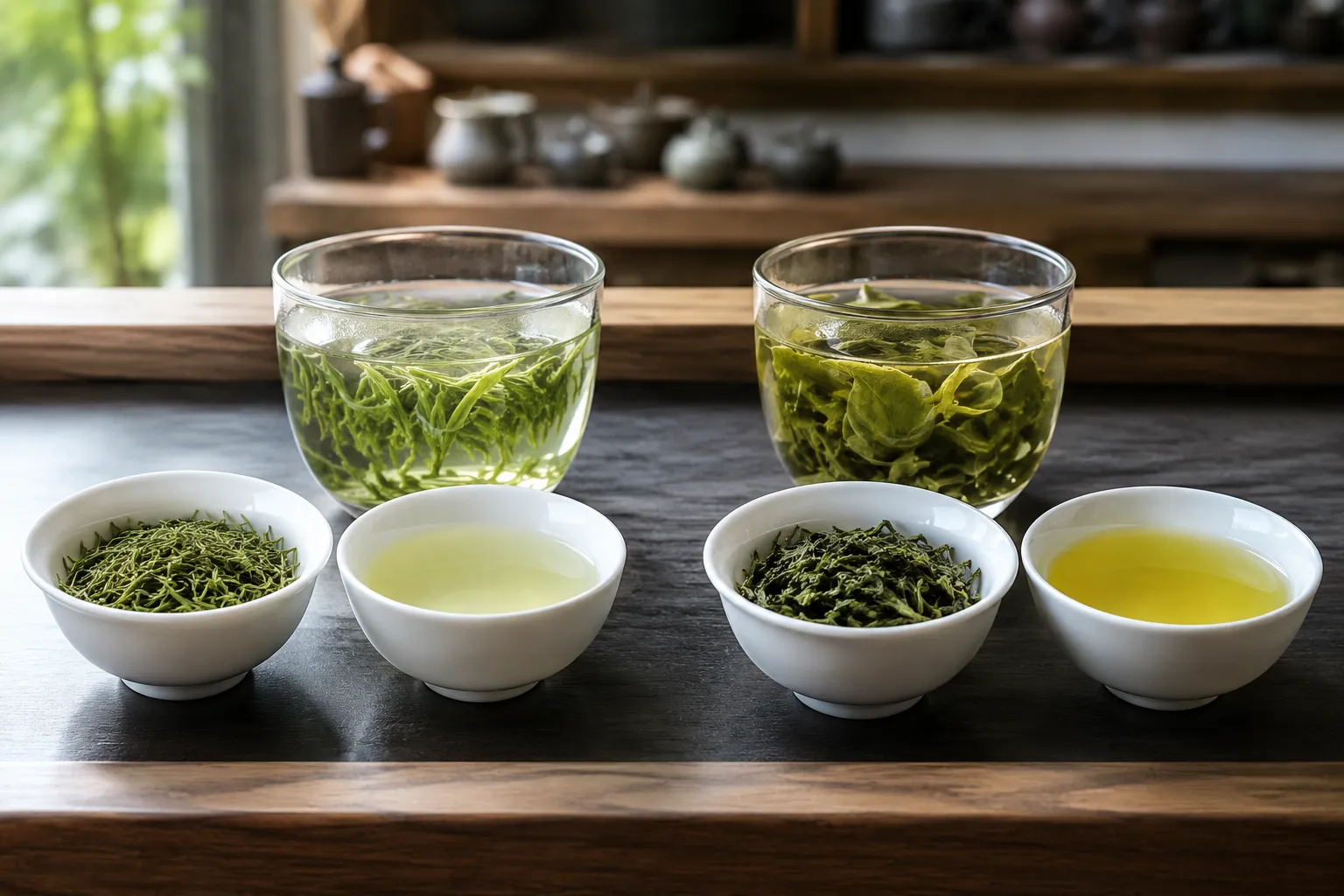
First flush green tea taste is commonly described as fresh, green-toned, floral, delicate, brisk, and aromatic. Those words become useful only when you translate them into the cup: lighter liquor, lifted aroma, more tenderness, sometimes more astringency, and less heavy body. In some teas, that profile is exactly the point.
Later harvest green tea can be better when you want more body, stronger flavor, roast compatibility, everyday value, or a less fragile brew. Later leaves may feel fuller, deeper, smoother, or more robust depending on the tea type and processing. A later harvest tencha or matcha intended for cooking, for example, is not trying to imitate a delicate first-harvest bowl. A roasted green tea such as hojicha sits in another taste world entirely.
This is where Darjeeling language can confuse green tea buyers. First flush and second flush comparisons are prominent in Darjeeling black tea, where later-season language often points toward richer flavor. That vocabulary can spill into general tea shopping, but it should not be imported too neatly into sencha, matcha, Longjing, or other green teas. Green tea processing and regional standards change the comparison.
The better cup may be the brighter one. It may also be the fuller one.
Common first flush tea misconceptions
The biggest misconception is that first flush means top grade. It means early. Early can be desirable, but it is not a universal grade.
Another mistake is treating tender buds as proof of better taste. Tender material can make a refined tea, but tenderness alone does not guarantee balance. A cup can be fragrant but too sharp, beautiful but weak, expensive but poorly matched to your preference.
A third misconception is that “fresh” always means better. Freshness matters most when it is protected. If a seller gives no harvest season, no origin, no processing style, no storage note, and no clear product photo, the phrase first flush is doing too much work. Better buying cues include harvest year, region, cultivar when available, leaf appearance, packaging, and whether the seller explains how the tea should be stored and brewed.
There is also a wellness misconception. Early spring green teas are sometimes described with nutrient or antioxidant language. Green tea contains caffeine and polyphenols, including catechins, but that does not show that first flush is healthier than later harvest tea. Brewed tea should also be kept separate from concentrated green tea extracts and supplement-style products, which have different safety discussions. For daily drinking, keep wellness language general and cautious; judge first flush mainly by leaf, aroma, storage, and cup behavior.
A sourcing cue is not a health claim.
A practical way to decide before you buy
Use first flush as one point in a small checklist, not as the whole decision.
Choose first flush green tea when the product gives you enough context: harvest season, origin, tea type, visible leaf quality, protective packaging, and brewing guidance that matches a delicate tea. It is especially promising if you enjoy a lighter spring cup and do not mind adjusting water temperature and steep time.
Be more skeptical when “first flush” appears alone beside broad claims about being the freshest or most premium. Without supporting details, the phrase may be more marketing than meaningful information. This is especially true when the product leans heavily on spring romance but shows little about the actual tea.
Choose a later harvest when you want strength, body, roast, lower fuss, or a tea that tolerates hotter water and longer steeping. Later does not automatically mean lower quality. It may simply mean a different use case: a steadier office cup, a stronger cold brew, a cooking matcha, a roasted green tea, or a fuller daily sencha.
If you already own the tea, let the cup answer. Brew a small amount gently first. Notice the dry aroma, leaf color, liquor clarity, first-sip bitterness, astringency, body, and finish. Then adjust only one thing: lower the water temperature, shorten the steep, or reduce the leaf. If the tea becomes clearer and sweeter, the first flush character needed gentler handling. If it stays flat or stale, harvest timing was not enough.
Quick answers
Is first flush green tea always higher quality?
No. It can signal early seasonal growth, but quality also depends on cultivar, origin, processing, storage, and brewing.
Does first flush green tea have more health value?
Do not use first flush as a health ranking. Green tea contains caffeine and catechins, but harvest timing alone is not enough to say one cup is healthier than another. People with caffeine sensitivity, pregnancy concerns, liver conditions, medication questions, or other health concerns should rely on qualified medical guidance.
Should beginners buy first flush green tea?
Yes, if they want a lighter, aromatic cup and are willing to brew gently. If they prefer stronger body, roast, or a more forgiving everyday tea, a later harvest may be the better choice.
The bottom line
First flush green tea can be better when you want a tender, aromatic, early-season cup and the tea has been processed, stored, and brewed well. It is not better by default. The phrase is useful because it points toward spring harvest character; it is limited because it cannot prove cultivar quality, careful handling, freshness in storage, fair value, or your personal preference.
The next time a first flush label looks tempting, read the leaf before the claim. Then brew one careful cup and ask a simpler question: does this tea taste fresh, balanced, and worth choosing again?
Sources
Sources and further reading
Reference links are limited to sources considered suitable for public citation in this page.