
Harvest and freshness
Green Tea Harvest Seasons and Freshness
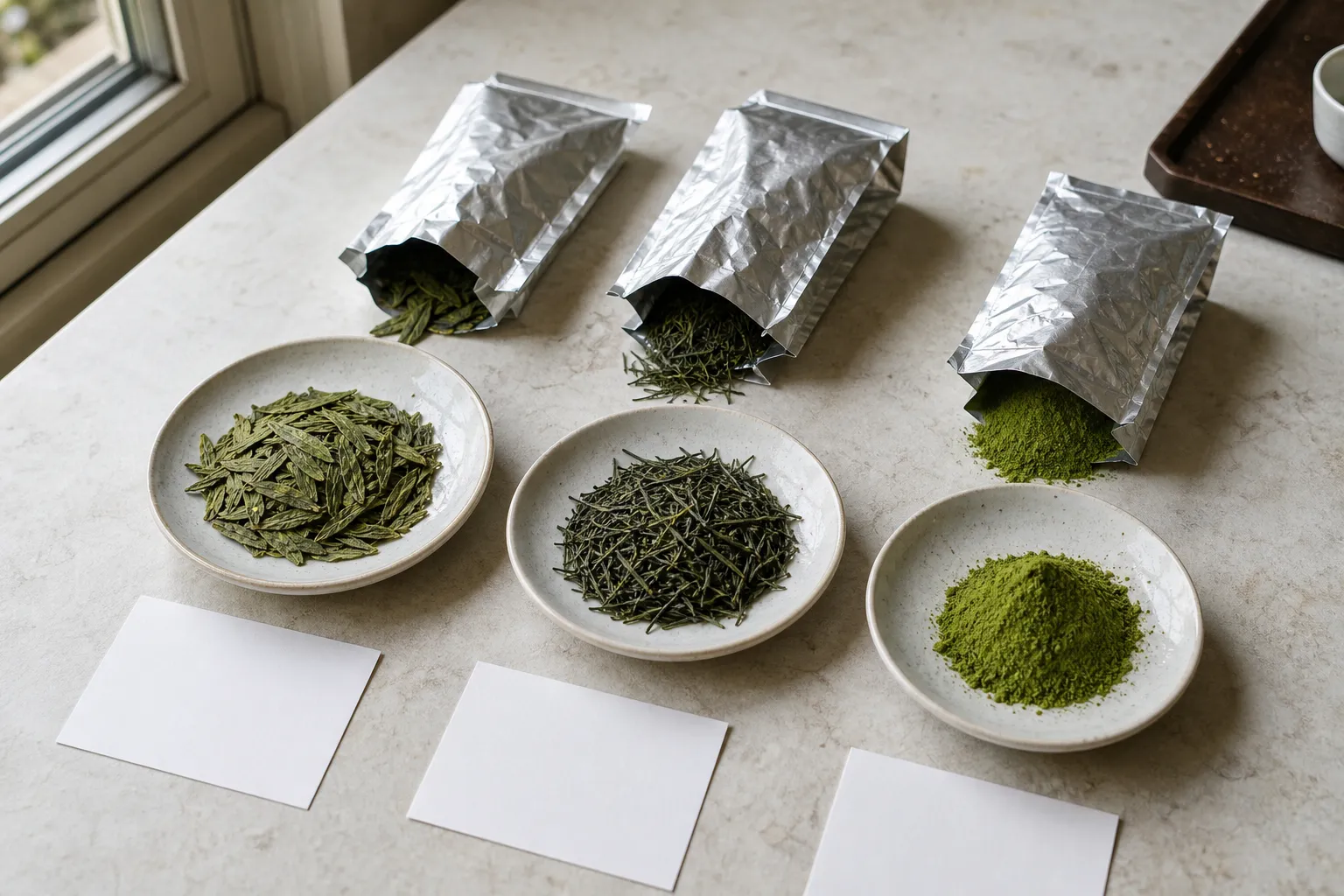
Flat Longjing leaves, needle-like sencha, and bright matcha powder can all carry the same shelf question: is this from the right season, and is it still fresh enough to taste lively? The answer is not only the green tea harvest season on a label. Season can suggest tenderness, aroma, and style; storage, processing, packaging, origin, cultivar, and time after harvest decide what reaches the cup.
For a buyer, “spring green tea,” “first flush green tea,” “pre-Qingming,” and “shincha” are useful clues. They are not proof by themselves. Read the leaf before the claim.
upward
Read the full overview first
Use the broader guide first if you need the full scope before this page.
What a Green Tea Harvest Season Can Tell You
Tea is an agricultural product, so harvest timing matters. New shoots do not grow on the same calendar everywhere; region, altitude, weather, cultivar, and processing schedule all shift the window. A broad green tea harvest date may point toward when the leaves were plucked, but it does not describe the finished tea on its own.
For many Chinese green teas, spring harvest is often discussed around March to May. That broad window includes early-season language such as pre-Qingming green tea, meaning tea picked before the Qingming festival in early April. In Japan, first-harvest green tea is often discussed from late April into early June, depending on region and tea type. Shincha Japanese green tea usually refers to the new season’s Japanese tea, commonly tied to the first spring harvest and early release.
Those windows are approximate. A warm year, cooler mountain garden, shaded field, or later finishing schedule can shift arrival. A label that says “spring” gives you a season category; a label with harvest date, harvest year, region, cultivar, and packing or storage detail gives you more to judge.
A harvest season can suggest
- Leaf maturity: early spring picking often emphasizes tender buds or young leaves.
- Taste direction: spring green tea is commonly described with fresher, sweeter, vegetal, floral, or umami-leaning notes, depending on the tea.
- Market timing: first harvest teas may appear in short seasonal windows, especially for shincha and some Chinese spring teas.
- Buying context: a recent harvest date can help you judge freshness, but only beside storage and packaging.
What season cannot prove is universal quality. A careful later harvest, processed and stored well, may give more pleasure to some drinkers than a poorly kept spring tea with impressive wording.
Season is a cue, not a verdict.
Spring Green Tea, First Flush, Pre-Qingming, and Shincha
Several seasonal terms get folded together, but they do not mean the same thing.
Spring green tea
This is the broadest term. It usually means green tea made from leaves harvested in spring, though the precise months depend on origin. It can include Chinese pan-fired teas, Japanese steamed teas, and other regional styles. The phrase is useful, but loose.
First flush green tea
This means an early or first picking period, but the term is used differently across tea markets. In some contexts, it suggests tender new growth and a lighter cup. In others, it becomes a shortcut for “better,” which is too simple. First flush can be desirable, but variety and processing still matter.
Pre-Qingming green tea
This belongs to Chinese seasonal language. It refers to tea picked before Qingming, a traditional early-April marker. For teas such as Longjing Dragon Well, pre-Qingming wording often signals very early spring picking, small young leaves, and a prized seasonal position. It does not confirm handling quality, storage condition, or taste preference.
Rainy season or later spring tea
This can refer to tea picked after the earliest pre-Qingming period, including teas associated with later spring rains. These teas may be less rare in market language and may show a fuller or more developed leaf character. That does not make them lesser for every drinker. Some people prefer more body, less delicacy, or lower price pressure.
Shincha
This is Japan-specific new-tea language. It means “new tea” and is usually tied to Japanese spring harvest and early release. It should not be used as a synonym for all spring green tea. A shincha sencha and a pre-Qingming Longjing sit in different tea cultures, processing systems, and flavor expectations.
The shared thread is new growth. The differences are origin, terminology, processing, and market habit.
Is First Flush Green Tea Always Better?
No. First flush green tea is often prized, but “first” is not the same as “best for every cup.”
Early spring leaves can bring lively aroma, tender texture, and a lighter profile. In Longjing Dragon Well, early spring leaves may show the flat shape, pale green-yellow liquor, nutty sweetness, and soft vegetal character many buyers look for. In sencha, first harvest can lean toward fresh green aroma and umami, especially when cultivar, steaming, shading, and processing support that direction. In matcha, harvest season matters too, but shading, tencha processing, milling, storage, and intended use become just as important.
People overread “first flush” partly because market language makes seasonal tea easy to romanticize: spring arrival, limited picking windows, small batches, fresh aroma, delicate flavor. Those phrases may describe real seasonal excitement, but they do not replace sensory evidence.
A better question is: better for what?
If you want a delicate morning cup with fresh aroma, spring tea may fit. If you want a stronger brew with more body, a later harvest or different style may be more satisfying. If you prepare tea with hotter water or a longer steep time, a very tender early tea may show bitterness or sharpness quickly. If you drink with food, you may prefer a tea that is less fragile.
First harvest can be special. It is not automatically the right tea.
Harvest Date vs Packing Date on Green Tea
Harvest date and packing date answer different questions.
The harvest date tells you when the leaves were picked. It places the tea in a seasonal timeline: spring, first harvest, pre-Qingming, shincha, summer harvest, or later picking. For green tea, where fresh aroma is often part of the appeal, this date can be useful.
The packing date tells you when the finished tea entered retail packaging. It may be close to harvest, or it may come after processing, sorting, resting, blending, transport, or storage. A packing date alone does not prove new harvest tea. A harvest date alone does not prove careful storage.
The strongest label cue is a cluster of information
| Label cue | What it helps you judge | What it cannot prove |
|---|---|---|
| Harvest date | Season and age of the leaf | Storage quality after harvest |
| Packing date | When the tea entered retail packaging | When the leaf was picked |
| Origin or region | Climate and style context | Exact taste or authenticity |
| Cultivar or variety | Possible flavor direction | Quality by itself |
| Picking standard | Bud, bud-and-leaf, or leaf maturity clues | Skill of processing |
| Storage or packaging note | Protection from air, light, heat, and moisture | Perfect freshness |
When these details line up, confidence improves. A spring Longjing with harvest date, origin area, picking standard, and sealed packaging gives you more context than a vague “fresh green tea” label. Even then, the cup remains the final check.
Dates guide the question. Aroma answers part of it.
Fresh Green Tea Cues in the Leaf, Aroma, and Cup
Tea freshness is not one visual trick. It is a set of small signals that become clearer when you compare dry leaf, warmed aroma, brewed liquor, and aftertaste.
Fresh green tea cues often include a clean dry aroma, visible leaf integrity, a lively first steep fragrance, and a cup that feels clear rather than flat. Depending on the tea, the aroma may be grassy, chestnut-like, marine, floral, sweet, steamed-vegetal, or softly nutty. A fresh sencha and a fresh Longjing should not smell identical; freshness expresses itself through the style.
Dry leaf color can help, but it can also mislead. Green does not always mean fresh, and slightly muted color does not always mean stale. Pan-fired teas, steamed teas, powdered teas, and shaded teas present differently. Matcha is more exposed because it is powdered; dull color, weak aroma, moisture clumping, or a stale smell can be more concerning than in intact leaf.
In the cup, freshness is often noticed as lift. The aroma rises quickly, the liquor has definition, and the aftertaste does not collapse immediately into cardboard, dust, or a tired hay-like note. Older green tea may become flatter, duller, or less aromatic. It may still be usable if kept dry and clean, but it may no longer show the seasonal character that made it appealing.
Practical signs to check
- The dry leaf smells clean, not musty, damp, smoky in an unintended way, or stale.
- The brewed cup has aromatic movement, not only bitterness or flatness.
- The liquor matches the style: Longjing may be pale yellow-green, sencha may be brighter green or yellow-green, and matcha should not look brown or lifeless.
- The finish feels coherent for the tea, rather than dusty or sour from poor condition.
Aroma is often the fastest freshness check.
Can Green Tea Be Too Fresh to Drink?
Sometimes the better question is not whether green tea is too fresh, but whether it has settled enough after processing and packing to taste balanced.
Freshly processed teas can be vivid. Some may show sharp green notes, light astringency, or a slightly unsettled edge soon after production. This is especially relevant when a seller releases a very early tea quickly to meet seasonal demand. At the same time, many green teas are made to be enjoyed while their fresh aromatics are still present, so waiting too long can reduce the quality you bought them for.
Treat this as a practical cup question rather than a universal rule. If a new harvest green tea tastes harsh, grassy in an unpleasant way, or disjointed, adjust brewing before blaming the tea. Use slightly cooler water, shorten the steep, or let the opened pack rest briefly in a sealed, dry container before trying again. For sencha, cooler water can soften bitterness and bring out umami. For Longjing, a shorter steep may preserve sweetness and nutty aroma.
Too fresh is not a fixed flaw. Let the cup decide.
Spring vs Summer Green Tea Taste
Spring vs summer green tea is a useful comparison, but it should stay flexible. The available material supports the broad idea that harvest season can affect tea qualities, and green tea buyers commonly notice seasonal differences. It does not support a simple rule that spring always wins.
Spring teas are often associated with tender leaves, fresh aromatics, delicate sweetness, floral or vegetal lift, and lighter body. Summer teas may come from faster-growing leaves and can be described in some markets as stronger, more astringent, or less delicate. These are tendencies, not fixed outcomes.
Processing can narrow or widen the difference. A skilled producer can make a later harvest enjoyable; poor processing can make an early harvest disappointing. Brewing also matters. Hot water and long steeping may exaggerate bitterness in a delicate green tea, while cooler water can bring a smoother cup from many Japanese greens. Storage can erase seasonal advantages if the tea has been exposed to heat, oxygen, light, or moisture.
For everyday buying
- Choose spring when you want fragrance, tenderness, and a seasonal cup.
- Consider later harvests when you want more body, value, or a less delicate daily brew.
- Do not pay only for the word “spring”; look for harvest date, origin, leaf condition, and packaging.
- Brew before judging; bitterness may be a water-and-time problem, not only a season problem.
Season shapes the cup, but it does not brew it for you.
Storage Is Where Freshness Can Be Won or Lost
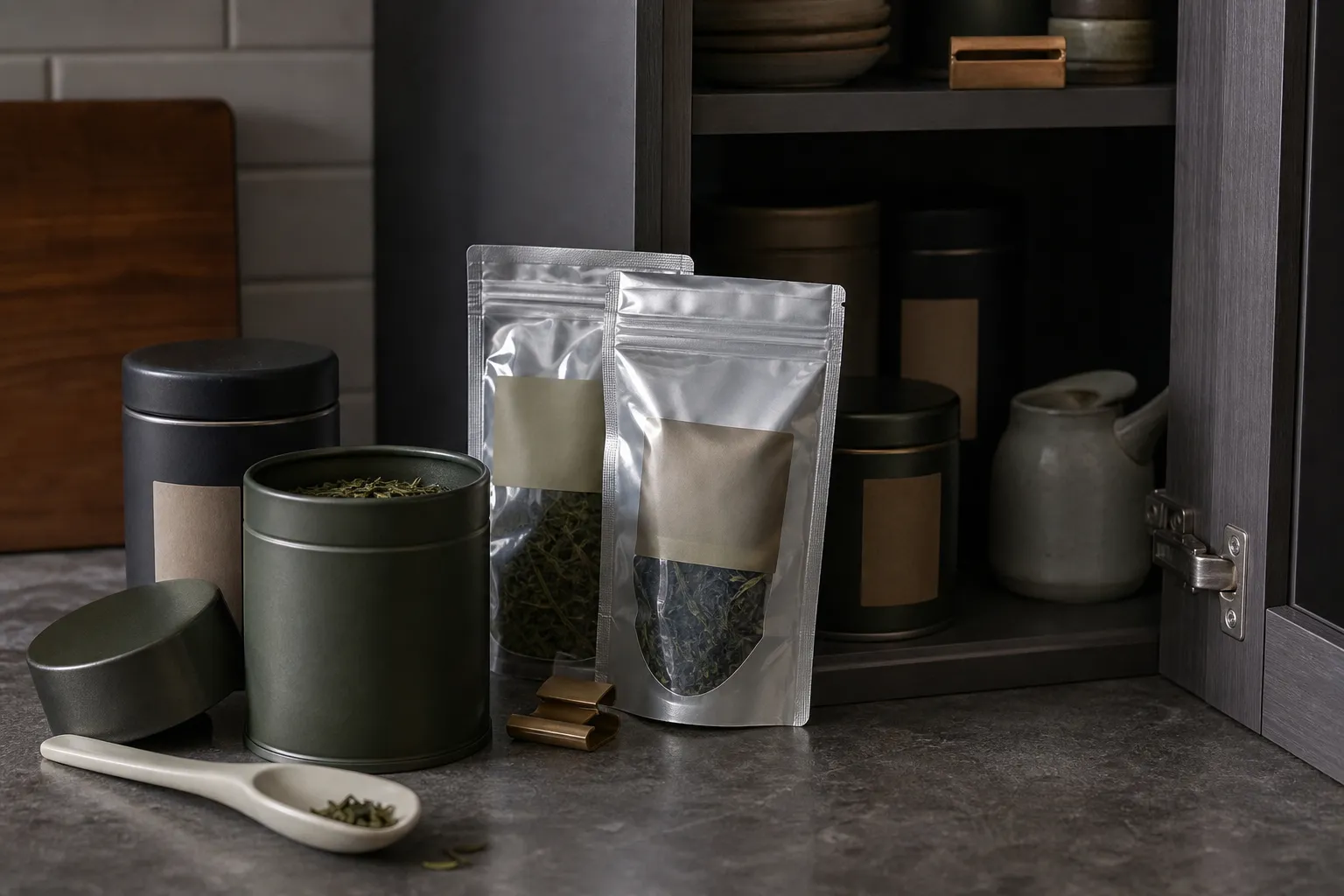
Green tea storage freshness deserves its own place in the decision because freshness continues changing after harvest. Storage research on green tea supports the general point that temperature can affect sensory evaluation, metabolites, and volatile compounds. In plain tea language: heat, air, light, moisture, and time can dull aroma and change the cup.
This is why a recent harvest date is not enough. A spring tea stored warm, opened repeatedly, or kept in a clear container near light may lose its lift faster than an older tea that stayed sealed, cool, dark, and dry. Powdered tea such as matcha is especially sensitive because more surface area is exposed to air.
A practical storage routine
- Keep unopened green tea sealed until you are ready to use it.
- Use airtight packaging or a tight storage tin after opening.
- Keep tea away from light, heat, moisture, and strong kitchen odors.
- If refrigerating unopened tea, let the sealed package return toward room temperature before opening to reduce condensation risk.
- Buy amounts you can finish while the tea still tastes lively.
Cool storage can help preserve quality, but household storage is not magic. It cannot restore aroma that has already faded, and it cannot make a poorly handled tea taste newly harvested.
Storage protects the season after the harvest.
Does Older Green Tea Always Taste Stale?
Older green tea does not always taste terrible, but it often loses the bright aroma that drinkers seek from fresh green tea. The difference between peak flavor, ordinary fading, and obvious damage matters.
A tea may be past its freshest point and still be usable as a casual brew. It may taste flatter, less sweet, less green, or less aromatic. Some drinkers use older green tea for cold brewing, cooking, or relaxed daily cups when the aroma no longer feels special. That is a taste decision.
Do not use tea that shows mold, moisture damage, contamination, or clearly unpleasant off odors. A damp, musty, or strange-smelling tea is not a freshness puzzle to solve with hotter water. It belongs outside the cup.
There is also a difference between a best-by date and the tea’s sensory peak. A package date or shelf date can help with rotation, but your nose and the dry condition of the leaf still matter. If the tea smells clean but muted, brew a small amount and judge the cup. If it smells wrong, do not brew through doubt.
Old is not the same as ruined; damaged is the problem.
How to Judge New Harvest Green Tea Without Overclaiming
A good buying decision uses several small checks instead of one dramatic claim. This keeps seasonal excitement useful without letting it turn into proof.
Start with the label. Look for harvest date, harvest season, origin, cultivar if available, picking standard, processing style, and packing details. If a tea is called new harvest green tea but gives no date or context, treat the phrase as market language until the leaf and aroma support it.
Then look at the tea style. Pre-Qingming Longjing, shincha sencha, and matcha do not share the same ideal appearance. Flat whole leaves, steamed needle-like leaves, and fine powder need different judgment. Use the right standard for the tea in front of you.
Finally, match the tea to your use. A delicate spring tea may be worth seeking if you want seasonal aroma and careful brewing. A less fragile daily green tea may make more sense if you brew casually, keep tea at work, or drink with meals. If caffeine, focus, or antioxidants are part of your interest, keep that discussion general. Green tea contains caffeine and tea compounds that many readers care about, but harvest wording should not be turned into promises about health outcomes or daily performance.
A clean decision frame
- 1. Season: Is the harvest window plausible for the origin and tea style?
- 2. Specificity: Does the label give more than a romantic spring phrase?
- 3. Condition: Does the leaf or powder smell clean, dry, and style-appropriate?
- 4. Storage: Was the tea protected from heat, air, light, and moisture?
- 5. Cup: Does the brewed tea show aroma, clarity, and balance at a sensible temperature?
- 6. Fit: Does this taste match how you actually drink green tea?
That frame works better than chasing the earliest date on the shelf.
Common Mix-Ups Around Tea Freshness
The most common confusion is treating freshness, quality, and season as the same word. They overlap, but they are not identical.
Freshness is about how recently the tea was harvested, processed, packed, opened, and protected. Quality includes leaf material, growing conditions, processing skill, sorting, storage, and whether the tea fits its intended style. Season is one part of that picture.
Another mix-up is using shincha as a global term. Shincha belongs to Japanese green tea culture. It can be a helpful seasonal cue for sencha and related Japanese teas, but it does not describe Chinese spring Longjing or every early green tea from another origin.
A third mix-up is thinking that an older tea must taste stale. It may only taste muted. Staleness is a sensory judgment; damage is a condition judgment. Keep those separate.
The last mix-up is assuming that limited release means better tea. A short seasonal window may reflect real agriculture and processing schedules, but scarcity language can also amplify demand. Let the dry leaf, aroma, label detail, and brewed cup do the harder work.
The next time a package promises spring, open the question gently: what season, what date, what storage, and what does the first warm aroma say?
Sources
Sources and further reading
Reference links are limited to sources considered suitable for public citation in this page.