
Leaf appearance check
Can Low-Quality Green Tea Still Look Good
A glossy pile of green tea can mislead you. Yes, low-quality green tea can still look good, especially in a product photo, a clear pouch, or a sample that has been neatly sorted for display. Appearance is a useful first clue, but it is not a final judgment. If you are asking, "can low quality green tea look good," the practical answer is: sometimes it can, and that is why the leaf needs to be checked against aroma, brewed color, taste, label detail, brewing behavior, and the seller's credibility.
Dry leaves can show obvious problems. They cannot prove freshness, origin, cultivar, processing skill, storage history, chemical composition, or health value. A bright green color, even shape, or tidy presentation may tell you what to inspect next. It should not make the decision for you.
upward
Read the full overview first
Use the broader guide first if you need the full scope before this page.
Why Good-Looking Green Tea Can Still Be Weak
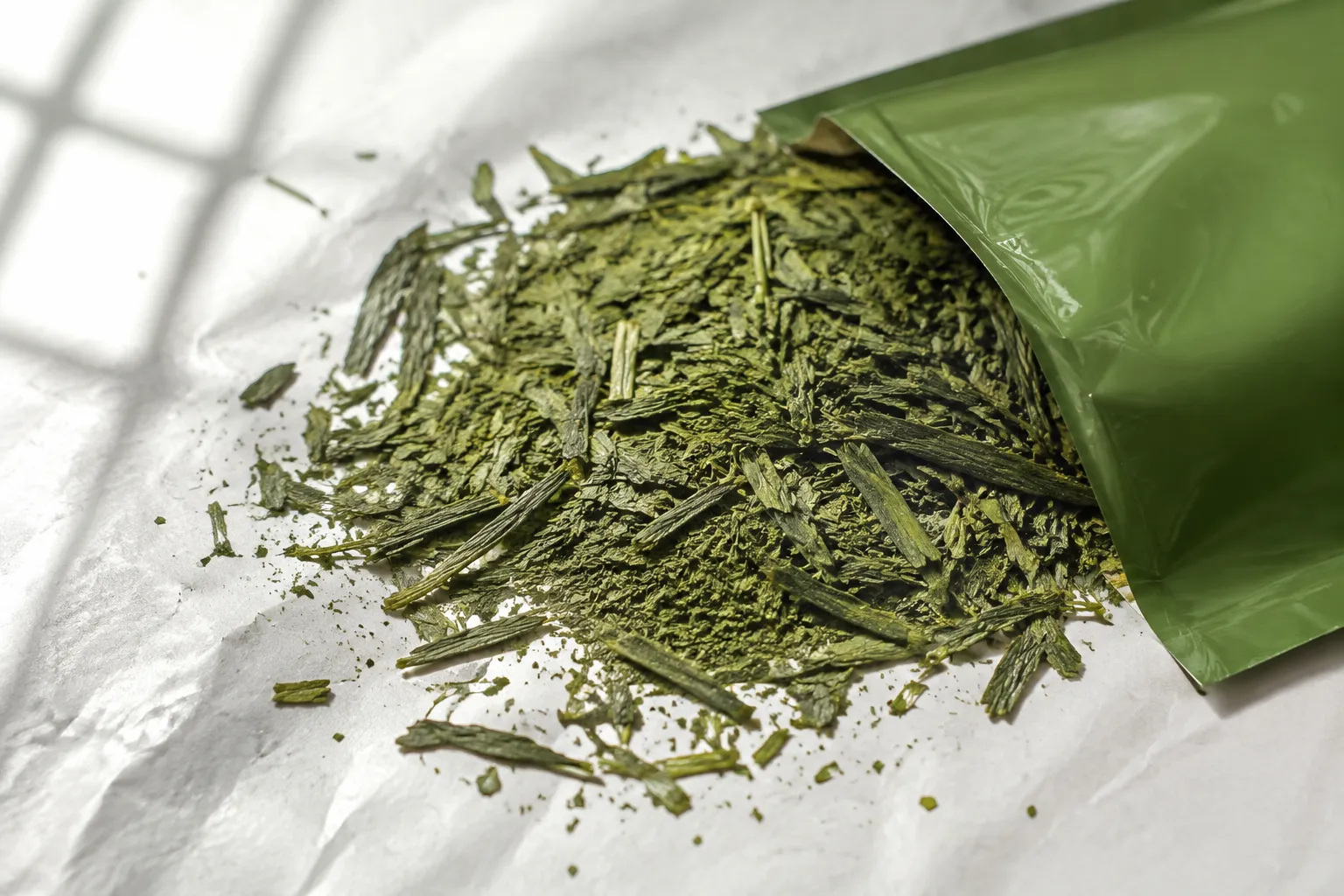
Loose-leaf tea is easy to judge with the eyes because the surface gives you something immediate: color, shape, size, stems, broken leaf, powder, and dust. Those details matter, but they are only the visible part of the cup.
A tea may look appealing because the leaves are fairly uniform, the listing photo uses flattering light, or the sample shows the neatest portion of a larger batch. It may also look bright because of its variety or processing style, not because it is automatically better. Without stronger information, appearance alone cannot confirm that the tea was fresh when packed, stored well, or handled carefully after leaving the producer.
This is one of the common green tea quality misconceptions: buyers often treat green color as proof. Color can be a clue, especially when it looks dull, brownish, faded, or uneven in a way that raises concern. But green tea color clues are not grading rules by themselves. A tea can be vivid and still taste flat. It can look tidy and still brew harsh. It can appear delicate and still have little aroma.
The same caution applies to premium-sounding language. Words on a packet or listing can tell you what the seller wants you to notice, but they do not prove the tea's condition. Appearance and language are starting points. The cup does the harder work.
What the Dry Leaf Can Tell You
Green tea leaf appearance is most useful when it points to something you can verify. Look first for broad consistency: are the pieces mostly similar in size, or is the packet full of mixed fragments? Does the leaf form match what the tea claims to be, at least in a general way? Longjing Dragon Well is often recognized by its flat leaf shape, while many sencha styles look more needle-like or narrow. Matcha is powdered, so leaf integrity is not judged in the same way.
For loose-leaf tea buying cues, the useful question is not "Does this look expensive?" It is "Does anything about this leaf ask for more checking?"
Visible cues worth noticing
- Leaf integrity: Many broken pieces may suggest rough handling, lower sorting, or smaller fragments left from processing, but one packet does not give a verified threshold.
- Dust and stems: Some stems or fine particles can appear in many teas, but a large amount of dust may make the tea brew faster and taste rougher.
- Uniformity: A more even pile can suggest sorting, while a very mixed pile may brew unevenly. Still, uniformity does not prove high quality.
- Color evenness: A faded, dull, or heavily varied appearance may raise freshness or storage questions, but color by itself cannot confirm the answer.
- Surface condition: Leaves that look crushed, powdery, or tired may be less promising than leaves that look intact for their style.
These are clues, not verdicts. They help you decide whether the tea deserves a smell, a label check, and a careful first brew.
What Appearance Cannot Tell You
Green tea appearance limits matter most when the seller asks you to trust the leaf at a glance. The visible leaf cannot confirm origin. It cannot confirm harvest date unless the seller provides reliable label details. It cannot confirm cultivar, farming method, storage temperature, or composition. It also cannot tell you how the tea will affect your body, focus, or daily routine.
Taste and aroma carry information the eye misses. A tea that looks neat may smell weak, stale, smoky in an unpleasant way, or oddly flat. After brewing, it may turn sharp quickly, lose sweetness, or leave a coarse finish. Those are cup-level observations, not laboratory conclusions, but they matter for daily drinking.
Appearance also struggles with storage history. A tea may have looked fresh when packed and then lost aroma after heat, light, air, or time. Without a reliable packing date, storage note, or seller you trust, the leaf can only tell part of the story. Tea appearance and freshness are related in a loose, practical sense; one does not prove the other.
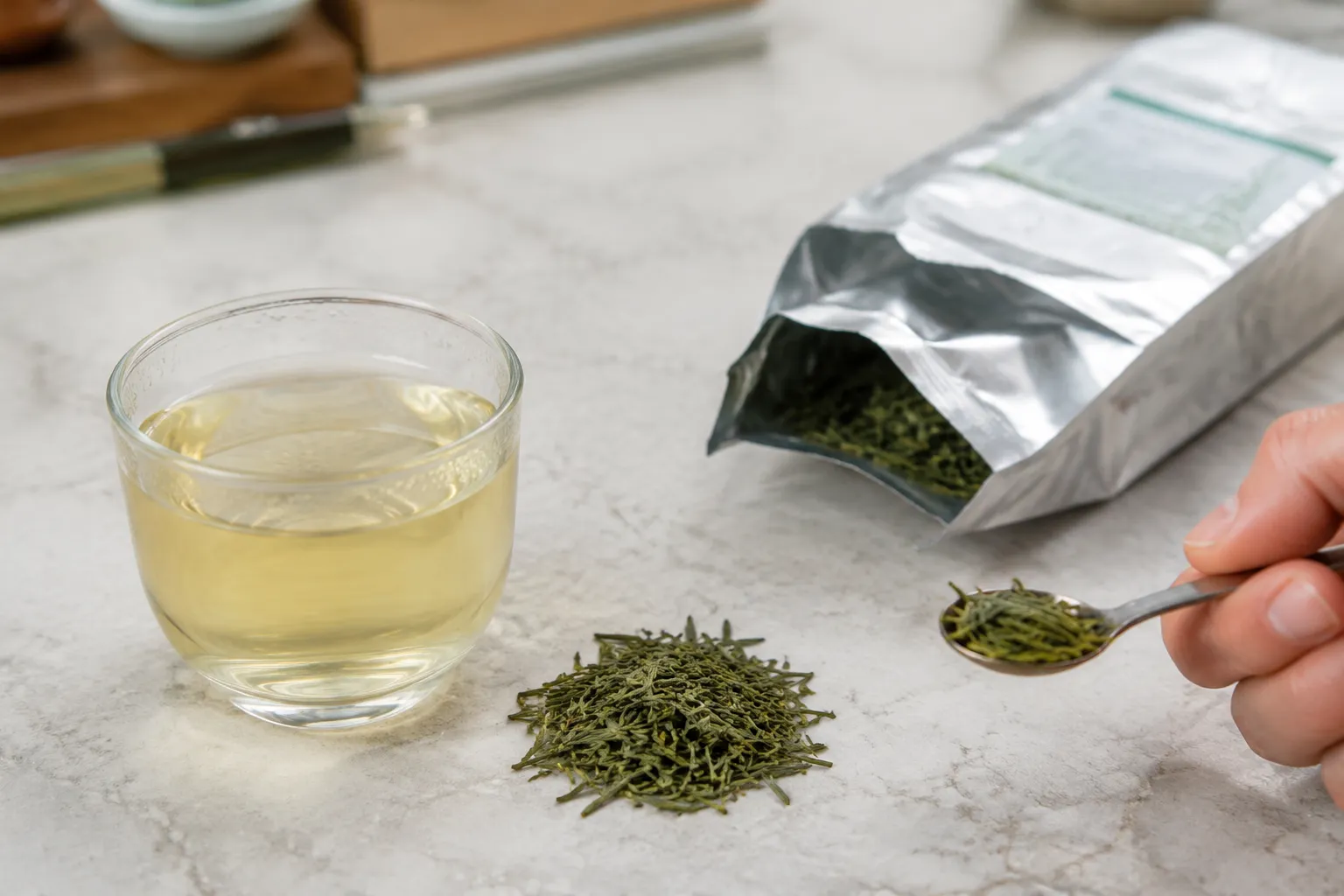
The brewed tea adds another check. Brewed green tea appearance can show whether the liquor is unusually murky, dull, or heavy-looking for what you expected, but the cup still needs smell and taste. Some cloudiness, color depth, or sediment may come from leaf style, powder content, water, vessel, and steep time. Do not turn one visual cue into a rigid rule.
A Better Way to Judge a Good-Looking Tea
When a green tea looks good, slow the decision down. You do not need a professional tasting bench to avoid the biggest mistakes; you need a sequence that keeps each cue in its place.
Start with the dry leaf. Notice color, breakage, stems, dust, and whether the leaf shape looks broadly consistent with the tea being sold. If the tea is loose-leaf, tilt the packet or tin and look beneath the top layer. Fine particles often settle. If the top looks neat but the bottom is dusty, the tea may brew more aggressively than the first view suggests.
Then smell it. Aroma is not proof of quality, but a lively, clean scent is more useful than color alone. If the leaf smells faint, stale, musty, or oddly absent, a good appearance should not carry much weight. For sencha, Longjing Dragon Well, or other whole-leaf green teas, the dry aroma and warm wet-leaf aroma often reveal more than the product photo can.
Next, read the packet. Label details on green tea can include origin language, harvest or packing information when available, storage guidance, lot detail, cultivar or style notes, and basic preparation guidance. These details still depend on seller honesty, but a seller who gives clear, specific information is easier to evaluate than one who relies only on broad premium language.
Finally, brew a small amount with moderate care. Use a reasonable brewing temperature and steep time for the style, then taste before blaming the leaf completely. Water that is too hot or a steep that runs too long can make decent green tea taste bitter. But if careful brewing still gives a flat aroma, thin body, harsh bitterness, or little character, the attractive leaf has not delivered in the cup.
Tea appearance versus taste is not a contest where one always wins. Appearance helps you decide what to inspect. Taste decides whether you want to drink it again.
Common Confusions When Buying by Sight
Bright green is not automatic proof
Some green teas are expected to look vivid, but brightness alone does not prove careful processing or freshness. A dull tea may be concerning, yet a bright tea may still disappoint.
Broken pieces are not universal defects
Broken leaf, dust, and stems can affect how fast the brew extracts and how rough it tastes, especially in loose-leaf teas meant to show intact leaf shape. But different tea forms are made differently. Matcha is powdered by design. Some teas include stems intentionally. The question is whether the visible form matches the tea being sold and how it behaves in water.
A perfect photo is not the packet in hand
Product photography can make attractive looking green tea look even more polished. Lighting, angle, editing, and sample selection can all change how the tea appears to a shopper. The real packet, its smell, and its brewed liquor matter more than the listing image.
A neat leaf does not prove credibility
A careful-looking product may come from a reliable seller, but the leaf alone cannot prove that. Credibility is built from consistent label detail, realistic descriptions, clear storage or packing information when offered, and a pattern of not leaning on exaggerated claims.
When Good Looks Should Still Make You Cautious
Be cautious when the tea looks unusually polished but gives you little information. A packet that shows beautiful leaves but no meaningful label details leaves a gap. That does not make the tea bad, but it means appearance is carrying too much of the argument.
Be cautious when the leaf looks uniform only on the surface. If the top layer looks tidy but the lower part contains much more dust, fragments, or stems than expected, the brew may be less balanced. Small particles extract quickly; the cup may become bitter or coarse before the larger pieces have opened fully.
Be cautious when the aroma is missing. Green tea does not need to smell dramatic, but if it has almost no scent before brewing and little character after hot water, the visual impression is weak evidence. A pretty leaf with no aroma asks for a careful taste.
Be cautious when the tea looks good but tastes narrow. Low-quality tea does not always announce itself with ugly leaves. Sometimes it shows up as a cup that is flat, thin, harsh, stale, or short-lived across steeps. That is the practical boundary: the leaf can invite interest, but the cup has to confirm it.
The Practical Answer
Low-quality green tea can still look good, especially when the judgment is based on color, uniformity, packaging, or a polished photograph. Appearance helps most when it flags obvious concerns: excessive dust for a whole-leaf tea, heavy breakage, dull color, odd inconsistency, or a form that does not match the tea being described. It becomes unreliable when it is asked to prove freshness, origin, storage, processing skill, composition, or health value.
For a daily buyer, the better habit is simple: inspect the dry leaf, smell it, check the label, brew a small cup, and notice how quickly the taste turns bitter, flat, or thin. If the tea looks beautiful but gives little aroma and a disappointing brew, trust the cup over the photograph.
A good-looking leaf is only the first question. The next answer is in the water.